
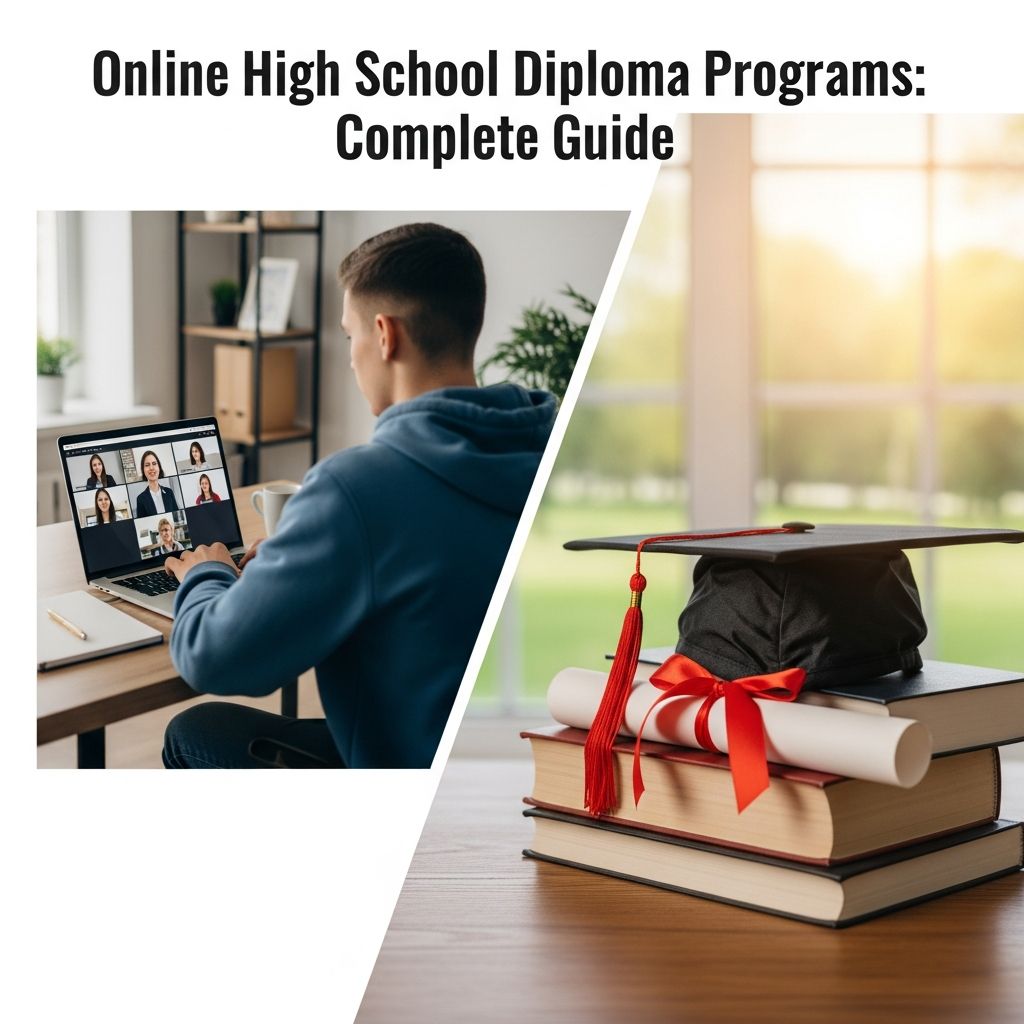
The landscape of secondary education has fundamentally transformed over the past decade, with online high school diploma programs emerging as a legitimate and increasingly popular alternative to traditional brick-and-mortar institutions. These programs deliver a complete high school curriculum through digital platforms, enabling students to earn credentials that carry the same weight and recognition as those obtained in conventional classrooms. For individuals juggling competing responsibilities, pursuing unique learning styles, or seeking specialized educational opportunities, online diploma programs represent a transformative option that aligns education with life circumstances rather than forcing life to accommodate rigid academic schedules.
Understanding Online High School Diploma Programs
An online high school diploma program represents a comprehensive educational pathway where students complete all required coursework, core subjects, and electives through internet-based platforms rather than attending physical classes. These programs deliver instruction across essential academic domains including language arts, mathematics, social studies, and sciences, while simultaneously offering expanded course selections that extend beyond traditional curricula. The educational experience encompasses interactive digital content, virtual instructor support, peer collaboration opportunities, and assessment mechanisms that collectively establish mastery of high school-level material.
The fundamental distinction between online diploma programs and alternative credentials lies in their scope and depth. While a GED certification demonstrates achievement through standardized testing, an online high school diploma reflects completion of a comprehensive curriculum spanning multiple subjects and academic disciplines. This comprehensive approach provides broader preparation for subsequent educational pursuits and professional advancement, as employers and colleges increasingly recognize that diploma holders possess more extensive foundational knowledge across diverse academic areas.
Key Advantages of Pursuing Your Diploma Online
Unparalleled Schedule Flexibility
Perhaps the most compelling advantage of online high school programs is the ability to structure learning around existing life circumstances. Students can access coursework at times that accommodate work schedules, family obligations, athletic commitments, or personal responsibilities. This asynchronous learning model eliminates the constraint of fixed class periods, allowing individuals to progress through material during their most productive hours, whether that involves early morning study sessions or late-night learning marathons. For working adults, employed teens, and individuals with caregiving responsibilities, this flexibility transforms education from an obstacle into an achievable goal.
Personalized Learning Trajectories
Online diploma programs recognize that students progress at different speeds and respond to varied instructional approaches. Rather than forcing all learners into identical pacing, virtual environments enable students to accelerate through content they grasp quickly while devoting additional time to challenging material. This self-paced methodology particularly benefits students with diverse learning needs, allowing them to engage with material in ways that align with their cognitive preferences and learning styles. The ability to revisit difficult concepts, access supplementary resources, and progress without artificial constraints enhances comprehension and retention while building genuine mastery rather than superficial coverage.
Expanded Academic Offerings
Virtual high schools transcend the geographical and resource limitations that constrain traditional institutions. Students gain access to broader course catalogs encompassing advanced subjects, specialized electives, and career-focused pathways that may not exist in their local educational contexts. This expanded selection enables learners to pursue interests deeply, develop skills aligned with career aspirations, and even accumulate college credits while still completing their secondary diplomas. International students, rural learners, and those in underserved communities particularly benefit from this democratization of academic opportunity.
Financial and Practical Efficiencies
Online education eliminates numerous expenses associated with traditional schooling, including transportation costs, uniform requirements, and various material expenses. Many programs offer flexible payment options and pricing structures that accommodate diverse financial circumstances. Beyond direct cost savings, students conserve substantial time by eliminating commutes, allowing them to invest these hours in productive study, employment, or personal development. The practical convenience of studying from home creates a comfortable learning environment while reducing logistical barriers that sometimes prevent degree completion.
Who Benefits Most From Online Diploma Programs?
While online high school serves diverse populations, certain student profiles experience particularly significant advantages:
- Student-Athletes and Performers: Young people balancing rigorous training schedules with academic requirements can maintain educational progress while prioritizing their primary pursuits without compromise.
- Working Teenagers: Adolescents managing part-time employment alongside education can structure both responsibilities coherently rather than sacrificing either.
- Learners with Diverse Needs: Students with learning differences, physical disabilities, social anxiety, or other conditions thrive in personalized environments offering targeted support and accommodations.
- Homeschooling Families: Families seeking structured curricula with advanced coursework, college preparation, and professional instruction benefit from comprehensive virtual programs.
- Adult Learners: Individuals returning to education after employment, family responsibilities, or life transitions can progress toward credentials without disrupting current obligations.
- Geographic Outliers: Students in rural areas, international locations, or regions with limited educational infrastructure access quality instruction regardless of physical location.
Academic Quality and Accreditation Considerations
The legitimacy of an online high school diploma depends critically on institutional accreditation. Reputable organizations like Cognia evaluate online programs against rigorous academic standards, ensuring that curricula, instruction, and assessment mechanisms meet or exceed quality benchmarks. Diplomas from accredited institutions receive recognition from colleges, employers, and credentialing bodies, whereas unaccredited programs may face skepticism or outright rejection in these contexts.
When evaluating online diploma programs, prospective students should prioritize accreditation verification, examine course catalogs for comprehensive coverage of core subjects, assess available support services, and investigate college preparation features. Quality programs provide robust mentoring, tutoring accessibility, and community engagement opportunities that enhance academic success and personal development beyond mere content delivery.
Skill Development Beyond Academic Content
Digital Literacy and Technological Competency
Completing studies through online platforms necessarily develops technological proficiency and digital citizenship skills that contemporary workplaces increasingly demand. Students become fluent with learning management systems, digital collaboration tools, web-based research platforms, and virtual communication technologies. These competencies transfer directly to college coursework and professional environments, providing competitive advantages in an increasingly digitized economy.
Independence and Self-Directed Learning
Online education requires and cultivates substantial self-discipline, time management capabilities, and intrinsic motivation. Students learn to structure their own schedules, identify resource needs, seek assistance proactively, and maintain focus without constant external supervision. These metacognitive skills—the ability to manage one’s own learning process—prove invaluable in higher education and professional contexts where independent problem-solving and self-improvement drive success.
Professional Communication Skills
Virtual learning environments necessitate written communication through discussion forums, emails, and collaborative documents, alongside synchronous communication through video conferences. These interactions develop professional communication abilities, clarity of expression, and virtual etiquette that increasingly characterize contemporary workplaces. Students learn to articulate ideas effectively in different formats and contexts, building workplace-ready competencies alongside academic knowledge.
Social Connection and Community in Virtual Settings
A common misconception regarding online education involves social isolation. Quality programs actively facilitate peer interaction through online clubs, group projects, discussion forums, and even occasional in-person events that enable community building aligned with students’ comfort levels and schedules. Rather than eliminating social dimensions, virtual schools restructure social learning to accommodate diverse preferences and circumstances. Students can develop meaningful relationships while maintaining the schedule flexibility that necessitated online enrollment in the first place.
College Preparation and Admission Pathways
Students earning diplomas from accredited online programs access college preparation support comparable to traditional high schools. Many programs incorporate SAT and ACT preparation, college counseling services, and Advanced Placement (AP) or dual enrollment opportunities enabling students to complete college coursework simultaneously with their diplomas. Colleges recognize credentials from accredited online institutions, and admissions officers increasingly understand that virtual learners often demonstrate exceptional motivation, discipline, and self-direction—qualities that predict collegiate success.
Career Readiness and Professional Advancement
The comprehensive nature of online diploma programs provides broader preparation for career entry than alternative credentials. Many programs structure electives around career pathways aligned with evolving labor market demands, enabling students to develop industry-specific competencies alongside general education. Upon completion, diploma holders access broader employment opportunities than GED certificate holders, with many employers specifically requiring high school diplomas as minimum qualifications for entry-level and advancement positions.
Beyond initial employment, online diploma credentials facilitate career advancement. Employers recognize diploma completion as evidence of dedication and follow-through, making diploma holders competitive for promotions, supervisory positions, and further professional development opportunities. The soft skills developed through online learning—technological proficiency, independent work ethic, communication ability—further enhance professional advancement prospects.
Comparing Online Diplomas to Alternative Credentials
| Credential Aspect | Online High School Diploma | GED Certificate |
|---|---|---|
| Scope | Comprehensive curriculum across multiple subjects | Test-based achievement demonstration |
| Time Requirement | Full coursework completion (typically 4 years) | Preparation and single testing event |
| College Acceptance | Broader opportunities; demonstrates subject mastery | Accepted but may indicate different preparation |
| Employer Recognition | Preferred for many positions and advancement | Acceptable for basic requirements |
| Skill Development | Comprehensive across academic disciplines | Focused on core competency demonstration |
Essential Considerations When Selecting Programs
Prospective online high school students should evaluate programs systematically using evidence-based criteria:
- Accreditation Status: Verify regional accreditation from recognized bodies ensuring academic legitimacy and credential recognition.
- Curriculum Comprehensiveness: Examine core subject coverage, elective availability, and opportunities for advanced or dual enrollment coursework.
- Support Infrastructure: Assess mentoring availability, tutoring services, and community engagement mechanisms supporting student success.
- Technology Platform: Evaluate user interface quality, accessibility features, and technical support ensuring learning environment functionality.
- College Preparation: Investigate SAT/ACT prep offerings, college counseling, and advanced placement opportunities.
- Cost Structure: Compare tuition, payment options, and financial aid availability relative to institutional quality.
Personal Development and Achievement Recognition
Beyond instrumental benefits for employment or higher education, earning an online diploma represents genuine personal achievement. Students completing rigorous virtual curricula develop confidence, self-efficacy, and recognition of their capability to accomplish challenging goals. This psychological dimension—the sense of accomplishment and personal credibility—provides lasting value independent of immediate practical applications. Diploma holders carry lifetime evidence of their dedication, academic capability, and ability to overcome obstacles, reinforcing self-perception and resilience.
The Evolving Role of Online Education
Online high school diploma programs represent more than convenient alternatives to traditional education; they embody educational evolution responding to contemporary life circumstances and learning science insights. As workplace demands increasingly emphasize technological competency, independent learning ability, and adaptability, online educational pathways develop precisely these competencies through their instructional mechanisms. The flexibility, personalization, and technology integration characteristic of quality virtual programs align fundamentally with how successful professionals and lifelong learners operate in modern contexts.
For individuals whose life circumstances, learning preferences, or career aspirations diverge from traditional educational pathways, online high school diploma programs offer legitimate, recognized, and increasingly superior alternatives. By combining academic rigor with practical flexibility, these programs enable credential attainment that truly serves individual needs rather than forcing individuals to serve institutional convenience. As educational technology continues advancing and institutional quality standards strengthen, online diploma programs will likely expand their role in secondary education, serving growing populations seeking education models that accommodate rather than constrain modern life.
References
- Do You Need A High School Diploma Fast? — Excel High School. https://www.excelhighschool.com/blog/i-need-a-high-school-diploma-fast/
- Discover the Benefits of a Virtual High School Diploma — Arizona State University Prep Digital. https://www.asuprepdigital.org/blog/virtual-high-school-diploma/
- Pros and Cons of Online High School — Penn Foster. https://partners.pennfoster.edu/blog/2024/july/pros-and-cons-of-online-high-school
- The Top Advantages of Earning a High School Diploma Online for Busy Adults — Southeastern High School. https://southeasternhs.com/the-top-advantages-of-earning-a-high-school-diploma-online-for-busy-adults/
- The Benefits of Obtaining an Online U.S. High School Diploma for International Students — Greenways Academy. https://www.greenwaysacademy.com/international-partners/the-benefits-of-obtaining-an-online-us-high-school-diploma-for-international-students/
- Benefits of Getting a High School Diploma Online — US Career Institute. https://www.uscareerinstitute.edu/online-high-school/the-benefits
- Online High School Diploma vs GED: Key Benefits Explained — Forest Trail Academy. https://foresttrailacademy.com/blog-why-an-online-high-school-diploma-is-better-than-a-ged/

- Integrated M.A. in Applied Linguistics, University of Hyderabad
- 5+ years in editorial, instructional, SEO, and research-based writing
Sneha is a relationships and lifestyle writer with a strong foundation in applied linguistics and certified training in relationship coaching. She brings over five years of writing experience to theskillvault, crafting thoughtful, research-driven content that empowers readers to build healthier relationships, boost emotional well-being, and embrace holistic living. Her writing and insights reflect the belief that beauty, happiness, and wellness…