
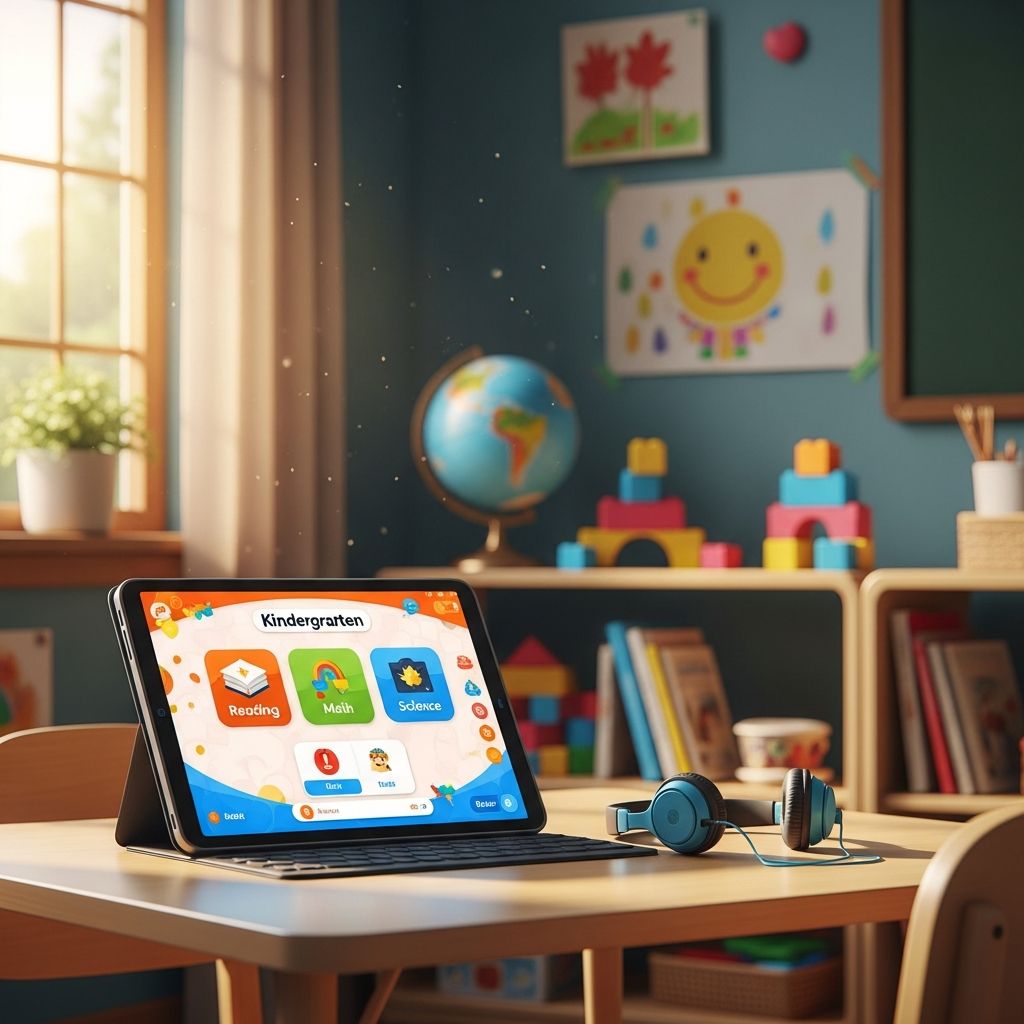
Virtual kindergarten programs offer a flexible and engaging way to introduce young children to formal education, blending structured learning with play-based activities to build core competencies across multiple domains. These curricula emphasize foundational skills in literacy, mathematics, science, social studies, and arts, ensuring students develop academically while nurturing social-emotional growth.
Building Strong Foundations in Language and Literacy
Early literacy forms the cornerstone of kindergarten online curricula, focusing on phonemic awareness, vocabulary expansion, and reading comprehension. Children engage in daily activities that promote letter recognition, sound blending, and simple storytelling, laying the groundwork for fluent reading.
- Phonemic skills: Identifying initial, medial, and final sounds in words, along with rhyming and syllable counting.
- Reading practice: Exploring pre-decodable books and using context clues from illustrations to predict outcomes.
- Writing development: Practicing handwriting with proper formation of uppercase and lowercase letters, progressing to simple sentences.
Interactive digital tools, such as animated stories and virtual writing workshops, help students gain confidence as authors by creating personal narratives with beginnings, middles, and ends. Teachers guide learners in adding details to drawings and labels, fostering editing skills like spacing words and using punctuation.
Mastering Early Mathematics Concepts
Online math lessons in kindergarten prioritize number sense, spatial reasoning, and basic problem-solving through hands-on virtual manipulatives and games. Students count objects, recognize patterns, and understand concepts like more/less and addition/subtraction within 10.
| Math Strand | Key Skills | Activities |
|---|---|---|
| Number Sense | Counting to 100, ordinal numbers | Songs, clapping rhythms, counting games |
| Geometry & Measurement | Shapes, sizes, patterns | Sorting virtual objects, building patterns |
| Operations | Simple addition/subtraction | Acting out word problems with digital tools |
Lessons often follow a structured format: investigation through discussion, discovery via activities, and practice with real-world applications, ensuring retention and enjoyment.
Exploring Science Through Inquiry and Discovery
Virtual science curricula ignite curiosity by covering life, earth, and physical sciences with hands-on experiments adapted for online delivery, such as virtual labs and observation journals. Topics include the human body, weather patterns, living versus non-living things, and basic ecology.
- Human Body: Senses, nutrition, hygiene, and healthy habits.
- Earth & Space: Day/night cycles, moon phases, and weather changes.
- Living Things: Plant life cycles, animal growth (e.g., tadpole to frog), and basic needs.
Students form hypotheses, conduct safe digital simulations, and discuss findings, aligning with scientific method principles. Monthly themes integrate sensory exploration, teaching observation skills using tools like virtual magnifying glasses.
Fostering Social Studies Awareness
Kindergarten social studies online introduces community, culture, geography, and civics through stories, virtual field trips, and discussions. Children learn about families, neighborhoods, holidays, and democratic values, promoting respect and responsibility.
Key themes include:
- Personal identity: Families, uniqueness, and self-expression.
- Community helpers: Roles in society and civic duties.
- Cultural diversity: Traditions, maps, and famous historical figures.
- Patriotism: Songs and stories about national symbols.
Activities encourage group discussions on topics like waste reduction and following rules, building social competency.
Nurturing Social-Emotional and Physical Development
Beyond academics, online programs emphasize self-regulation, empathy, and motor skills. Daily routines include circle time for sharing, turn-taking, and emotional check-ins, supporting transitions to formal schooling.
- Social skills: Raising hands, active listening, and collaborative editing.
- Emotional growth: Recognizing feelings, building confidence through authorship.
- Physical activities: Virtual yoga, fine motor exercises like tracing, and gross motor games.
Play-based elements ensure balanced development, with flexible pacing for individual needs.
Integrating Arts, Music, and STEAM
Creativity thrives in online kindergarten through STEAM (Science, Technology, Engineering, Arts, Mathematics) integration. Art projects, music rhymes, and dramatic play enhance learning across subjects.
Examples include composing simple rhythms, creating digital collages tied to science themes, and engineering basic structures with virtual blocks. These activities boost fine motor skills and self-expression.
Daily Structure and Flexibility in Virtual Classrooms
A typical online kindergarten day blends teacher-led lessons, independent tasks, and family involvement. Lessons rotate across domains weekly, with pacing guides for educators or parents.
- Morning circle: Songs, weather checks, calendar skills.
- Core subjects: 30-45 minute interactive sessions.
- Afternoon projects: Hands-on extensions and reflection.
Programs meet standards from organizations like NAEYC, ensuring rigorous yet developmentally appropriate content[10].
Benefits of Online Kindergarten for Families
Virtual curricula provide personalized pacing, accessibility for diverse learners, and progress tracking via digital portfolios. Parents partner in reinforcement activities, strengthening home-school connections. Research supports play-infused structures for long-term success[10].
Frequently Asked Questions (FAQs)
What age group is online kindergarten for?
Typically 5-year-olds entering formal education, with flexibility for advanced 4-year-olds or remedial 6-year-olds.
How do online programs handle socialization?
Through live video sessions, group projects, and virtual playdates emphasizing collaboration and empathy.
Are materials provided?
Most include digital access and printable workbooks; some ship physical kits.
Does it prepare for first grade?
Yes, exceeding standards in literacy, math, and critical thinking.
Can parents homeschool with these curricula?
Absolutely, with guided lesson plans and support resources for at-home implementation.
Choosing an online kindergarten curriculum empowers young learners with essential skills in a supportive digital environment, setting the stage for lifelong education.
References
- The Green Vale School Kindergarten Curriculum: Program Outline — Green Vale School. 2023. https://www.greenvaleschool.org/uploaded/files/Academics/Kindergarten_Curriculum_Program_Outline.pdf
- Developmental Kindergarten Curriculum — Chancy and Bruce. 2024. https://chancyandbruce.com/developmental-kindergarten-curriculum
- Kindergarten Curriculum — The Preschool Place & Kindergarten. 2024. https://preschoolplace.com/kindergarten-curriculum/
- Curriculum Guide — The Center for Early Education. 2024. https://www.centerforearlyeducation.org/academics/curriculum-guide
- Complete Kindergarten Curriculum — Escondido Union School District. 2021. https://resources.finalsite.net/images/v1616104460/eusdnet/jflvcrbfigoxmikpvuab/kindercurriculum.pdf
- DAP: Planning and Implementing an Engaging Curriculum — NAEYC. 2020. https://www.naeyc.org/resources/position-statements/dap/planning-curriculum

Medha Deb is an editor with a master's degree in Applied Linguistics from the University of Hyderabad. She believes that her qualification has helped her develop a deep understanding of language and its application in various contexts. Medha specializes in the areas of beauty, health, sports, and wellness and is committed to ensuring that the content on the website is…