
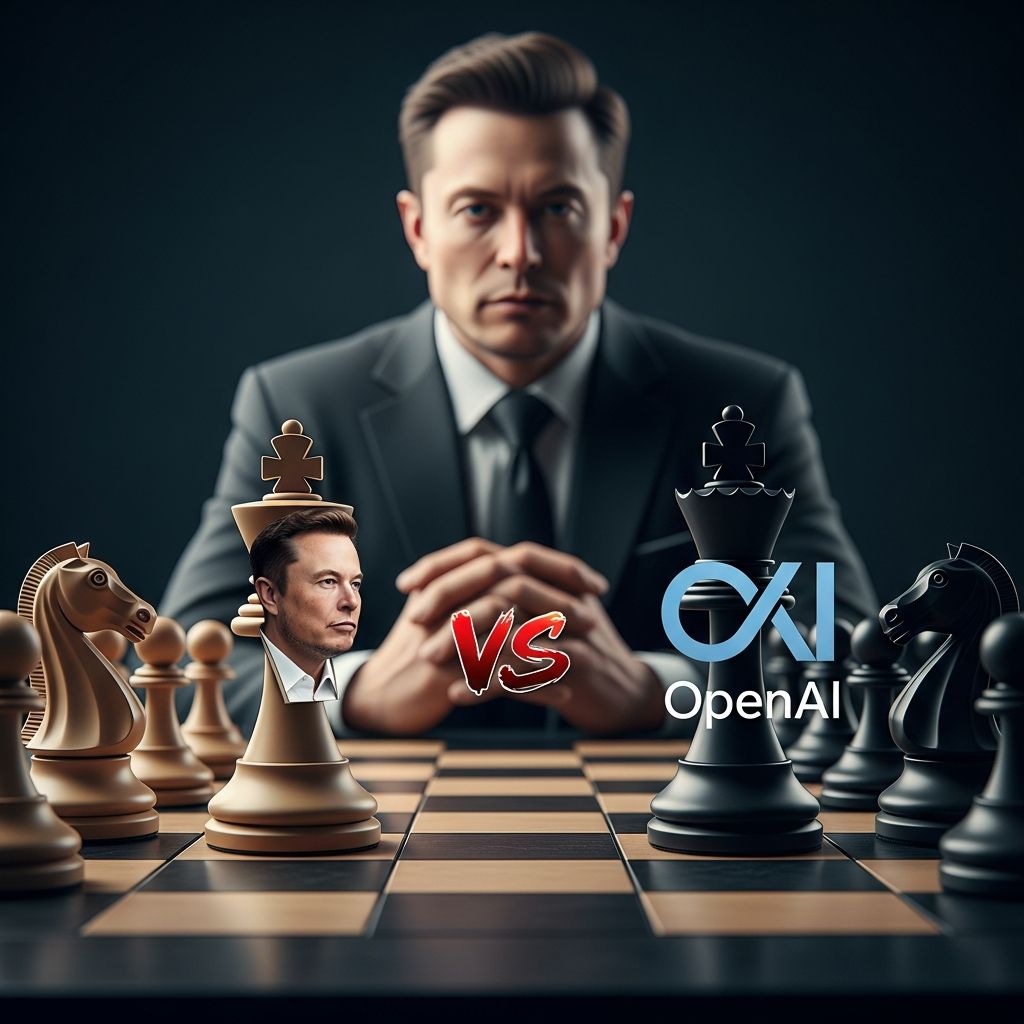
One of the most consequential corporate dramas in recent memory is unfolding not around social media or e-commerce, but around artificial intelligence. At the center of it is OpenAI, a research lab originally founded as a charity, and Elon Musk’s multibillion-dollar offer to buy out its nonprofit controller. The outcome could reshape how powerful AI systems are governed, who profits from them, and how seriously companies must take their stated promise to serve the public good.
This article unpacks the unusual structure of OpenAI, Musk’s $97.4 billion proposal to its nonprofit foundation, the legal and ethical stakes of that offer, and what experts like nonprofit law scholar Rose Chan Loui see as the key questions regulators and the courts must answer.
From Idealistic Lab to AI Powerhouse
To understand why Musk’s bid is so disruptive, it helps to review how OpenAI ended up with such a complicated legal structure and massive commercial value.
OpenAI’s original charitable vision
OpenAI was founded in 2015 with a bold nonprofit mission: to develop artificial general intelligence (AGI) in a way that would benefit all of humanity, rather than a narrow set of shareholders. In practice, that meant:
- Setting up a nonprofit organization with a public-interest mission, not a profit-maximizing charter.
- Raising philanthropic donations from wealthy founders and early backers, including Elon Musk.
- Framing AGI as a technology so powerful that its deployment must be guided by ethics, safety, and global welfare, not only revenue growth.
Under U.S. law, such a nonprofit must operate for recognized charitable purposes (such as scientific research or public benefit) and cannot distribute profits to private individuals, except as reasonable compensation for services.
The pivot to a for-profit subsidiary
As the costs of AI research soared—driven by enormous computational demands and competition from tech giants—OpenAI moved to a hybrid structure:
- The original nonprofit foundation remained in place and retained control.
- A separate for-profit company (now OpenAI Global LLC and related entities) was created to attract outside investment and issue equity to employees and backers.
- Contractual and governance arrangements gave the nonprofit the final say on the for-profit’s most critical decisions, including adherence to the charitable mission.
This approach, often called a “nonprofit-controlled for-profit,” is rare but not unheard of in sectors like healthcare, media, and education. The idea is that philanthropic trustees constrain profit-seeking behavior while still allowing the operating company to raise capital and compete.
A Nonprofit With “Priceless” Control
The key to the controversy is the nonprofit foundation’s controlling stake in OpenAI’s for-profit arm. It does not simply hold shares as a regular investor; it wields structural power over the direction of the entire enterprise.
| Feature | OpenAI Nonprofit Foundation | OpenAI For-profit Company |
|---|---|---|
| Primary purpose | Charitable mission: ensure AI benefits humanity | Develop and commercialize AI products and services |
| Legal duties | Fiduciary duty to charitable beneficiaries and the mission | Duty to investors and contractual obligations |
| Control rights | Board appoints or oversees the for-profit board, can block major changes | Runs day-to-day operations, negotiates deals, hires staff |
| Financial upside | Can receive substantial economic value, but must use it for charitable purposes | Investors can receive capped returns; employees receive equity |
As Rose Chan Loui and other nonprofit law experts note, this kind of arrangement gives the charity an asset that is enormously valuable but hard to price: the ability to steer a leading AI lab in the public interest. Its value is not just financial; it is also regulatory and moral, because many donors and regulators expect OpenAI to honor the original mission.
Why OpenAI Wants to Restructure
In late 2024, OpenAI announced plans to loosen or end nonprofit control, shifting the heart of the operation more fully into the for-profit entity. The company argued that this was necessary to continue competing for capital and talent in an arms race where rivals have access to hundreds of billions of dollars.
Stated motivations
From the for-profit’s perspective, the nonprofit’s veto power creates several constraints:
- Major strategic shifts and fundraising deals must satisfy both mission-oriented trustees and commercial partners.
- Some investors may be reluctant to commit capital without traditional corporate control and clear exit options.
- Executives may want faster decision-making in the race to develop frontier models and AGI.
In public communications, OpenAI has framed the restructuring as essential for scaling up compute, research, and global deployment, while still claiming to care about safety and shared benefit.
Legal tension with the original mission
The problem is that the nonprofit board cannot simply relinquish control because it is convenient. Under U.S. charity law and state oversight, the board has a duty to ensure that any restructuring better advances the charitable mission than the status quo. State attorneys general, who supervise charities, are empowered to investigate transactions that might divert charitable assets to private parties or undermine the stated public purpose.
This sets the stage for the confrontation that made headlines: Elon Musk’s massive, unsolicited offer for the nonprofit’s stake.
Elon Musk’s $97.4 Billion Offer
In early 2025, Musk made an astonishing proposal: he would pay roughly $97.4 billion for the nonprofit foundation’s interest in the OpenAI for-profit structure and, he claimed, allow the nonprofit to retain a charitable mission focused on humanity’s benefit. This offer arrived amid ongoing litigation between Musk and OpenAI over alleged mission drift and contractual promises from OpenAI’s early days.
Why the offer is hard to ignore
For a normal corporation, a takeover bid of this size would be remarkable but not necessarily existential. Here, the bid has additional force because:
- The nonprofit is already exploring a transaction to monetize or give up its control rights.
- By signaling a willingness to pay nearly $100 billion, Musk arguably sets a valuation floor that other bidders and regulators can reference.
- The nonprofit’s board must consider whether accepting Musk’s offer would better serve its mission than the internal restructuring proposed by OpenAI’s current leadership.
According to experts interviewed in public forums, if the nonprofit is willing to accept a lower-value internal deal that weakens its mission without seriously evaluating higher, mission-aligned alternatives, state attorneys general could challenge the transaction as a misuse of charitable assets.
Possible objections to Musk’s bid
At the same time, the board is not required to accept any high-priced offer automatically. Plausible grounds for rejecting Musk’s bid include:
- Financing doubts: questioning whether Musk can definitively secure and maintain the promised capital at the stated valuation.
- Antitrust concerns: regulators might object to giving control of another major AI lab to a business leader who already owns xAI and several other large technology platforms.
- Governance quality: Musk might insist on board members or governance terms that, in the nonprofit’s view, would compromise safety, transparency, or the mission.
- Strategic risk: the board could assess that Musk’s approach to AI development is too aggressive or dismissive of safety and global equity.
For any of these objections to hold up under scrutiny, the board would need careful analysis, documentation, and arguably independent expert advice, given the stakes and visibility of the decision.
How State Regulators May Weigh In
In the United States, state attorneys general (AGs) act as guardians of charities and have broad authority to review major restructurings, asset transfers, or mission changes. For an entity like OpenAI’s nonprofit foundation, this oversight could include:
- Evaluating whether selling control to a for-profit (whether Musk’s or another buyer’s) undervalues the charity’s interest.
- Assessing whether the new mission or structure remains within legally recognized charitable purposes.
- Challenging any transaction that appears to enrich private parties at the expense of the public benefit the charity is supposed to serve.
Legal scholarship emphasizes that charitable assets are held in something like a perpetual trust for the public; trustees and directors are stewards, not owners. If AGs determine that OpenAI’s nonprofit is effectively selling its control position too cheaply, or surrendering its watchdog role without sufficient protections, they could seek to block or condition the deal.
Key Legal Questions at Stake
Legal observers highlight a few central issues that courts and regulators may ultimately have to decide.
1. Has OpenAI abandoned its charitable mission?
Elon Musk’s lawsuit accuses OpenAI of drifting away from its founding mission and using charitable assets to enrich private investors and executives. A recent court order in related litigation suggested there is at least a plausible argument that early donors like Musk expected OpenAI to remain dedicated to a charitable mission, not to become a standard profit-maximizing corporation.
If a court finds that OpenAI’s leadership deliberately circumvented or undermined this mission in structuring the for-profit arm, regulators could impose remedies ranging from governance changes to limits on profit extraction.
2. Can a nonprofit redefine its purpose for convenience?
Another core issue is whether a charity may substantially modify or dilute its purpose in order to chase more investment or speed. Under doctrines such as cy-près, a charitable organization can sometimes update its mission if the original purpose has become impossible or impracticable to achieve. But courts typically demand strong evidence that:
- The old mission truly cannot be accomplished under current constraints.
- The new mission is as close as feasible to the original intent of donors and founders.
Simply arguing that the nonprofit’s oversight slows down AGI development or complicates fundraising may not satisfy this standard, especially when the organization has already attracted billions in investment under the existing model.
3. How should “priceless” control be valued?
Perhaps the thorniest question is how to put a price on the nonprofit’s unique control rights. Unlike regular equity, this control:
- Shapes regulatory risk, because regulators may be more tolerant of a mission-oriented overseer than of unfettered profit-seeking.
- Influences public trust, which can affect partnerships, research collaborations, and global policy discussions.
- Has long-term implications that are difficult to model, especially in a rapidly changing AI landscape.
Yet any sale or restructuring must assign some monetary value to this control. Musk’s bid, whatever its flaws, gives regulators and analysts a concrete benchmark to compare against internal deals that might compensate the nonprofit at a far lower level.
Implications for AI Governance and Public Trust
The OpenAI–Musk conflict is not just corporate theater; it is a test case for how society will govern transformative technologies whose development is concentrated in a few powerful firms.
Signals to other AI labs and philanthropies
How regulators and courts respond will likely influence the design of future AI organizations. Some possible ripple effects include:
- More cautious hybrid structures: philanthropies may rethink creating for-profit subsidiaries if regulators appear skeptical of mission drift.
- Stronger mission enforcement: founders who promise public-benefit oversight may face stricter expectations to document and honor those commitments.
- Investor expectations: venture capital and corporate investors may demand clearer rules of the road when working with nonprofit-controlled startups.
The role of public institutions
Meanwhile, governments around the world are racing to establish AI safety and transparency regulations. Agencies such as the European Commission, the U.S. Federal Trade Commission, and national data protection authorities are increasingly scrutinizing AI firms for issues ranging from competition and consumer protection to privacy and discrimination.
OpenAI’s case highlights a complementary dimension: charity and corporate law as tools for shaping AI governance. Even before new AI-specific rules fully mature, existing legal frameworks for nonprofits, fiduciary duty, and consumer protection can significantly constrain how AI labs behave.
Practical Lessons for Mission-Driven Tech
For other mission-driven technology organizations, the OpenAI saga offers concrete lessons:
- Align governance with mission early: once billions of dollars and powerful corporate partners are involved, changing course without legal disputes becomes far harder.
- Be explicit with donors and investors: ambiguous promises about public benefit, profit caps, or oversight bodies can later fuel litigation and regulatory intervention.
- Anticipate regulator scrutiny: any plan to privatize or monetize a charity’s control of a valuable asset should be stress-tested against state charity law and potential public backlash.
- Plan for scale and safety together: if a mission requires enormous resources, its governance model must be designed from the outset to accommodate both capital and long-term public obligations.
Frequently Asked Questions (FAQs)
Q: Why is Elon Musk’s offer such a big deal for OpenAI?
Musk’s $97.4 billion bid directly targets the nonprofit foundation that controls OpenAI’s for-profit operations. Because the charity is already considering restructuring and monetizing that control, its board has a legal duty to assess whether his offer—or competing options—better serves its mission than the internal deal proposed by OpenAI’s current leadership.
Q: Can the nonprofit legally ignore Musk’s offer?
The nonprofit board does not have to accept any particular bid, but it also cannot arbitrarily disregard serious offers that might advance the mission more effectively. If it rejects Musk’s bid, it must have well-founded reasons—such as governance concerns, antitrust risk, or doubts about his commitment to the mission—that can withstand scrutiny from regulators and, potentially, courts.
Q: What role do state attorneys general play?
State attorneys general oversee charities and can investigate or challenge major transactions that appear to divert charitable assets to private use or undermine the organization’s public purpose. In OpenAI’s case, they may review whether any restructuring or sale of control fairly values the nonprofit’s interests and preserves a legitimate charitable mission.
Q: Does this dispute affect how safe OpenAI’s AI systems are?
Indirectly, yes. The nonprofit’s control rights were designed to ensure that OpenAI’s for-profit operations could be held to safety-oriented commitments and a broad humanitarian mission. Weakening or selling those rights—whether to Musk or another buyer—could alter incentives around how quickly to deploy powerful models and how much to invest in safety and alignment.
Q: What does this mean for the future of AI governance globally?
The OpenAI–Musk conflict is likely to become a reference case for how law and regulation can constrain or shape AI labs that began with philanthropic goals but grew into major commercial actors. Policymakers, philanthropists, and corporate leaders worldwide will watch how courts and regulators balance innovation, profit, and the public interest in this high-stakes setting.
References
- Emergency pod: Elon tries to crash OpenAI’s party (with Rose Chan Loui) — 80,000 Hours Podcast. 2025-02-10. https://80000hours.org/podcast/episodes/rose-chan-loui-elon-musk-open-ai/
- Profit or Purpose? OpenAI’s $300 Billion Question, with Rose Chan Loui — Capitalisn’t Podcast, University of Chicago Booth School of Business. 2025-03-07. https://www.capitalisnt.com/episodes/profit-or-purpose-openais-300-billion-question-with-rose-chan-loui
- Judge plants a legal time bomb under OpenAI (with Rose Chan Loui) — 80,000 Hours Podcast. 2025-04-23. https://80000hours.org/podcast/episodes/rose-chan-loui-elon-musk-openai-case-update/
- European Commission outlines AI safety and transparency rules under the AI Act — European Commission. 2024-03-13. https://digital-strategy.ec.europa.eu/en/policies/european-approach-artificial-intelligence
- Generative AI and the FTC: the law already applies — U.S. Federal Trade Commission. 2023-07-13. https://www.ftc.gov/business-guidance/blog/2023/07/generative-ai-ftc-law-already-applies
- Rose Chan Loui appears on CNBC to discuss Elon Musk and OpenAI — UCLA School of Law. 2025-02-20. https://law.ucla.edu/node/136942
- OpenAI’s structure raises questions about protecting its charitable mission — Daily Journal (Op-Ed by nonprofit law academics). 2024-06-10. https://www.dailyjournal.com/articles/380443-openai-s-structure-raises-questions-about-protecting-its-charitable-mission

Medha Deb is an editor with a master's degree in Applied Linguistics from the University of Hyderabad. She believes that her qualification has helped her develop a deep understanding of language and its application in various contexts. Medha specializes in the areas of beauty, health, sports, and wellness and is committed to ensuring that the content on the website is…