
Understanding Paper Brightness: The Foundation of Print Quality
When you hold a printed document in your hands, the clarity of text and the vibrancy of images depend on numerous factors, with one critical element standing out: paper brightness. Paper brightness refers to the ability of paper to reflect light from its surface, a characteristic that fundamentally influences how printed materials appear to the human eye. The brighter a sheet of paper, the more vivid and crisp your letters, images, and colors become, making brightness an essential consideration for anyone involved in printing, publishing, or document production.
Understanding paper brightness goes beyond simply selecting a white sheet from a stack. Brightness is a measurable, quantifiable property that directly affects the professional appearance of printed materials, the legibility of text, and the overall aesthetic quality of finished products. Whether you’re producing marketing collateral, business documents, or high-quality publications, comprehending how brightness works will help you make informed decisions about paper selection and achieve the desired visual impact.
The Science Behind Paper Brightness Measurements
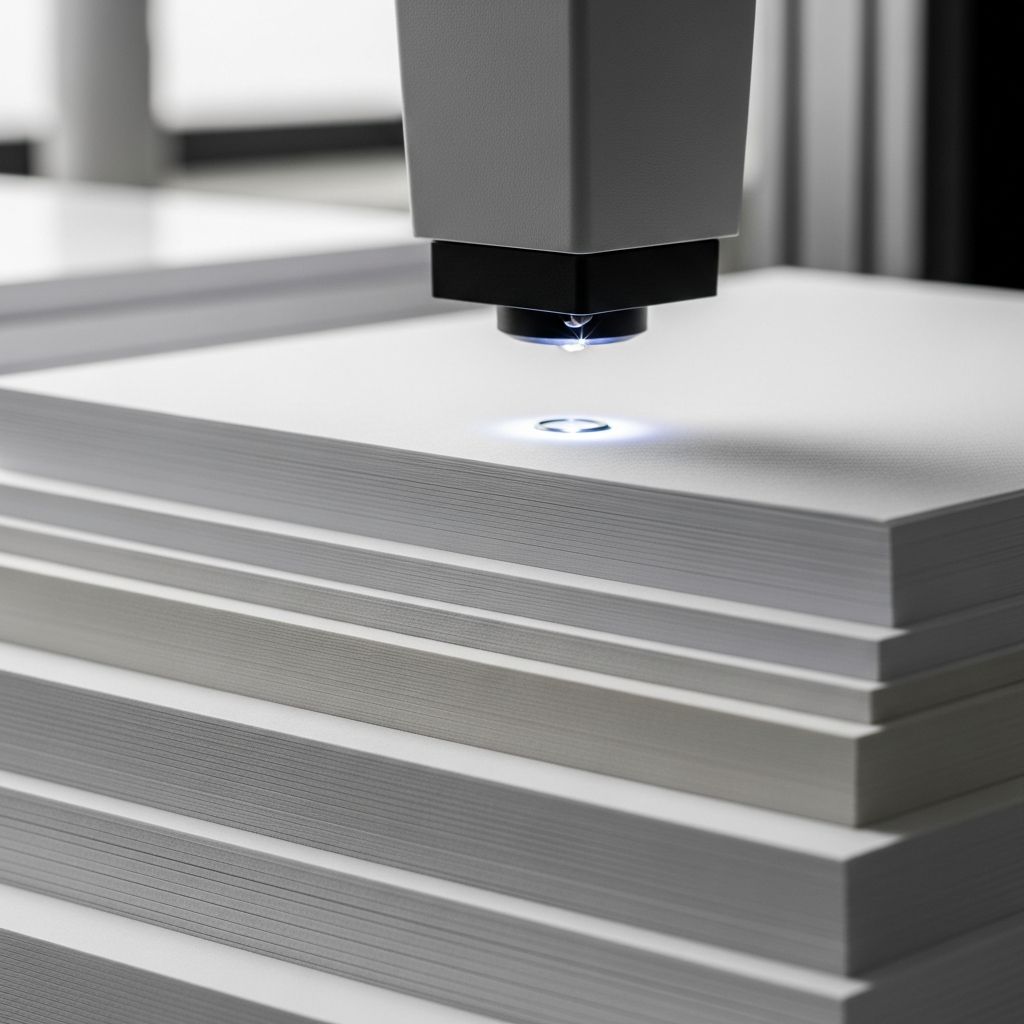
Paper brightness is measured on a standardized scale from 0 to 100, with higher values indicating greater light reflectivity. The measurement methodology is rooted in optical science and uses a specific wavelength of blue light to determine how much light a sheet of paper reflects back to the observer. The test procedure involves directing a light beam measuring 457 nanometers—a wavelength in the blue spectrum—onto the paper’s surface at a 45-degree angle. This particular wavelength is chosen because the human eye exhibits heightened sensitivity to variations in blue and yellow light, making it an ideal benchmark for assessing perceived brightness.
During the measurement process, specialized equipment calibrated to detect light reflectivity captures the amount of light bouncing back from the paper’s surface. The collected data is then plotted against a reference standard—magnesium oxide, which is defined as 100% bright—to establish the paper’s brightness percentage. This standardized approach ensures consistency across the paper industry, allowing manufacturers, printers, and consumers to reliably compare brightness ratings between different paper products and suppliers.
A fascinating aspect of brightness perception is that the human eye cannot distinguish differences of less than two points on the brightness scale. This means that a paper rated at 92 brightness versus 94 brightness would appear virtually identical to most observers. However, more significant jumps in brightness values produce increasingly noticeable visual changes, particularly at the higher end of the scale where small incremental increases create more dramatic perceptual differences than comparable increases at lower brightness levels.
Brightness Versus Whiteness: Clarifying the Distinction
A common source of confusion in the paper industry involves the terms “brightness” and “whiteness,” which are frequently used interchangeably despite having distinct meanings. While brightness focuses exclusively on reflectivity at a single blue wavelength (457 nm), whiteness encompasses the relative balance of light reflected across the entire visible spectrum, ranging from approximately 380 nanometers to 720 nanometers.
This distinction becomes practically important when evaluating paper quality. A sheet with high brightness readings might still exhibit perceivable color tints because brightness measurement captures only blue light reflectivity. Whiteness, by contrast, provides a comprehensive picture of how uniformly the paper reflects all colors within the visible light spectrum. High-whiteness paper demonstrates smooth, consistent reflection across wavelengths, while low-whiteness paper shows variations that can produce noticeable color shifts, even when brightness values appear adequate.
The CIE Whiteness Index represents the most widely adopted industry standard for measuring whiteness, providing a single numerical value that references the relative degree of near-white materials under specific, controlled lighting conditions. Understanding this distinction allows professionals to select papers that not only reflect abundant light but also maintain color accuracy and visual consistency across different applications and lighting environments.
Standard Paper Brightness Classifications
Different categories of paper exhibit distinct brightness ranges based on their intended applications, manufacturing processes, and quality grades. Understanding these standard classifications helps explain why certain papers feel premium while others seem duller to the touch.
Office and Standard Copy Paper typically occupies the 80 to 100 brightness range, with most everyday printer paper settling comfortably between 85 and 92 brightness. Standard office copy paper commonly measures around 92 brightness, representing a balance between visual appeal and cost efficiency. This brightness level proves sufficient for routine business correspondence, internal documents, and everyday printing needs.
Premium and Professional-Grade Papers often boast brightness values exceeding 90, with top-tier options reaching 96 to 98 brightness levels. These elevated brightness ratings yield notably crisper and more dynamic prints, making them preferable for color-sensitive applications including photography reproduction, graphic design, and marketing materials where visual impact directly influences purchasing decisions or brand perception.
Specialty Papers vary considerably in their brightness ratings depending on their composition and purpose. Coated offset papers designed for high-quality printing applications display brightness ranges from approximately 69% to 93% depending on the specific grade and finish. Uncoated offset papers generally achieve higher brightness levels, ranging from 78% to 96%, reflecting their different manufacturing specifications and intended uses.
Brightness Categories and Their Characteristics
- Soft White (92 Bright): Delivers easy readability and performs excellently for black and white prints, offering a slightly warmer tone than brighter alternatives
- True White (96 Bright): Represents an ideal choice for color printing applications, including natural images and skin tones, providing balanced color reproduction
- Bright White (98+ Bright): Optimizes intense color saturation and produces maximum contrast for text and graphics, making colors and images truly stand out
- Ultra-Bright (99-100): Represents the extreme end of the brightness spectrum, typically reserved for specialized applications requiring maximum luminosity and impact
The Role of Optical Brightening Agents
Many modern papers achieve their impressive brightness ratings through the incorporation of optical brightening agents (OBAs), specialized chemical compounds that enhance a paper’s ability to reflect light. These substances work by absorbing ultraviolet light energy and re-emitting it as visible blue light, creating an optical illusion of increased brightness. Papers containing optical brighteners will display noticeably higher brightness percentages compared to chemically identical papers without these additives.
The presence and concentration of OBAs significantly influence how paper appears under different lighting conditions. In outdoor settings, papers with higher OBA concentrations appear considerably brighter than they do indoors, since ultraviolet light is abundant in natural sunlight. Conversely, papers with lower OBA levels tend to appear whiter indoors while looking duller when viewed in outdoor lighting conditions. Understanding this distinction proves valuable for applications where the finished product will be viewed under varying light sources, such as marketing materials that may be viewed both in offices and outdoors.
How Paper Brightness Impacts Print Quality and Visual Performance
The practical implications of paper brightness extend far beyond laboratory measurements. Higher paper brightness directly enhances contrast between printed content and the paper surface, making text and graphics visually pop, resulting in improved legibility and visual impact. This effect proves especially important for documents containing detailed imagery, such as professional photographs, marketing brochures, and fine art reproductions, where visual fidelity significantly influences viewer perception.
When designing printed materials, professionals consistently recognize that enhanced paper brightness amplifies the effectiveness of color printing. Darker, less bright papers absorb more light, reducing color vibrancy and making printed images appear muted or dull. Bright papers, by contrast, maximize color saturation and create the impression of greater detail and clarity, even when using identical ink formulations and printing techniques.
The perceptual difference becomes particularly apparent when comparing side-by-side samples. A marketing brochure printed on 92-brightness paper will appear noticeably sharper and more professional than an identical design printed on 80-brightness stock. This optical difference directly influences viewer perception of quality, with brighter papers consistently conveying impressions of premium quality, professionalism, and attention to detail.
Industrial Applications and Monitoring Brightness Consistency
In paper manufacturing facilities, brightness monitoring serves multiple critical functions beyond simple quality control. Brightness tests primarily evaluate bleaching efficiency during pulp processing, with higher brightness values indicating more complete removal of lignin and other light-absorbing compounds. Lignin, a natural adhesive present in wood fibers, imparts a yellowish tint that reduces blue light reflectivity, so thorough bleaching processes directly correlate with elevated brightness measurements.
Additionally, brightness monitoring helps track paper aging and degradation over time. Paper naturally yellows during storage and use, progressively reducing blue light reflectivity as chemical changes accumulate. By establishing baseline brightness measurements and tracking changes over months or years, manufacturers and archivists can assess paper longevity and predict when documents may begin showing visible signs of age-related deterioration.
For production facilities, consistent brightness monitoring offers significant operational benefits. By detecting brightness variations early in the manufacturing process, quality control personnel can implement rapid adjustments to bleaching parameters, chemical additions, or pulp composition, minimizing waste and maintaining efficiency. This proactive approach to quality management directly impacts the bottom line through reduced material waste and fewer rejected batches.
Selecting Paper Brightness for Specific Applications
Different printing and document production scenarios call for different brightness levels, and understanding these distinctions leads to optimal results and appropriate cost-benefit decisions.
For Business Documents and Correspondence: Standard brightness levels between 85 and 92 provide an appropriate balance of professional appearance and economic efficiency. These brightness ratings offer sufficient contrast for clear text reproduction without the premium pricing associated with ultra-bright papers. Daily business letters, internal memos, and routine correspondence benefit from this mid-range brightness approach.
For Marketing and Promotional Materials: Brightness ratings of 92 and above significantly enhance the visual impact of colors and graphics, making marketing collateral more attention-grabbing and memorable. Brochures, flyers, and promotional postcards warrant investment in higher-brightness papers to maximize the effectiveness of design investments and printing expenses.
For Photography and Fine Art Reproduction: Premium papers with brightness ratings of 96 or higher ensure that photographic reproductions achieve maximum color accuracy and detail clarity. These applications justify the premium pricing of ultra-bright papers, as the improved visual quality directly influences the perceived value of the reproduced artwork.
For Long-Term Archival Documents: While brightness alone doesn’t determine archival longevity, papers with moderate brightness ratings and minimal optical brightening agents often provide superior long-term stability compared to ultra-bright papers that may yellow more rapidly due to higher OBA concentrations.
Practical Considerations for Brightness Selection
When selecting paper for specific projects, several practical factors merit consideration beyond brightness specifications alone:
- Verify that brightness measurements use standardized TAPPI (Technical Association of the Pulp and Paper Industry) methodology to ensure accurate comparisons between different suppliers
- Consider the intended viewing environment—papers viewed primarily outdoors benefit from lower OBA concentrations, while office-viewed documents gain from higher OBA additions
- Balance brightness with other paper characteristics including weight, finish, texture, and cost to optimize overall quality and budget efficiency
- Test sample sheets under actual lighting conditions before committing to large print runs, as perceived brightness varies significantly based on environmental illumination
- Remember that brightness differences of fewer than two points are imperceptible to most observers, allowing for flexibility in paper selection without noticeable quality degradation
The Future of Paper Brightness Standards
As printing technologies evolve and environmental sustainability becomes increasingly important, the paper industry continues refining brightness measurement methodologies and exploring alternatives to traditional optical brightening agents. Manufacturers increasingly investigate plant-based and eco-friendly brightening compounds that deliver comparable optical performance while reducing environmental impact. These innovations promise to maintain the visual quality advantages that brightness provides while supporting broader sustainability objectives.
Frequently Asked Questions
Q: What is the difference between brightness and opacity in paper?
A: Brightness measures light reflection from the paper surface, while opacity refers to the paper’s ability to prevent light from passing through to the opposite side. Both properties independently affect print quality, with opacity preventing show-through in double-sided printing and brightness enhancing color vibrancy and contrast.
Q: Can I visually distinguish between papers rated 90 and 92 brightness?
A: Unlikely. The human eye cannot reliably detect brightness differences smaller than two points on the 100-point scale, so 90 and 92 brightness papers would appear virtually identical to most observers.
Q: Why is blue light wavelength specifically used for brightness measurement?
A: The human eye exhibits heightened sensitivity to variations in blue and yellow light compared to other wavelengths. Measuring reflectivity at 457 nanometers (blue spectrum) effectively captures how people perceive brightness variations in real-world viewing conditions.
Q: Does higher brightness always mean better paper quality?
A: Not necessarily. Brightness is one quality dimension; whiteness, texture, weight, and finish also significantly influence overall paper quality and suitability for specific applications. Ultra-bright paper may be inappropriate for certain specialized uses despite its high brightness rating.
Q: How do optical brightening agents affect paper longevity?
A: Papers with high OBA concentrations may yellow more rapidly over time compared to papers with lower OBA levels, particularly if exposed to ultraviolet light. For archival applications requiring extended document preservation, papers with moderate brightness and minimal optical brighteners often provide superior long-term stability.
References
- Paper Brightness Explained — Red River Paper. Accessed April 2026. https://www.redrivercatalog.com/infocenter/brightness.html
- Paper Brightness vs Whiteness: What’s the Difference? — Golden Paper Group. Accessed April 2026. https://www.goldenpapergroup.com/blog/paper-brightness-vs-whiteness-whats-the-difference.html
- Understanding Paper Brightness: A Key to Superior Quality — Datacolor Business Solutions. Accessed April 2026. https://www.datacolor.com/business-solutions/blog/understanding-paper-brightness-a-key-to-superior-quality/
- Paper 101: Paper Brightness, Whiteness, and Opacity — WCP Solutions. Accessed April 2026. https://www.wcpsolutions.com/news/paper-101-paper-brightness-whiteness-and-opacity/
- Understanding Paper Brightness — Holland Litho. Accessed April 2026. https://www.hollandlitho.com/understanding_paper_brightness.html
- Understanding Paper Brightness — Quill.com. Accessed April 2026. https://www.quill.com/content/index/xerox-paper/pdfs/Quill-UnderstandingBrightnessFlyer.pdf
- Understanding Paper Weight and Brightness — Staples.com. Accessed April 2026. https://www.staples.com/sbd/cre/products/perm/merch020622_paper_buying

- Integrated M.A. in Applied Linguistics, University of Hyderabad
- 5+ years in editorial, instructional, SEO, and research-based writing
Sneha is a relationships and lifestyle writer with a strong foundation in applied linguistics and certified training in relationship coaching. She brings over five years of writing experience to theskillvault, crafting thoughtful, research-driven content that empowers readers to build healthier relationships, boost emotional well-being, and embrace holistic living. Her writing and insights reflect the belief that beauty, happiness, and wellness…