
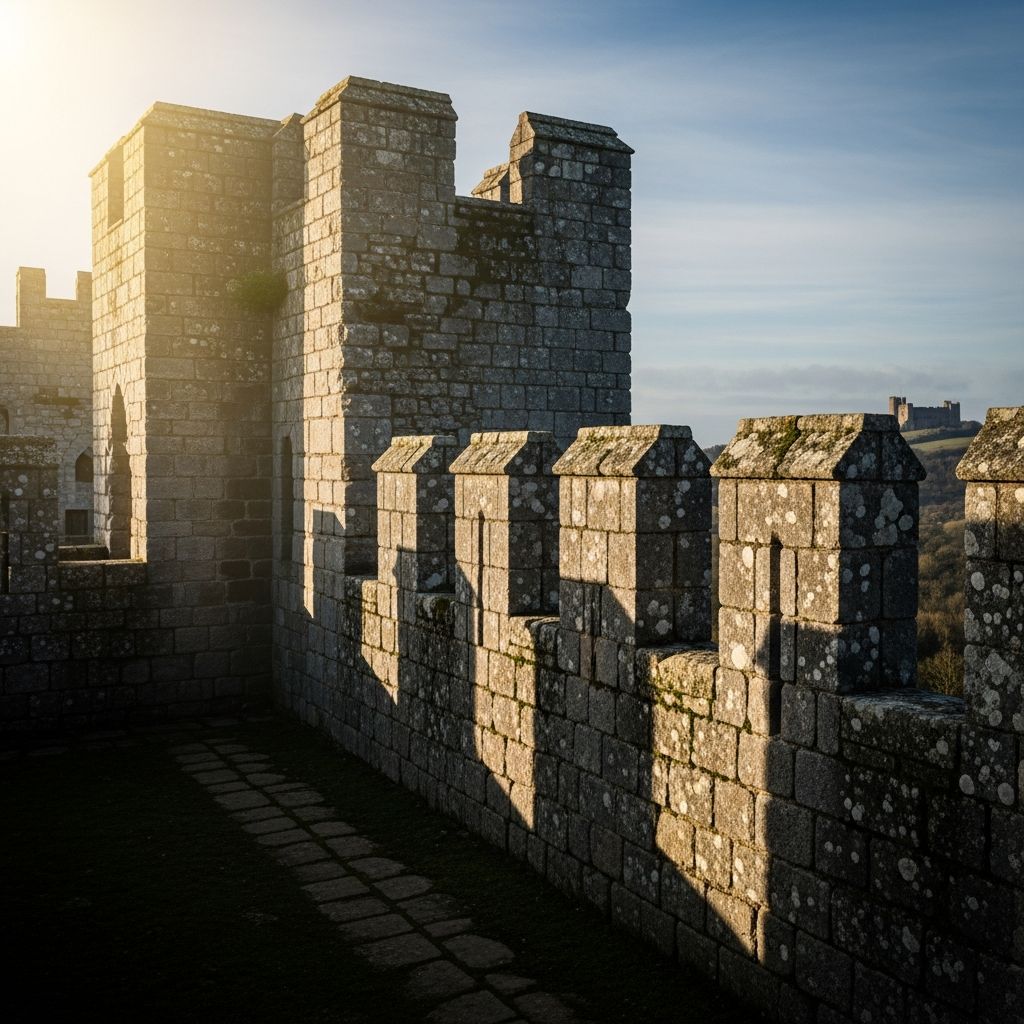
Throughout history, architects and builders have crafted elevated barriers to shield structures from harm while enhancing their visual appeal. Parapets and battlements stand as timeless examples of such ingenuity, evolving from practical fortifications to elegant design staples. These features not only protected warriors in ancient times but now safeguard modern rooftops and balconies, blending function with form in seamless harmony.
Defining the Essentials: Parapet Fundamentals
A **parapet** serves as a low wall rising above the roofline, edge of a bridge, or balcony perimeter. Typically reaching waist to chest height, it prevents accidental falls and shields occupants from wind or debris. Unlike full walls, parapets maintain open views, making them ideal for observation decks or terraces.
In structural terms, parapets distribute loads effectively, often constructed from brick, concrete, stone, or metal. Their height varies by application: residential versions might stand 42 inches tall per safety codes, while industrial ones exceed this for added security. Modern innovations include glass panels for transparency or perforated designs for ventilation.
- Key benefits: Fall prevention, weather protection, aesthetic enhancement.
- Common materials: Reinforced concrete for durability, glass for modern aesthetics.
- Placement: Roofs, bridges, balconies, stadiums.
The Warrior’s Edge: Anatomy of Battlements
A **battlement**, or crenellation, transforms a basic parapet into a tactical masterpiece. It features alternating high solid sections called **merlons** and low gaps known as **crenels** or embrasures. This design allowed medieval defenders to crouch behind merlons for cover while firing arrows through crenels at attackers below.
Merlons, the protective uprights, often pierced with narrow slits for precise aiming, stood tall enough to shield a soldier’s body. Crenels provided clear firing lines, typically rectangular or trapezoidal in shape. The rhythmic pattern of merlons and crenels created an iconic silhouette synonymous with castles and fortresses.
| Component | Description | Function |
|---|---|---|
| Merlon | Solid raised block | Protection for defenders |
| Crenel | Open gap between merlons | Firing aperture for weapons |
| Parapet Base | Continuous low wall | Structural support |
Ancient Origins: From Mesopotamia to Rome
The concept of battlements traces back millennia. Early examples appear in Chaldean and Egyptian fortifications, where notched parapets aided archers. Prehistoric Greek sites reveal similar indented walls, while Romans elevated the design with wooden pinnacles atop earthen ramparts known as aggeres.
These ancient battlements prioritized defense against sieges. Warriors exploited the crenels to launch projectiles, turning walls into active battlegrounds. Britannica notes their presence in diverse cultures, underscoring a universal need for elevated protection.
Medieval Mastery: Battlements in Castles
During the Middle Ages, battlements defined European castles. Built atop thick stone walls, they encircled walkways called allures, enabling patrols. From the 12th century, wooden hoardings—temporary overhanging galleries—complemented stone battlements, allowing defenders to drop stones or boiling oil on foes.
Arrow loops within merlons adapted to evolving weapons: narrow for longbows, wider for crossbows. By the 13th century, hinged wooden shutters covered crenels, opening only for volleys. This era’s battlements reached peak sophistication at sites like the Tower of London or Carisbrooke Castle.
- Defensive roles: Arrow fire, object dropping, surveillance.
- Innovations: Machicolations (floor openings above gates), shuttered crenels.
- Decline: Gunpowder rendered them obsolete by the Renaissance.
Beyond Fortresses: Parapets in Civic Life
Not confined to military use, parapets graced bridges, city walls, and religious structures. Roman aqueducts featured solid parapets for worker safety, while Gothic cathedrals employed decorative versions. In Islamic architecture, parapets with intricate muqarnas—honeycomb vaulting—adorned minarets and mosques.
Parapets also prevented rooftop erosion from weather, channeling water via scuppers. Their versatility extended to ships’ railings and theater balconies, proving indispensable across engineering domains.
Revival and Reinvention: 19th-Century Ornamentation
The Gothic Revival movement resurrected battlements as stylistic flourishes. Architects like Augustus Pugin incorporated crenellated parapets on Victorian buildings, evoking medieval grandeur without defensive intent. In America, structures like those in Indianapolis showcased battlements on commercial facades, with stepped merlons adding drama to parapets.
These ornamental battlements used brick or terra-cotta, often with crosses or geometric patterns. Residential examples appeared on chateaux-style homes, blending nostalgia with everyday utility.
Contemporary Applications: Safety Meets Style
Today’s parapets prioritize safety codes, such as IBC standards requiring 42-inch minimum heights on roofs. Battlements inspire perforated screens or railing motifs in high-rises. Glass parapets offer panoramic views in skyscrapers, while concrete versions fortify sea walls against erosion.
In stadiums and airports, curved parapets enhance sightlines. Sustainable designs incorporate green walls or solar-integrated panels. Design encyclopedias highlight battlements’ shift to neo-Gothic revivals, maintaining historical charm in urban contexts.
| Era | Primary Use | Materials | Examples |
|---|---|---|---|
| Ancient | Defense | Stone, wood | Roman aggeres |
| Medieval | Fortification | Masonry | Castles |
| Modern | Safety/Decoration | Concrete, glass | Bridges, high-rises |
Engineering Considerations for Builders
Constructing parapets demands attention to stability. They must resist wind uplift, seismic forces, and thermal expansion. Reinforcement bars in concrete parapets prevent cracking, while copings—sloped caps—shed water. In seismic zones, flexible joints accommodate movement.
Battlements add complexity: merlons require precise corbeling to avoid weak points. Waterproofing membranes beneath prevent leaks into main structures. Cost analyses favor prefabricated panels for large projects, reducing labor by up to 30%.
Global Variations: Cultural Twists on Tradition
Japanese castles feature ishigaki stone walls with angular parapets, optimized for musket fire. Ottoman fortresses blend battlements with bulbous merlons. In India, Mughal palaces display flared parapets called chhajja, doubling as sunshades.
These adaptations reflect local threats—earthquakes in Japan, monsoons in India—proving parapets’ adaptability across continents.
Frequently Asked Questions
What is the main difference between a parapet and a battlement?
A parapet is a solid low wall for general protection, while a battlement adds crenels and merlons specifically for defensive firing.
Are battlements still used in modern buildings?
Yes, primarily decoratively in Gothic Revival styles or as perforated safety features, not for combat.
How tall should a parapet be for safety?
Typically 42 inches (107 cm) minimum per building codes to prevent falls.
What materials are best for durable parapets?
Reinforced concrete or stone for longevity; glass for aesthetics in low-risk areas.
Why did battlements decline in use?
Advancements in gunpowder and artillery made elevated crenels ineffective by the 16th century.
References
- Battlement | Masonry, Fortification & Defense — Britannica. 2023-10-15. https://www.britannica.com/technology/battlement
- Parapet Vs Battlement — Design+Encyclopedia. 2024-05-20. https://design-encyclopedia.com/?T=Parapet+Vs+Battlement
- Building Language: Battlement — Historic Indianapolis. 2022-08-12. https://historicindianapolis.com/building-language-battlement/
- Parts of a Medieval Castle: The Battlement — Medieval Britain. 2023-11-05. https://medievalbritain.com/type/medieval-life/architecture/parts-of-a-medieval-castle-the-battlements/
- What is a Battlement? Definition, Parts & Design — Study.com. 2024-02-28. https://study.com/academy/lesson/video/what-is-a-battlement-definition-parts-design.html

Medha Deb is an editor with a master's degree in Applied Linguistics from the University of Hyderabad. She believes that her qualification has helped her develop a deep understanding of language and its application in various contexts. Medha specializes in the areas of beauty, health, sports, and wellness and is committed to ensuring that the content on the website is…