
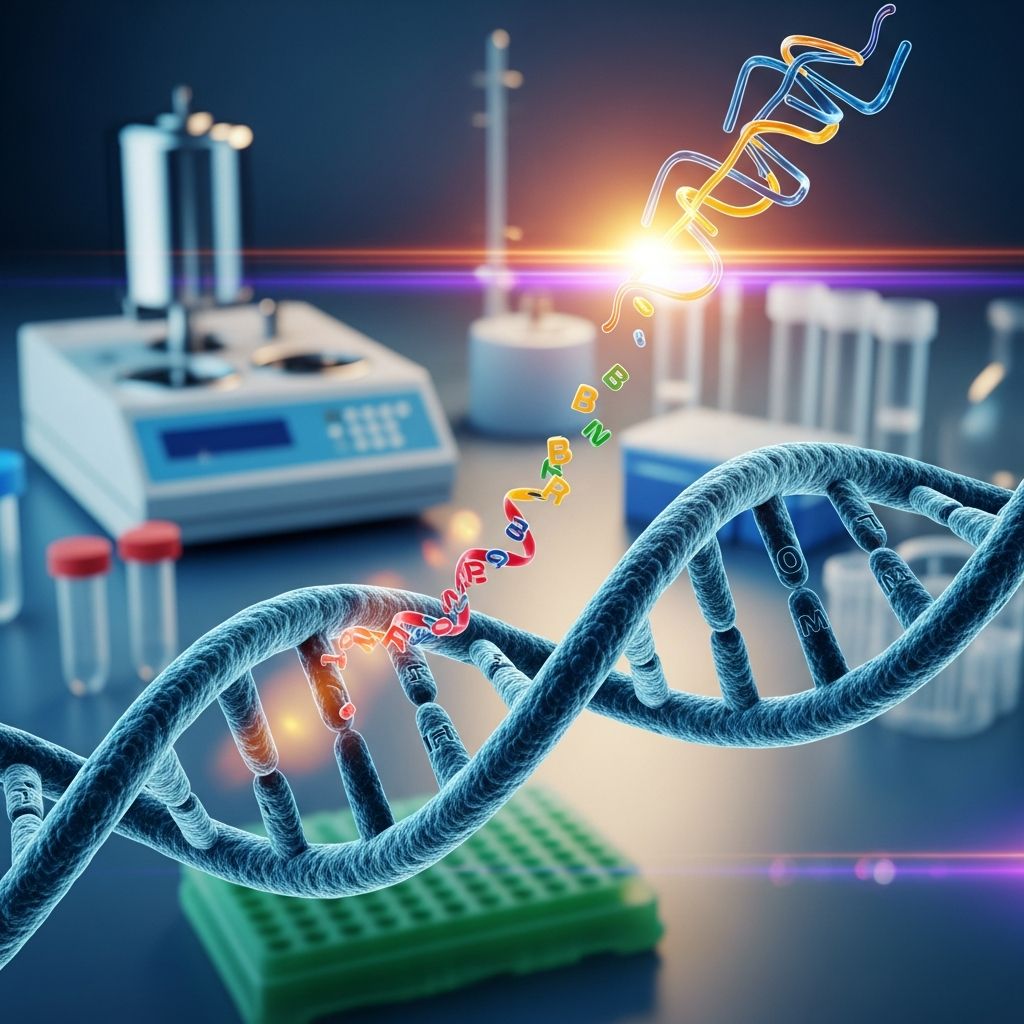
Polymerase chain reaction, commonly known as **PCR**, stands as one of the most transformative techniques in modern molecular biology. This method enables scientists to generate millions or even billions of copies of a specific DNA segment from a minuscule starting sample, facilitating detailed analysis that was once impossible. Developed in the 1980s, PCR has become indispensable in fields ranging from medical diagnostics to criminal investigations, powering advancements that touch nearly every aspect of life sciences.
The Origins and Evolution of PCR Technology
The story of PCR begins with Kary Mullis, who conceived the idea in 1983 while driving along a California highway. Mullis realized that by mimicking the natural process of DNA replication in a controlled, cyclical manner, one could exponentially amplify targeted genetic material. His breakthrough earned him the Nobel Prize in Chemistry in 1993. Initially, the technique relied on DNA polymerase from E. coli, which denatured at high temperatures, requiring manual addition after each cycle—a tedious process.
The game-changer came with the discovery of Taq polymerase, isolated from the thermophilic bacterium Thermus aquaticus found in Yellowstone’s hot springs. This heat-stable enzyme withstands the high temperatures needed for DNA denaturation without losing activity, automating the process via thermal cyclers. Today, PCR has evolved into numerous variants, each tailored for specific needs, but its core principle remains: rapid, precise DNA multiplication.
Essential Components for a Successful PCR Reaction
To initiate a PCR reaction, several key ingredients must be precisely combined in a reaction tube:
- Template DNA: The starting genetic material containing the target sequence to amplify, often just a few molecules.
- Primers: Short, synthetic single-stranded DNA oligonucleotides (typically 18-22 bases) that flank the target region. The forward primer binds to the 3′ end of one strand, and the reverse to the other, defining the amplified segment.
- dNTPs: Deoxynucleotide triphosphates (dATP, dCTP, dGTP, dTTP), the building blocks for new DNA strands.
- Taq Polymerase: The thermostable enzyme that synthesizes new DNA by adding nucleotides to the primer.
- Buffer Solution: Provides optimal pH, salts, and magnesium ions essential for enzyme activity.
These components are mixed in a thermal cycler, a machine that precisely controls temperature cycles, typically running 25-40 cycles for sufficient amplification.
Decoding the Three Core Phases of PCR
Each PCR cycle consists of three meticulously timed phases, repeated to achieve exponential amplification. Here’s a detailed breakdown:
| Phase | Temperature | Duration | Purpose |
|---|---|---|---|
| Denaturation | 94-98°C | 20-30 seconds | Separates double-stranded DNA into single strands by breaking hydrogen bonds. |
| Annealing | 50-65°C | 20-40 seconds | Primers bind to complementary sequences on the single-stranded templates. |
| Extension | 72°C | 30 seconds – 2 minutes | Taq polymerase extends primers, synthesizing new DNA strands. |
In the first cycle, two new strands are produced. Subsequent cycles double the product, yielding over a billion copies after 30 cycles (230 ≈ 1 billion). Optimization of temperatures and times is crucial; mismatches can lead to non-specific amplification or low yields.
Advanced PCR Variants Enhancing Precision and Utility
Standard PCR has spawned sophisticated variants addressing limitations like quantification and specificity.
Real-Time Quantitative PCR (qPCR)
qPCR, or real-time PCR, monitors amplification as it occurs using fluorescent dyes (e.g., SYBR Green) or probes (e.g., TaqMan). Signals increase proportionally with DNA amount, enabling quantification without post-reaction analysis. It’s vital for gene expression studies and pathogen detection.
Reverse Transcription PCR (RT-PCR)
RT-PCR converts RNA to complementary DNA (cDNA) via reverse transcriptase, then amplifies it. This is key for studying RNA viruses like SARS-CoV-2 or mRNA expression profiles.
Nested and Hot-Start PCR
Nested PCR uses two primer sets for higher specificity, reducing errors. Hot-start PCR employs modified Taq that activates only at high temperatures, minimizing non-specific products during setup.
Real-World Applications Transforming Science and Medicine
PCR’s versatility has revolutionized multiple disciplines:
- Medical Diagnostics: Detects pathogens like HIV, COVID-19, and tuberculosis with unmatched sensitivity, even from tiny samples.
- Forensics: DNA fingerprinting identifies individuals from crime scene evidence, paternity testing, and disaster victim identification.
- Genetic Research: Clones genes, maps genomes, and studies mutations in diseases like cancer.
- Agriculture and Ecology: Identifies GMO crops, tracks endangered species, and monitors biodiversity.
- Preimplantation Genetic Diagnosis: Screens embryos for hereditary disorders during IVF.
During the COVID-19 pandemic, RT-qPCR became the gold standard for detecting viral RNA, underscoring PCR’s role in global health crises.
Optimizing PCR: Troubleshooting Common Challenges
Despite its robustness, PCR can falter. Common issues include:
- No Amplification: Check template quality, primer design, or Mg2+ concentration.
- Non-Specific Bands: Optimize annealing temperature or use hot-start polymerase.
- Inhibitors: Purify samples to remove contaminants like heme or urea.
Advanced tools like gradient thermal cyclers help fine-tune conditions. Primer design software (e.g., Primer3) ensures specificity by checking melting temperatures (Tm) and avoiding secondary structures.
Future Horizons: PCR Innovations on the Horizon
Emerging technologies like digital PCR (dPCR) partition samples into thousands of microreactions for absolute quantification without standards, ideal for rare mutation detection. Isothermal amplification methods (e.g., LAMP) eliminate thermal cycling for point-of-care testing. CRISPR integration with PCR promises ultra-sensitive, specific detection. As costs drop and portability increases, PCR will democratize genomics in remote and resource-limited settings.
Frequently Asked Questions (FAQs)
What is the main purpose of PCR?
PCR amplifies specific DNA segments exponentially, enabling analysis from trace amounts.
Why is Taq polymerase used in PCR?
Its thermostability allows survival through high-temperature denaturation without degradation.
How many cycles are typically needed for PCR?
25-40 cycles suffice for billions of copies, balancing yield and error accumulation.
Can PCR amplify RNA?
Yes, via RT-PCR, which first converts RNA to cDNA.
What are limitations of standard PCR?
It doesn’t quantify products in real-time and can produce non-specific amplicons.
References
- Polymerase chain reaction (PCR) — Encyclopædia Britannica. 2023-10-15. https://www.britannica.com/science/polymerase-chain-reaction
- Polymerase Chain Reaction (PCR) — StatPearls, NCBI Bookshelf, National Library of Medicine. 2023-07-17. https://www.ncbi.nlm.nih.gov/books/NBK589663/
- Polymerase chain reaction (PCR) — Khan Academy. 2025-01-01. https://www.khanacademy.org/science/ap-biology/gene-expression-and-regulation/biotechnology/a/polymerase-chain-reaction-pcr
- Polymerase Chain Reaction Overview and Applications — Addgene Blog. 2023-05-10. https://blog.addgene.org/polymerase-chain-reaction-overview-and-applications
- Polymerase Chain Reaction (PCR) — National Human Genome Research Institute. 2023-11-01. https://www.genome.gov/genetics-glossary/Polymerase-Chain-Reaction-PCR
- PCR Basics — Thermo Fisher Scientific. 2024-02-20. https://www.thermofisher.com/us/en/home/life-science/cloning/cloning-learning-center/invitrogen-school-of-molecular-biology/pcr-education/pcr-reagents-enzymes/pcr-basics.html

- Integrated M.A. in Applied Linguistics, University of Hyderabad
- 5+ years in editorial, instructional, SEO, and research-based writing
Sneha is a relationships and lifestyle writer with a strong foundation in applied linguistics and certified training in relationship coaching. She brings over five years of writing experience to theskillvault, crafting thoughtful, research-driven content that empowers readers to build healthier relationships, boost emotional well-being, and embrace holistic living. Her writing and insights reflect the belief that beauty, happiness, and wellness…