
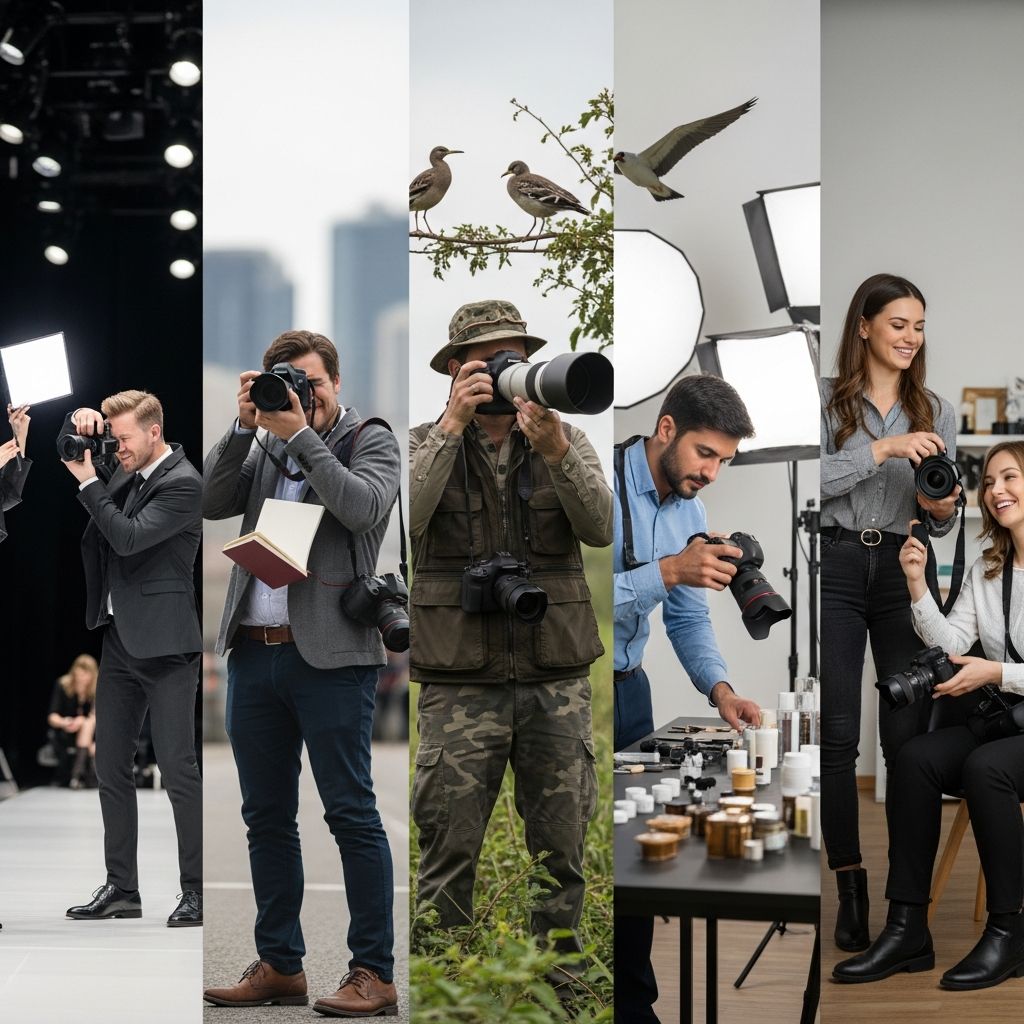
Photography offers a dynamic array of professional opportunities, blending artistic expression with technical expertise. In 2026, the field continues to evolve with digital tools, social media influence, and demand for specialized imagery across industries. This guide outlines key career paths, required skills, earning potential, and strategies for entry, drawing from established industry trends.
Understanding the Photography Landscape
The photography profession encompasses roles that capture moments, products, events, and scientific phenomena for commercial, artistic, or informational purposes. Professionals in this field work independently, for agencies, or within organizations, often specializing to build expertise. Employment growth is projected at 2 percent from 2024 to 2034, slower than average, but niches like drone and stock photography show promise due to technological advancements.
Success requires mastery of camera operation, lighting, composition, and post-production software like Adobe Lightroom. Many roles demand a portfolio showcasing versatility and a bachelor’s degree in photography or related fields for competitive edges.
Commercial and Product-Focused Roles
Commercial photography dominates marketable imagery needs, focusing on advertising products and services. These positions prioritize clean, appealing visuals for clients in retail and marketing.
- Product Photographer: Specializes in studio shots of merchandise with neutral backgrounds to highlight features. Common in e-commerce, earning median salaries around $40,000-$60,000 annually.
- Food Photographer: Crafts appetizing images for menus, cookbooks, and ads using lighting and styling techniques. Freelancers charge per project, often $500-$2,000 per shoot.
- Real Estate Photographer: Documents properties’ interiors and exteriors for listings, emphasizing wide angles and natural light. Entry-level pay starts at $35,000, with experienced pros reaching $70,000.
| Role | Key Skills | Avg. Salary (USD) |
|---|---|---|
| Product | Studio lighting, editing | $45,000 |
| Food | Styling, macro lenses | $55,000 |
| Real Estate | Wide-angle, HDR | $50,000 |
Fashion and Portrait Specialties
Fashion and portrait photography emphasize human subjects, requiring collaboration with models, stylists, and directors to convey style and personality.
- Fashion Photographer: Shoots runway, editorials, and campaigns in studios or on-location. Top earners collaborate with magazines, pulling $60,000-$100,000 yearly.
- Portrait Photographer: Captures individuals or groups for headshots, family sessions, or corporate profiles. Includes newborn and family variants, with sessions priced $200-$1,000.
- Headshot Specialist: Focuses on professional profiles for actors, executives, using controlled lighting for flattering results.
These roles thrive on networking at events and building online portfolios via Instagram or personal sites.
Nature and Adventure Photography
Outdoor enthusiasts find rewarding paths in capturing landscapes, wildlife, and travel scenes, often involving physical challenges and remote locations.
- Landscape Photographer: Frames natural vistas, from mountains to micro-details, selling prints or licensing to publications.
- Wildlife Photographer: Documents animals in habitats, using telephoto lenses and camouflage. Patience is key for ethical, safe shoots.
- Travel Photographer: Blends genres to showcase cultures, landmarks, and cuisine, monetizing via stocks, books, or tourism boards.
- Adventure Photographer: Chronicles extreme sports and expeditions, adapting to variable weather and motion.
Earning potential varies; freelancers build passive income through stock sales, averaging $30,000-$80,000 based on portfolio size.
Event and Editorial Documentation
Event and editorial roles capture real-time narratives, demanding quick reflexes and storytelling prowess.
- Wedding Photographer: Handles ceremonies and receptions, delivering edited albums. Popular niche with packages $2,000-$10,000 per event.
- Concert/Event Photographer: Navigates crowds and low light for music and corporate events, often credentialed via media passes.
- Photojournalist: Records news and human stories for outlets, emphasizing authenticity over staging. Builds credibility through consistent publications.
- Documentary Photographer: Chronicles social issues or histories, exhibiting in galleries or books.
Technical and Specialized Fields
Beyond traditional shooting, photography intersects with science, industry, and tech.
- Scientific Photographer: Images experiments and microscopy for research, often in labs or agencies.
- Aerial/Drone Photographer: Uses UAVs for overhead views in real estate, agriculture, and film. Emerging with FAA certification needs.
- Stock Photographer: Produces reusable images for agencies, generating royalties from high-volume uploads.
- Camera Technician: Repairs gear and supports shoots, ideal for tech-savvy grads.
Education and Skill Development
Entry often starts with associate or bachelor’s programs in photography, covering digital imaging and business. Online platforms like Skillshare supplement with niches. Build a portfolio early, intern at studios, and network via associations like PPA.
Certifications in drone operation or Adobe enhance resumes. Freelancers benefit from business courses on pricing and contracts.
Salary Insights and Job Outlook
Median U.S. photographer salary hovers at $40,980, with top 10% exceeding $80,000. Growth favors digital-savvy specialists amid print decline. States like California and New York offer highest pay due to media hubs.
| Niche | Median Salary | Job Growth |
|---|---|---|
| Fashion | $60,000 | Moderate |
| Wildlife | $45,000 | Slow |
| Drone | $55,000 | High |
Steps to Launch Your Career
- Assemble gear: DSLR/mirrorless camera, lenses, tripod.
- Create portfolio website.
- Freelance locally, sell stock images.
- Network at workshops, join LinkedIn groups.
- Specialize based on passion and market demand.
Challenges and Opportunities in 2026
Competition is fierce, but AI tools aid editing, freeing time for creativity. Social media democratizes access, enabling influencers to monetize. Sustainability pushes eco-friendly practices in wildlife shoots.
Frequently Asked Questions
What education is needed for photography careers?
A degree helps but isn’t mandatory; portfolios and experience matter most.
Can you make a living as a freelance photographer?
Yes, through diversification like weddings, stocks, and commercial gigs.
What’s the best camera for beginners?
Entry-level mirrorless like Canon EOS R50 or Sony A6400.
How do I break into photojournalism?
Submit to local papers, build a news-focused portfolio.
Is drone photography lucrative?
Yes, with growing demand in inspections and media.
References
- 32 Careers in Photography — Indeed.com. 2023. https://www.indeed.com/career-advice/finding-a-job/list-of-careers-in-photography
- Photographers: Salary, career path, job outlook — Raise.me. 2024. https://www.raise.me/careers/media-and-communication/photographers/
- Profitable Photography Careers to Consider in 2026 — ExpertPhotography.com. 2025. https://expertphotography.com/photography-careers/
- What Can I Do With a Photography Degree? — Villa Maria College. 2024. https://www.villa.edu/what-can-i-do-with-a-photography-degree/
- Photographers: Occupational Outlook Handbook — U.S. Bureau of Labor Statistics. 2025-02-01. https://www.bls.gov/ooh/media-and-communication/photographers.htm

Medha Deb is an editor with a master's degree in Applied Linguistics from the University of Hyderabad. She believes that her qualification has helped her develop a deep understanding of language and its application in various contexts. Medha specializes in the areas of beauty, health, sports, and wellness and is committed to ensuring that the content on the website is…