
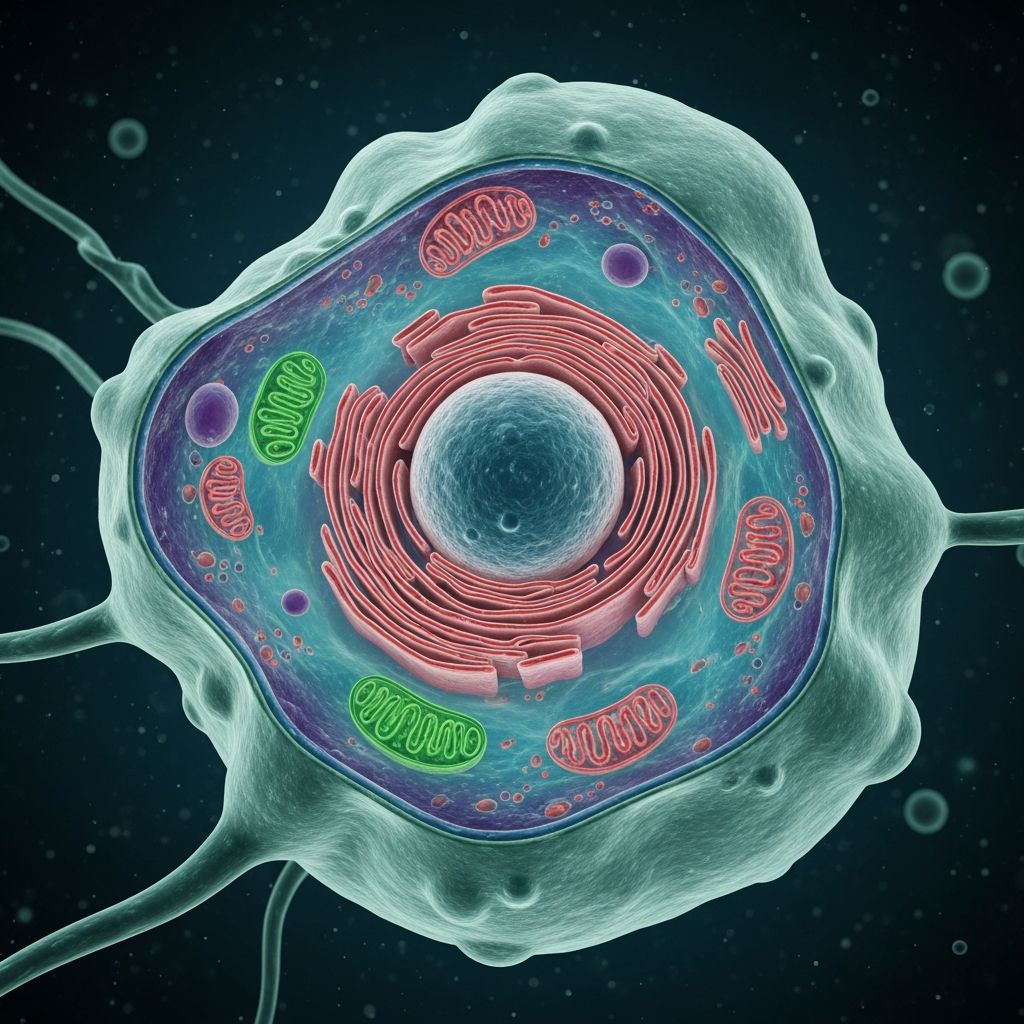
Plant cells form the foundational units of all plant life, enabling processes like photosynthesis, structural support, and growth. Unlike animal cells, they possess specialized features such as rigid cell walls and chloroplasts that capture sunlight for energy production.
Core Components of Plant Cells
At their heart, plant cells are eukaryotic, meaning they contain a nucleus and membrane-bound organelles. These structures work together to sustain life, from energy generation to waste management. The plasma membrane, a phospholipid bilayer, acts as a selective barrier, controlling the entry and exit of molecules while maintaining internal balance.
Surrounding this is the **cell wall**, a tough outer layer primarily composed of cellulose, hemicellulose, pectin, and sometimes lignin. This structure provides rigidity, protects against mechanical stress, and helps regulate water pressure within the cell, preventing collapse during drought.
Key Organelles and Their Roles
- Nucleus: The control center housing DNA, directing cell activities like growth and reproduction. It includes the nucleolus for ribosome assembly and nucleopores for material transport.
- Mitochondria: Known as the powerhouse, these organelles produce ATP through cellular respiration, converting sugars into usable energy.
- Endoplasmic Reticulum (ER): A network of membranes for protein and lipid synthesis. Rough ER has ribosomes for protein folding, while smooth ER handles lipid metabolism and detoxification.
- Golgi Apparatus: Modifies, sorts, and packages proteins and lipids into vesicles for secretion or use within the cell.
- Ribosomes: Protein-building factories, either free-floating or attached to ER, translating genetic instructions into functional proteins.
The **cytoplasm**, a gel-like matrix, suspends organelles and facilitates biochemical reactions, while the **cytoskeleton** of microtubules and actin filaments maintains shape, aids organelle movement, and guides cell division.
Unique Features Distinguishing Plant Cells
What sets plant cells apart are organelles absent in most animal cells, adapted for stationary, sunlight-dependent lifestyles. The **central vacuole**, often occupying up to 90% of the cell volume in mature plants, stores water, nutrients, enzymes, and waste. Surrounded by the tonoplast membrane, it maintains turgor pressure, keeping plants upright and firm.
**Chloroplasts** are the hallmark of plant cells, site of photosynthesis. These double-membrane organelles contain chlorophyll, capturing light to convert carbon dioxide and water into glucose and oxygen. They also house their own DNA and ribosomes, hinting at ancient bacterial origins.
Other **plastids** include amyloplasts for starch storage and chromoplasts for pigment production in fruits and flowers. The cell wall’s layered structure—primary (flexible cellulose), secondary (thicker with lignin for strength), and middle lamella (pectin glueing cells)—ensures durability.
| Organelle | Present in Plant Cells | Present in Animal Cells | Primary Function |
|---|---|---|---|
| Cell Wall | Yes | No | Structural support, protection |
| Chloroplasts | Yes | No | Photosynthesis |
| Central Vacuole | Yes (large) | No (small vesicles) | Storage, turgor pressure |
| Mitochondria | Yes | Yes | Energy production |
| Nucleus | Yes | Yes | Genetic control |
Specialized Plant Cell Types
Plants exhibit diverse cell types tailored to specific roles, categorized by wall thickness and function. **Parenchyma cells**, the most abundant, are thin-walled and versatile, performing photosynthesis in leaves, storing reserves in roots, or facilitating gas exchange.
**Collenchyma cells** have unevenly thickened primary walls, offering flexible support to growing stems and leaves, much like flexible scaffolding.
**Sclerenchyma cells**, with thick secondary walls containing lignin, provide rigid support in mature tissues like nut shells or veins. They are dead at maturity, functioning as hollow tubes.
Transport specialists include **xylem** (water-conducting, lignified walls) and **phloem** (nutrient-transporting, sieve tubes with companion cells).
| Cell Type | Wall Structure | Main Location | Key Role |
|---|---|---|---|
| Parenchyma | Thin primary | Leaves, stems, roots | Photosynthesis, storage |
| Collenchyma | Thickened primary | Stems, leaf petioles | Flexible support |
| Sclerenchyma | Thick secondary (lignin) | Seeds, veins | Rigid support |
| Xylem | Lignified, hollow | Vascular tissue | Water transport |
| Phloem | Sieve plates | Vascular tissue | Sugar transport |
Photosynthesis: The Powerhouse Process
Central to plant cell function is **photosynthesis**, occurring in chloroplast thylakoids. Light-dependent reactions split water, releasing oxygen and generating ATP/NADPH. The Calvin cycle then fixes CO2 into sugars. This process not only fuels the plant but sustains global oxygen levels and food chains.
Equation: 6CO₂ + 6H₂O + light → C₆H₁₂O₆ + 6O₂. Chloroplasts adapt to light via thylakoid stacking (grana), optimizing efficiency.
Cell Communication and Growth
Plant cells connect via **plasmodesmata**, cytoplasmic channels through cell walls for nutrient and signal sharing. The ER network forms dynamic webs, linking organelles for coordinated responses to stress or hormones.
Growth involves **meristematic cells** in tips and cambium, dividing rapidly with dense cytoplasm and prominent nuclei. Differentiation leads to specialized forms.
Adaptations to Environmental Challenges
Plant cells excel in stress response. Cell walls resist pathogens and drought; vacuoles sequester toxins; plastids store reserves. During water scarcity, guard cells around stomata adjust to minimize loss while allowing CO2 intake.
In cold climates, antifreeze proteins in vacuoles prevent ice formation. Salt-tolerant halophytes use vacuoles for ion storage.
Modern Insights into Plant Cell Dynamics
Recent research reveals ER-plasma membrane contact sites for signaling and lipid transfer, crucial for development. Plasmodesmata regulate symplastic transport, influencing growth patterns.
Understanding these boosts agriculture, like engineering drought-resistant crops via enhanced vacuole function or chloroplast efficiency.
Frequently Asked Questions (FAQs)
What makes plant cells different from animal cells?
Plant cells have cell walls for support, chloroplasts for photosynthesis, and large central vacuoles for storage and pressure, absent in animal cells.
How do chloroplasts enable photosynthesis?
Chloroplasts contain chlorophyll to absorb light, using it to split water and fix CO2 into glucose, powering the plant.
What is the role of the central vacuole?
It stores water, maintains turgor for rigidity, and holds waste or pigments.
Why are sclerenchyma cells dead at maturity?
Their lignified walls provide permanent support without needing living cytoplasm.
Can plant cells divide without a cell wall temporarily?
Yes, during cytokinesis, a cell plate forms a new wall from vesicles.
References
- Plant Cell | Definition, Diagram & Parts – Lesson — Study.com. 2023. https://study.com/academy/lesson/eukaryotic-plant-cells-definition-examples-characteristics.html
- Plant Cell – Definition, Structure, Function, Diagram & Types — BYJU’S. 2023. https://byjus.com/biology/plant-cell/
- A glossary of plant cell structures: Current insights and future directions — PMC (National Center for Biotechnology Information). 2022-02-15. https://pmc.ncbi.nlm.nih.gov/articles/PMC8846186/

- Integrated M.A. in Applied Linguistics, University of Hyderabad
- 5+ years in editorial, instructional, SEO, and research-based writing
Sneha is a relationships and lifestyle writer with a strong foundation in applied linguistics and certified training in relationship coaching. She brings over five years of writing experience to theskillvault, crafting thoughtful, research-driven content that empowers readers to build healthier relationships, boost emotional well-being, and embrace holistic living. Her writing and insights reflect the belief that beauty, happiness, and wellness…