
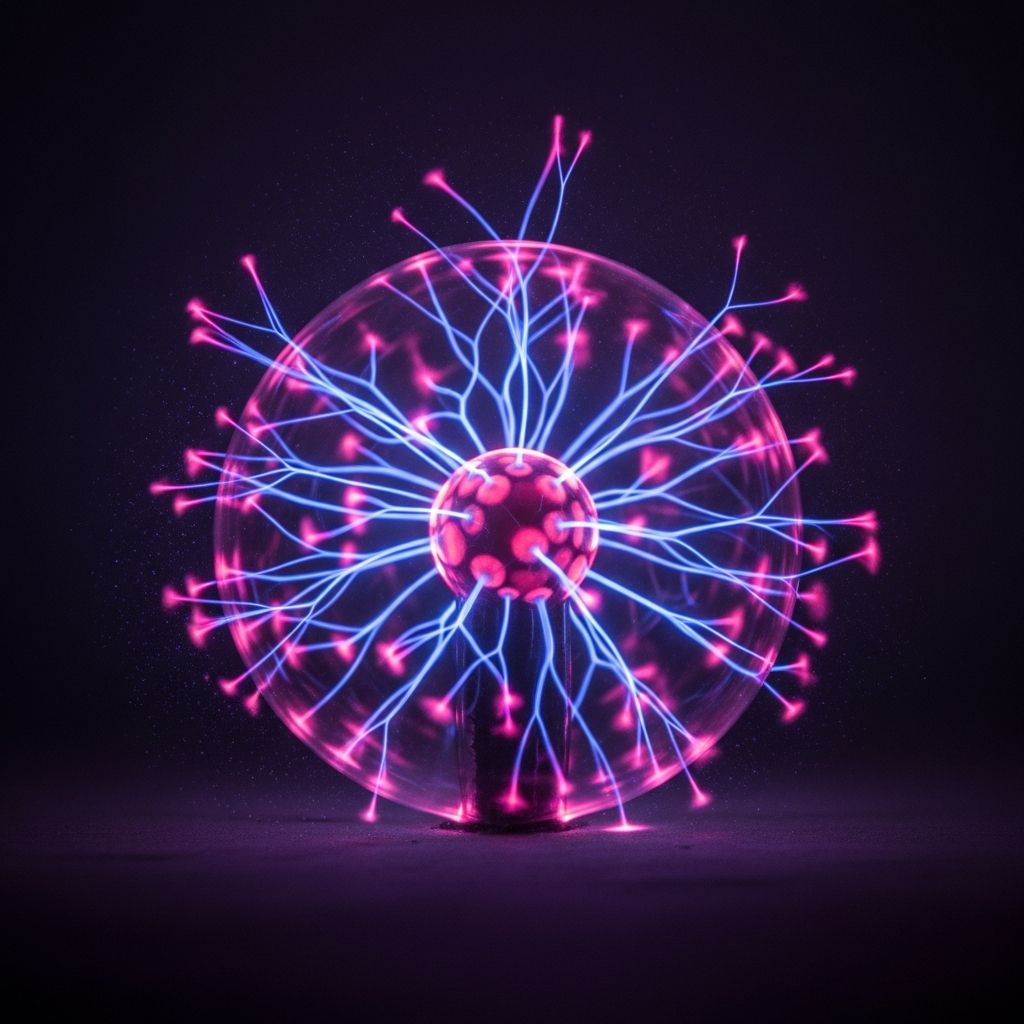
Introducing the Fourth State of Matter
When we consider the matter surrounding us in our everyday lives, we typically think of three distinct states: solids maintain their shape and volume, liquids take the shape of their containers while maintaining volume, and gases expand to fill available space. However, scientists have identified a fourth state of matter that constitutes the vast majority of the observable universe, yet remains largely unfamiliar to the general public. This state is known as plasma, and it represents one of the most fascinating and energetic forms of matter known to science.
Plasma comprises nearly 99.9 percent of all observable matter in the universe. From the blazing cores of stars to the swirling auroras dancing across polar skies, plasma is everywhere in space. Despite its prevalence throughout the cosmos, plasma remains relatively uncommon under natural conditions on Earth’s surface, making it seem exotic and distant to those unfamiliar with advanced physics. Yet plasma’s properties and behaviors have become increasingly important to scientific research, industrial applications, and the future of energy production.
The Process of Ionization: Creating Plasma
Plasma does not exist as a default state of matter under typical terrestrial conditions. Instead, it must be created through specific processes that fundamentally alter the structure of atoms and molecules. The primary mechanism for generating plasma involves ionization, a process where atoms lose some or all of their electrons.
In normal neutral atoms, the number of negatively charged electrons orbiting the nucleus equals the number of positively charged protons within the nucleus, resulting in an overall neutral electrical charge. Ionization disrupts this balance by separating electrons from their parent atoms. When sufficient energy is applied to matter, electrons can escape their atomic bonds and become free particles, leaving behind positively charged ions—atoms that have lost electrons and thus carry a net positive charge.
Several methods can initiate this ionization process in laboratory and industrial settings:
- Applying intense heat to gases causes atoms to collide with such force that electrons separate from nuclei
- Exposing atoms to high-voltage electrical discharges that strip electrons away
- Bombarding matter with electromagnetic radiation, including lasers and radio waves
- Subjecting material to ionizing radiation such as gamma rays or X-rays
- Increasing pressure to levels where temperature rises so dramatically that ionization occurs spontaneously
In natural astronomical environments, plasma formation occurs through different mechanisms. Within stars, gravitational compression generates pressures and temperatures so extreme that thermal ionization creates plasma continuously. In space, high-energy photons and cosmic radiation collide with atoms, ionizing them and forming plasma throughout interstellar regions and planetary ionospheres.
Fundamental Characteristics of Plasma
Plasma possesses distinctive properties that differentiate it fundamentally from gases, despite both being composed of particles in motion. Understanding these characteristics is essential for comprehending plasma behavior and its applications.
Electrical Conductivity and Charge Dynamics
One of the most significant distinctions between plasma and ordinary gas involves electrical conductivity. Gases are excellent insulators, capable of withstanding electrical field strengths of tens of kilovolts per centimeter before breaking down. Plasma, conversely, exhibits extraordinarily high electrical conductivity that can effectively be treated as infinite for many practical purposes. This remarkable property stems from the presence of free charge carriers—the abundant electrons and ions that move independently throughout the plasma.
The movement of these charged particles generates electrical currents and creates electromagnetic fields. Every motion of a charged particle within plasma affects and is affected by the fields produced by all other charges in the medium. This interdependence creates complex collective behavior and intricate interactions that govern plasma dynamics in ways fundamentally different from gas physics.
Quasineutrality Principle
Despite consisting entirely of charged particles, plasma maintains an overall electrical neutrality across large volumes. This counterintuitive property, called quasineutrality, indicates that the density of negative charges (electrons) approximately equals the density of positive charges (ions) when measured over macroscopic scales. However, this balance breaks down at smaller scales known as the Debye length, where localized charge imbalances can develop and create electrical fields that shape plasma behavior.
Response to Electromagnetic Fields
Because plasma contains vast numbers of free charge carriers, it responds dramatically to electromagnetic fields in ways that gases cannot. This responsiveness enables scientists and engineers to manipulate and control plasma using carefully designed magnetic and electric field configurations. This property has proven invaluable for plasma confinement in fusion reactors and for plasma acceleration in numerous technological applications.
Distinguishing Plasma from Ordinary Gases
Although plasma originates from gases through ionization, the two states of matter exhibit striking differences that extend far beyond simple thermodynamic considerations. In ordinary gases, all particles behave in broadly similar ways, following predictable patterns governed by kinetic molecular theory. Plasma, by contrast, exhibits fundamentally different behavior because electrons and ions—being oppositely charged—interact and respond to electromagnetic fields in distinctly different ways.
These differential interactions create complex phenomena absent in gases, including plasma waves and instabilities that can spontaneously develop and evolve. Furthermore, plasma’s ability to conduct electricity and respond to magnetic fields enables behaviors and applications that gases simply cannot support. While heating a liquid produces a gas with predictable changes in properties, heating a gas to plasma does not simply represent a continuation of the same trends but rather involves a qualitative transformation to an entirely different physical regime.
Comparison Table: Gas vs. Plasma
| Property | Gas | Plasma |
|---|---|---|
| Electrical Conductivity | Extremely low; excellent insulator | Extremely high; conducts electric currents |
| Particle Behavior | Neutral atoms behave uniformly | Electrons and ions exhibit complex interactions |
| Electromagnetic Response | Minimal or negligible | Dramatic and controllable response |
| Charge Balance | Neutral overall and locally | Quasineutral at macro scale; imbalances at micro scale |
| Wave Phenomena | Sound waves only | Multiple wave types including plasma oscillations |
Where Plasma Occurs Naturally
Although plasma seems exotic, it dominates the visible universe. The Sun and all stars are primarily plasma, with nuclear fusion reactions occurring in their hot cores. The solar wind—a continuous stream of plasma emanating from the Sun—permeates the entire solar system, carrying charged particles and magnetic fields outward from the solar surface.
Beyond our solar system, plasma fills interstellar space and constitutes the material from which new stars and planetary systems form. Planetary magnetospheres—magnetic regions surrounding planets like Earth—contain plasma trapped by planetary magnetic fields. Aurora displays, such as the northern and southern lights, result from solar wind plasma interacting with Earth’s magnetosphere and upper atmosphere.
On Earth itself, plasma occurs rarely under natural conditions at surface levels due to the relatively cool temperatures and protective atmosphere. However, lightning bolts represent temporary plasma formation where electrical discharge ionizes atmospheric gases. High-altitude regions experience more frequent plasma formation due to cosmic radiation and solar ultraviolet radiation ionizing rarefied atmospheric gases.
Laboratory Generation and Control
Modern scientific research and industrial applications require the ability to create and control plasma precisely under laboratory conditions. Scientists employ several established techniques to generate plasma reliably and consistently.
Thermal ionization involves heating gases to extreme temperatures using resistive heating, arc dischargers, or other heat sources until ionization occurs spontaneously. Electrical discharge methods pass high-voltage electricity through gases, creating ionization pathways that propagate rapidly through the medium. Radiofrequency and microwave techniques use electromagnetic radiation to impart energy directly to gas molecules and their constituent particles, causing ionization. Each method offers distinct advantages and disadvantages depending on the desired plasma density, temperature, and composition.
Confining and controlling plasma once generated presents formidable challenges. Because plasma responds strongly to electromagnetic fields, scientists use carefully designed magnetic field geometries to trap plasma and prevent it from contacting container walls, which would cool it rapidly and cause recombination of ions and electrons. Tokamaks and stellarators represent two major magnetic confinement approaches that have advanced significantly over recent decades.
Revolutionary Applications Transforming Technology
The unique properties of plasma have enabled technological innovations spanning multiple disciplines, with impact extending from energy production to medical treatment to industrial manufacturing.
Fusion Energy Production
The most prominent contemporary application of plasma research involves fusion energy development. Fusion reactions, which power stars, occur when nuclei fuse under extreme temperature and pressure conditions found only in plasma. Reproducing this process on Earth promises virtually unlimited clean energy, as fusion consumes fuel abundantly available in nature and produces no greenhouse gases or long-lived radioactive waste. International research collaborations like ITER represent massive investments in demonstrating practical fusion energy through plasma confinement and control.
Medical and Industrial Treatments
Lower-temperature plasma, called cold plasma or low-enthalpy plasma, has emerged as a powerful tool in medical applications. Medical plasma systems sterilize surgical instruments, treat wounds and infections, and show promise in dermatological and cancer therapies. Cold plasma’s antimicrobial properties and minimal thermal damage to surrounding tissue make it ideal for sensitive medical applications.
Industrial applications include plasma cutting and welding, where plasma’s extreme temperature and conductivity enable precise material removal and joining. Plasma coating and surface modification techniques improve material properties in manufacturing. Semiconductor production relies heavily on plasma processes for etching and deposition during chip fabrication.
Space and Astrophysical Research
Understanding plasma behavior illuminates the workings of the Sun, stars, planetary atmospheres, and interstellar environments. Space plasma physics explains solar flares, cosmic weather, and the fundamental processes governing celestial bodies and galactic structures.
Ongoing Research and Future Directions
Plasma physics continues as an active frontier in scientific research with substantial funding and talented researchers worldwide. Advances in computational modeling enable increasingly sophisticated simulations of plasma behavior, complementing experimental research. Emerging applications in propulsion systems, environmental remediation, and advanced manufacturing continue expanding plasma’s technological relevance.
The pursuit of commercial fusion energy remains perhaps the most ambitious plasma application currently under development. Achieving sustained, net-positive energy fusion through plasma confinement would represent a revolutionary breakthrough with transformative implications for civilization’s energy future. While significant technical challenges remain, continuous progress in plasma physics and engineering provides confidence in eventual success.
Frequently Asked Questions About Plasma
Q: How does plasma differ fundamentally from a gas?
A: While both gases and plasma consist of freely moving particles, plasma contains ionized particles (electrons and ions) that interact with electromagnetic fields in complex ways. Plasma exhibits high electrical conductivity, whereas gases are excellent insulators. Additionally, in gases all particles behave similarly, but in plasma, electrons and ions behave distinctly, creating waves and instabilities impossible in ordinary gases.
Q: What is the minimum temperature required to create plasma?
A: The temperature required for ionization varies depending on the specific gas and the applied energy method. Different gases ionize at different temperatures, and some plasma can be created at surprisingly low temperatures using non-thermal methods. However, most thermal plasma formation requires temperatures ranging from thousands to millions of degrees Kelvin, depending on the application.
Q: Why is plasma called the fourth state of matter?
A: Plasma is classified as the fourth state of matter because it exhibits properties distinct from solids, liquids, and gases. It represents matter in a highly ionized state where electromagnetic forces dominate particle interactions. As the predominant form of matter in the universe, plasma’s designation as a fundamental state reflects its cosmic significance and unique physical properties.
Q: Can plasma exist at room temperature?
A: While spontaneous plasma formation at room temperature is rare, scientists can create plasma at relatively low temperatures using non-thermal ionization methods. Cold plasma generated through electrical discharge or radiofrequency techniques can exist at room temperature or slightly elevated temperatures, making such plasma useful for medical and industrial applications that would otherwise damage heat-sensitive materials.
Q: What practical benefits might fusion energy from plasma provide?
A: Fusion energy extracted from plasma offers several compelling advantages: abundant fuel readily available in nature, no greenhouse gas emissions during operation, minimal radioactive waste compared to fission reactors, and the potential to provide virtually unlimited clean energy for civilization’s needs. Realizing these benefits requires overcoming remaining technical challenges in plasma confinement and energy extraction efficiency.
References
- Plasma (physics) — Wikipedia. Accessed April 5, 2026. https://en.wikipedia.org/wiki/Plasma_(physics)
- A Short Introduction to Plasma Physics — K. Wiesemann, AEPT, Ruhr-Universität Bochum. arXiv. https://arxiv.org/pdf/1404.0509
- DOE Explains…Plasma — U.S. Department of Energy Office of Science. https://www.energy.gov/science/doe-explainsplasma
- Plasma Physics — University of Iowa, College of Liberal Arts and Sciences. https://physics.uiowa.edu/plasma-physics
- What is Plasma? — American Physical Society Division of Plasma Physics. https://engage.aps.org/dpp/resources/what-is-plasma
- Plasma Physics and Applications — EPFLx on edX. https://www.edx.org/course/plasma-physics-introduction
- Plasma Physics History — NASA Plasma Wave Group. https://pwg.gsfc.nasa.gov/Education/whplasma.html

- Integrated M.A. in Applied Linguistics, University of Hyderabad
- 5+ years in editorial, instructional, SEO, and research-based writing
Sneha is a relationships and lifestyle writer with a strong foundation in applied linguistics and certified training in relationship coaching. She brings over five years of writing experience to theskillvault, crafting thoughtful, research-driven content that empowers readers to build healthier relationships, boost emotional well-being, and embrace holistic living. Her writing and insights reflect the belief that beauty, happiness, and wellness…