
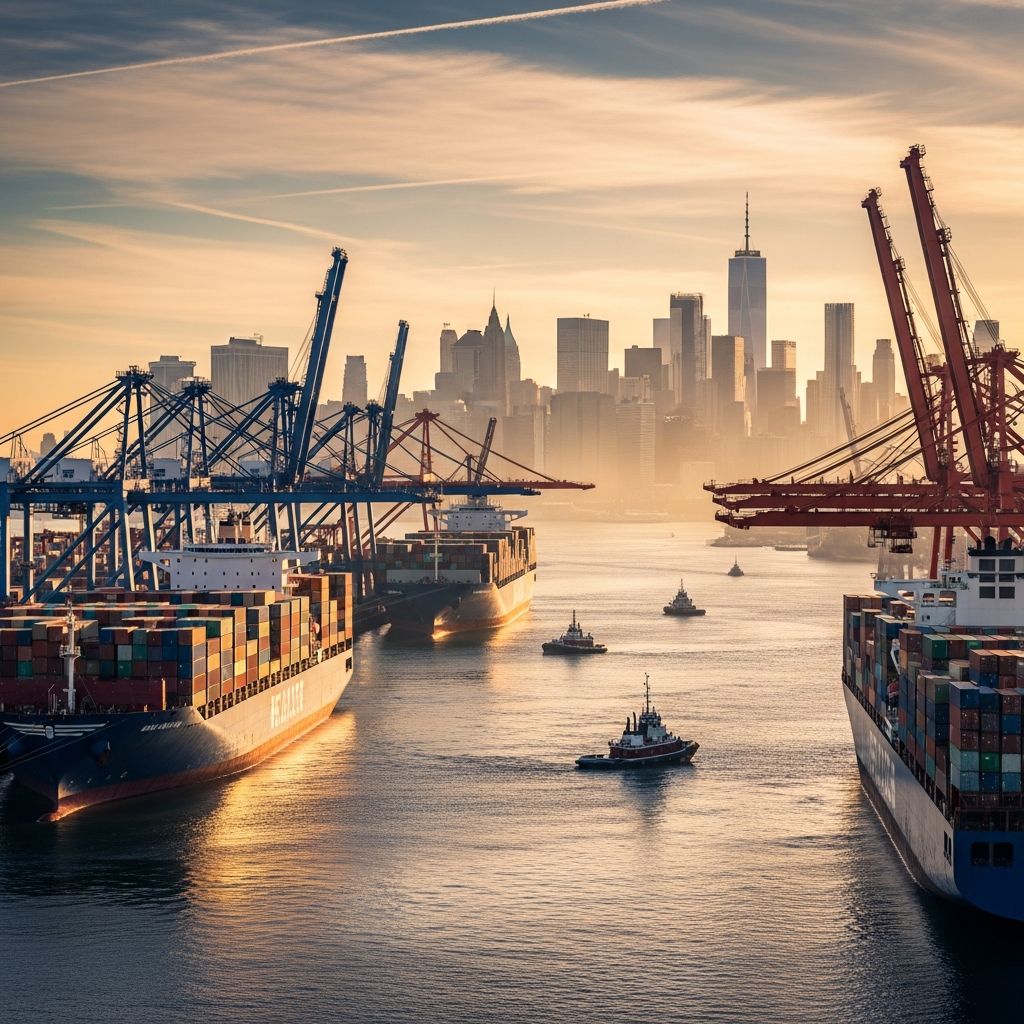
The Port Authority of New York & New Jersey (PANYNJ) is the public agency behind many of the most recognizable transportation and trade assets in the United States, from major airports and seaports to bridges, tunnels, and transit systems. For professionals who want to see their work drive visible change, it offers a unique combination of public service, cutting-edge infrastructure, and long-term career opportunity.
This article explores what the Port Authority does, why it matters to the region and the country, and what it is like to build a career inside such a complex and mission-driven organization.
The Organization Behind the Region’s Connections
The Port Authority is a bi-state agency created in 1921 by compact between New York and New Jersey to plan, develop, and operate shared transportation and trade facilities across the region. It is widely regarded as one of the oldest and most diverse public authorities in the United States in terms of the scale and types of assets it manages.
Key Facts at a Glance
- Founded: 1921 as the Port of New York Authority; renamed in 1972 to reflect the bi-state role.
- Governance: 12 commissioners, six appointed by each state’s governor, approved by the respective state senate.
- Funding model: Financially self-supporting public agency that relies primarily on tolls, fees, rents, and other user revenues rather than state or local tax dollars.
- Port District: Roughly 1,500 square miles centered on New York Harbor.
- Workforce: Approximately 8,000 employees across multiple disciplines.
What the Port Authority Operates
Most people encounter the Port Authority every day without realizing it. The agency plans, builds, and runs a portfolio of assets that keep the region — and much of the national economy — moving.
Airports
The Port Authority operates some of the country’s busiest airports, forming one of the largest aviation systems in the world.
- John F. Kennedy International Airport (JFK)
- Newark Liberty International Airport (EWR)
- LaGuardia Airport (LGA)
- Stewart International Airport (SWF)
- Teterboro Airport (TEB)
These airports connect the region to global markets and tourism, and generate significant employment both on and off the airfield.
Seaports
The Port of New York and New Jersey is the largest containerized cargo port on the U.S. East Coast and the third largest in North America, serving more than 27 million local residents. It includes over 3,000 acres of Port Authority marine facilities such as:
- Port Newark
- Elizabeth-Port Authority Marine Terminal
- Howland Hook Marine Terminal
- Port Jersey-Port Authority Marine Terminal
- Brooklyn-Port Authority Marine Terminal
In addition to these facilities, the wider port complex includes private bulk terminals, cruise and ferry terminals, barge operations, and marine support services.
Bridges, Tunnels, and Terminals
The Port Authority manages several of the most heavily traveled crossings and terminals connecting New York and New Jersey.
- George Washington Bridge (including a double-deck structure)
- Lincoln Tunnel
- Holland Tunnel
- Major bus and truck terminals, including the Port Authority Bus Terminal
These assets allow commuters, visitors, and freight to move efficiently across state lines while maintaining strict safety and security standards.
Rail and Transit
The Port Authority owns and operates the **PATH** rapid transit system, which connects northwestern New Jersey with Lower and Midtown Manhattan. It also oversees on-dock rail that links port terminals to inland markets, helping shift some freight from trucks to rail and easing road congestion.
World Trade Center and Other Facilities
The agency played a leading role in constructing, operating, and rebuilding the World Trade Center site. It developed the original twin towers in the 1970s, and after the 2001 attacks, it worked on reconstruction projects including One World Trade Center and the World Trade Center Transportation Hub.
Public Mission and Strategic Priorities
Although the Port Authority must manage its finances like a sophisticated business, it remains a public entity with a statutory mission to promote trade, transportation, and economic development across the bi-state region.
Economic Engine for the Region
The Port Authority’s facilities help drive a metropolitan area that is home to tens of millions of people and one of the world’s largest concentrations of economic activity.
- Handling millions of passengers and tons of cargo each year through airports and seaports.
- Supporting jobs in aviation, logistics, construction, tourism, retail, and more.
- Providing critical connections that underpin roughly one-third of U.S. GDP within a 250-mile radius of the port.
Financial Self-Sufficiency
The Port Authority is a self-supporting public agency, generating revenue mainly from tolls, fares, landing fees, rents, and other charges paid by facility users, tenants, and partners. It does not rely on tax revenue from New York, New Jersey, or New York City. This model allows it to reinvest earnings into capital projects without directly drawing on local taxpayers.
Commitment to Sustainability
The Port Authority has positioned itself as a leader in sustainable transportation. It was the first U.S. transportation agency to formally adopt the Paris Climate Agreement goals, targeting an 80% reduction in greenhouse gas emissions by 2050.
Key efforts include:
- Transitioning to low- and zero-emission vehicles and equipment at ports and airports.
- Implementing energy efficiency and clean energy projects across facilities.
- Supporting mode shift from road to rail and waterborne freight where feasible.
Transparency and Governance
The Port Authority emphasizes accountability and open decision-making. Initiatives include publishing advance agendas for Board actions, webcasting public meetings, and enabling public comment on major decisions. This governance structure is designed to balance regional interests, financial responsibility, and public trust.
Career Paths Across a Complex Enterprise
Because of its wide footprint, the Port Authority employs professionals in many disciplines. Prospective employees can find paths that combine technical expertise with public impact.
Major Career Families
| Career Area | Typical Focus |
|---|---|
| Engineering & Construction | Designing, building, and maintaining bridges, tunnels, rail, aviation, and marine facilities. |
| Operations & Maintenance | Day-to-day running of airports, ports, terminals, and transit systems, including field operations. |
| Planning & Project Management | Long-range transportation planning, capital programs, and large-scale infrastructure delivery. |
| Public Safety & Security | Protecting facilities and users through specialized police, security, and emergency management roles. |
| Corporate Functions | Finance, procurement, legal, IT, HR, communications, and policy analysis. |
Who Thrives at the Port Authority?
Roles at the Port Authority are well-suited to professionals who:
- Want their work to have visible, long-term impact on a region’s infrastructure and quality of life.
- Value mission-driven public service combined with complex, large-scale projects.
- Enjoy collaborating across disciplines — from engineering and planning to law and communications.
- Are comfortable working in a regulated, safety-critical environment.
Culture, Values, and Work Environment
As a public authority with private-sector scale, the Port Authority offers a hybrid environment: mission-oriented like government, but project-driven and capital-intensive like a major infrastructure company.
Core Values in Practice
- Integrity: Commissioners serve without pay, emphasizing ethical stewardship of public assets.
- Service: The agency’s work centers on safety, reliability, and mobility for millions of customers.
- Innovation: A history of firsts, from early container ports to large multi-modal hubs and climate-aligned initiatives.
- Resilience: The organization has reconstructed key facilities following disasters, including the World Trade Center site.
Work Settings
Staff work in a mix of environments:
- Field and operations sites such as bridges, tunnels, marine terminals, runways, and rail yards.
- Transportation hubs like airports, bus terminals, and PATH stations.
- Corporate offices focused on planning, policy, finance, technology, and administration.
This variety allows for diverse career trajectories, from hands-on operational leadership to technical and strategic roles.
Impact Beyond the Region
While its legal jurisdiction is confined to the bi-state area, the Port Authority’s decisions influence national and global supply chains, environmental goals, and transportation policy.
Gateway for International Trade
The Port of New York and New Jersey serves one of the world’s wealthiest and most densely populated consumer markets, with more than 60 million people within a 250-mile radius. It is a critical entry point for imported goods and a channel for U.S. exports, connecting manufacturers, retailers, and consumers across the country.
Recent data show that the port has handled millions of twenty-foot equivalent units (TEUs) of containerized cargo annually, remaining the busiest East Coast port and a key competitor to other major North American gateways.
Regional Competitiveness and Quality of Life
Timely investments in airports, ports, and transit help maintain the New York–New Jersey area’s status as a global business and cultural center. Projects that improve reliability, capacity, and sustainability can:
- Shorten commutes and improve travel experience for residents and visitors.
- Support tourism, conferences, and international business.
- Attract and retain employers who depend on seamless logistics and global connectivity.
How the Port Authority Collaborates
Delivering large infrastructure and operating complex facilities requires sustained partnerships.
Public and Academic Partnerships
The Port Authority works with federal, state, and local agencies on safety, funding, and regulatory compliance. It also partners with educational institutions — for example, collaborating with aviation and transportation programs within the City University of New York system. These relationships help build talent pipelines and inform best practices.
Private Sector and Community Engagement
Because it is financially self-supporting, the agency frequently collaborates with airlines, shipping lines, terminal operators, developers, and concessionaires to finance and operate projects. Community outreach, public hearings, and stakeholder engagement also shape major capital plans, especially where projects affect neighborhoods and small businesses.
Is a Port Authority Career Right for You?
Choosing a role at the Port Authority means joining an organization whose work is integral to daily life in one of the world’s leading metropolitan areas. Whether you are an engineer, planner, analyst, communicator, or technologist, you can expect challenging projects, cross-disciplinary collaboration, and the opportunity to leave a lasting mark on regional infrastructure.
Frequently Asked Questions (FAQs)
Q: Is the Port Authority a government agency or a private company?
A: The Port Authority is a bi-state public agency created by compact between New York and New Jersey, but it is largely self-funded through user fees, tolls, and rents rather than taxes.
Q: What types of facilities does the Port Authority manage?
A: It manages major airports (such as JFK, Newark Liberty, and LaGuardia), marine terminals, bridges, tunnels, the PATH rail system, bus terminals, and the World Trade Center complex, among other facilities.
Q: How does the Port Authority support sustainability and climate goals?
A: The agency has committed to significant greenhouse gas reductions aligned with the Paris Climate Agreement and is transitioning to low- and zero-emission operations, especially at ports and airports.
Q: Does the Port Authority receive tax revenue?
A: According to official information, the Port Authority is financially self-supporting and does not rely on tax revenue from New York, New Jersey, or New York City, instead using tolls, fees, fares, and rents to fund operations and capital projects.
Q: What skills are most valuable for careers at the Port Authority?
A: In addition to technical expertise in fields like engineering, operations, planning, IT, or finance, the agency values collaboration, public service motivation, and the ability to work in a safety-critical, highly regulated environment.
References
- Port Authority of New York and New Jersey — Encyclopaedia Britannica. 2023-10-25. https://www.britannica.com/topic/Port-Authority-of-New-York-and-New-Jersey
- Port Authority of New York and New Jersey (PANYNJ) — Metro Airport News / PANYNJ overview. 2021-06-01. https://metroairportnews.com/port-authority-of-new-york-and-new-jersey-panynj/
- Port of New York and New Jersey — World Port Sustainability Program. 2022-04-15. https://www.sustainableworldports.org/wpcap/wg-5/our-mission/port-of-new-york-and-new-jersey/
- The Port Authority of New York and New Jersey — CUNY Aviation Institute at York College. 2020-09-10. https://www.york.cuny.edu/aviation-institute/partnerships/pa-ny-nj.html
- Learn More About the Port Authority of New York and New Jersey — Official PANYNJ website. 2024-03-01. https://www.panynj.gov/port-authority/en/about.html
- We Keep the Region Moving — Official PANYNJ homepage. 2024-03-01. https://www.panynj.gov/port-authority/en/index.html
- Port of New York and New Jersey H1 2025 Overview — Cushman & Wakefield. 2025-07-10. https://www.cushmanwakefield.com/en/united-states/insights/the-port-of-new-york-and-new-jersey-overview

Medha Deb is an editor with a master's degree in Applied Linguistics from the University of Hyderabad. She believes that her qualification has helped her develop a deep understanding of language and its application in various contexts. Medha specializes in the areas of beauty, health, sports, and wellness and is committed to ensuring that the content on the website is…