
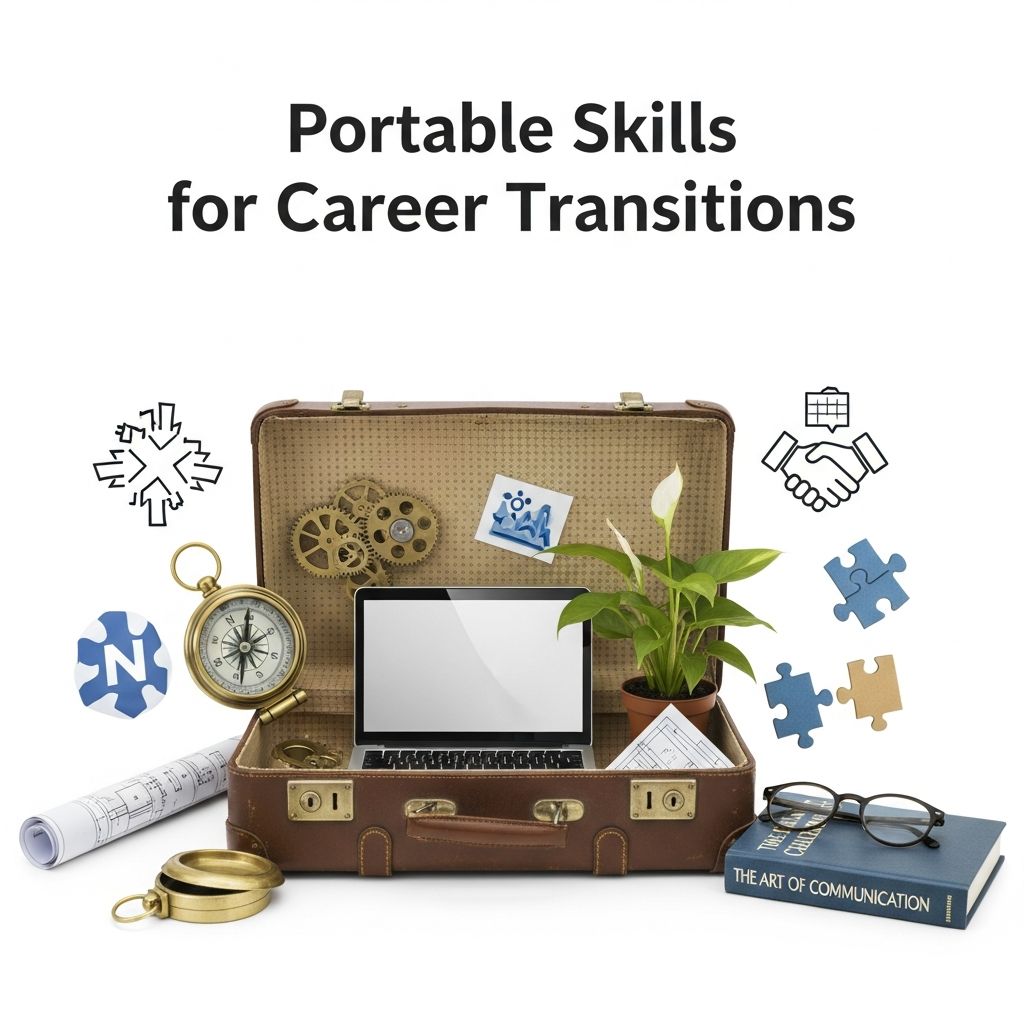
Understanding Portable Professional Competencies
Every professional carries a collection of abilities developed through work experience, education, and life experiences that extend far beyond a single job title or industry. These portable competencies—often called transferable abilities—form the foundation of career agility in an increasingly dynamic job market. Unlike specialized technical knowledge confined to particular fields, portable competencies retain their value regardless of the sector or position you pursue. A project coordinator transitioning into consulting, a retail manager moving into nonprofit leadership, or an educator entering corporate training all rely on these universal abilities to succeed in unfamiliar environments. Understanding and articulating these competencies transforms career transitions from uncertain leaps into confident progressions grounded in demonstrated capabilities.
The Foundation of Cross-Industry Success
Why Organizations Prioritize Portable Competencies
Forward-thinking organizations increasingly recognize that specialized technical skills can be trained and updated quickly, but foundational competencies take considerably longer to develop. According to research from the National Association of Colleges and Employers, nearly 90% of employers actively seek candidates who demonstrate strong problem-solving capabilities, viewing this as more critical than industry-specific experience. This preference reflects a fundamental business reality: employees who communicate effectively, adapt to change, and collaborate across teams drive organizational success regardless of their previous backgrounds. When you highlight portable competencies during hiring conversations, you signal to employers that you’ve mastered the underlying capabilities necessary to learn new technical skills, navigate organizational cultures, and contribute immediately to team objectives.
The Distinction Between Portable and Technical Competencies
The competency landscape divides into two distinct categories. Technical competencies encompass specialized knowledge like accounting methodologies, software programming, medical procedures, or industry-specific regulations—skills learned through formal training or extended practice within particular fields. Portable competencies, by contrast, represent broader capabilities like communication, problem-solving, and collaboration that apply across contexts. While technical skills may become obsolete or industry-specific, portable competencies remain perpetually valuable. A marketing professional transitioning to healthcare administration likely cannot immediately apply their campaign management expertise, but their ability to lead teams, manage budgets, analyze data, and communicate complex information translates directly. This distinction explains why organizations increasingly value candidates who demonstrate strong portable competencies over those with narrow technical specialization.
Core Portable Competencies That Matter Most
Articulate Communication Across Contexts
Communication stands as perhaps the most universally valued portable competency, transcending industry boundaries and organizational hierarchies. Effective communicators adapt their message to different audiences—explaining technical concepts to non-specialists, presenting findings to executives, collaborating with peers, or engaging customers. The competency encompasses multiple dimensions: active listening that demonstrates genuine understanding of others’ perspectives, clear written expression through emails and reports, confident verbal delivery in meetings and presentations, and attentiveness to nonverbal cues that shape how messages are received. Professionals who master communication can navigate ambiguity, prevent misunderstandings, build trust with unfamiliar colleagues, and move projects forward despite obstacles. When presenting this competency during interviews or in resumes, emphasize specific examples: “Communicated technical findings to non-technical stakeholders, translating complex data into actionable insights” or “Facilitated cross-departmental collaboration by establishing clear communication protocols and addressing concerns from diverse perspectives.”
Collaborative Effectiveness in Diverse Teams
Teamwork extends beyond simply coexisting with colleagues—it represents the capacity to coordinate efforts toward shared objectives while navigating personality differences and competing priorities. Collaborative professionals understand their role within larger systems, contribute their perspective while respecting others’ viewpoints, provide constructive feedback, and support colleagues in achieving collective goals. This competency becomes particularly valuable as workplaces increasingly feature remote teams, virtual collaboration, and cross-functional projects. The ability to work effectively whether meeting in person, collaborating asynchronously across time zones, or building relationships with people you’ve never met in a conference room demonstrates genuine collaborative maturity. Showcase this competency by highlighting instances where your efforts contributed to team success: “Worked as part of cross-functional teams to deliver projects on schedule and within budget” or “Collaborated with team members from different departments to develop comprehensive solutions addressing organizational challenges.”
Adaptability in Changing Environments
The ability to navigate change—embracing new tools, adjusting to shifting priorities, and maintaining performance amid uncertainty—has emerged as one of the most in-demand portable competencies, particularly following workplace disruptions that normalized remote work and accelerated digital transformation. Professionals with strong adaptability don’t merely tolerate change; they respond strategically, updating their approaches based on new information while maintaining focus on core objectives. This competency includes learning agility (the capacity to acquire new knowledge quickly), resilience (bouncing back from setbacks), and resourcefulness (finding creative solutions when conditions shift). Organizations value adaptable employees because they absorb organizational changes without creating friction, learn new systems without extensive hand-holding, and maintain productivity during transitions. When discussing adaptability in career contexts, highlight concrete examples: “Rapidly adapted to three different software systems during a departmental transition, achieving full proficiency within two weeks” or “Maintained performance metrics while embracing new workflows during organizational restructuring.”
Strategic Problem-Solving and Analysis
Problem-solving represents a foundational portable competency that manifests differently depending on professional context but remains universally valuable. This competency involves identifying obstacles, analyzing contributing factors, evaluating potential solutions, and implementing effective remedies. A marketer solves problems about audience reach and engagement, a data analyst troubleshoots declining revenue patterns, and a customer service professional resolves client satisfaction issues—all applying the same underlying problem-solving framework to different domain-specific challenges. Strong problem-solvers demonstrate critical thinking, creativity in generating alternatives, analytical rigor in evaluating options, and decisiveness in selecting and implementing solutions. This competency proves particularly valuable during interviews because it signals that you can contribute immediately by addressing challenges rather than requiring extensive guidance. Emphasize problem-solving capability through examples: “Identified workflow inefficiencies causing project delays, analyzed root causes, and implemented process improvements reducing timelines by 20%” or “Applied analytical thinking to troubleshoot technical issues, proposing solutions that prevented customer churn.”
Leadership and Influence Without Authority
Leadership competencies extend far beyond formal management positions. Many portable leadership competencies function effectively in non-supervisory roles: inspiring confidence in colleagues, influencing decisions through compelling reasoning rather than positional authority, mentoring others’ professional development, and directing collective efforts toward objectives. Professionals demonstrating leadership competencies show initiative in addressing gaps, take responsibility for outcomes, delegate appropriately, and develop others’ capabilities. These competencies prove portable across industries and role levels because human motivation, team dynamics, and organizational goals share common principles regardless of sector. When presenting leadership competencies, emphasize situations where you influenced outcomes without formal authority: “Led cross-departmental initiatives by building consensus among stakeholders with competing priorities” or “Mentored junior staff, supporting their professional development and improving team capabilities.”
Identifying Your Portable Competencies
Reflective Self-Assessment Process
Identifying your portable competencies requires structured reflection examining your professional history, educational experiences, and volunteer work through a capabilities lens rather than a job duties lens. Begin by examining your work history chronologically, pausing at each role to consider not just what you did, but how you did it. Consider the following reflective questions for each experience:
- What were the key challenges you encountered, and how did you approach solving them?
- Which colleagues, supervisors, or stakeholders specifically valued your contributions, and what made those contributions valuable?
- What new skills did you develop, and which ones have remained relevant across multiple positions?
- When did you feel most engaged and effective, and what competencies enabled that success?
- Which accomplishments required you to work with unfamiliar people, systems, or processes?
- How did you respond when priorities shifted or unexpected challenges emerged?
Extend this reflection beyond formal employment to include volunteer leadership, academic projects, extracurricular involvement, and community engagement. Many portable competencies develop through experiences outside traditional work contexts—volunteer roles often develop leadership and communication competencies, academic group projects build collaboration skills, and event organization develops project management and problem-solving capabilities. Compile your reflections into a comprehensive capabilities inventory, grouping related competencies together and noting specific situations where you’ve demonstrated each capability.
External Feedback and Pattern Recognition
Your self-perception of your competencies may differ significantly from how others perceive them, making external feedback invaluable for identifying portable competencies you might underestimate or overlook. Seek feedback from colleagues, supervisors, mentors, and even clients or customers about your strengths and capabilities. During conversations, specifically ask: “What do you see as my greatest strengths?” or “What capabilities do you think I bring that distinguish me from others?” Listen carefully for patterns—if multiple people mention your ability to simplify complex information, communicate clearly, or navigate change, these observations point toward genuine portable competencies worth developing further and emphasizing in career transitions. Additionally, examine feedback you’ve received through performance reviews, 360-degree assessments, or achievement recognition—these sources often highlight competencies others recognize even if you haven’t explicitly acknowledged them.
Articulating Portable Competencies for Career Advancement
Resume Presentation Strategies
Effectively presenting portable competencies on resumes requires moving beyond generic skill lists to demonstrate concrete capability through achievement-focused language and specific examples. Rather than writing “Strong communication skills,” demonstrate communication capability through accomplishment statements: “Presented quarterly findings to C-level executives, translating complex analytical results into strategic recommendations that informed company investment decisions.” This approach shows communication capability in action, revealing not just that you possess the competency but that you apply it to generate meaningful results. When organizing your resume, consider grouping experiences to highlight portable competencies across different roles—if you’ve managed teams, mentored colleagues, or led initiatives in multiple positions, organizing these experiences thematically rather than chronologically emphasizes your leadership capability. Include specific context about the challenges you faced, the approaches you employed, and the outcomes you achieved, allowing hiring managers to infer your underlying portable competencies from demonstrated success.
Interview Communication Approach
During interviews, deliberately connect your portable competencies to the hiring organization’s needs and challenges. Rather than simply listing your strengths, present concrete examples of how your competencies have addressed challenges similar to those the organization faces. If the job description emphasizes adapting to rapid change, share a specific example of how you’ve successfully navigated organizational transitions: “During a recent project, our department implemented three new systems simultaneously. I quickly learned each platform, created reference guides for colleagues, and supported the team during the transition, ultimately achieving a 90% adoption rate within the target timeline.” This narrative approach demonstrates your capability in action, making your portable competencies concrete and credible. Prepare 4-6 comprehensive examples that can be adapted to different interview questions, each following a structure where you describe the situation, explain the challenges, highlight your approach, and quantify the outcomes when possible.
Developing Your Portable Competency Portfolio
Intentional Development Pathways
While portable competencies often develop through experience, intentional development accelerates capability building and creates career options you might otherwise miss. If you recognize that communication represents a gap relative to your career aspirations, deliberately seek opportunities to develop this capability—volunteering for presentation opportunities, taking public speaking courses, writing articles or blog posts, or leading meetings where you practice communicating complex information. Similarly, if you want to strengthen problem-solving capabilities, seek assignments requiring analytical thinking, take analytics or data literacy courses, or participate in strategic planning initiatives. This intentional approach ensures you develop capabilities aligned with your career trajectory rather than leaving competency development entirely to chance. Additionally, consider how your current role offers development opportunities you might be underutilizing—if your position doesn’t naturally require leadership capability, volunteer to lead a task force, mentor new employees, or chair a committee, deliberately creating experiences that develop this portable competency.
Continuous Learning and Skill Evolution
The most successful career transitions occur for professionals who view portable competency development as ongoing rather than completed. As industries evolve and organizations face new challenges, the particular expression of portable competencies shifts, but the underlying capabilities remain relevant. Maintain your competency portfolio by reading widely, engaging with industry trends, seeking feedback about your effectiveness, and deliberately stretching yourself with new challenges. A professional strong in collaboration might deepen this competency by working with increasingly diverse global teams, an adaptable employee might volunteer for roles requiring navigation of significant organizational change, or a strong communicator might develop expertise in presenting to senior leadership. This continuous development approach ensures that your portable competencies remain sharp and contemporary, positioning you for advancement regardless of how your career path evolves.
Portable Competencies Across Different Career Stages
| Career Stage | Priority Portable Competencies | Development Focus |
|---|---|---|
| Early Career | Communication, Collaboration, Reliability | Building foundational competencies through diverse projects and cross-functional exposure |
| Mid-Career | Problem-solving, Leadership, Adaptability | Deepening competencies through increased responsibility and strategic initiatives |
| Senior Career | Strategic Thinking, Influence, Mentorship | Leveraging competencies to drive organizational impact and develop others |
Frequently Asked Questions About Portable Competencies
Q: Can portable competencies compensate for lacking specific technical skills?
A: Portable competencies significantly enhance your candidacy and ability to learn technical skills quickly, but most roles require a baseline technical capability. However, strong portable competencies—particularly learning agility and problem-solving—demonstrate that you can acquire necessary technical skills faster than candidates lacking these foundational abilities. Organizations frequently hire candidates with strong portable competencies over technically specialized candidates who lack collaboration or communication abilities.
Q: How do I explain career changes that rely heavily on portable competencies?
A: Frame career transitions by explicitly connecting your portable competencies to the new role’s requirements. Rather than apologizing for your different background, present your transition as strategic: “My background in [previous field] developed strong [relevant portable competencies], which I’m eager to apply to [new field] challenges. I understand the specific technical skills are different, but I’ve demonstrated capability in rapidly learning new technical domains while maintaining strong performance across teams.”
Q: Which portable competencies matter most for remote work success?
A: Remote work particularly values communication (especially written clarity and responsiveness), self-direction, adaptability to technology, and collaboration despite distance constraints. Strong time management and ability to work independently also prove critical since supervisors cannot observe work in progress. If transitioning to remote work, emphasize examples of these competencies in your career narrative.
Q: How should I present portable competencies if my background differs significantly from the target role?
A: Create explicit connections between your background and the target role by mapping your portable competencies to specific job responsibilities. If transitioning from healthcare to corporate management, you might emphasize: “My healthcare background developed strong crisis management and collaborative problem-solving skills—capabilities I’ll apply to [company’s specific challenges]. My experience coordinating across diverse teams and managing competing priorities has prepared me for [specific job responsibility].”
Q: Can I develop portable competencies if my current role seems limited?
A: Absolutely. Seek opportunities within your current organization—volunteer for cross-functional projects, lead initiatives outside your core responsibilities, mentor new employees, propose improvements to processes, or take on assignments requiring you to develop specific competencies. Many professional development opportunities exist within positions that appear narrow when you actively create or seek them out.
References
- 25 Transferable Skills Employers Look For — Penn State Smeal College of Business Career Center. 2022-10-28. https://careerconnections.smeal.psu.edu/blog/2022/10/28/25-transferable-skills-employers-look-for/
- Transferable Skills: The Key to Landing Your Dream Job — The Muse. https://www.themuse.com/advice/transferable-skills-definition-examples
- 15 Transferable Skills Companies Want in 2025 — FlexJobs. 2025. https://www.flexjobs.com/blog/post/transferable-skills
- Transferable Skills: 10 Skills That Work Across Industries — Indeed.com. https://www.indeed.com/career-advice/resumes-cover-letters/transferable-skills
- Transferable Skills: 17 Examples to Boost Your Resume & Career — BetterUp. https://www.betterup.com/blog/transferable-skills
- What Are Transferable Skills? Definition and Examples — University of Wooster Apex. 2022-09-23. https://apex.wooster.edu/blog/2022/09/23/what-are-transferable-skills-definition-and-examples/

Medha Deb is an editor with a master's degree in Applied Linguistics from the University of Hyderabad. She believes that her qualification has helped her develop a deep understanding of language and its application in various contexts. Medha specializes in the areas of beauty, health, sports, and wellness and is committed to ensuring that the content on the website is…