
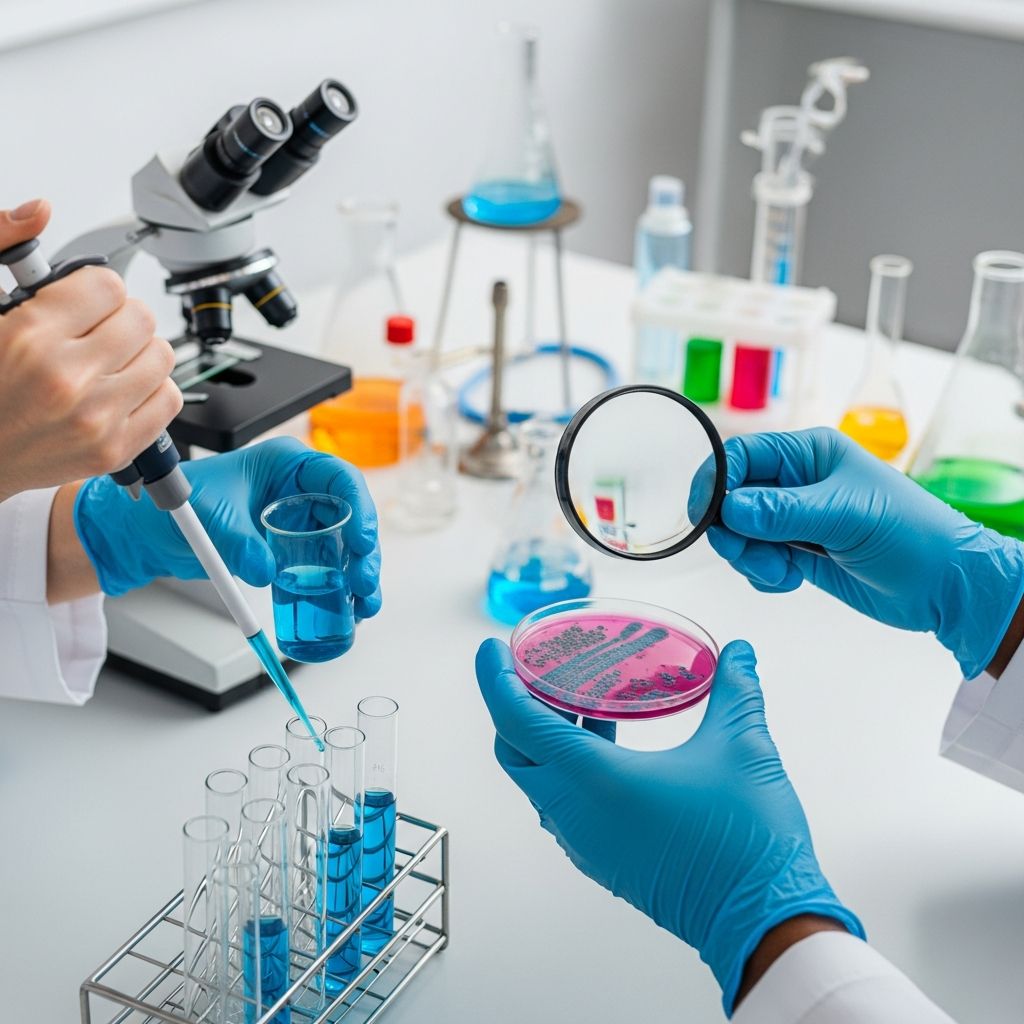
Introduction to Practical Biology Education
Biology education extends far beyond textbooks and lectures. When students engage in hands-on experimental work, they develop a deeper understanding of life’s processes and build critical scientific thinking skills. Practical laboratory activities transform abstract biological concepts into tangible, observable phenomena that students can directly manipulate and analyze. This approach to learning aligns with modern educational best practices, where experiential activities create stronger neural pathways and foster genuine curiosity about the natural world.
The foundation of effective biology education rests on bridging theory with practice. Students who participate in laboratory work develop laboratory safety skills, learn proper scientific methodology, and gain confidence in their ability to conduct investigations. Furthermore, hands-on experiments encourage students to ask questions, form hypotheses, and interpret data—essential components of scientific literacy that extend well beyond their formal education.
Genetic Material Investigation: DNA Extraction Techniques
One of the most transformative experiences in biology education involves directly observing genetic material. DNA extraction represents an accessible yet profound entry point into molecular biology. Students can visualize the hereditary code that defines all living organisms, making the abstract concept of genetics remarkably concrete.
The strawberry DNA extraction experiment remains a cornerstone activity for high school curricula. This procedure demonstrates how cellular components can be systematically separated using basic household materials. The process begins with mechanical disruption of cell walls through mashing, followed by chemical treatment to dissolve membrane structures. When cold alcohol is introduced to the cellular extract, DNA precipitates out as a visible, stringy white substance that students can observe with their naked eyes.
The beauty of this experiment lies in its simplicity and accessibility. Required materials include:
- Fresh strawberries or other plant tissue
- Dish soap solution
- Salt solution
- Chilled rubbing alcohol
- Basic laboratory glassware and coffee filters
By performing this experiment, students internalize fundamental concepts about cell structure, molecular polarity, and the physical properties of nucleic acids. They understand that DNA is not merely an abstract concept discussed in textbooks but a tangible substance with observable characteristics.
Cellular Processes: Osmosis and Membrane Transport
Understanding how cells interact with their environment forms a critical component of biological literacy. Osmosis—the movement of water across semi-permeable membranes—profoundly influences cellular function in every organism. The osmosis-with-eggs experiment provides a direct window into these fundamental transport mechanisms.
In this investigation, eggs are first treated with vinegar to dissolve their calcium carbonate shells, leaving behind only the semi-permeable cell membrane. Students then place these prepared eggs into different solutions: pure water, concentrated saltwater, and sugar syrup. Over several days, observable changes occur as water moves across the membrane in response to concentration gradients. Eggs immersed in pure water absorb water and expand, while those in hypertonic solutions lose water and shrivel. These dramatic physical changes make the invisible process of osmosis unmistakably visible.
This experiment elegantly illustrates several interconnected biological principles:
- Semi-permeable membrane selectivity and function
- Water potential and solute concentration effects
- Homeostatic mechanisms that maintain cellular integrity
- Quantitative observation and measurement techniques
Cell Division: Observing Mitosis Through Microscopy
The process of cell division represents one of biology’s most fundamental phenomena, yet it remains invisible in real-time within most cells. By examining prepared onion root tips under microscopic magnification, students can observe mitosis frozen at different phases, creating a visual timeline of cell division.
Onion root tips provide exceptional specimen material because cells in the root meristem divide rapidly, offering numerous cells in various mitotic phases. After staining procedures that highlight chromosomes and spindle fibers, students prepare microscope slides and systematically identify cells in prophase, metaphase, anaphase, and telophase. This structured observation develops critical skills in microscope operation, tissue preparation, and cellular recognition.
The experiment connects to broader concepts including:
- Chromosome condensation and movement
- Spindle apparatus formation and function
- Cytokinesis and cellular separation
- Growth and tissue regeneration mechanisms
Comparative Cellular Architecture: Plant Versus Animal Cells
While textbooks present simplified diagrams of plant and animal cells, direct microscopic comparison reveals the sophisticated structural variations between these cell types. This comparative investigation challenges students to observe, document, and explain cellular differences at the structural level.
Students typically prepare two slides simultaneously: one containing cheek cells from an animal source and another showing plant leaf cells. After appropriate staining procedures, students observe the differences in real time. Plant cells display prominent cell walls, chloroplasts containing green pigment, and large central vacuoles. Animal cells lack these structures, instead showing only a cell membrane, multiple small vacuoles, and a prominent nucleus. This direct visual comparison transforms abstract knowledge into embodied understanding.
Key cellular features students identify include:
- Cell wall presence and composition in plants
- Chloroplast distribution and pigmentation
- Vacuole size and function differences
- Nuclear size relative to cell volume
- Membrane structure and flexibility
Rapid-Turnaround Investigations: Efficient Laboratory Activities
Not all biology experiments require extensive preparation time or specialized equipment. Several quick investigations provide meaningful learning experiences using common materials. These rapid-turnaround activities prove particularly valuable in resource-limited educational settings.
Seed Germination Observation: Students place seeds between damp paper towels and monitor developmental progression over several days. This simple activity demonstrates growth processes, environmental factor effects on development, and measurement techniques. Students can vary conditions—light exposure, temperature, moisture levels—and document how each variable influences germination rates.
Yeast Fermentation Dynamics: Combining yeast with sugar and warm water initiates fermentation, producing visible carbon dioxide bubbles. Students observe anaerobic respiration in real time, understanding how organisms generate energy in oxygen-limited conditions. This experiment introduces concepts of cellular respiration, metabolic processes, and biochemical reactions.
Plant Transpiration Visualization: Placing a sealed plastic bag over a leafy plant branch creates a closed system where water vapor condenses visibly on the bag’s interior. Students recognize transpiration as the plant’s water transport and cooling mechanism, understanding how plants move water from roots to leaves against gravitational forces.
Microbial World Exploration: Bacterial Observation Techniques
Bacteria occupy every environment on Earth, yet their microscopic size places them beyond unaided human perception. Several experiments bring the bacterial world into direct student observation, revealing the hidden microbial universe that surrounds us constantly.
The water bottle bacteria investigation encourages hypothesis formation about contamination sources and microbial growth factors. Students swab water bottle exteriors before and after refilling, preparing microscope slides at successive time intervals. Over one to two days, bacterial colonies become visible, demonstrating microbial growth rates and response to repeated environmental exposure. Students then investigate what conditions promoted growth, whether bottle material affected bacterial adherence, and how personal hygiene practices influence contamination.
Advanced bacterial investigations include culturing bacteria on homemade or commercial agar plates, observing fermentation processes in food preparation, and studying bacterial roles in decomposition and nutrient cycling. These activities ground abstract microbiology in observable reality, helping students recognize bacteria not as threats but as essential components of ecological systems.
Advanced Cellular Studies: Enzyme Function and Metabolic Processes
For students ready to investigate molecular-level biological processes, enzyme studies provide sophisticated yet accessible investigations. Enzymes catalyze virtually all biological reactions, yet their activity remains invisible without proper experimental design.
Catalase activity measurements represent a particularly accessible enzyme investigation. Catalase breaks down hydrogen peroxide into water and oxygen gas, with oxygen production creating visible bubble formation. By varying enzyme concentration, substrate concentration, temperature, or pH, students observe how each factor affects enzymatic reaction rates. This experimental variation develops understanding of enzyme kinetics and demonstrates that biological reactions respond predictably to environmental changes.
Enzyme investigations connect to practical applications including industrial biotechnology, medical diagnostics, and food processing, helping students understand how fundamental biochemistry translates into real-world applications.
Fermentation and Applied Microbiology: Kombucha Cultivation
Combining microbiology with practical application, kombucha fermentation projects extend over multiple days, allowing students to document yeast and bacterial growth patterns throughout the fermentation process. This extended investigation requires daily observation and documentation, developing longitudinal research skills.
Kombucha production involves yeast and beneficial bacteria converting sugar and tea into an acidic, carbonated beverage. Students observe how microorganisms modify their environment, generate metabolic byproducts, and create distinctive flavor compounds. The project also opens discussions about probiotic bacteria, digestive health, and the role of beneficial microorganisms in maintaining human wellness.
This investigation transforms fermentation from an abstract chemical concept into a tangible, consumable product, demonstrating that microbiology directly impacts daily life and food culture.
Physiological Measurements: Cardiovascular and Respiratory Responses
Human physiology becomes remarkably transparent when students measure their own cardiovascular and respiratory responses to activity. This self-directed investigation requires minimal equipment—essentially only a stopwatch and a willing research partner.
Students establish baseline heart rates and breathing rates, then perform standardized physical activities of increasing intensity. Measurements taken at successive intervals reveal how cardiovascular output adjusts to meet metabolic demands. Students compare responses between individuals of different fitness levels, ages, or sexes, recognizing human physiological variation while identifying common adaptive responses to physical stress.
This investigation makes abstract concepts like heart rate regulation and oxygen delivery viscerally real, as students directly experience their bodies’ responses to physical challenges.
Anatomical Understanding Through Dissection
While microscopic observation reveals cellular structures, dissection provides insight into organism-level anatomy and tissue organization. Invertebrate and vertebrate dissections progress in complexity, from earthworms with simple body organization to fetal pigs or chicken wings with complex organ systems.
Dissection develops manual dexterity, spatial reasoning, and three-dimensional anatomical understanding that diagrams cannot fully convey. Students recognize how organs connect, how tissues vary in appearance and texture, and how body systems integrate into functional wholes.
Frequently Asked Questions
Q: What safety precautions are essential when conducting biology experiments?
A: Always wear appropriate protective equipment including lab coats and safety goggles. Handle biological materials with care, avoid contacting mucous membranes, properly dispose of biological waste, and follow institutional guidelines for pathogen handling. Wash hands thoroughly after completing experiments, and ensure adequate ventilation when using chemical reagents.
Q: Can these experiments be performed outside traditional laboratory settings?
A: Many experiments function effectively in classroom or home settings with basic safety precautions. However, some procedures benefit from proper laboratory facilities, supervision, and chemical storage. Always verify that specific experiments meet local educational standards and institutional requirements before implementation.
Q: How can educators modify experiments for students with different learning abilities?
A: Experiments can be simplified by reducing variables, providing structured observation sheets, or using technology to enhance visualization. Advanced students might design variations to test additional hypotheses or conduct statistical analysis of results.
Q: What materials typically cost less but produce equivalent learning outcomes?
A: Household items frequently substitute for specialized laboratory equipment. Fresh plant tissue replaces expensive commercial samples, household chemicals replace specialized reagents, and basic microscopes provide adequate magnification for most investigations. These substitutions maintain educational rigor while reducing costs significantly.
Q: How do hands-on experiments improve long-term retention of biological concepts?
A: Experiential learning engages multiple sensory pathways and creates stronger memory consolidation compared to passive reading. Students who observe phenomena directly, manipulate variables, and interpret results develop deeper conceptual understanding that persists longer than memorized facts.
References
- High School Biology Experiment Ideas, Activities, and Kits — Anatomy Warehouse. Accessed 2026-04-04. https://anatomywarehouse.com/news/high-school-biology-experiment-ideas-activities-and-kits/
- 7 Easy Homeschool Biology Experiments for High School Students — Journey Homeschool Academy. Accessed 2026-04-04. https://journeyhomeschoolacademy.com/easy-biology-experiments-middle-high-school/
- Experiments — Ask A Biologist, Arizona State University. Accessed 2026-04-04. https://askabiologist.asu.edu/activities/experiments
- Biology Lab Experiments — Lehigh Carbon Community College Science in Motion. Accessed 2026-04-04. https://www.lccc.edu/science-in-motion/labs-equipment/biology-lab-experiments/

- Integrated M.A. in Applied Linguistics, University of Hyderabad
- 5+ years in editorial, instructional, SEO, and research-based writing
Sneha is a relationships and lifestyle writer with a strong foundation in applied linguistics and certified training in relationship coaching. She brings over five years of writing experience to theskillvault, crafting thoughtful, research-driven content that empowers readers to build healthier relationships, boost emotional well-being, and embrace holistic living. Her writing and insights reflect the belief that beauty, happiness, and wellness…