
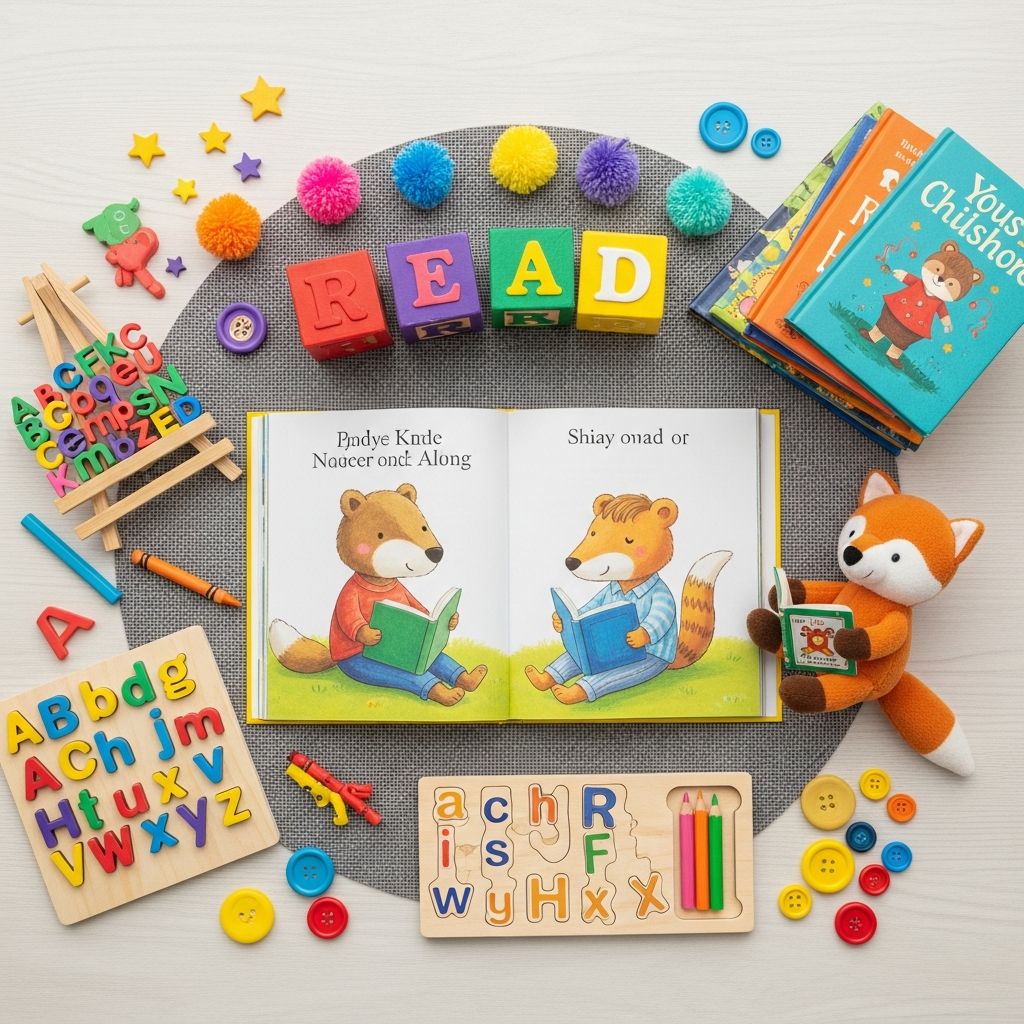
Preschool years are crucial for building foundational literacy skills like recognizing letters, understanding sounds, expanding vocabulary, and enjoying stories. Through playful, hands-on experiences, children aged 3-5 develop phonemic awareness, print motivation, and narrative abilities that pave the way for reading success. This guide presents original activity ideas inspired by proven educational strategies, adaptable for home, classroom, or group settings.
Why Early Literacy Matters for Preschoolers
Research shows that early exposure to language-rich environments significantly predicts later academic achievement. Children who engage in daily literacy play show stronger phonological skills and better comprehension by kindergarten. Key components include oral language, alphabet knowledge, and concept of print. Integrating these into routines fosters curiosity without pressure, making learning joyful.
Creating an Engaging Literacy Space
Start by designing a welcoming area with soft cushions, low shelves stocked with board books, magnetic letters, and word posters. Add labels on bins and rotate materials weekly to maintain interest. Incorporate natural light and cozy nooks for independent exploration. This setup encourages self-directed discovery while embedding literacy naturally.
- Book Corner: Diverse titles including rhymes, animals, and diverse characters.
- Writing Station: Markers, crayons, paper, and clipboards for scribbling.
- Sensory Zone: Trays with sand or rice for tracing letters.
Interactive Story Sessions to Ignite Imagination
Group storytelling builds listening skills and empathy. Gather in a circle on a rug for 10-15 minutes daily. Use expressive voices, pauses for predictions, and point to words to model reading.
Puppet Performance Retells
Craft simple puppets from socks or paper bags representing story characters. After reading, let children act out key scenes. This reinforces sequence and details. Materials: socks, markers, googly eyes. Extend by having kids create their own endings.
Picture Sequence Puzzles
Print or draw 4-6 story event images, laminate, and cut into puzzles. Children reassemble while narrating. Promotes comprehension and memory. Vary difficulty by story length.
Mystery Bottle Tales
Fill clear bottles with story-themed items like tiny toys or fabric swatches. Shake gently while reading aloud; pass around for tactile engagement. Enhances focus and multisensory learning.
Movement-Infused Phonics Adventures
Active games channel energy into sound recognition. Preschoolers learn best when bodies and minds move together.
Jump-to-Letter Mats
Tape large letter shapes on the floor using paper or tape. Call a sound; kids jump and shout the letter. Add colors for matching challenges. Builds gross motor and phonics links.
Ball Kick Challenges
Set up cups labeled with letters. Roll or kick a ball to topple one, then name the letter or sound. For groups, form teams. Reinforces recognition through play.
Freeze Dance Rhymes
Play music with rhyming lyrics; freeze on cues to name rhyming words. Examples: cat-hat, dog-log. Develops auditory discrimination.
Sensory Crafts for Letter Mastery
Tactile experiences solidify abstract concepts like shapes and sounds.
Playdough Letter Builders
Roll dough into snakes to form letters on mats. Say sounds while shaping. Use cookie cutters for guidance. Strengthens fine motors and memory.
Invisible Ink Magic
Write letters with white crayon on paper; paint over with watercolors to reveal. Kids guess before revealing. Sparks wonder and letter ID.
Salt Tray Tracing
Fill trays with salt or flour. Guide fingers to trace letters, saying sounds. Shake to erase and retry. Low-mess fine motor practice.
Vocabulary Builders Through Everyday Play
Expand word banks via conversations and props.
| Activity | Focus Skill | Materials | Duration |
|---|---|---|---|
| Mealtime Descriptions | Descriptive Language | Food items | 10 min |
| I-Spy Sound Hunt | Initial Sounds | Room objects | 5 min |
| Pretend Shop Talks | Role-Play Vocab | Play food, cash register | 15 min |
| Nature Word Walks | Observation Words | Outdoor space | 20 min |
During meals, ask “What color is this? How does it taste?” I-Spy starts with “I spy something starting with /b/.” Dramatic areas with signs boost functional reading.
Games for Sight Word Fun
Introduce high-frequency words playfully.
Balloon Word Toss
Write words on balloons. Toss in circle; catcher reads aloud. Pop for surprises! Keeps energy high.
Scavenger Word Hunts
Hide word cards around space. Find, read, collect in baskets. Group share reinforces.
Clap Syllable Beats
Say words; clap syllables together. Progress to blending sounds. Rhythm aids memory.
Daily Routines Embedded with Literacy
Weave skills into transitions.
- Sing alphabet songs during cleanup.
- Label clothes hooks with names.
- Narrate diaper changes or handwashing steps.
- Use rhymes for line-ups: “If you’re ready (1,2,3).”
Tracking Progress and Adapting Activities
Observe engagement: Does the child anticipate rhymes? Name letters? Adjust by scaffolding—model first, then assist, finally independent. Portfolios of drawings or recordings show growth. Parent-teacher shares amplify home practice.
Frequently Asked Questions (FAQs)
What age group benefits most from these activities?
Ideal for 3-5-year-olds, but adapt for younger toddlers by simplifying to sounds and older kids by adding writing.
How often should we do literacy activities?
Daily short bursts (10-20 min) plus embedded moments yield best results without overwhelming.
Can screen time fit in?
Limited; opt for interactive apps with adult guidance, prioritizing hands-on play.
What if my child shows no interest?
Follow their leads—tie to favorites like dinosaurs—and keep sessions voluntary and fun.
Are materials expensive?
Mostly household items; thrift stores or recyclables work great.
References
- Creating a Playful, Literacy-Rich Preschool Environment — National Association for the Education of Young Children (NAEYC). 2023-10-12. https://www.naeyc.org/resources/blog/creating-playful-literacy-rich-preschool-environment
- 25 Fun Literacy Activities for Preschoolers — Rasmussen University. 2022-08-15. https://www.rasmussen.edu/degrees/education/blog/literacy-activities-for-preschoolers/
- Fun and Effective Literacy Activities for Preschoolers — Grand Canyon University Blog. 2023-05-20. https://www.gcu.edu/blog/teaching-school-administration/fun-and-effective-literacy-activities-preschoolers
- Early Literacy Activities for Children — Child Care Resource & Referral Center Association (CCRRCA). 2024-02-10. https://www.ccrcca.org/parents/strengthening-families-blog/item/early-literacy-activities-for-children/
- 20 Best Language and Literacy Activities for Preschoolers — Accelerate Learning Blog. 2023-11-05. https://blog.acceleratelearning.com/20-best-language-and-literacy-activities-for-preschoolers

Medha Deb is an editor with a master's degree in Applied Linguistics from the University of Hyderabad. She believes that her qualification has helped her develop a deep understanding of language and its application in various contexts. Medha specializes in the areas of beauty, health, sports, and wellness and is committed to ensuring that the content on the website is…