
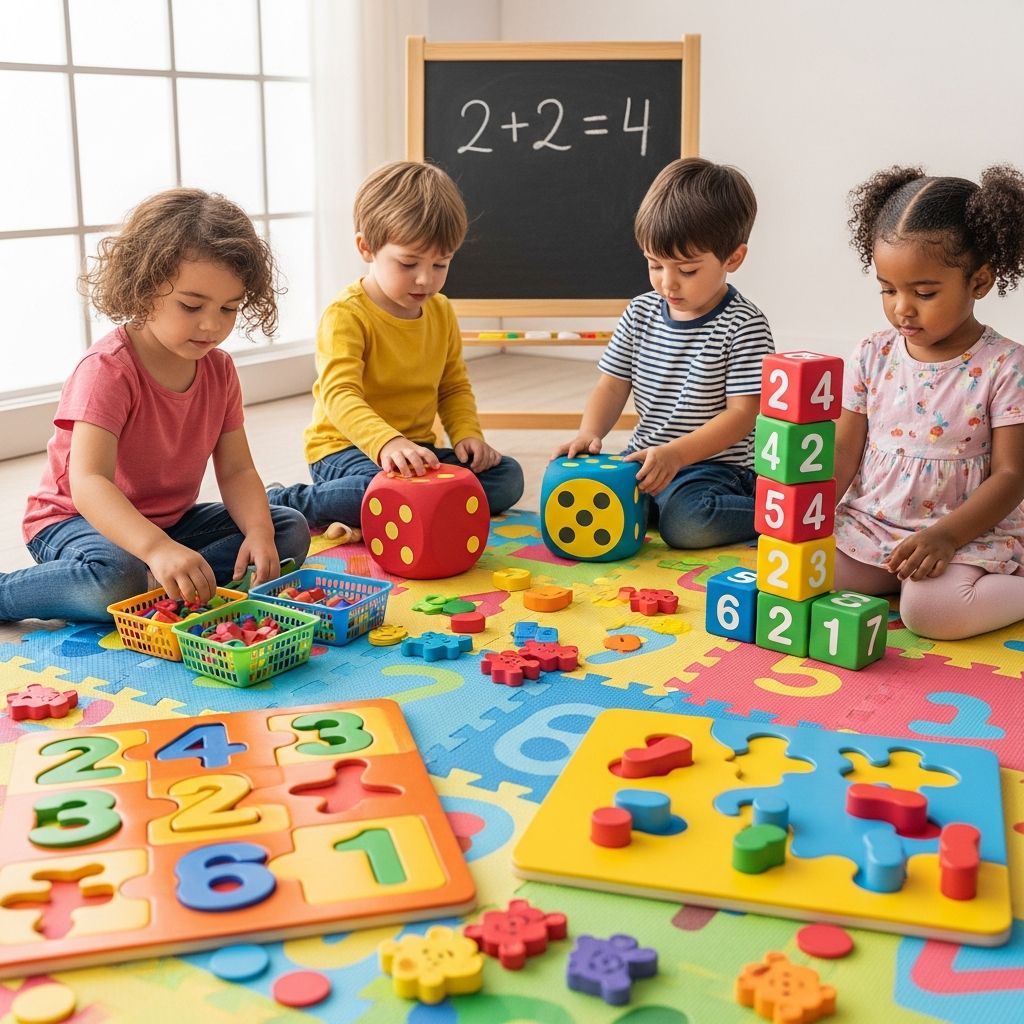
Preschool years are a critical time for developing foundational math skills. Through playful activities, children aged 3-5 can grasp concepts like counting, shapes, patterns, and basic operations without feeling the pressure of formal lessons. These games turn everyday moments into opportunities for discovery, using household items and nature to spark curiosity and confidence.
Building Strong Foundations: Why Math Matters Early
Early exposure to math enhances problem-solving abilities and prepares children for school success. Research shows that hands-on activities improve number sense and spatial awareness. By integrating math into play, educators and parents create positive associations that last a lifetime.
Mastering Counting Through Adventure
Counting is the gateway to numeracy. Transform it into exciting quests that encourage movement and exploration.
- Nature Collection Challenge: During outdoor walks, task children with gathering specific quantities of leaves, stones, or twigs. For example, collect five red leaves or three smooth rocks, then count them aloud together. This reinforces one-to-one correspondence while connecting math to the environment.
- Dice Dash Relay: Roll a die and have kids race to collect that many objects—like buttons or cereal pieces—into a bowl. Repeat rolls to build towers or lines, practicing sequential counting up to 12.
- Balloon Keep-Up Count: Inflate balloons and challenge children to tap them in the air, counting each bounce. Vary by adding numbers: tap five times before passing to a friend.
These activities not only teach numbers 1-20 but also develop gross motor skills and attention span.
Shape Discovery in Everyday Surroundings
Shapes are everywhere, from toys to household items. Games that hunt and build with shapes help children recognize and name them confidently.
- Indoor Shape Safari: Provide a checklist of circles, squares, triangles, and rectangles. Children roam the room, pointing out examples like clock faces or book covers, then draw or build replicas with blocks.
- Block Shape Towers: Using wooden or foam blocks, instruct kids to construct towers incorporating specific shapes, such as a square base with triangular roofs. Count the shapes used for dual learning.
- Playdough Shape Mats: Roll dough and press into outline mats of various shapes. Discuss properties like sides and corners while creating colorful mosaics.
| Shape | Common Examples | Activity Idea |
|---|---|---|
| Circle | Plates, wheels | Trace and cut wheels for a toy car |
| Square | Tiles, windows | Build a square house with sticks |
| Triangle | Sandwich slices, roofs | Form pizza slices from dough |
| Rectangle | Doors, books | Stack rectangles into a ladder |
This table offers quick references for integrating shapes into daily routines.
Pattern Play: Predicting and Creating Sequences
Patterns lay the groundwork for algebra by teaching repetition and prediction. Simple, repeatable games make this abstract concept concrete.
- Lego Sequence Cards: Draw cards showing color patterns like red-blue-red-blue. Children replicate using bricks, then extend the pattern independently.
- Bead Stringing Symphony: Provide pipe cleaners and colorful beads. Start a pattern (e.g., two yellow, one blue) and let kids continue, discussing what comes next.
- Cereal Chain Creator: Loop cereal pieces into edible necklaces following patterns. Eat and remake for repeated practice.
Encourage verbalizing patterns: “What comes after two reds?” This boosts logical thinking.
Sorting and Classifying for Logical Minds
Sorting teaches categorization, a key math skill. Use tactile items to engage senses.
- Coin Classification Grid: Tape a grid on the floor labeled by coin type or size. Children sort pennies, nickels, etc., from a mixed pile.
- Laundry Logic Game: During chore time, group socks by color, size, or pattern. Extend to buttons or pom-poms for variety.
- Toy Type-Out: Draw circles numbered by quantity on paper; fill each with matching toys, like four cars in one circle.
These promote comparison skills: bigger/smaller, same/different.
Early Addition and Subtraction Adventures
Introduce operations through manipulatives, avoiding worksheets for kinesthetic learning.
- Pom-Pom Egg Carton Add: Place two numbers in carton sections with pom-poms. Combine into one section and count the total.
- Playdough Smash Subtract: Roll balls for addends; smash away the subtracted amount and recount remainders.
- Bead Slide Subtraction: String beads on pipe cleaners per a sum, then slide off the minuend to reveal the difference.
- Block Stack Sums: Write equations; stack blocks accordingly and verify by counting.
Keep problems simple: 2+3, 5-1. Visuals bridge to abstract math.
Measurement and Comparison Fun
Comparing sizes, lengths, and capacities builds vocabulary and estimation.
- Cup Fill Frenzy: Roll dice, fill cups with that many counters. Compare whose cup holds more.
- Number Line Leap: Tape a floor number line; hop to numbers called or solve simple jumps like “+2 from 4”.
- Tower Height Contest: Build towers matching numbers, then measure with string or blocks against peers.
Incorporate words: longer, shorter, fuller, emptier.
Dynamic Movement Math Games
Active games blend physicality with numbers for energetic learners.
- Beanbag Number Toss: Toss into numbered hoops or boxes, tally scores.
- Number Jump Jam: Scatter cards; call a number, child jumps there then jumps that many times.
- Fishing for Figures: Magnet-fish numbered fish from a “pond,” identify and add caught values.
Movement aids retention, especially for kinesthetic children.
Creative Arts-Infused Math Explorations
Art makes math memorable.
- Shape Painting Pages: Draw hidden numbers/shapes in white crayon; paint to reveal and count.
- Egg Punch Numbers: Paper eggs numbered; punch holes equal to the number for fine motor/math combo.
- Cloud Raindrop Addition: Cloud shapes with equations; fingerprint raindrops for sums.
These foster creativity alongside cognition.
Group and Solo Play Variations
Adapt for settings: solo for home, groups for preschool. Small groups (3-5) maximize participation. Rotate roles: counter, collector, checker.
Tips for Success and Extension
Observe interests, use praise, vary materials. Extend by journaling counts or photographing towers. Track progress without pressure.
Frequently Asked Questions (FAQs)
What age group are these math games best for?
Ideal for 3-5-year-olds, with adjustments for younger (focus counting) or older (add complexity).
What household items work best for these activities?
Common finds like blocks, beads, paper, nature items, and food like cereal keep costs low.
How often should we do math play?
Daily 10-15 minute sessions build habits without overwhelming young attention spans.
Can these help reluctant learners?
Yes, play reduces anxiety; start with favorites like blocks or snacks.
How to assess progress?
Observe verbally: Can they count to 10? Predict patterns? No tests needed.
References
- 50 Hands-on Math Activities for Preschool and Kindergarten — Treehouse Schoolhouse. 2023-10-15. https://treehouseschoolhouse.com/blog/hands-on-math-activities-preschool-kindergarten
- Fun Math Activities for Preschoolers: Lessons That Really Work! — RevTrak Child Care Blog. 2024-02-20. https://www.revtrak.com/child-care/blog/math-activities-for-preschoolers
- Fun Math Activities for Preschoolers: Engaging and Educational Ideas — ELC Broward. 2023-05-10. https://www.elcbroward.com/post/fun-math-activities-for-preschoolers-engaging-and-educational-ideas
- 9 Creative Math Activities for Preschoolers — Famly. 2024-01-12. https://www.famly.co/us/blog/preschool-math-activities
- 25 Fun Math Activities for Preschoolers — DreamBox Learning. 2023-08-05. https://www.dreambox.com/math/guides/math-activities-for-preschoolers
- Pre-K Math Activities: Hands-On Learning for Kids — Brighter Futures Indiana. 2023-11-18. https://brighterfuturesindiana.org/blog/pre-k-math-activities-hands-on-learning-for-kids-2
- Math for Preschoolers — Illinois Early Learning Project (.gov affiliate). 2024-03-01. https://illinoisearlylearning.org/reslists/math-preschool/

- Integrated M.A. in Applied Linguistics, University of Hyderabad
- 5+ years in editorial, instructional, SEO, and research-based writing
Sneha is a relationships and lifestyle writer with a strong foundation in applied linguistics and certified training in relationship coaching. She brings over five years of writing experience to theskillvault, crafting thoughtful, research-driven content that empowers readers to build healthier relationships, boost emotional well-being, and embrace holistic living. Her writing and insights reflect the belief that beauty, happiness, and wellness…