
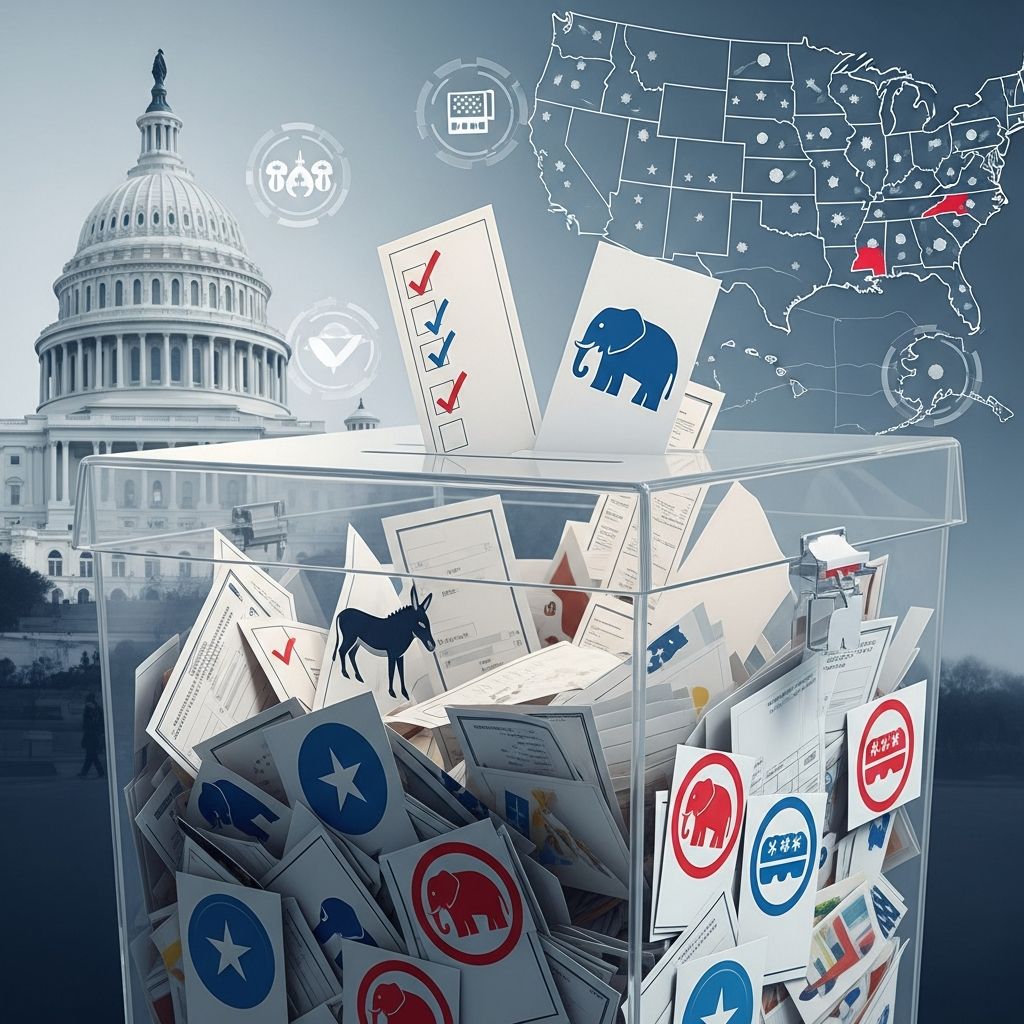
The Foundational Role of Presidential Primaries in Modern Elections
Presidential primaries represent a cornerstone of the American electoral system, serving as the mechanism through which political parties identify and nominate their candidates for the general election. Unlike general elections that determine which candidate wins office, primaries function as internal party events where registered party members exercise direct influence over their party’s direction and leadership choices. This distinction between primaries and general elections creates a two-stage process that fundamentally shapes the trajectory of American politics at the national level.
The significance of presidential primaries extends far beyond simple candidate selection. These elections establish which individuals will have the opportunity to compete in general elections and, consequently, determine the range of choices available to all voters. When primary voters narrow the field to a single nominee per party, they effectively establish the parameters for national political discourse and policy debates that will dominate the subsequent general election campaign. This gatekeeping function makes primary participation exceptionally consequential for shaping the future direction of the country.
Historical Evolution: From Conventions to Direct Voter Participation
The modern primary system represents a dramatic departure from earlier nomination methods used in American politics. Before the advent of direct primaries, congressional caucuses served as the mechanism for selecting presidential candidates. These informal gatherings of legislators allowed political elites to exercise near-complete control over the nomination process, limiting public participation and voter influence.
The transition from caucus-based selection to direct primaries emerged from recognition that the existing system had become untenable. Reformers advocated for democratization of the nomination process, arguing that voters deserved meaningful participation in selecting their leaders rather than having decisions made behind closed doors by party establishment figures. This reform movement gained traction particularly in one-party dominant regions, where the primary effectively became the decisive election since the general election outcome was predetermined.
A pivotal moment in primary history occurred in 1960 when Senator John F. Kennedy leveraged primary election victories to demonstrate broad voter support for his candidacy, ultimately securing the Democratic nomination at the Los Angeles convention. Kennedy’s success with primary voters proved that strong performance in state primaries could influence the calculations of party delegates and establish momentum that translated into convention success. This demonstrated that primary elections had evolved into a genuine force in determining presidential nominees, rather than merely serving as a secondary consideration.
How Primary Elections Function Within Party Structures
Presidential primaries operate according to rules and timelines established by individual states and national party organizations. Most states schedule their primaries between six to nine months before the general election, allowing sufficient time for the nomination process to conclude and for the winning nominee to prepare for the general election campaign. Voters in these primaries cast secret ballots indicating their preferred candidate, and the results directly influence the allocation of delegates to the national nominating convention.
The delegate allocation process represents a critical mechanism through which primary results translate into tangible power at national party conventions. Different parties employ distinct delegate allocation formulas. For Democratic primaries, candidates must typically reach a minimum threshold of voter support—such as 15 percent—to qualify for any delegate allocation, ensuring that delegate distribution reflects meaningful voter preference rather than fragmenting among numerous minor candidates. Republican delegate allocation follows different rules that vary by state and may involve caucus components alongside primary voting.
Early-voting states occupy a position of outsized influence within the primary calendar. Iowa and New Hampshire, traditionally holding their primaries before other states, generate substantial media attention and establish momentum that can significantly influence subsequent contests. Success in these early states can reshape candidate viability, affecting fundraising capacity, media coverage, and voter perceptions in later primaries. Conversely, disappointing performances in early states can effectively end candidacies despite substantial resources and organizational infrastructure.
The phenomenon of “Super Tuesday”—when numerous states hold primaries simultaneously—represents another critical juncture in the primary calendar. These coordinated voting days can dramatically consolidate support for frontrunners or create opportunities for surging candidates to establish commanding leads. The cumulative delegate totals achieved on Super Tuesday often determine the trajectory of the remaining primary contests.
The Voter Participation Dynamic and Democratic Representation
Primary elections attract a distinctly different voter population compared to general elections. Primary voters tend to be more partisan, more ideologically committed, and more engaged with specific policy issues than the broader electorate that participates in general elections. This characteristic of primary electorates creates important implications for representation and political direction.
Research indicates that lower turnout rates in primary elections compared to general elections amplify the influence of individual votes and increase the relative weight of organized interests. When fewer voters participate in primaries, special interest groups, well-financed candidates, and passionate activist constituencies exercise proportionally greater influence over outcomes. This dynamic raises concerns about whether primary electorates accurately represent the preferences of broader party membership or the general voting public.
The composition of primary voters also influences which candidates gain traction and which policy positions receive emphasis during primary campaigns. Candidates often tailor messaging and policy proposals to appeal to primary voters, who may hold more extreme positions or more passionate commitments than general election voters. This dynamic can affect which issues dominate campaign discourse and how nominees are positioned relative to the political center.
Strategic Implications for Candidates and Campaigns
Successful navigation of the primary process requires candidates to develop sophisticated campaign strategies that address the distinct characteristics of primary electorates. Early emphasis on building name recognition, establishing organizational infrastructure, and securing fundraising networks proves essential for viability in competitive primaries.
Candidates must also assess strategic decisions about which early states to prioritize and which later contests represent realistic opportunities for victory or delegate accumulation. The resource constraints facing most candidates necessitate focused efforts rather than national campaigns, making early state performance disproportionately important for establishing momentum and maintaining viability.
The relationship between primary success and general election viability represents an ongoing tension in American politics. Strategies and messaging that prove effective in securing primary victory may not translate directly to general election success, potentially creating challenges for nominees who moved significantly toward their party’s ideological base during primary contests.
The Influence of Primary Elections on Party Direction and Policy
Presidential primaries serve as critical mechanisms through which party bases assert influence over party direction and policy priorities. The issues emphasized during primary campaigns, the candidates elevated to prominence, and the rhetoric employed in primary discourse all shape the party’s public identity and policy commitments. Winning candidates emerge from primaries with mandates reflecting the priorities of primary voters, creating pressure to maintain alignment with primary constituency preferences throughout their presidency.
Party leadership navigates complex terrain in primary elections, seeking to guide outcomes while respecting the democratic principle that party members should exercise meaningful influence over nominee selection. Party elites employ strategies such as endorsements, campaign contributions, and organizational support to advance favored candidates, though these informal mechanisms prove less direct than the command-and-control approaches available to party leadership in earlier eras.
Why Individual Votes Carry Greater Weight in Primary Elections
The mathematics of primary voting create a reality where individual voter participation exercises more substantial influence than in general elections. Because primary turnout typically represents a smaller percentage of the eligible electorate compared to general election participation, each vote represents a larger share of the total vote cast. In competitive primary races, relatively modest shifts in voter participation or preference can determine outcomes, making primary voters collectively more consequential than their numbers might initially suggest.
This mathematical reality proves particularly significant for voters in early states and for supporters of candidates not favored by party establishment figures. A dedicated group of motivated primary voters can establish momentum for candidates lacking traditional party support or substantial financial resources, creating pathways to viability that would be unavailable in other electoral contexts.
Concerns About Representation and Political Polarization
Academic research raises important concerns about the relationship between primary electorates and broader democratic representation. Because primary voters often hold more ideologically consistent and more intensely felt policy preferences than general election voters, legislators may perceive incentives to align closely with primary voter priorities rather than seeking compromise positions acceptable to broader constituencies. This dynamic potentially contributes to increased polarization and reduced capacity for legislative consensus-building.
The disconnect between primary electorates and broader party constituencies also raises questions about whether primary-selected nominees adequately represent diverse perspectives within their parties. Candidates who win primary elections by mobilizing highly motivated activist bases may struggle to appeal to moderate voters and independent voters necessary for general election victory.
The Importance of Voter Education and Informed Participation
Primary elections provide voters with opportunities to evaluate candidate qualifications, track records, and policy positions before candidates secure their parties’ nominations. The competitive environment of primary contests fosters public debate about substantive policy differences, potentially creating a more informed electorate than would exist without competitive primaries.
As voters track candidate performance in debates, evaluate their policy proposals, and assess their records in previous office, primary voters become more knowledgeable about candidates’ strengths, weaknesses, and governing philosophies. This vetting process, spread across months of primary campaigning and multiple contests in different states, creates opportunity for thorough evaluation of candidate qualifications.
Practical Guidance for Primary Participation
Understanding the mechanics of primary participation proves essential for voters seeking to exercise meaningful influence. Key considerations include:
- Registering with a political party if your state requires party affiliation to participate in that party’s primary
- Verifying your state’s primary election date and voting procedures
- Researching candidate positions on issues important to you
- Recognizing that early state primaries can significantly influence the eventual nominee
- Understanding that your vote may carry proportionally greater weight in primary elections than in general elections
- Considering whether voting in a contested primary serves your interests better than waiting for the general election
Frequently Asked Questions
Q: What is the key difference between primary elections and general elections?
A: Primary elections are internal party events where party members select their nominee for the general election, while general elections determine which candidate wins office. Primaries focus on the party base, while general elections target a wider electorate including independents and members of other parties.
Q: Why do early states like Iowa and New Hampshire have such significant influence?
A: Early primary states generate substantial media attention and establish momentum that affects candidate viability, fundraising, and voter perception in subsequent contests. Success in early states can reshape the entire primary race.
Q: How do primary results translate into delegates at the national convention?
A: States award delegates to candidates based on primary voting results. Different parties use different allocation formulas—for example, Democratic candidates must typically receive at least 15 percent of votes to qualify for any delegates.
Q: Do primary voters represent the broader party membership?
A: Primary voters tend to be more partisan and ideologically committed than general election voters. Research suggests that lower primary turnout may skew representation toward more ideologically extreme positions compared to broader party membership.
Q: Why does my individual vote carry more weight in a primary than a general election?
A: Primary elections attract lower overall turnout than general elections, meaning each vote represents a larger percentage of total votes cast. In competitive races, modest changes in participation can determine outcomes.
Q: Can I vote in a primary if I’m not registered with a political party?
A: This depends on your state’s rules. Some states allow open primaries where voters of any affiliation can participate, while others require party registration to vote in that party’s primary.
References
- Why Do We Have Primaries? — New America. 2024. https://www.newamerica.org/insights/what-we-know-about-congressional-primaries-and-congressional-primary-reform/why-do-we-have-primaries/
- Primaries are Important — Voto Latino. 2024. https://votolatino.org/article/primaries-are-important/
- Do U.S. Elections Have a Primary Problem? — Northwestern University Institute for Policy Research. 2025. https://www.ipr.northwestern.edu/news/2025/do-us-elections-have-a-primary-problem.html
- Voting in a Primary Election – An Explainer — Rock the Vote. 2024. https://www.rockthevote.org/explainers/voting-in-a-primary-election-an-explainer/
- Why a Primary Election Matters So Much — Outlier Media. 2024. https://outliermedia.org/why-primary-election-matters/
- Your Comprehensive Guide To Understanding the Presidential Primaries — Plural Policy. 2024. https://pluralpolicy.com/resources/guide-to-presidential-primaries/
- A Brief History of Presidential Primaries — National Constitution Center. 2024. https://constitutioncenter.org/blog/a-brief-history-of-presidential-primaries
- Presidential Primaries and Caucuses — USAGov. 2024. https://www.usa.gov/primaries-caucuses
- Voting in Primaries: What Are They? — Federal Voting Assistance Program. 2024. https://www.fvap.gov/uploads/FVAP/Outreach-Materials/PrimaryElectionsFactSheet.pdf

- Integrated M.A. in Applied Linguistics, University of Hyderabad
- 5+ years in editorial, instructional, SEO, and research-based writing
Sneha is a relationships and lifestyle writer with a strong foundation in applied linguistics and certified training in relationship coaching. She brings over five years of writing experience to theskillvault, crafting thoughtful, research-driven content that empowers readers to build healthier relationships, boost emotional well-being, and embrace holistic living. Her writing and insights reflect the belief that beauty, happiness, and wellness…