
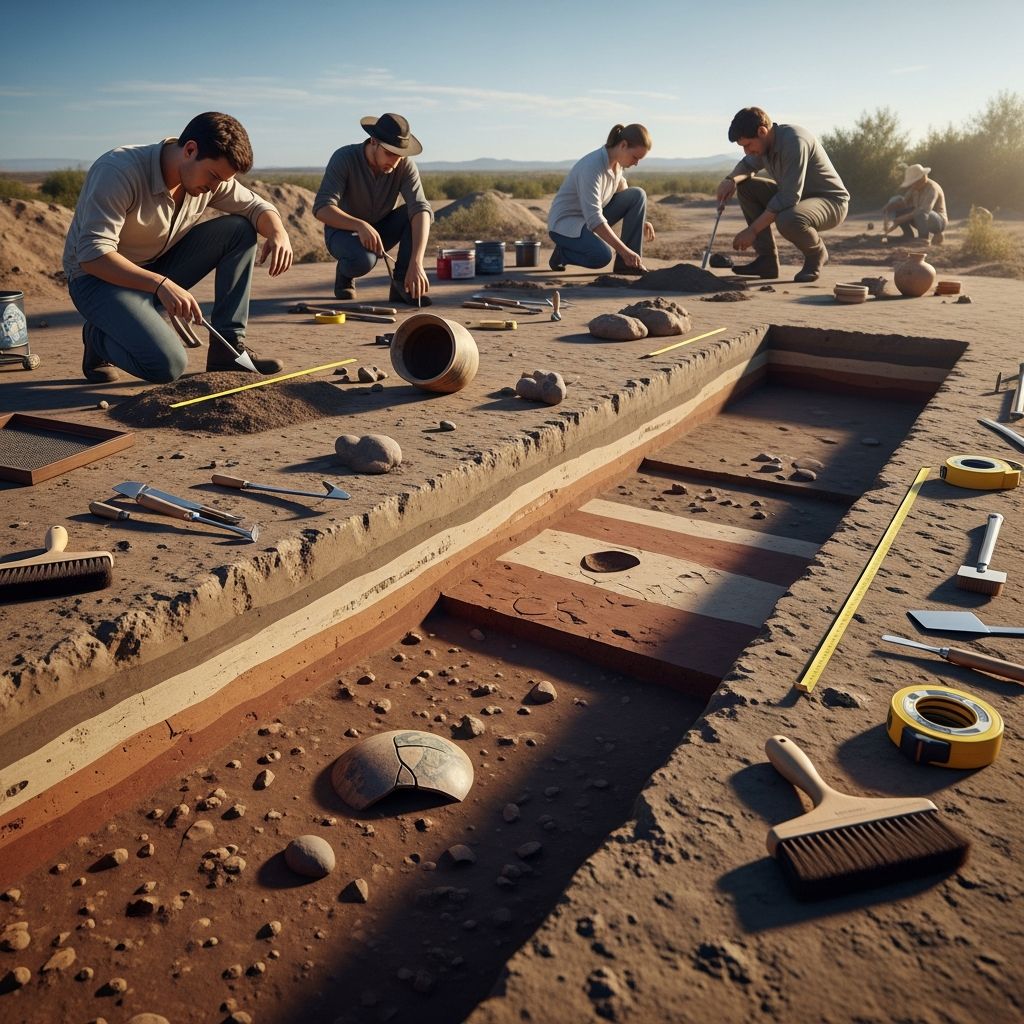
Processual archaeology represents a transformative shift in how archaeologists interpret the material remnants of ancient societies. Emerging in the mid-20th century, it emphasized rigorous scientific methods to explain the underlying processes driving cultural change, rather than merely cataloging artifacts and timelines. This approach redefined archaeology as a science capable of reconstructing adaptive strategies and systemic interactions in prehistoric communities.
Historical Foundations and the Birth of a New Paradigm
The roots of processual archaeology trace back to the late 1950s, when scholars began challenging the dominant culture-historical framework. Prior to this, archaeology largely focused on descriptive chronologies, classifying pottery styles, tool types, and settlement patterns to build timelines of cultural sequences. While useful for establishing ‘what’ happened, it fell short in addressing ‘why’ cultures evolved or adapted.
In 1958, Gordon Willey and Philip Phillips published Method and Theory in American Archaeology, a seminal work that declared archaeology must align with anthropology’s broader goals or risk irrelevance. They argued that understanding human culture required examining dynamic processes, not static descriptions. This manifesto ignited the ‘New Archaeology’ movement, later termed processual archaeology, which sought universal laws of cultural behavior.
By the 1960s, this paradigm gained momentum across the Atlantic. In Europe and the UK, figures like Colin Renfrew and David Clarke advocated for emulating scientific methodologies. Renfrew, for instance, highlighted how processual thinking illuminated ‘underlying historical processes at the root of change,’ applying it to debates on Indo-European language origins through migration models supported by archaeology and linguistics.
- Key Triggers for Change: Limitations of radiocarbon dating precursors, over-reliance on typologies, and a desire for explanatory power.
- Global Spread: Rapid adoption in the US by 1971, with Europe advancing natural science integrations.
Core Principles: Systems, Adaptation, and Scientific Rigor
At its heart, processual archaeology views culture as a system of adaptive mechanisms to environmental challenges. Drawing from Leslie White’s ideas, it posits culture as humanity’s ‘exosomatic’ tool for survival—artifacts, settlements, and practices that help groups respond to ecological pressures without biological evolution.
Unlike biological adaptation over generations, cultural processes operate on shorter timescales through innovation, migration, or substitution. Archaeologists aimed to model these as predictable interactions: for example, how climate shifts prompted tool variations in Mousterian assemblages, as Lewis Binford demonstrated at Combe Grenal, linking stylistic differences to functional adaptations rather than ethnic boundaries.
This systemic view employed systems theory, treating societies as interconnected components—economy, social structure, environment—whose changes could be hypothesized and tested. Cultural evolution was seen as driven by selective pressures, yielding adaptive outcomes testable against archaeological data.
| Aspect | Culture-Historical Approach | Processual Approach |
|---|---|---|
| Focus | Chronology and artifact classification | Explanatory processes and adaptation |
| Method | Typological seriation | Hypothesis testing, quantitative analysis |
| Goal | Describe sequences | Develop general laws of behavior |
Innovative Methodologies and Tools
Processual archaeologists introduced the hypothetico-deductive model, mirroring the scientific method: observe patterns, form testable hypotheses, gather data, and refine or reject ideas. Quantitative techniques became standard, including statistical analyses of artifact distributions, use-wear studies on lithics, and faunal remains to infer subsistence strategies.
Middle-range theory bridged the gap between static artifacts and dynamic behaviors. By studying modern ethnographic analogies—ethnoarchaeology—researchers built models linking contemporary practices to archaeological signatures. For instance, Kent Flannery used ethnographic data from Mexican villages to predict site formation processes, testing these against ancient records.
Settlement pattern surveys expanded, mapping how communities organized space in response to resources. Functional analyses decoded artifact roles: pollen studies revealed agricultural shifts, while trace element sourcing tracked trade networks, revealing economic adaptations.
- Quantitative Data: Statistical modeling of distributions to test spatial hypotheses.
- Interdisciplinary Integration: Borrowing from ecology, physics (e.g., radiocarbon), and anthropology.
- Ethnoarchaeology: Direct observation of living cultures to inform past interpretations.
Key Contributors and Landmark Studies
Lewis Binford stands as a central figure, criticizing culture-historical ‘normative’ views of culture as pigeonholing diverse behaviors into rigid types. His work at Combe Grenal reframed Mousterian variability as adaptive responses to climate, not cultural mosaics.
Colin Renfrew applied processualism to grand scales, proposing Indo-European expansions via farming dispersals, challenging linguistic diffusion models with archaeological, genetic, and linguistic evidence.
David Clarke emphasized explanatory goals over description, promoting systems thinking in British archaeology. Gordon Willey pioneered settlement studies in Peru, linking landscape use to societal complexity.
These pioneers shifted archaeology from narrative history to predictive science, influencing global practice.
Achievements and Practical Impacts
Processual methods revolutionized data collection: systematic sampling prevented biases, while computers enabled complex simulations. It fostered cultural resource management, applying processual logic to predict site locations for preservation.
Notable successes include reconstructing hunter-gatherer mobility from site catchments and modeling agricultural intensification. Renfrew’s work on European prehistory demonstrated how processual models could resolve long-standing debates.
- Settlement Archaeology: Willey’s Peruvian surveys revealed state formation dynamics.
- Functional Studies: Binford’s lithic analyses decoded tool lifecycles.
- Trade and Exchange: Sourcing studies illuminated economic networks.
Critiques and the Path to Post-Processualism
Despite triumphs, processual archaeology faced pushback. Critics argued it oversimplified human agency, treating individuals as passive system components and ignoring symbolism or ideology. Logical positivism’s assumption—that all culture is materially accessible—was challenged, as cognitive aspects like beliefs often leave faint traces.
Post-processualists, led by Ian Hodder, emphasized interpretive approaches, integrating meaning, power, and context. They contended processualism neglected historical contingency and over-relied on universal laws.
Yet, processual foundations endure; modern archaeology blends both, using scientific rigor with nuanced interpretations.
Processual Archaeology Today: Enduring Legacy
Contemporary practice retains processual tools—GIS mapping, Bayesian statistics, agent-based modeling—while incorporating post-processual insights. Evolutionary archaeology extends its adaptive focus with genetic data, and climate archaeology models past environmental responses.
In an era of big data and interdisciplinarity, processualism’s call for testable explanations remains vital, ensuring archaeology contributes to anthropology’s quest to understand human resilience.
Frequently Asked Questions (FAQs)
What is the main difference between processual and culture-historical archaeology?
Processual archaeology prioritizes explaining cultural processes through science, while culture-historical focuses on descriptive timelines and artifact typologies.
Who are the founding figures of processual archaeology?
Key pioneers include Lewis Binford, Colin Renfrew, Gordon Willey, Philip Phillips, and David Clarke.
How does middle-range theory work in processual archaeology?
It uses ethnographic analogies to link observable modern behaviors to archaeological patterns, enabling behavioral inferences.
Did processual archaeology succeed in its goals?
Yes, it introduced scientific methods and explanatory power, though critiqued for underemphasizing symbolism; it forms modern archaeology’s backbone.
Is processual archaeology still relevant?
Absolutely—its methodologies underpin current digital and evolutionary approaches in the field.
References
- Processual archaeology – Wikipedia — Wikipedia contributors. 2023-10-15. https://en.wikipedia.org/wiki/Processual_archaeology
- Processual Archaeology | Intro to Archaeology Class Notes — Fiveable. 2024-01-20. https://fiveable.me/introduction-archaeology/unit-3/processual-archaeology/study-guide/d1TTdpLLyVW3ywjj
- ‘New’/Processual Archaeology — Tristan Alphey, SeaxEducation. 2023-05-10. https://seaxeducation.substack.com/p/newprocessual-archaeology
- Post Processual archaeology and after — Michael Shanks, Stanford University. 2006-01-01. https://web.stanford.edu/~mshanks/MichaelShanks/files/140558.pdf
- 2.5 The 20th Century: 1960 to 2000 — Internet Archaeology. 2003-06-20. https://intarch.ac.uk/journal/issue11/1/2.5.html

Medha Deb is an editor with a master's degree in Applied Linguistics from the University of Hyderabad. She believes that her qualification has helped her develop a deep understanding of language and its application in various contexts. Medha specializes in the areas of beauty, health, sports, and wellness and is committed to ensuring that the content on the website is…