
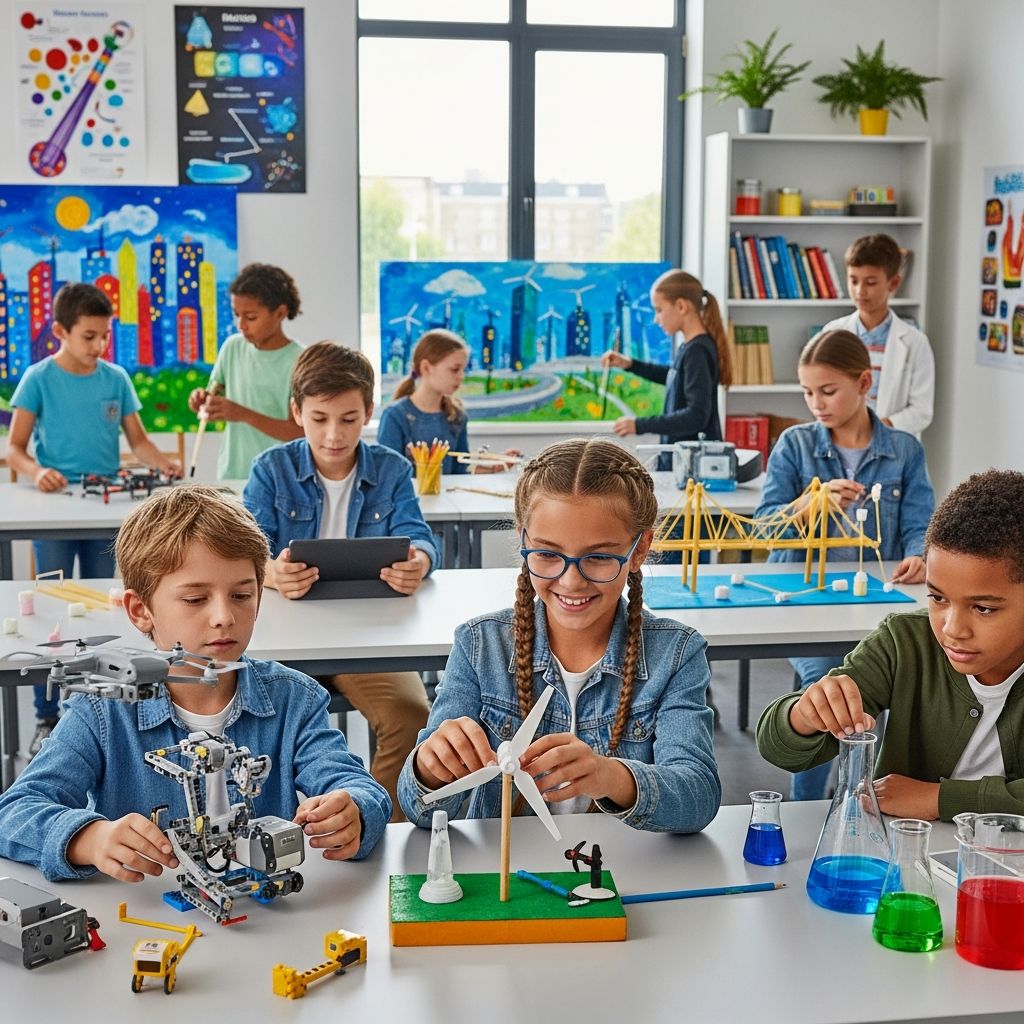
Engaging students in meaningful projects transforms traditional classrooms into dynamic hubs of discovery and innovation. These activities go beyond rote memorization, encouraging collaboration, problem-solving, and self-expression. Whether exploring scientific principles, crafting artistic visions, or tackling community challenges, projects empower learners to connect knowledge with real-world applications.
Why Hands-On Projects Revolutionize Learning
Research from the National Training Laboratories shows that hands-on experiences boost retention rates to 75%, far surpassing lectures at 5%. Projects cultivate essential 21st-century skills like adaptability and teamwork, preparing students for future careers. They also make abstract concepts tangible, turning ‘why’ into ‘how’ through experimentation and creation.
STEM Adventures: Building Tomorrow’s Innovators
Science, Technology, Engineering, and Math projects ignite curiosity by merging theory with practice. These ideas suit elementary to high school levels, scalable for different ages.
- Build a Solar-Powered Charger: Construct a device using photovoltaic cells, wires, and a battery to charge small electronics. Discuss renewable energy’s role in combating climate change.
- Design a Hydraulic Lift Model: Use syringes, tubing, and water to demonstrate Pascal’s principle. Apply it to real inventions like car jacks.
- Code a Simple Game: With platforms like Scratch, students program interactive stories or puzzles, learning loops and conditionals.
- Engineer a Bridge: Test structures made from popsicle sticks for weight-bearing capacity, exploring truss designs.
- Plant Growth Lab: Experiment with variables like light, soil, and nutrients to track plant development via charts.
These projects align with Next Generation Science Standards, promoting inquiry-based learning.
Artistic Explorations: Unleashing Creativity
Art projects allow students to visualize ideas, honing fine motor skills and emotional intelligence. They provide outlets for personal narratives and cultural appreciation.
- Upcycled Sculpture Garden: Transform recyclables into outdoor art, teaching sustainability while exploring textures and forms.
- Interactive Storybook Illustration: Create pop-up books with layered scenes, blending drawing and paper engineering.
- Portrait Timeline: Draw self-portraits evolving over time, reflecting personal growth or historical figures’ journeys.
- Nature-Inspired Collages: Collect leaves and fabrics to compose ecosystems, discussing biodiversity.
- Kinetic Wind Mobiles: Balance shapes on strings to capture wind movement, inspired by Alexander Calder.
Such endeavors enhance spatial reasoning and confidence, as visual arts correlate with improved academic performance.
Historical Journeys: Reviving the Past
History projects breathe life into dates and events, fostering empathy and analytical thinking through immersive storytelling.
| Project Idea | Key Skills | Materials Needed |
|---|---|---|
| Replica Artifact Museum | Research, Curation | Clay, Cardboard, Labels |
| Historical Debate Simulation | Public Speaking, Argumentation | Costumes, Props |
| Time Traveler’s Diary | Creative Writing, Perspective | Notebooks, Images |
| Era-Specific Board Game | Game Design, Strategy | Board, Tokens |
| Monument Model | Architecture, Symbolism | Foam, Paint |
By role-playing figures from ancient civilizations to modern leaders, students grasp cause-and-effect in human events.
Community Impact: Service and Social Projects
Service learning connects classrooms to neighborhoods, instilling civic responsibility and gratitude.
- Local Heroes Interview Series: Record podcasts with community elders, preserving oral histories.
- School Garden Initiative: Plan, plant, and maintain a veggie patch, donating produce to food banks.
- Anti-Litter Campaign: Design posters and organize cleanups, tracking waste reduction data.
- Mentorship Program: Pair older students with younger ones for skill-sharing workshops.
- Fundraiser Invention: Sell student-crafted goods like bookmarks to support charities.
These initiatives mirror project-based learning models, where authentic problems drive engagement.
Digital and Multimedia Masterpieces
In the tech era, multimedia projects blend creativity with digital literacy, appealing to tech-savvy learners.
- Stop-Motion Animation: Animate historical events or science processes using apps like Stop Motion Studio.
- Virtual Reality Tour: Build 360-degree scenes of ecosystems or landmarks with free tools.
- Podcast Episode: Produce episodes on book characters or inventors, including sound effects.
- Infographic Campaign: Visualize data on global issues using Canva.
- App Prototype: Sketch interfaces for solving everyday problems like homework trackers.
Interdisciplinary Challenges: Connecting Subjects
Blend subjects for holistic understanding. For example:
- Math in Nature: Measure fractals in leaves, calculating patterns with geometry.
- Literature-Inspired Inventions: Engineer gadgets from fantasy books, like a wand detector.
- Geography Quest: Create escape-room challenges mapping world cultures.
- Music of the Spheres: Compose tunes based on planetary data, linking physics and arts.
- Economic Simulations: Run class businesses trading handmade goods.
Tips for Project Success
To maximize impact:
- Set clear rubrics focusing on process over perfection.
- Incorporate peer feedback loops.
- Allow choice to boost ownership.
- Document progress with portfolios.
- Celebrate with showcases or galleries.
Adapt for inclusivity: provide scaffolds for diverse needs, ensuring all participate.
Frequently Asked Questions
What age groups are these projects for?
Most ideas scale from kindergarten to high school; simplify materials and concepts for younger learners.
How much time do projects take?
Range from 1-2 class periods to multi-week endeavors; plan based on curriculum pacing.
What if I lack supplies?
Use household recyclables; many projects cost under $5 per student.
Can these fit standards?
Yes, align with Common Core and NGSS; map objectives explicitly.
How to assess fairly?
Use multi-faceted rubrics evaluating creativity, research, collaboration, and presentation.
References
- Dunlosky, J. et al. Improving Students’ Learning With Effective Learning Techniques. — Psychological Science in the Public Interest. 2013-12-01. https://journals.sagepub.com/doi/full/10.1177/1529100612453266
- Next Generation Science Standards. — National Research Council / Achieve Inc. 2013-04-01. https://www.nextgenscience.org/
- Arts Education and Academic Achievement. — Arts Education Partnership. 2020-09-15. https://www.artsedsearch.org/studies/
- Project-Based Learning Research Review. — Edutopia / George Lucas Educational Foundation. 2022-03-10. https://www.edutopia.org/project-based-learning-research-review

- Integrated M.A. in Applied Linguistics, University of Hyderabad
- 5+ years in editorial, instructional, SEO, and research-based writing
Sneha is a relationships and lifestyle writer with a strong foundation in applied linguistics and certified training in relationship coaching. She brings over five years of writing experience to theskillvault, crafting thoughtful, research-driven content that empowers readers to build healthier relationships, boost emotional well-being, and embrace holistic living. Her writing and insights reflect the belief that beauty, happiness, and wellness…