
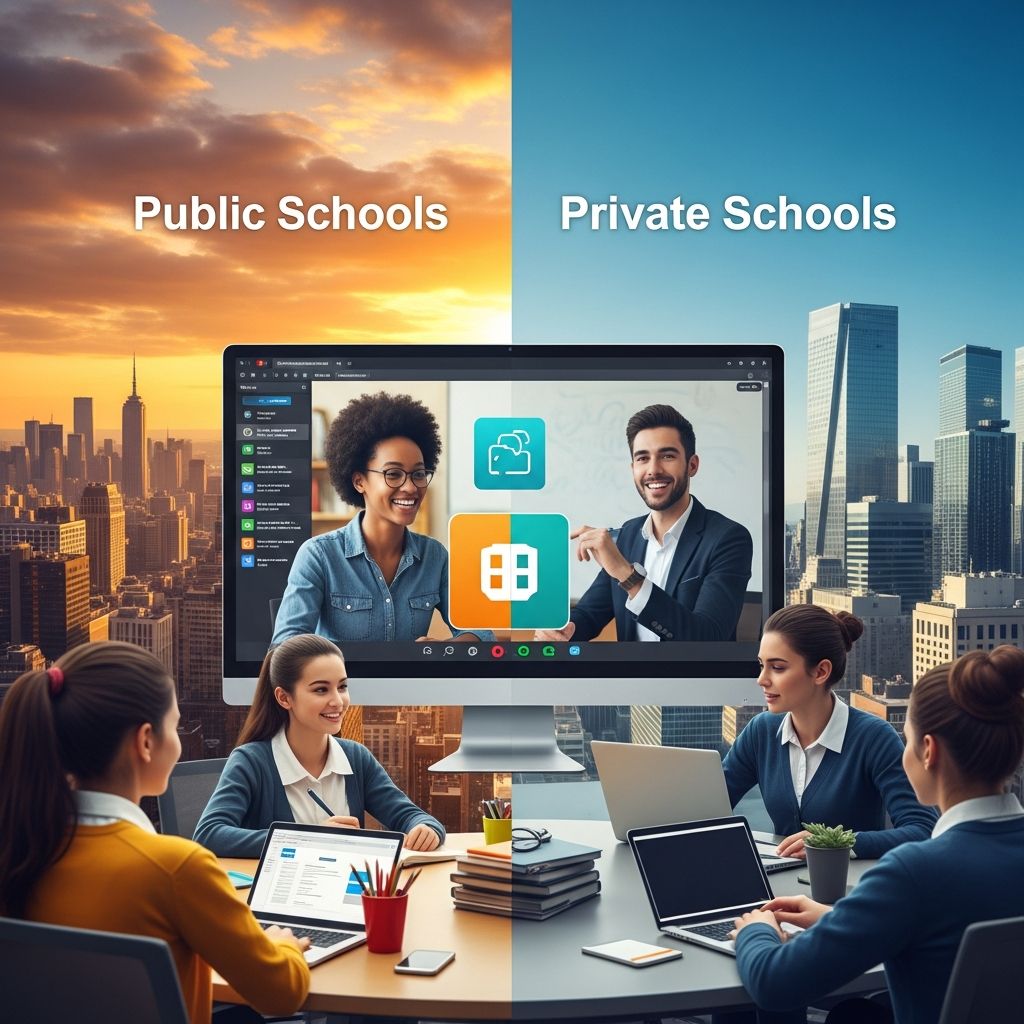
Online education has transformed learning opportunities, offering families choices between **public** and **private** virtual schools. Public online schools provide tuition-free access funded by government sources, while private ones charge fees for enhanced customization and global reach.
Understanding the Core Models of Virtual Education
Public online schools operate like traditional public institutions but deliver content digitally. They receive state funding, remain free for residents, and follow district or state guidelines, often limiting enrollment to specific regions. Charter variants, also public, may blend online elements but prioritize accessibility without tuition.
Private online schools function independently, setting their own standards without government funding ties. This autonomy allows worldwide enrollment, self-paced progression, and specialized programs, appealing to families seeking tailored experiences.
Financial Aspects: Who Pays and What You Get
The starkest divide lies in costs. Public online schools charge no tuition, covered by taxes and grants, making them accessible regardless of income. However, families might cover extras like internet or supplies.
Private options require tuition, varying by program, but deliver value through advanced resources. For instance, motivated students can accelerate graduation with flexible credit systems.
| Aspect | Public Online Schools | Private Online Schools |
|---|---|---|
| **Cost** | Tuition-free; government-funded | Tuition-based; fees for premium features |
| **Funding Source** | State taxes, grants | Private revenue, tuition |
| **Hidden Expenses** | Supplies, tech | Included in tuition often |
Flexibility and Scheduling Freedom
**Public online schools** often mimic brick-and-mortar schedules with required logins, live sessions, and fixed pacing to meet attendance mandates. This structure suits routine-oriented learners but restricts travel or acceleration.
**Private online schools** excel in adaptability. Students set their schedules, progress independently, and even graduate early upon credit completion—ideal for gifted or busy teens. Families log in from anywhere, supporting relocations or unique lifestyles.
- Self-paced modules in private settings allow finishing courses ahead.
- Public models enforce timelines, ensuring steady progress for all.
- Both build digital skills, but private emphasizes independence.
Curriculum Depth and Variety
Public virtual curricula focus on core subjects aligned with state standards, sometimes lacking electives due to budget limits. They ensure baseline proficiency but may not cater to niche interests.
Private schools offer expansive options: AP courses, STEM specials, honors tracks, and international alignments like Common Core or global frameworks. This breadth supports college prep and diverse goals.
During 2017–18, 21% of public schools offered fully online courses, with charters at 30%, showing growing adoption but varied depth.
Teacher Support and Class Dynamics
In public online environments, certified teachers lead via video, but larger classes limit personalization. Real-time interaction aids some, though ratios challenge individual focus.
Private platforms prioritize smaller groups and dedicated coaches. Dual-teacher models—one for instruction, one for engagement—enhance participation. Learning success teams provide ongoing guidance.
Socialization and Extracurricular Engagement
Public schools foster community through local peers, virtual clubs, and events mirroring traditional setups. This builds interpersonal skills vital for development.
Private online schools connect global students via forums, group projects, and clubs like coding or debate. While less routine-based, they emphasize digital collaboration.
- Public: Local networks, sports tie-ins.
- Private: Worldwide peers, flexible activities.
Accessibility and Inclusivity Factors
Public options shine for remote or underserved areas, health needs, or disabilities, with no-cost entry and tech support. They standardize education nationwide.
Private schools extend to international families, offering acceleration for advanced learners. However, tuition barriers exist, though scholarships help.
Outcomes and Long-Term Success
Both paths yield accredited diplomas accepted by colleges. Public ensures consistency; private boosts via customization—early grads with strong test scores. Studies show online models suit self-starters, with flexibility aiding retention.
Choosing the Right Path for Your Family
Assess your child’s needs: routine vs independence, budget, location. Public suits budget-conscious local families; private fits ambitious, flexible ones. Trial periods or consultations clarify fits.
Frequently Asked Questions (FAQs)
Are public online schools completely free?
Yes, tuition-free for eligible residents, funded publicly, though tech costs apply.
Can private online students graduate early?
Often yes, with self-paced credits and qualifying exams.
Do online schools offer socialization?
Both provide virtual interactions, clubs, and peer projects.
What about accreditation?
Reputable ones are state-approved, ensuring diploma validity.
Is internet mandatory for both?
Essential; public may supply devices in some districts.
References
- Public vs. Private School in an Online Environment — Excel High School. 2023. https://www.excelhighschool.com/blog/public-vs-private-school-in-an-online-environment/
- Public vs. Private Online School — CCA Educate. 2023. https://ccaeducate.me/blog/public-vs-private-online-school/
- Comparing Charter vs Public vs Online Options — Achieve Virtual Education Academy. 2023. http://www.achievevirtual.org/high-school/why-virtual/comparing-charter-vs-public-vs-online-options
- Online School vs. Public School — The Bina School. 2023. https://www.thebinaschool.com/blog/online-school-vs-public-school
- Online School vs Public School: What’s the Best Choice — ASU Prep Digital. 2023. https://www.asuprepdigital.org/blog/online-school-vs-public-school/
- Fast Facts: Distance Learning (79) — National Center for Education Statistics (.gov). 2019-05-01. https://nces.ed.gov/fastfacts/display.asp?id=79

Medha Deb is an editor with a master's degree in Applied Linguistics from the University of Hyderabad. She believes that her qualification has helped her develop a deep understanding of language and its application in various contexts. Medha specializes in the areas of beauty, health, sports, and wellness and is committed to ensuring that the content on the website is…