
Understanding the Quinceañera: A Sacred Passage Into Adulthood
The quinceañera represents one of the most significant cultural celebrations within Latin American communities, marking a young woman’s transition from adolescence to womanhood at the age of fifteen. This milestone combines deep spiritual meaning with vibrant social celebration, creating a memorable experience that honors both family heritage and individual growth. The tradition spans multiple countries including Mexico, Puerto Rico, Cuba, Colombia, and throughout Latin American populations in the United States, with each region adding its own unique cultural elements while maintaining core ceremonial practices.
At its foundation, the quinceañera serves as a public acknowledgment of a girl’s maturation and her readiness to engage more fully in adult society and family responsibilities. The celebration typically unfolds over several hours, beginning with solemn religious observance and transitioning into festive social gatherings that can involve hundreds of guests. This dual nature—combining spiritual devotion with joyful celebration—reflects the values that many families wish to impart to their quinceañeras as they embark on this new chapter of their lives.
The Spiritual Foundation: Religious Ceremonies and Blessings
The quinceañera celebration begins with a formal religious ceremony, most commonly held within a Catholic church setting. This opening component demonstrates the importance families place on spiritual guidance and divine blessing as the young woman enters adulthood. The religious service typically takes the form of a Thanksgiving Mass, known in Spanish as the Misa de Acción de Gracias, where the quinceañera and her family gather to express gratitude for the fifteen years lived and to seek blessings for the years ahead.
During this sacred ceremony, several meaningful rituals occur that reinforce the spiritual dimensions of the celebration. The quinceañera often presents a floral bouquet to the Virgin Mary as a gesture of devotion and faith. Parents or godparents may present symbolic gifts such as a Bible, prayer book, rosary beads, or a cross, each representing different aspects of spiritual guidance and protection. The priest typically offers a special blessing over the young woman, invoking divine protection, wisdom, and strength as she transitions into adulthood. These ceremonial elements ground the celebration in faith and heritage, emphasizing that this milestone carries religious as well as social significance.
The religious ceremony generally lasts approximately one hour and includes traditional readings, hymns, and prayers of thanksgiving led by church clergy. Some families choose to conduct the ceremony at their home church, while others prefer alternative venues, though the church setting remains the most traditional and widely practiced option. This spiritual centerpiece provides a solemn counterbalance to the festive celebrations that follow, creating a holistic experience that addresses both the sacred and celebratory aspects of this important life transition.
The Court of Honor: Family and Community Support
A distinctive feature of the quinceañera celebration involves the assembly of a Court of Honor, a formal group of close friends and family members who accompany and support the quinceañera throughout the day’s events. This tradition symbolizes the importance of community in a young woman’s life and acknowledges the collective support required for a successful transition to adulthood. The court typically includes both female and male participants, referred to as damas (ladies) and chambelanes (gentlemen), with the number of court members varying depending on family preference and cultural tradition.
Traditionally, the court consists of fourteen members—seven pairs of damas and chambelanes—with the quinceañera herself serving as the fifteenth member, representing the fifteen years of her life. However, contemporary celebrations demonstrate greater flexibility, with some families opting for smaller courts ranging from seven to fifteen pairs, while others choose to include only damas or only chambelanes based on personal preference. The selection of court members typically honors close relationships and family connections, making participation in the court a significant honor that reflects the quinceañera’s most important personal relationships.
The court participates in choreographed ceremonies and dances throughout the celebration, most notably the formal waltz that showcases the quinceañera and her court in a carefully rehearsed performance. Preparation for this dance may require weeks or even months of practice, with the group working together to create an elegant and synchronized presentation. The participation of the court in these ceremonial moments reinforces themes of community support and shared celebration, transforming the quinceañera from a solitary birthday celebrant into the center of a coordinated group performance.
Essential Ceremonial Traditions That Define the Celebration
Several specific ceremonial moments form the core of any quinceañera celebration, each carrying symbolic meaning that marks the young woman’s transition to adulthood. These traditions have evolved over generations while maintaining their essential significance within Latin American cultural practice.
The Symbolic Changing of Footwear
One of the most emotionally resonant moments during the celebration involves the ceremonial exchange of footwear. The quinceañera’s father, or another significant male figure in her life such as an uncle or godfather, solemnly kneels before her and replaces her flat shoes with high heels. This gesture represents her first symbolic steps into womanhood and acknowledgment of her physical and emotional growth. The replaced footwear transforms from practical children’s shoes into formal adult attire, visually demonstrating the transition being celebrated. Many families personalize this moment by selecting heels specially purchased or designed for the occasion, sometimes embellished with crystals, initials, or colors that coordinate with the quinceañera’s formal gown. This tender ceremonial moment often ranks among the most photographed and emotionally significant elements of the entire celebration.
The Crowning Moment
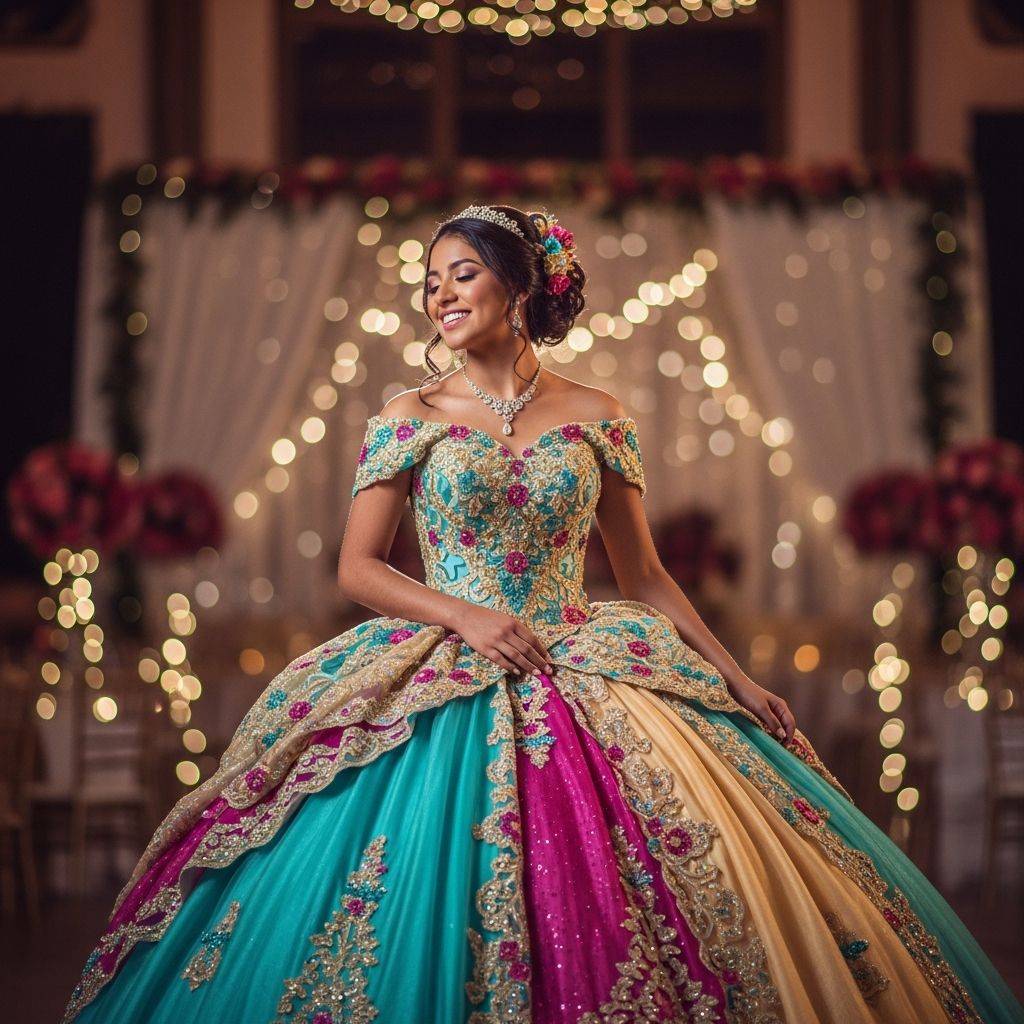
The placement of a decorative tiara upon the quinceañera’s head represents her emergence from childhood and triumph over early life challenges. The tiara, typically placed by her mother or godmother, serves as a visible crown symbolizing maturity, dignity, and her new status within the family and community. This ornamental accessory distinguishes the quinceañera throughout the celebration and remains one of the most iconic visual elements of the event. The act of crowning carries ceremonial weight similar to coronation rituals in many cultures, formally acknowledging the young woman’s changed status and social position.
The Choreographed Waltz Performance
The formal waltz represents another pivotal moment within the celebration, typically performed immediately following the religious ceremony or early in the reception activities. The father-daughter waltz serves as the opening dance, with the quinceañera and her father moving together in a carefully choreographed routine that demonstrates both grace and the enduring connection between parent and child. Following this initial dance with her father, the quinceañera typically performs an extended waltz with her complete court of honor, creating a larger choreographed performance that may involve all fourteen members of her court dancing in coordinated pairs. This elaborate dance routine requires significant preparation and rehearsal but creates a visually stunning moment that many attendees remember as a highlight of the celebration.
The Symbolic Last Doll
The presentation of a decorative doll, known as la última muñeca (the last doll), symbolizes the quinceañera’s departure from childhood and childhood possessions. This doll sometimes mirrors the quinceañera herself, dressed in a miniature version of the gown being worn during the celebration. The doll may be retained by the quinceañera as a cherished keepsake commemorating this important milestone, or it may be given to a younger sibling, cousin, or female relative, symbolically passing childhood innocence through the family line. This tradition emphasizes the psychological and developmental aspects of the transition being celebrated, acknowledging that maturation involves releasing certain aspects of childhood while carrying meaningful connections forward.
The Formal Toast Ceremony
Known as el brindis, the toast represents a moment when family members and close friends publicly express their congratulations, best wishes, and affirmations to the quinceañera. During this ceremony, the quinceañera typically takes her first ceremonial sip from a special glass, often presented by her godparents or padrinos. This symbolic consumption marks her entry into a new phase of life where she can participate more fully in adult family gatherings and conversations. The toasts themselves provide opportunities for important people in her life to publicly acknowledge her growth and express their hopes for her future, creating meaningful verbal affirmations that complement the physical and ceremonial aspects of the celebration.
The Social Celebration: Reception Activities and Festivities
Following the conclusion of the religious ceremony, the celebration transitions into a festive reception that gathers family and friends in celebration of the quinceañera. This reception may be hosted at the family’s home, a rented banquet facility, wedding venue, or community center, depending on the scale of the celebration and family preferences. The reception represents the social and celebratory counterpart to the spiritual ceremony, creating an atmosphere of joy, music, dancing, and shared meals.
Reception activities typically include a grand entrance featuring the quinceañera, often accompanied by her parents, godparents, and members of her court. This formal presentation marks the beginning of the festive portion of the celebration and signals to guests that the main celebrations are commencing. Following the entrance, guests are typically invited to participate in traditional dances and meals together. The reception includes various choreographed dances, with the father-daughter waltz serving as the centerpiece of dance activities, followed by performances from the court and social dancing involving all guests. The atmosphere remains festive throughout, with live music or DJs providing entertainment and creating a celebratory ambiance that extends well into the evening.
Traditional Elements of Reception Hospitality
Receptions typically feature several key components that distinguish them as quinceañera celebrations rather than generic parties or family gatherings:
- Dinner Service: Formal meal service featuring traditional Latin American cuisine or family-selected menu options that reflect cultural heritage and family preferences
- Cake Ceremony: Cutting of an ornamental cake following the formal toasts, with family members gathering to sing traditional birthday songs and celebrate the milestone
- Gift Presentations: Family members and godparents present traditional gifts including Bibles, prayer books, rosaries, or religious medallions symbolizing faith and spiritual guidance
- Photo Sessions: Organized photography opportunities allowing guests to capture memories with the quinceañera throughout the reception
- Dance Performances: Arranged dances beyond the traditional waltz, sometimes including surprise performances by family members or choreographed group dances
- Decorative Elements: Thematic decorations reflecting the quinceañera’s favorite colors and personal style, creating an environment that celebrates her individual identity
Regional Variations and Cultural Adaptations
While certain core elements remain consistent across Latin American cultures, quinceañera celebrations display significant regional variations that reflect distinct cultural practices and family traditions. In Mexico, the tradition maintains strong connections to Catholic Church participation and often includes the presentation of religious items such as rosaries or medals depicting the Virgin of Guadalupe blessed by the priest. Colombian celebrations emphasize the waltz tradition and often include the pasodoble, a Spanish dance form that demonstrates cultural heritage and connection to broader Hispanic traditions.
In Puerto Rico and Cuban communities, quinceañera celebrations sometimes incorporate additional musical traditions and dance styles specific to Caribbean culture. Some families in these regions may adapt ceremony elements to reflect their spiritual beliefs, choosing to modify or supplement traditional Church components with family-specific rituals or alternative spiritual practices. Throughout all variations, however, the core themes of family support, spiritual blessing, and celebration of female maturation remain central to the experience.
Modern Evolution and Personalized Approaches
Contemporary quinceañera celebrations demonstrate increasing flexibility and personalization, reflecting modern values while maintaining connection to traditional elements. Some families choose to reduce the size of the court of honor due to budget constraints or personal preference, while others maintain fully traditional structures. Certain families opt to forgo or significantly modify the religious ceremony component based on their individual spiritual beliefs, though the majority continue to include some form of spiritual blessing or religious observance.
The scale of celebrations has become increasingly variable, with some families hosting intimate gatherings of close relatives while others organize elaborate events involving hundreds of guests. Fashion choices for the quinceañera’s gown have evolved substantially, moving beyond traditional white or pastel formal wear to include diverse colors, contemporary designs, and personal style expressions. Technology has introduced new elements to celebrations, with professional photography and videography creating lasting documentation of the events, and social media allowing extended family and friends unable to attend in person to participate virtually in certain celebration moments.
Selecting Meaningful Gifts for the Quinceañera
Traditional gift-giving practices during quinceañera celebrations carry symbolic meaning beyond monetary value. Religious gifts continue as a primary category, with Bibles, prayer books, rosaries, and religious medallions serving as meaningful tokens that support the spiritual dimensions of the celebration. Monetary gifts from family members and godparents remain customary, often collected as part of the formal gift-giving process. Decorative keepsakes such as personalized jewelry, engraved items, or specially commissioned artworks have become increasingly popular in recent generations, allowing gift-givers to create lasting reminders of this important milestone.
Many modern families appreciate practical gifts that support the young woman’s emerging independence and interests, such as savings bonds, educational items, or technology. The most meaningful gifts often balance practical utility with sentimental value, acknowledging both the immediate needs of a maturing young woman and the lasting emotional significance of the milestone being celebrated.
Common Questions About Quinceañera Celebrations
Q: What is the appropriate age for celebrating a quinceañera?
A: The traditional age is fifteen years old, with most celebrations occurring near the exact date of the fifteenth birthday or on a nearby significant date that works for family scheduling purposes.
Q: Can boys participate in quinceañera celebrations?
A: While quinceañera celebrations traditionally honor young women, boys participate actively as chambelanes (gentlemen) within the court of honor, performing choreographed dances and serving important ceremonial roles throughout the celebration.
Q: How long do quinceañera celebrations typically last?
A: The religious ceremony generally lasts about one hour, while the reception and celebration activities typically continue for four to six hours, though some celebrations may extend longer depending on family tradition and preference.
Q: What is the approximate cost of hosting a quinceañera celebration?
A: Costs vary significantly based on guest count, venue selection, and celebration scale, ranging from modest family-centered celebrations under $2,000 to elaborate events exceeding $20,000 or more for large guest lists and premium venues.
Q: Can the quinceañera’s dress color be something other than white?
A: Yes, while white and pastel colors remain traditional, contemporary quinceañeras increasingly choose diverse colors and styles that reflect personal preferences and individual identity while still maintaining formal, elegant presentation.
Q: Is participation in a quinceañera celebration required by Latin American culture?
A: No, while the tradition remains culturally significant and widely practiced, participation is ultimately a family decision based on individual beliefs, circumstances, and preferences.
References
- The Traditions of the Quinceañera — Bella Collina. 2024. https://www.bellacollina.com/blog/traditions-of-the-quinceanera
- What Is a Quinceañera? A Guide to Meaning, Traditions & Gifts — Romero Cookies. 2026. https://romerocookies.com/blogs/traditions-and-taste/what-is-a-quinceanera
- Quinceañera Traditions: Past to Present — The Centre of Escondido. 2024. https://thecentreescondido.com/blog/quinceanera-traditions-past-to-present/
- Quinceañera Timeline: Traditions, Touches, & Tips for Success — Saint Patrick Palace. 2024. https://www.saintpatrickpalace.com/quinceanera-timeline-traditions-modern-touches-and-a-full-day-celebration-guide/
- Quinceañera — Wikipedia. 2025. https://en.wikipedia.org/wiki/Quinceanera
- Complete Guide: Quinceanera Traditions You Need To Know — Metropol Banquet. 2024. https://metropolbanquet.com/blog/complete-guide-quinceanera-traditions-you-should-know/
- Quinceañera Traditions 101: How to Honor Family & Culture — Party Slate. 2024. https://www.partyslate.com/best-of/quinceanera-traditions-honor-family-culture

Medha Deb is an editor with a master's degree in Applied Linguistics from the University of Hyderabad. She believes that her qualification has helped her develop a deep understanding of language and its application in various contexts. Medha specializes in the areas of beauty, health, sports, and wellness and is committed to ensuring that the content on the website is…