
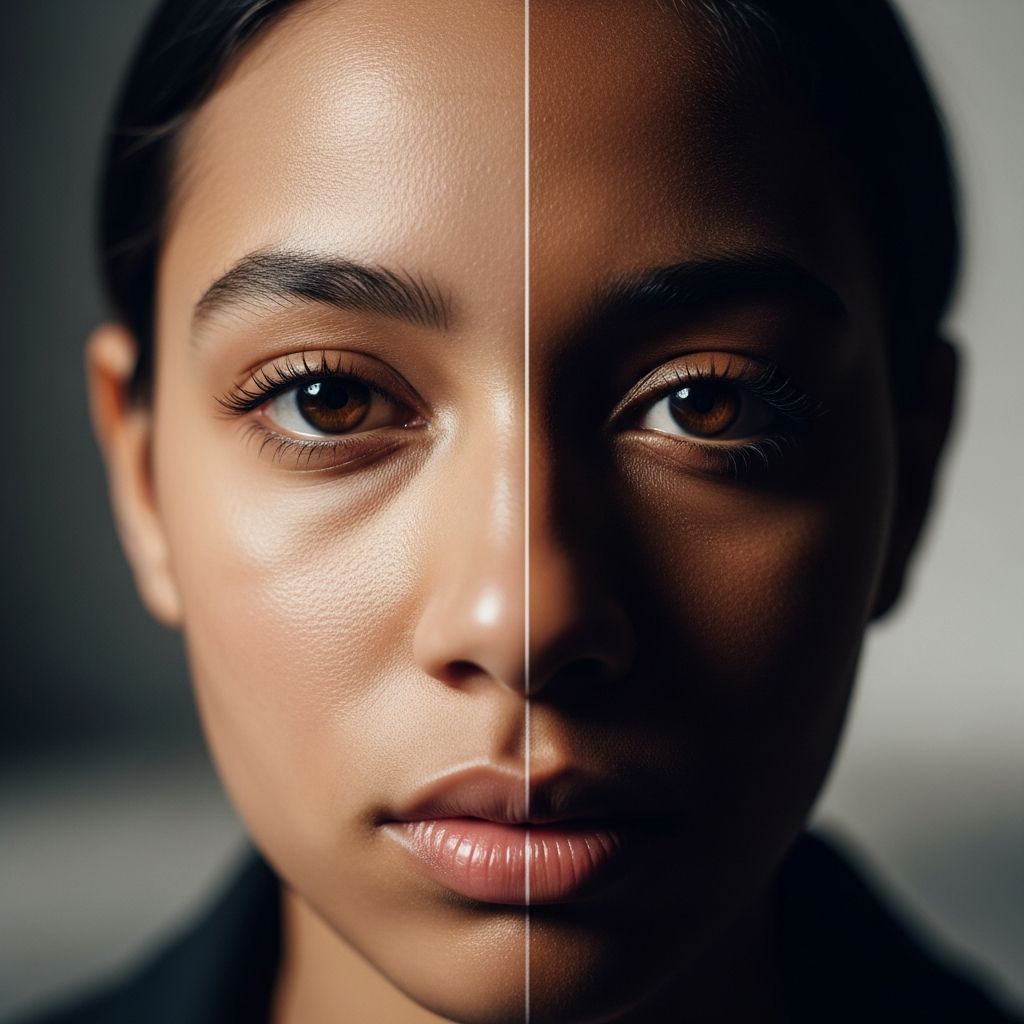
Racial passing refers to individuals from marginalized racial groups concealing their heritage to be accepted as members of the dominant white society, often to access opportunities denied by systemic discrimination.This practice emerged prominently in the United States during eras of slavery, Jim Crow laws, and segregation, allowing lighter-skinned people of color to navigate forbidden spaces for survival, employment, or education.
Origins in a Divided Nation
The roots of racial passing trace back to the antebellum South, where enslaved people of mixed ancestry used temporary disguises to flee bondage. As slavery evolved into a rigid racial caste system, those with lighter complexions—often resulting from coerced interracial unions—faced the brutal one-drop rule, which classified anyone with African ancestry as Black regardless of appearance. This legal fiction maximized the enslaved population while enforcing hypodescent, pushing some to “pass” for freedom.
Post-emancipation, passing became a tool for economic mobility amid sharecropping and peonage. Lighter-skinned African Americans, Asian Americans, and Latinos with European-like features could infiltrate white-only jobs, schools, and neighborhoods. For instance, “tactical passing” or “9-to-5 passing” allowed individuals to adopt a white identity during work hours while returning to Black communities at night.
- Key drivers included escaping violence, securing better wages, and avoiding lynchings.
- Women often passed to protect families or access healthcare unavailable to non-whites.
- Multiracial individuals with straight hair, light eyes, and fair skin had higher success rates.
Personal Narratives of Sacrifice and Secrecy
Passing demanded profound personal costs, severing family ties and erasing cultural roots. Imagine boarding a train as a Black person and disembarking as white, never to reunite with loved ones—a metaphorical death. Many “passed permanently,” fabricating backstories and avoiding old acquaintances to maintain the facade.
Historical accounts reveal harrowing choices. Some parents coached children to pass for safety, leading to lifelong isolation. Others experienced “passing in and out,” slipping into whiteness for convenience—like dining in segregated restaurants—then reverting privately. Asian and Latino passers faced fewer barriers due to subtler phenotypic differences, blending more seamlessly into white society.
| Racial Group | Common Traits for Passing | Primary Motivations | Challenges |
|---|---|---|---|
| African American | Light skin, straight hair, European features | Escape slavery, jobs, travel | One-drop rule scrutiny, family separation |
| Asian American | Fair complexion, acculturated speech | Employment, immigration benefits | Less dramatic features eased blending |
| Latino American | Light skin, non-indigenous features | Social acceptance, education | Variable regional perceptions of whiteness |
These stories underscore passing not as deception for gain but survival amid oppression. Light-skinned Black women, in particular, navigated dual worlds, benefiting from proximity to whiteness yet stigmatized within their communities.
Cultural Mirrors: Literature and Media Reflections
Racial passing has captivated artists, serving as a lens for exploring identity, betrayal, and America’s racial obsessions. Early 20th-century novels like those by Nella Larsen depicted protagonists torn between worlds, their passing exposing societal hypocrisies. Films and theater amplified these themes, portraying the psychological toll of living a lie.
In modern media, passing narratives challenge binaries. Contemporary discussions extend “passing” beyond race to gender, sexuality, and class, questioning authenticity and privilege. Yet, the term retains its Black-white core, rooted in subjugation histories. Literature often frames passing as a gateway to power, but at the cost of self-erasure.
- Classic works highlight tragedy: protagonists unmasked or consumed by guilt.
- Recent adaptations reclaim agency, portraying passers as complex survivors.
- Pop culture icons spark debates on who “owns” passing stories.
Modern Echoes: Privilege, Identity, and “White-Passing”
Today, overt passing is rare post-Civil Rights, but “white-passing” persists—when BIPOC individuals are perceived as white due to appearance or behavior, granting unearned advantages. This sparks intra-community tensions: Are white-passing people “too privileged” to claim marginalized identities?
Mixed-race individuals grapple with fluid identities in a post-one-drop era. Social media amplifies stories of those navigating “not Black enough” critiques while facing microaggressions. Passing now implicates cultural assimilation—acting “professional” or “mature” to access opportunities.
Broader applications include white individuals passing as POC for scams, inverting historical dynamics. Cases like welfare fraudsters exploiting stereotypes reveal passing’s dual-edged nature: a tool for capital across lines.
Societal Impacts and Ongoing Debates
Passing undermined segregation by blurring lines, fostering multiracial alliances covertly. Yet, it reinforced colorism, privileging lighter skin within communities of color. Economically, passers accessed wealth, subtly eroding racial wealth gaps.
Debates rage: Does labeling someone white-passing invalidate their experiences? Or does it highlight conditional privilege? In an era of DNA testing, hidden ancestries surface, complicating narratives.
Policy-wise, passing histories inform affirmative action discussions, revealing how appearance influences equity perceptions.
Frequently Asked Questions (FAQs)
Why did people historically pass for white?
To escape slavery, secure jobs, travel safely, and access education during segregation eras, often at great personal cost.
Is racial passing still common today?
Overt passing has declined, but white-passing perceptions based on appearance or behavior continue to affect mixed-race individuals.
What is the one-drop rule?
A legal and social principle classifying anyone with known African ancestry as Black, regardless of mixed heritage.
Can non-Black people pass for white?
Yes, Asian and Latino Americans with lighter features often passed more easily due to phenotypic similarities to Europeans.
How does passing relate to modern identity politics?
It challenges binaries, raising questions about privilege, authenticity, and who benefits from proximity to whiteness.
References
- Passing (racial identity) — Wikipedia. 2023-12-01. https://en.wikipedia.org/wiki/Passing_(racial_identity)
- Passing (race relations) — EBSCO Research Starters. 2023. https://www.ebsco.com/research-starters/history/passing-race-relations
- “Passing” – Queer Cultures 101 — Emory University ScholarBlogs. 2023-12-12. https://scholarblogs.emory.edu/queercultures101/2023/12/12/passing/
- The Secret Lives of Black Folks Who Passed as White — YouTube (One Mic History). 2023. https://www.youtube.com/watch?v=XsQ_8g7buEE
- Let’s Talk About “White Passing” — RIT Reporter Magazine. 2022-05. https://reporter.rit.edu/6560/may-2022/lets-talk-about-white-passing/
- I’m Half Black, and Passing as White Has a Complicated History — Good Housekeeping. 2022. https://www.goodhousekeeping.com/life/a42435755/white-passing-complicated-legacy/

- Integrated M.A. in Applied Linguistics, University of Hyderabad
- 5+ years in editorial, instructional, SEO, and research-based writing
Sneha is a relationships and lifestyle writer with a strong foundation in applied linguistics and certified training in relationship coaching. She brings over five years of writing experience to theskillvault, crafting thoughtful, research-driven content that empowers readers to build healthier relationships, boost emotional well-being, and embrace holistic living. Her writing and insights reflect the belief that beauty, happiness, and wellness…