
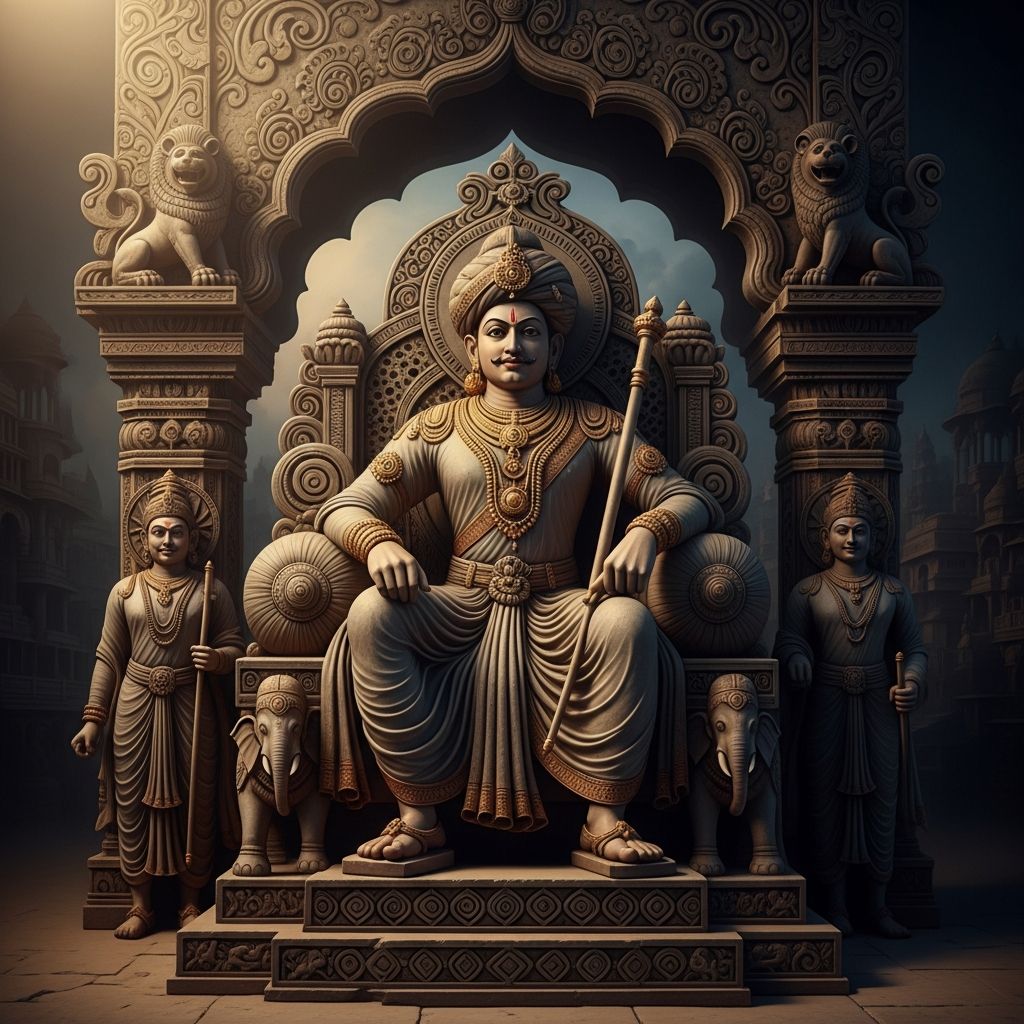
Understanding the Raja: A Title Steeped in History
The term raja represents one of the most enduring titles in human history, embodying authority, responsibility, and cultural heritage across vast regions of Asia. Derived from ancient Sanskrit, this word has transcended centuries to remain relevant in contemporary discussions of governance, history, and tradition. The raja served not merely as a ceremonial designation but as a functional title that conveyed specific duties, expectations, and social standing within hierarchical societies. Understanding this title requires exploring its linguistic roots, historical evolution, and the multifaceted roles that those who bore the title were expected to fulfill.
Linguistic Foundations and Etymology
The word raja originates from Sanskrit, one of the oldest languages of the Indian subcontinent, where it carries the fundamental meaning of ruler or king. The pronunciation typically follows the pattern RAH-jah, though regional variations have produced alternative spellings including rajah, reflecting how the title was adopted across different linguistic communities. This linguistic flexibility demonstrates how the concept transcended cultural and linguistic boundaries, adapting to local phonetic systems while retaining its essential meaning.
The historical documentation of this term extends remarkably far back into recorded history. References to the raja appear in some of the oldest surviving texts of human civilization, including the Rigveda, one of Hinduism’s most ancient scriptures. In these foundational texts, the rājan is identified as a ruler with recognized authority over territory and subjects. The term gained such widespread acceptance that it eventually incorporated into numerous languages and cultures beyond its Sanskrit origins, demonstrating its powerful resonance across Asian societies.
Geographic Reach and Cultural Adaptation
Originally emerging in the Indian subcontinent, the raja title extended its influence throughout Southeast Asia, creating a shared vocabulary of power across diverse political landscapes. Rulers in regions including Malaysia and other Southeast Asian territories adopted the title, adapting it to local contexts while maintaining its essential connotation of authority and nobility. This geographic dispersal reflects how cultural concepts travel and integrate into different societies, often becoming so thoroughly embedded that they appear indigenous to each location.
The widespread adoption of the raja title across such vast territories speaks to the effectiveness of Indian cultural influence during periods of significant trade, migration, and cultural exchange. Rather than imposing the title through military conquest alone, the concept appears to have spread through the prestige associated with Indian classical civilization, attracting rulers who sought to legitimate their authority by adopting Sanskrit-derived titles and concepts.
Social Hierarchy and the Kshatriya Class
Within the classical Indian social structure, the raja title held particular significance for the Kshatriya class, a warrior and ruler caste that occupied the second tier of the traditional four-part varna system. Members of this group frequently bore the raja title, as the designation aligned perfectly with their prescribed social role as administrators, military leaders, and defenders of society. The association between the Kshatriya class and the raja title reinforced the hierarchical nature of Indian society, clearly distinguishing rulers from merchants, priests, and laborers.
This class-based assignment of titles created a system where social position and political authority reinforced one another. A person’s birth into the Kshatriya class provided the foundation for assuming leadership roles, while the acquisition of a raja title publicly confirmed and legitimized that authority. This interconnection between hereditary status and formal title created stability in governance structures, though it also restricted opportunities for social mobility and leadership outside established family lines.
Governance Duties and Rajadharma
Beyond serving as a mere honorific, the raja title carried profound obligations rooted in the philosophical and religious framework of South Asian societies. The concept of rajadharma established a code of conduct specifically for kings, outlining their duties and responsibilities to maintain cosmic and social order. Dharma, understood as that which upholds and supports the universal order, placed the raja at the center of a sacred responsibility to govern justly and ensure the wellbeing of their subjects.
The rajadharma framework created a sophisticated accountability system, one that transcended simple autocratic rule. While a raja wielded substantial power, that power was theoretically constrained by religious obligation and cosmic law. Rulers were expected to make judicious decisions regarding property disputes, protect their subjects from harm, and maintain the social and moral order upon which civilization depended. The rajas who best fulfilled these obligations earned respect and legitimacy, while those who neglected their dharmic duties faced criticism and potential loss of support.
Dual Functions of Royal Authority
Historical and religious texts identify two primary functions that rajas were expected to fulfill in their governance role. The obligatory function encompassed the practical administration of justice, collection of taxes, maintenance of public order, and protection against external threats. These concrete responsibilities ensured that the kingdom functioned as a viable political and economic unit capable of supporting its population.
The religious function represented the spiritual dimension of kingship, positioning the raja as a guardian of cosmic order and moral law. This religious dimension was not peripheral to governance but central to it, as rajas were frequently patrons of temples, sponsors of religious ceremonies, and preservers of sacred traditions. By fulfilling their religious obligations, rajas were believed to maintain the favor of the divine powers that ensured prosperity and stability within the realm.
Evolution of the Title Across Historical Periods
The raja title experienced shifts in meaning and application throughout different historical epochs. In the Early Vedic period, the term commonly translated as king, though contemporary scholarship suggests that the original designation carried connotations closer to chief, indicating a less centralized form of authority than later monarchies would feature. As Indian political structures developed toward more complex state systems, the title evolved to encompass the more elaborate administrative requirements of larger kingdoms and empires.
Throughout various historical periods, including the Mughal era and beyond, the raja title continued to be used, though sometimes alongside other titles and designations that reflected changing political hierarchies. Some rajas maintained substantial independent authority, while others held titles that signified nobility and privilege but operated within larger imperial frameworks where ultimate authority resided elsewhere. This flexibility allowed the title to survive successive waves of political change and foreign influence.
Gender Dimensions: Rani and Royal Women
While the raja title traditionally denoted male rulers, the parallel title rani applied to queens and the wives of rajas, demonstrating how gender was incorporated into the hierarchical system of titles. In some contexts, women who ruled in their own right also bore the designation of raja or the feminized rani form, depending on local custom and circumstance. The existence of these parallel titles reveals how South Asian societies incorporated gender into their formal systems of authority while maintaining the essential connection between the title and the exercise of power.
Raja in Contemporary Understanding
Today, the term raja functions both as a historical reference and, in some contexts, as a surviving title among certain Indian royal families and communities. Museums, historical societies, and academic institutions preserve the memory of rajas through historical records and collections. The title carries romantic and prestigious associations in popular culture, appearing frequently in literature, film, and historical narratives about Asian civilizations.
Modern India, despite being a democratic republic, maintains recognition of traditional titles including raja among its citizens, though these titles carry cultural and historical significance rather than governmental authority. Various cultural organizations and heritage movements work to preserve the historical memory of notable rajas and the governance systems they represented, ensuring that this important dimension of Asian history remains accessible to contemporary audiences.
Comparative Analysis of Royal Titles
| Title | Origin | Geographic Region | Primary Function |
|---|---|---|---|
| Raja | Sanskrit | South and Southeast Asia | Ruler/King with administrative and religious duties |
| Rani | Sanskrit | South and Southeast Asia | Queen or wife of raja, sometimes ruling in own right |
| Emperor | Latin | Europe and historical empires | Ruler of multiple territories or empire |
| King | Germanic | Europe and elsewhere | Monarch with varying degrees of authority |
Cultural Legacy and Symbolic Significance
The raja represents more than a historical title; it embodies an entire philosophical approach to governance and social organization that developed over millennia in Asian societies. The concept encapsulates ideas about justice, cosmic order, duty, and the relationship between rulers and ruled. Through literature, art, religious texts, and oral traditions, the image of the raja has become embedded in the cultural consciousness of millions of people across Asia and among diaspora communities worldwide.
Archaeological discoveries, temple inscriptions, and historical records continue to provide evidence of individual rajas and their accomplishments. Some rajas are remembered for military conquests, others for cultural patronage, and still others for just administration and social reforms. This diversity of remembered accomplishments demonstrates that the title itself carried different meanings and allowed for different expressions of authority depending on individual rulers’ priorities and capabilities.
Frequently Asked Questions About the Raja Title
Q: What does raja literally mean?
A: Raja literally means king or ruler in Sanskrit and refers to a monarch or princely ruler who held authority over a territory and its subjects in South and Southeast Asian societies.
Q: How did the raja title differ from other royal titles?
A: The raja title specifically emphasized both administrative responsibility and religious obligation through the concept of rajadharma, distinguishing it from titles that might emphasize military conquest or hereditary status alone.
Q: Was the raja title used only in India?
A: No, the title spread throughout Southeast Asia and was adopted by rulers in regions including Malaysia and other territories, demonstrating its broad cultural appeal and acceptance across diverse societies.
Q: What was the relationship between rajadharma and actual governance?
A: Rajadharma provided a philosophical and religious framework for governance, creating expectations that rajas would rule justly, maintain order, and fulfill both administrative and spiritual obligations to their subjects and to cosmic law.
Q: Are there rajas in India today?
A: While India is now a democratic republic, some traditional royal families maintain the title as a cultural and historical designation, though it carries no governmental authority in the modern political system.
Q: What is the female equivalent of raja?
A: The female form of the title is rani, which referred to queens and the wives of rajas, though in some cases women who ruled independently also bore this designation.
References
- RAJA Definition & Meaning — Merriam-Webster. Accessed 2026-04-04. https://www.merriam-webster.com/dictionary/raja
- Raja — Wikipedia. Accessed 2026-04-04. https://en.wikipedia.org/wiki/Raja
- Rājā | Indian society — Britannica. Accessed 2026-04-04. https://www.britannica.com/topic/raja-Indian-society
- Raja Facts for Kids — Kiddle. Accessed 2026-04-04. https://kids.kiddle.co/Raja
- Raja: Significance and symbolism — Wisdom Library. Accessed 2026-04-04. https://www.wisdomlib.org/concept/raja
- RAJA | Definition and Meaning — Lexicon Learning. Accessed 2026-04-04. https://www.lexiconlearning.com/word/Word.php?i=26649
- Genus Raja — iNaturalist. Accessed 2026-04-04. https://www.inaturalist.org/taxa/48407-Raja

Medha Deb is an editor with a master's degree in Applied Linguistics from the University of Hyderabad. She believes that her qualification has helped her develop a deep understanding of language and its application in various contexts. Medha specializes in the areas of beauty, health, sports, and wellness and is committed to ensuring that the content on the website is…