
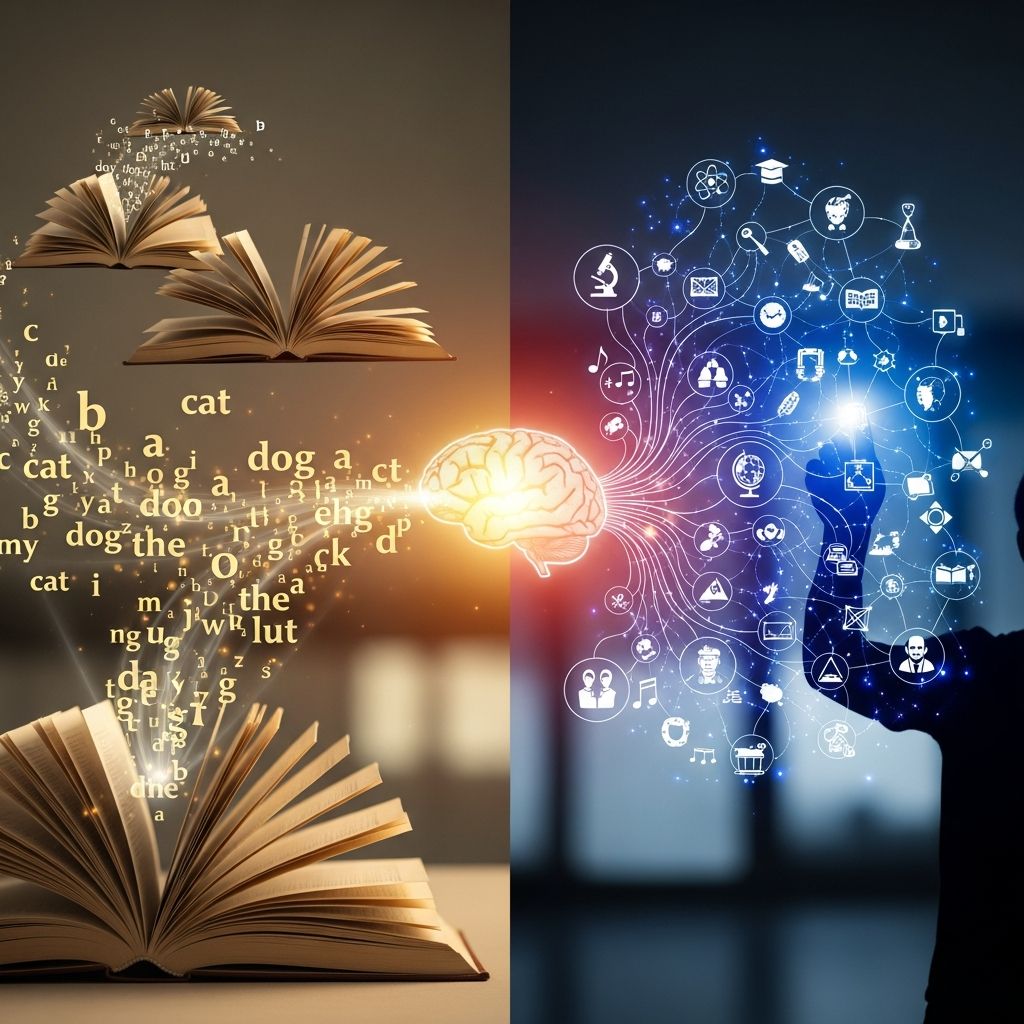
Reading transforms from a basic skill into a gateway for lifelong learning when foundational decoding merges seamlessly with comprehension and content mastery. Modern research challenges the outdated sequence of mastering word recognition before tackling complex texts, advocating instead for an integrated approach that fosters proficient readers from the start.
The Evolution of Reading Instruction Paradigms
Historically, educators divided reading development into distinct phases: early years focused on phonics and word recognition, with comprehension deferred until later grades. This linear model assumed children needed fluency in decoding before extracting meaning from texts. However, contemporary studies reveal this separation hinders progress, as comprehension thrives alongside decoding when introduced early.
Evidence from cognitive science indicates that young learners benefit from exposure to informational content during initial reading lessons. By blending phonemic awareness with vocabulary building and basic inference-making, children develop a robust literacy foundation. This shift aligns with findings that background knowledge significantly boosts understanding, even for novice readers.
Core Components of Effective Early Reading
Building proficient readers requires deliberate attention to interdependent skills. Phonological awareness—recognizing sounds in spoken words—forms the bedrock, enabling children to link letters to phonemes. From there, systematic phonics instruction teaches sound-symbol relationships, allowing decoding of unfamiliar words.
- Phonemic Awareness: Isolating and blending sounds prepares brains for print.
- Phonics: Explicit rules for letter-sound mapping accelerate word recognition.
- Fluency: Repeated reading builds speed and expression.
- Vocabulary: Word meanings expand through context and discussion.
- Comprehension: Strategies like predicting and questioning deepen engagement.
These elements overlap in practice. For instance, while practicing blends like ‘sh’ or ‘th’, teachers can introduce simple sentences with familiar topics, sparking curiosity and meaning-making.
Why Integration Beats Segregation
The traditional divide creates gaps: students fluent in decoding but lacking content knowledge struggle with complex texts. Research shows prior knowledge activates neural pathways that enhance retention and inference. Without it, even skilled decoders falter on unfamiliar subjects.
In classrooms embracing integration, children read leveled texts on science or history from kindergarten. This exposes them to domain-specific terms early, building schemas that support advanced learning. A three-phase model—becoming a reader, skilled reader, expert reader—illustrates this overlap: Phase 1 emphasizes decoding with light comprehension; Phase 2 interleaves vocabulary and fluency; Phase 3 prioritizes wide reading for knowledge acquisition.
| Phase | Focus Skills | Instructional Approach |
|---|---|---|
| Becoming a Reader | Phonology, decoding | Systematic phonics, simple texts |
| Becoming Skilled | Fluency, vocabulary | Leveled readers, word study |
| Becoming Expert | Comprehension, analysis | Complex texts, discussions |
Practical Classroom Strategies for Seamless Transition
Teachers facilitate the shift by embedding comprehension routines in every lesson. Start with purpose-setting: ‘What might we discover about animals today?’ This activates schema and motivates.
Encourage text connections—personal experiences, other books, real-world events—to anchor new ideas. Predictions keep minds active: ‘What do you think happens next?’ Verification reinforces accuracy.
Story mapping visualizes narrative elements: characters, setting, problem, resolution. For nonfiction, graphic organizers chart main ideas and details. Retelling in sequence hones recall, while self-monitoring prompts like ‘Does this make sense?’ build metacognition.
Questioning evolves from literal (‘Who? What?’) to inferential (‘Why? How?’) and evaluative (‘Do you agree?’). Model think-alouds: ‘I’m confused here—let me reread.’ Daily read-alouds model prosody and expose advanced vocabulary.
Building Background Knowledge Through Reading
Knowledge is the hidden engine of comprehension. Children with broad schemas navigate dense texts effortlessly. Integrate read-alouds on diverse topics: weather patterns, historical figures, life cycles. Discuss and connect to experiences.
Use trade books alongside phonics. A lesson on digraphs might feature a book on ocean life, teaching ‘fish’ while explaining habitats. This dual purpose maximizes time.
Wide reading—independent choices from classroom libraries—accelerates growth. Track progress with running records, adjusting levels to ensure 95% accuracy for practice, 90% for challenge.
Addressing Challenges in Upper Elementary and Beyond
Middle school teachers often inherit students decoding-capable but comprehension-weak. Counter this with explicit strategy instruction: summarizing paragraphs, visualizing descriptions, synthesizing across chapters.
Discipline-specific literacy shines here—science demands procedural reading, history chronological sequencing. Teach genre cues: headings signal structure, bold terms define key concepts.
Intervene early for strugglers. Small-group phonics remediation pairs with comprehension scaffolds. Whole-school professional learning communities ensure consistency.
Evidence from Research and Real-World Impact
Studies confirm integrated approaches yield superior outcomes. Longitudinal data links early comprehension focus to high school proficiency. Programs emphasizing science of reading—structured literacy—close achievement gaps.
Policy implications urge standards like Common Core, prioritizing complex texts K-12. Eliminate siloed reading blocks; infuse literacy across subjects.
Frequently Asked Questions
When should children start reading for information?
Immediately, alongside decoding. Even pre-readers glean meaning from pictures and read-aloud discussions.
How do I know if my child is transitioning successfully?
Signs include fluent oral reading, accurate retells, spontaneous questions, and interest in varied topics.
What if a child decodes well but comprehends poorly?
Build knowledge through read-alouds, teach strategies explicitly, and assess background gaps.
Can phonics and comprehension coexist in kindergarten?
Yes—use decodable texts with simple plots to practice both.
How much daily reading is ideal?
20-30 minutes whole-group, plus 15-20 independent, scaling with grade level.
Empowering the Next Generation of Readers
By dismantling artificial divides, educators cultivate thinkers who wield reading as a tool for discovery. This holistic model promises equity, engaging all learners in a literacy-rich world.
References
- From Learning-to-Read to Reading-to-Learn — The Learning Bar. 2022-05. https://thelearningbar.com/downloads/TLB-Learning-toRead-Research-Paper-May-2022_Web.pdf
- Learning to Read: What We Know and What We Need to Know — National Center for Biotechnology Information (PMC). 2015-08-14. https://pmc.ncbi.nlm.nih.gov/articles/PMC4538787/
- Dismantling the Myth of Learning to Read and Reading to Learn — ASCD (Association for Supervision and Curriculum Development). 2023. https://www.ascd.org/el/articles/dismantling-the-myth-of-learning-to-read-and-reading-to-learn
- Shifting from Learning to Read to Reading to Learn — Thomas B. Fordham Institute. 2023. https://fordhaminstitute.org/national/commentary/shifting-learning-read-reading-learn
- Learning to Read to Learn — Harvard Graduate School of Education. 2016-12. https://www.gse.harvard.edu/ideas/usable-knowledge/16/12/learning-read-learn

- Integrated M.A. in Applied Linguistics, University of Hyderabad
- 5+ years in editorial, instructional, SEO, and research-based writing
Sneha is a relationships and lifestyle writer with a strong foundation in applied linguistics and certified training in relationship coaching. She brings over five years of writing experience to theskillvault, crafting thoughtful, research-driven content that empowers readers to build healthier relationships, boost emotional well-being, and embrace holistic living. Her writing and insights reflect the belief that beauty, happiness, and wellness…