
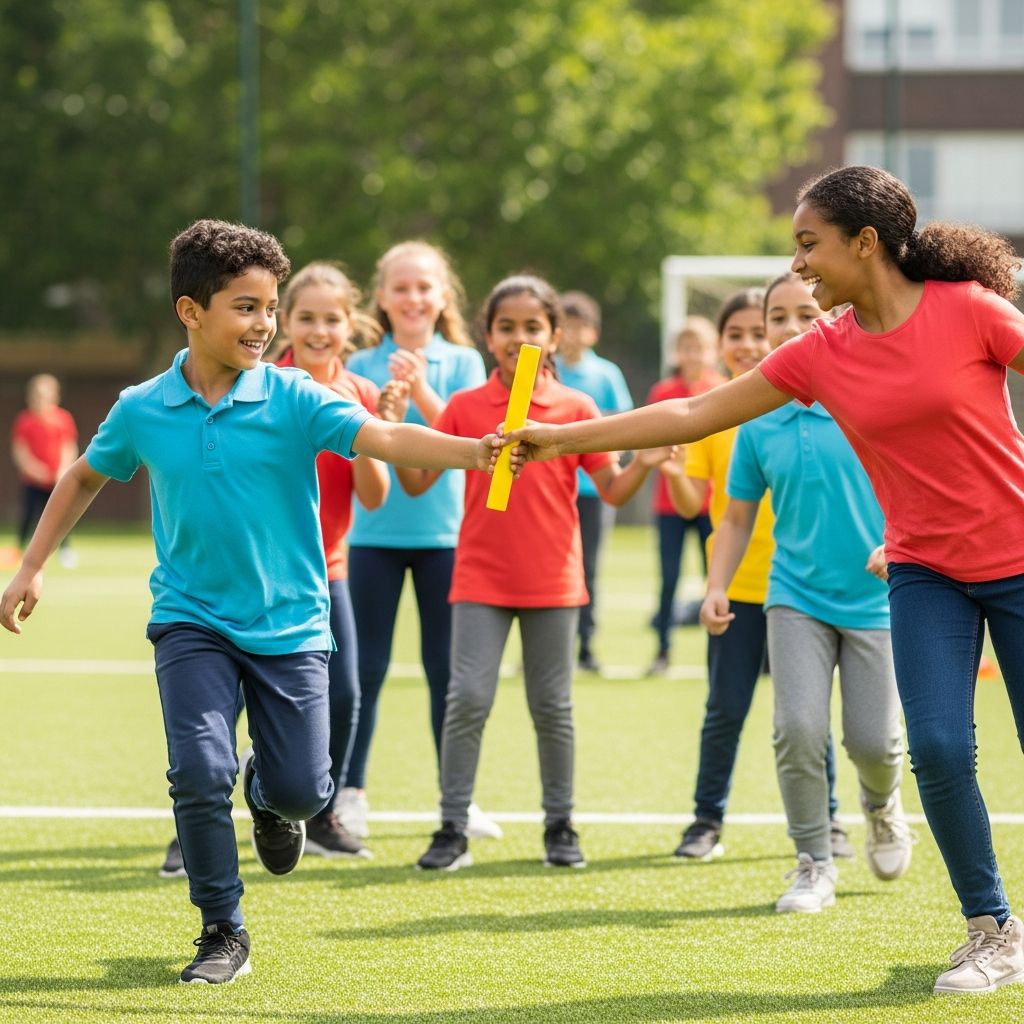
Introduction to Relay-Based Learning and Movement
Relay activities represent a cornerstone of effective physical education programming, combining athletic development with collaborative learning. These structured competitions require participants to work synchronously as a unified group, with each individual contributing essential components to the team’s overall success. The relay format transcends traditional individual sports by emphasizing interdependence, communication, and mutual encouragement among peers. Beyond the athletic benefits, these activities cultivate valuable social competencies that extend far beyond the gymnasium or athletic field.
Educational institutions have long recognized relay competitions as versatile tools for addressing multiple pedagogical objectives simultaneously. They accommodate diverse skill levels, promote inclusivity, and can be adapted to support learning across various age groups and physical capabilities. The inherent competitive structure motivates participation while the collaborative element builds classroom community and strengthens interpersonal relationships among students.
Fundamental Principles of Effective Relay Design
Successful relay activities share several core characteristics that maximize engagement and learning outcomes. Understanding these foundational elements enables educators to select or modify activities that best serve their specific student populations and instructional goals.
Team Structure and Participation
Relay competitions function optimally when teams are composed of four to six participants, allowing sufficient opportunities for individual contribution while maintaining reasonable competition duration. Balanced team composition ensures that all students have meaningful roles and adequate rest periods between their turns. This structure prevents fatigue-induced frustration and maintains enthusiasm throughout the activity. Teams should be organized strategically to ensure equitable competition—mixing abilities rather than creating teams solely based on athletic performance produces more engaging experiences and prevents discouragement among less experienced participants.
Clear Objective Framework
Each relay activity must establish explicit objectives that participants understand before competition commences. Whether the goal involves speed, accuracy, cooperative coordination, or creative problem-solving, clarity regarding success criteria enables students to focus their efforts appropriately. Well-articulated objectives also facilitate meaningful assessment and help students recognize how their performance contributed to team outcomes.
Safety Considerations
Physical safety requires paramount attention in relay design and implementation. Activities should incorporate adequate spacing to prevent collisions, use age-appropriate equipment, and include clear boundary definitions. Instructors must monitor participant intensity levels and enforce rules that prioritize participant welfare over competitive victory.
Movement-Based Relay Categories
Relay activities can be organized into distinct categories based on the primary movements participants must execute. This classification system helps educators select activities that align with specific motor skill development objectives or physical education curriculum standards.
Locomotor Movement Relays
These activities emphasize fundamental movement patterns that form the foundation of athletic development. Participants might skip, gallop, hop on single legs, or perform bear crawls to designated turnaround points. Bear crawl relays challenge students to maintain specific body positioning—beginning on hands and feet with stomachs parallel to the ground—while traveling forward by moving opposite limbs. These movement-based relays develop neuromuscular coordination, cardiovascular fitness, and dynamic balance while maintaining high engagement levels through varied movement patterns.
Balance and Stabilization Challenges
Activities requiring participants to maintain object equilibrium while traveling introduce additional cognitive and physical demands. Students might balance balls atop inverted cones while navigating around obstacle markers, or transport objects using specialized gripping techniques. These relays enhance proprioceptive awareness, core stability, and fine motor control while adding complexity that appeals to older elementary and middle school students.
Partner-Coordinated Movement
Certain relay formats require synchronized movement between paired participants. Spider relays exemplify this category, with one partner facing forward while the other faces backward, their arms linked as they navigate around markers together. These activities demand communication, trust, and coordinated effort as participants learn to move as unified units despite facing opposite directions. The challenge level makes these particularly effective for developing advanced social skills and complex motor planning.
Equipment-Based Relay Variations
Incorporating various materials transforms relay activities and introduces novel challenges that maintain student interest across multiple sessions.
Simple Object Transport
Basic relays involve moving objects from one location to another using conventional carrying methods or creative techniques. Beanbag relays require transporting small sacks from starting buckets to designated turnaround points. Tennis ball scramble relays challenge teams to collect scattered balls while employing specified locomotor movements, adding complexity by requiring students to sort objects into categorized buckets based on predetermined criteria. These simple variations accommodate younger students while remaining engaging for older participants.
Specialized Equipment Navigation
Space hoppers—inflatable bouncing toys—enable participants to traverse distances through hopping motions rather than running. Hopper balls provide similar challenges with different biomechanical demands. Shoebox relays position participants’ feet inside boxes, requiring shuffling movements instead of conventional running. These specialized equipment options accommodate diverse abilities and create novel experiences that maintain novelty and excitement across multiple physical education sessions.
Obstacle Integration
Ultimate relay experiences combine multiple elements into comprehensive obstacle courses. Students might hop through agility ladders, spin hula hoops designated numbers of times, jump over hurdles, and crawl through tunnels during single relay runs. These complex sequences develop multifaceted athletic capabilities while presenting problems requiring strategic planning and sequential execution.
Creative Concept Relays
Beyond traditional athletics, relays can incorporate imaginative themes and problem-solving elements that engage students’ creativity alongside their physical capabilities.
Property Management Challenges
“Clean Your Room” themed relays task participants with organizing scattered items into designated locations. Students might collect various objects and arrange them in specific patterns or categorized containers. These activities subtly incorporate organizational skills while maintaining physical activity engagement.
Game-Based Strategy Relays
Rock-paper-scissors relays introduce decision-making elements where outcomes determine team advancement or task modifications. Cone flip relays require participants to successfully complete flipping movements before proceeding, adding skill verification requirements to traditional relay structures. Tennis ball scramble variations where students sort balls into odd and even buckets combine athletic movement with mathematical categorization, creating multidisciplinary learning opportunities.
Water and Weather-Responsive Activities
Water balloon relays introduce elements of fragility and careful handling to competitive contexts. Participants transport water balloons around courses without rupturing them, with scoring systems potentially rewarding teams that complete the activity with minimal balloon casualties. These activities work particularly well during warm weather periods and create memorable experiences through their novel sensory components.
Age-Appropriate Selection Framework
| Age Group | Recommended Focus | Activity Examples | Equipment Needs |
|---|---|---|---|
| Kindergarten–Grade 2 | Basic locomotor patterns, simple rules | Hula hoop relays, space hopper races, basic running relays | Minimal equipment, large open spaces |
| Grade 3–5 | Coordinated movement, moderate complexity | Bear crawl relays, crab walk relays, balloon foot pass activities | Standard PE equipment, defined boundaries |
| Grade 6–8 | Advanced coordination, strategic thinking | Spider relays, obstacle courses, game-based relays | Diverse materials, complex setup options |
Implementation Strategies for Maximum Engagement
Successful relay programming requires thoughtful preparation and responsive facilitation throughout implementation.
Pre-Activity Preparation
Establishing enthusiasm before competition begins significantly impacts participation quality and safety. Educators should explain objectives clearly, demonstrate proper techniques, and allow practice attempts before formal competition. Establishing specific behavioral expectations—such as encouraging teammates, following boundary rules, and respecting turnaround points—creates positive classroom cultures where competition enhances rather than detracts from relationships.
Equitable Competition Organization
Organizing teams that balance abilities rather than segregating experienced from inexperienced participants creates more engaging experiences for all students. Strategic team assignment ensures that each group has reasonable chances of success, preventing the repeated victory of identical teams across multiple competitions. Rotating team membership across multiple relay activities distributes success and maintains motivation.
Differentiation and Modification
Effective educators modify activities to accommodate diverse needs while maintaining core elements. Students with mobility challenges might compete using alternative movement patterns—crawling instead of bear crawling, or mobility devices instead of hopping. Adjusting distances, complexity levels, or success criteria enables all students to participate meaningfully regardless of physical capabilities.
Benefits Beyond Physical Development
While relay activities provide obvious cardiovascular and motor skill benefits, their contributions extend across multiple developmental domains. Students develop leadership skills by motivating teammates, enhance problem-solving abilities through strategic planning, and build communication competencies through coordinated efforts. The pressure of competitive environments creates controlled stress responses that help students develop resilience and emotional regulation capabilities. Perhaps most significantly, relay activities create shared experiences that strengthen classroom communities and establish positive peer relationships that extend beyond physical education periods.
Seasonal and Environmental Adaptations
Relay programming can incorporate environmental variations that maintain novelty and appropriately match seasonal conditions. Outdoor relays during pleasant weather might emphasize speed and endurance challenges, while indoor winter activities might focus on skill precision or creative problem-solving. Weather-responsive modifications—such as incorporating water elements during warm months or emphasizing indoor locomotor patterns during inclement weather—ensure consistent programming regardless of environmental circumstances.
Frequently Asked Questions About School Relay Programming
Q: What team size works best for relay activities?
A: Teams of four to six members provide optimal balance between individual participation opportunities and manageable competition duration. Larger teams sometimes create excessive waiting periods that reduce engagement, while smaller teams offer insufficient opportunities for skill development and social interaction.
Q: How can educators include students with varying physical abilities?
A: Differentiation strategies include modifying movement patterns (crawling instead of running), adjusting distances, providing mobility equipment or assistance devices, and creating alternative success criteria. The fundamental principle is ensuring all students can participate meaningfully in team contexts.
Q: What safety precautions should educators prioritize?
A: Essential safety measures include establishing adequate spacing between teams, clearly marking boundaries and turnaround points, enforcing appropriate intensity levels, using age-appropriate equipment, and monitoring participants for signs of excessive fatigue or distress.
Q: How frequently should educators rotate between different relay activities?
A: Introducing new activities every few sessions maintains novelty and prevents monotony, typically rotating between three to five favorite activities within a unit. This frequency balances skill development through repetition with engagement benefits from variety.
Q: Can relay activities accommodate classroom instruction objectives beyond physical education?
A: Absolutely. Relay activities can incorporate academic elements such as mathematical sorting, language-based challenges, or scientific problem-solving, creating multidisciplinary learning opportunities that reinforce content across curricula.
References
- 25 Fun Ideas for Kids Relay Races — Childhood 101. 2024. https://childhood101.com/kids-relay-races/
- 48 Creative Relay Race Ideas To Try — We Are Teachers. 2024. https://www.weareteachers.com/relay-race-ideas/
- Field Day Activities for Solo, Partners, and Groups — School Specialty Blog. 2024. https://blog.schoolspecialty.com/partner-and-group-field-day-activity-ideas/
- Grade K-3 | Relay Races — Prime Coaching Sport. 2024. https://www.primecoachingsport.com/gradek-3relayraces

- Integrated M.A. in Applied Linguistics, University of Hyderabad
- 5+ years in editorial, instructional, SEO, and research-based writing
Sneha is a relationships and lifestyle writer with a strong foundation in applied linguistics and certified training in relationship coaching. She brings over five years of writing experience to theskillvault, crafting thoughtful, research-driven content that empowers readers to build healthier relationships, boost emotional well-being, and embrace holistic living. Her writing and insights reflect the belief that beauty, happiness, and wellness…