
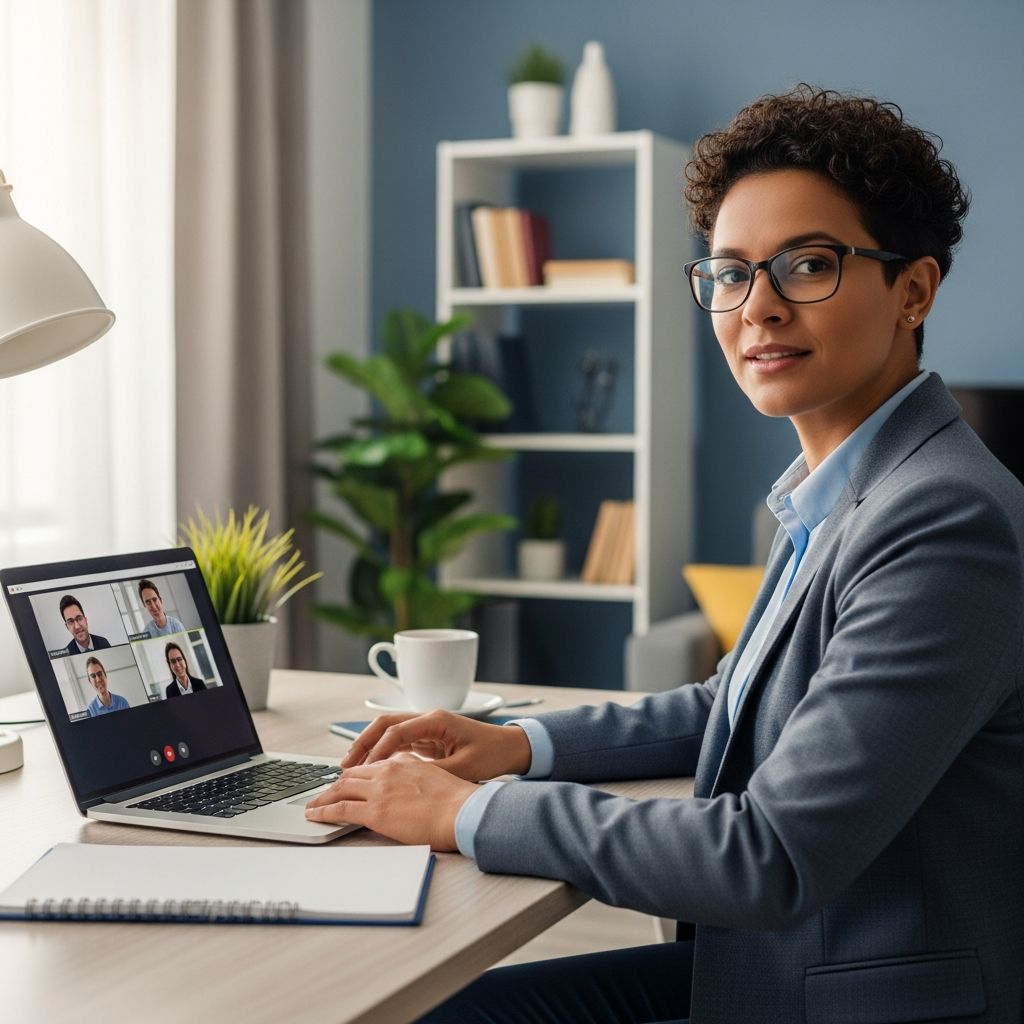
Remote interviews, including phone calls and video sessions, have become standard in modern hiring. They test your communication skills, professionalism, and preparation without visual or in-person cues. Success hinges on clear voice projection, technical reliability, and demonstrating enthusiasm effectively.
Essential Pre-Interview Preparation
Thorough preparation builds confidence and showcases your fit for the role. Start by confirming all logistics to avoid last-minute issues.
- Verify the interview date, time, time zone, caller’s name and role, their phone number, and your contact details.
- Research the company thoroughly: review its website, recent news, products, values, and challenges to tailor your responses.
- Study the job description and match your skills using the STAR method (Situation, Task, Action, Result) for behavioral questions.
Prepare a ‘cheat sheet’ with key notes: your resume highlights, salary expectations (researched via reliable benchmarks), and 2-3 thoughtful questions like team dynamics or growth opportunities. Practice aloud, recording yourself to check pace, clarity, and tone. Speak slowly, smile to convey energy, and ensure you sound engaged.
Setting Up Your Interview Space
Your environment impacts focus and sound quality. Choose a quiet, distraction-free room.
| Aspect | Recommendations |
|---|---|
| Noise Control | Silence pets, TV, notifications; inform household members; use noise-cancelling headphones. |
| Comfort | Sit or stand upright for confident posture; dress professionally to adopt the right mindset. |
| Tech Check | Fully charge devices, test connection, have backup power and phone; set professional voicemail. |
For video interviews, ensure stable internet (at least 5 Mbps upload), clear webcam at eye level, neutral background, and good lighting facing you. Test platforms like Zoom or Teams in advance.
Excel During the Remote Interview
The call is your chance to shine. Be ready 10-15 minutes early, take deep breaths, and answer promptly on the 2nd or 3rd ring.
- Greet warmly: ‘Hello, this is [Your Name] speaking. Thank you for calling.’ Transition smoothly to small talk if initiated, like commenting on the day or weather, keeping it brief and professional.
- Project enthusiasm: Smile, gesture naturally, vary tone to avoid monotony. Stand if it boosts energy.
- Listen actively: Pause before responding, repeat key points for clarity (‘So, you’re asking about my experience with team projects?’), use fillers like ‘I see’ sparingly.
Answer concisely, using examples from your experience. If unclear, politely ask for repetition. Avoid filler words, eating, or background noise. Have pen, paper, resume, and notes handy for jotting details without rustling.
Common Pitfalls and Fixes
Anticipate issues:
- Connection drops: Have alternate contact info ready and resume conversation calmly.
- Poor audibility: Speak directly into the mic, confirm ‘Can you hear me clearly?’ early.
- Nerves: Slow your speech, focus on breathing between answers.
End strongly: Ask your prepared questions, express continued interest (‘I’m excited about how my skills align with your team’s goals’), and inquire about next steps.
Video-Specific Strategies
Video adds visual elements, demanding attention to appearance and tech.
- Eye contact: Look at the camera lens, not the screen.
- Body language: Sit straight, nod, lean slightly forward to show engagement.
- Visuals: Professional attire from waist up, tidy space, test audio/video fully.
Practice full mock sessions to blend verbal and non-verbal cues seamlessly.
Post-Interview Actions for Success
Follow-up reinforces your professionalism.
- Send a thank-you email within 24 hours: Personalize by referencing a discussion point, reiterate fit, and restate enthusiasm.
- Note key details for potential future rounds.
- If no response in 1-2 weeks, send a polite follow-up.
Reflect: Review what went well and areas to improve for next time.
Frequently Asked Questions
What if my phone dies during the interview?
Quickly reconnect using backup details provided beforehand. Apologize briefly and resume professionally.
How do I sound confident without visuals?
Smile, use varied inflection, speak deliberately, and stand upright to naturally enhance vocal strength.
Should I prepare salary talk for phone screens?
Yes, research market rates and have a range ready, but defer if possible until later stages.
What’s the best way to handle technical glitches in video?
Stay calm, have a phone backup, communicate openly (‘Let me switch to audio’), and test everything pre-call.
How many questions should I ask?
2-3 insightful ones showing research, like role challenges or team success metrics.
Advanced Techniques for Standing Out
Beyond basics, differentiate yourself.
- Tailor stories to company needs, quantifying achievements (e.g., ‘Increased sales 20% by…’).
- Show cultural fit through shared values research.
- For creative roles, reference portfolio if applicable.
Practice with mentors or apps simulating interviews to refine delivery.
Remote interviews level the playing field globally, but demand discipline. Consistent preparation turns opportunities into offers. With these strategies, you’ll convey competence and eagerness effectively.
References
- Phone interview tips — National Careers Service. 2023. https://nationalcareers.service.gov.uk/careers-advice/how-to-do-well-in-telephone-interviews/
- 22 Phone Interview Tips to Help You Nail the Call — The Muse. 2023. https://www.themuse.com/advice/phone-interview-tips-preparation
- 25 Phone Interview Tips To Get You to the Next Round — Indeed.com. 2023. https://www.indeed.com/career-advice/interviewing/phone-interview-tips-to-get-you-to-the-next-round
- Making an Impression with the Phone Interview — Texas State University Career Services. 2023. https://www.careerservices.txst.edu/students-alumni/resources-services/career-guides/phone-interview-guide.html
- Phone Interview — San Jose State University iSchool. 2023. https://ischool.sjsu.edu/phone-interview

Medha Deb is an editor with a master's degree in Applied Linguistics from the University of Hyderabad. She believes that her qualification has helped her develop a deep understanding of language and its application in various contexts. Medha specializes in the areas of beauty, health, sports, and wellness and is committed to ensuring that the content on the website is…