
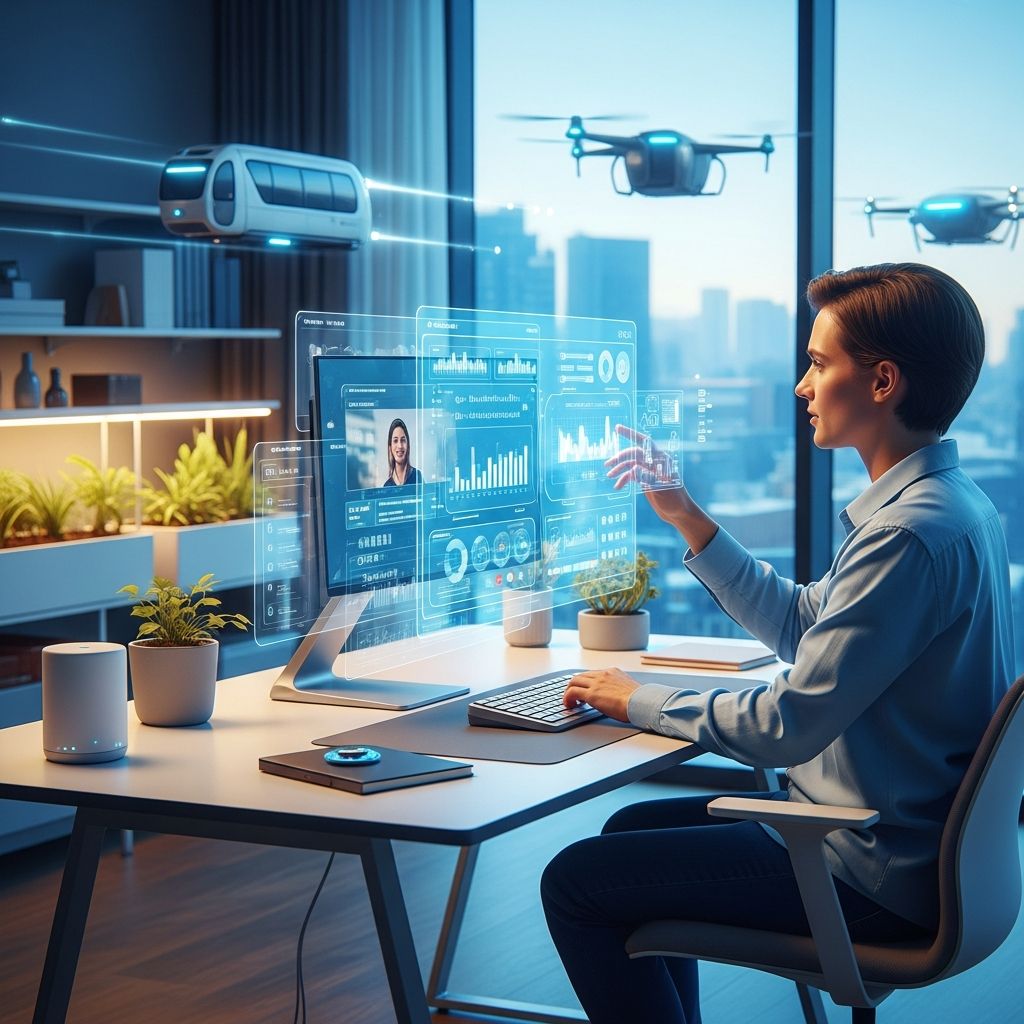
Remote work has evolved into a dominant force in modern professional landscapes, with remote jobs comprising over 15% of U.S. opportunities by 2026, a threefold increase since 2020. As hybrid models become standard, mastering productivity requires intentional strategies that combat isolation, distractions, and burnout while leveraging AI tools and outcome-focused metrics.
Designing Your Optimal Remote Workspace
A dedicated workspace is foundational for remote success, providing psychological separation from home life and enhancing focus. This setup signals to your brain that it’s time for professional mode, much like a traditional commute.
- Ergonomic Essentials: Invest in an adjustable chair, monitor stand, and keyboard to prevent strain during long sessions. Proper lighting reduces eye fatigue and improves video call presence.
- Boundary Ritual: Create a ‘commute’ by stepping away from your desk for 5-10 minutes post-setup, perhaps with stretches or a walk, to mentally transition into work.
- Minimalist Environment: Keep only work-related items visible to minimize visual clutter and decision fatigue.
Teams with flexible spaces benefit most, as this investment yields high returns in ergonomics and professionalism on calls.
Harnessing Time Management Techniques
Effective time allocation prevents overcommitment and protects deep work periods. In 2026, calendar tools integrated with AI help forecast realistic schedules amid hybrid demands.
The Power of Pomodoro for Sustained Focus
The Pomodoro Technique divides work into 25-minute bursts followed by 5-minute breaks, building momentum without exhaustion. After four cycles, take a longer 15-30 minute respite. This method suits knowledge workers by aligning with natural attention spans.
- Customize intervals for your rhythm—some extend to 50 minutes for creative tasks.
- Pair with timers that auto-block distractions on devices.
Implementing Time Blocking Mastery
Assign specific blocks for tasks, such as 9-11 AM for deep work and 11:30 AM for emails. Include buffers for overruns and reactive slots like mid-morning check-ins. Weekly planning sessions on Mondays refine this, reducing decision fatigue.
| Technique | Effort Level | Cost | Benefits | Best For |
|---|---|---|---|---|
| Dedicated Workspace | Medium | High | Clear boundaries, ergonomics | Video-heavy roles |
| Time Blocking | Medium-High | Low | Reduces overcommitment | Complex schedules |
| Pomodoro | Low | None | Boosts focus bursts | All remote workers |
Streamlining Small Tasks with the Two-Minute Rule
Handle any task that takes under two minutes immediately to clear mental clutter. Reserve dedicated ‘two-minute windows,’ like post-lunch, for batching these without disrupting focus blocks. This prevents backlog accumulation and builds quick wins.
- Batch similar micros: Group emails or status updates.
- Integrate into routines without constant checking.
Mastering Task Batching for Efficiency
Group similar activities—like all communications or reports—into dedicated slots to minimize context switching, which can consume 20-40% of productive time. Schedule batches realistically, such as emails at 9 AM and 4 PM, and review weekly for optimization.
- Categorize First: Emails, calls, admin—then assign blocks.
- Movement Integration: Follow desk batches with walking calls for variety.
- No-Meeting Days: Reserve for deep batches like writing or coding.
Automation in 2026 amplifies this by handling repetitive batches, freeing time for high-value work.
Setting Communication Boundaries
Constant pings erode focus; batch checks and use status indicators in tools like Slack (e.g., ‘Focus Mode’). Tier channels by urgency and default to async updates with context, deadlines, and actions.
- Golden hours for sync overlaps across time zones.
- Video messages for quick, personal async comms.
This respects boundaries, vital for global teams, reducing after-hours stress.
Integrating Movement and Wellness Breaks
Sedentary remote life demands scheduled activity. Post-Pomodoro stretches or walks recharge energy and mood. Wellness is a productivity pillar, with 2026 trends prioritizing mental health via quiet weeks and burnout checks.
- Batch movement: Walking meetings after focus blocks.
- End-of-day shutdown: Log off ritual to detach.
Leveraging AI and Tech for 2026 Workflows
AI tools automate routines, transcribe meetings, and suggest schedules, transforming remote setups. Outcome-based metrics shift from hours to results, aligning with hybrid norms.
Select async-first stacks: Trackers for tasks, wikis for knowledge, chat for coordination. Micro-learning modules enable paced upskilling.
Fostering Remote Team Engagement
Engagement drives retention; frequent manager check-ins via video build trust. Hybrid hubs and nomad policies expand options, while sustainability practices like virtual collab cut commutes.
- Virtual team-building for creativity flow.
- Flexible policies for work-life harmony.
Frequently Asked Questions (FAQs)
What are the top challenges in remote productivity?
Key issues include distractions, communication gaps, work-life blur, and tracking output without presence metrics. Solutions emphasize boundaries and async tools.
How does AI boost remote teams in 2026?
AI automates tasks, provides insights, enhances decisions, and streamlines collab, creating efficient environments.
Can virtual teams match in-person performance?
Yes, with optimized tools, leadership, and flexibility, virtual setups enhance accessibility and balance.
How to prevent remote burnout?
Enforce boundaries, forecast loads, schedule recovery, and monitor signals early.
What metrics work best for remote evaluation?
Shift to outcomes over hours, using clear goals and transparent policies.
References
- 8 Essential Remote Work Productivity Tips for 2026 — Nearshore Business Solutions. 2026. https://nearshorebusinesssolutions.com/news/remote-work-productivity-tips/
- Strategies to Keep Remote Teams Engaged 2026 — Scale Army. 2026. https://scalearmy.com/blog/strategies-to-keep-remote-teams-engaged/
- 10 Trends That Will Redefine Remote Work in 2026 — Splashtop. 2026. https://www.splashtop.com/blog/remote-work-trends-2026
- What’s the future of remote work? Here’s what researchers say — Binghamton University. 2023-10-01. https://www.binghamton.edu/news/story/6004/remote-work-best-practices-business-new-research
- 7 Essential Strategies to Support Your Remote Workforce — Elcom. 2026. https://www.elcom.com.au/resources/blog/7-essential-strategies-to-support-your-remote-workforce
- 11 Surprising Statistics on Remote Work for 2026 — StrongDM. 2026. https://www.strongdm.com/blog/remote-work-statistics

- Integrated M.A. in Applied Linguistics, University of Hyderabad
- 5+ years in editorial, instructional, SEO, and research-based writing
Sneha is a relationships and lifestyle writer with a strong foundation in applied linguistics and certified training in relationship coaching. She brings over five years of writing experience to theskillvault, crafting thoughtful, research-driven content that empowers readers to build healthier relationships, boost emotional well-being, and embrace holistic living. Her writing and insights reflect the belief that beauty, happiness, and wellness…