
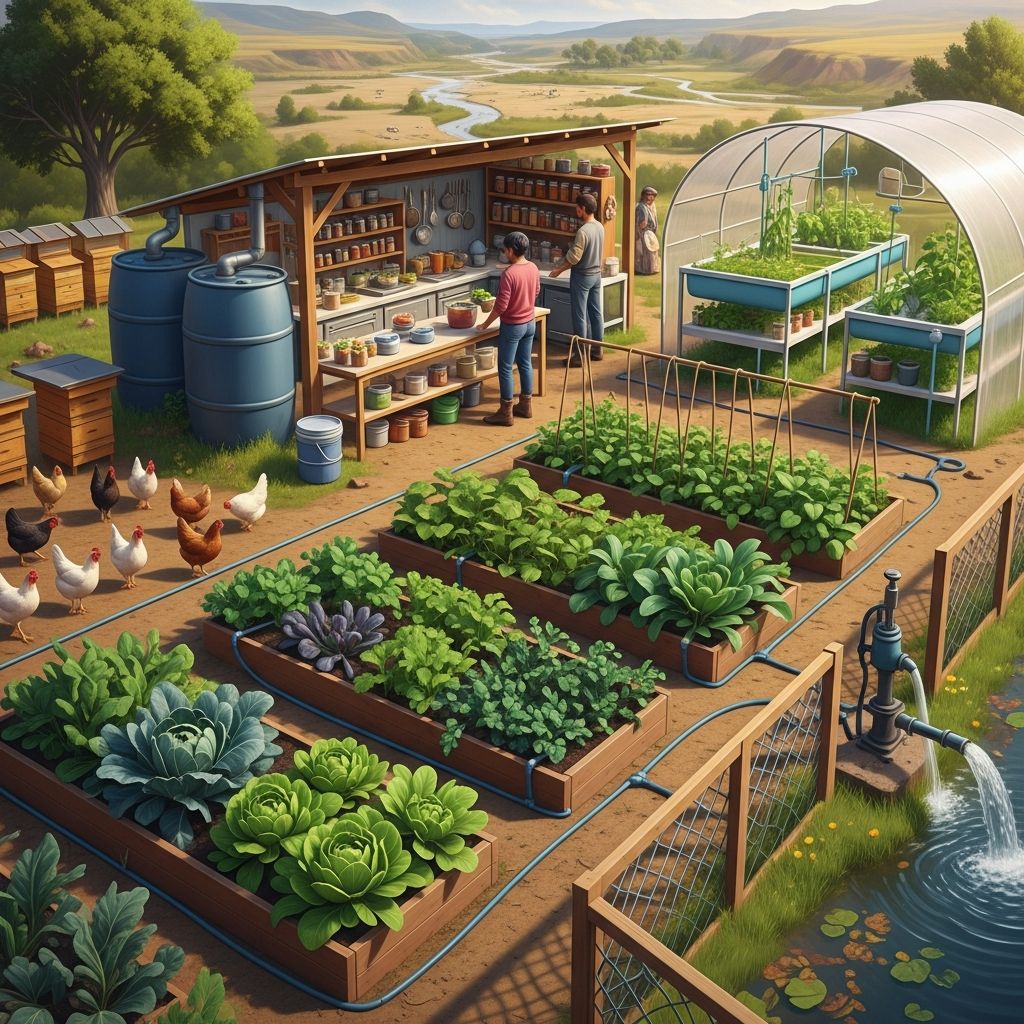
Understanding the Vulnerability of Modern Food Systems
The global agricultural infrastructure that feeds billions of people relies on interconnected systems that are surprisingly fragile. Modern farming depends on consistent environmental conditions—adequate sunlight, stable temperatures, and reliable precipitation patterns. Additionally, our food supply chains stretch across continents, with crops moving through complex distribution networks before reaching consumers. This interconnectedness creates a paradox: while it enables efficiency and global trade, it also introduces systemic vulnerabilities where disruption at any critical point can cascade throughout the entire network.
Potential threats to this system are diverse and sobering. Climate change scenarios increasingly show the possibility of simultaneous crop failures across multiple global breadbaskets—the geographic regions responsible for feeding massive populations. Pandemic threats could ravage agricultural workforces and disrupt transportation networks. Asteroid impacts or volcanic events could block sunlight for extended periods. Even large-scale nuclear conflicts pose risks to both the environment and the infrastructure supporting food production. Without significant preparation, such catastrophes could lead to widespread famine affecting billions of people, as current global food stockpiles only provide approximately six months of supply.
The Research Foundation for Catastrophe-Resistant Food Production
The scientific investigation into alternative food systems emerged from a provocative question: if mushrooms could thrive in darkness following a global catastrophe, could humans also adapt by consuming these organisms? This inquiry led researcher David Denkenberger and collaborator Joshua Pearce to systematically explore how humanity might sustain itself when traditional agriculture becomes impossible. Their comprehensive study, published in 2014, introduced the concept of “resilient foods”—alternative protein and calorie sources that don’t depend on conventional agricultural conditions.
The research has proven remarkably influential. The original publication has been cited over 100 times in subsequent research, spawning an entire field of study dedicated to catastrophe-resistant food systems. Beyond academic impact, the work inspired the creation of the Alliance to Feed the Earth in Disasters (ALLFED), an organization dedicated to researching and developing practical solutions for maintaining food security during global emergencies.
Converting Cellulose into Edible Nutrients
One of the most promising resilient food approaches involves transforming wood and cellulose-based materials into human-edible sugar. This process represents a elegant solution because it leverages existing industrial infrastructure—specifically, paper manufacturing facilities that already possess most necessary components for cellulose processing.
The technical process begins with grinding wood into pulp using the machinery already present in paper mills. Following this initial step, enzymes are introduced to break down cellulose into simple sugars, with additional enzymatic action converting hemicellulose into other usable sugars. The economic efficiency of this approach is striking: estimates suggest that feeding a single person all daily calories through cellulosic sugar costs approximately one dollar per day. This affordability stems partly from the fact that paper mills already bear the capital and operational costs of wood processing infrastructure—the modification to produce food merely adds an enzymatic conversion step to existing operations.
The advantages extend beyond cost efficiency. Because paper facilities exist globally with substantial redundancy, these factories could be rapidly repurposed during emergencies. Furthermore, the technology requires no sophisticated biotechnology breakthroughs—it represents an engineering solution utilizing well-understood chemistry and established industrial processes.
Expanding the Menu: Diverse Alternative Protein Sources
Beyond cellulosic sugars, researchers have identified numerous alternative food sources, ranging from the conventional to the extraordinary. Mushroom cultivation on degrading wood represents a particularly accessible option, as fungi thrive in darkness and decompose organic matter efficiently. Agricultural residues—the parts of crops not harvested for human consumption—can be redirected to animal feed in catastrophe scenarios, freeing human-edible crops for direct human consumption.
More unconventional approaches under investigation include bacteria engineered to consume natural gas or convert electricity directly into biomass. While these technologies sound like science fiction, they represent serious research directions because they decouple food production from sunlight, temperature, or seasonal cycles. In scenarios where the sun’s light reaches the surface, alternative energy sources like nuclear power or stored fossil fuels could theoretically sustain biological systems that convert raw energy and basic chemical inputs into digestible food.
The diversity of approaches matters strategically. Different regions possess different resources—some countries maintain extensive potato seed reserves, others have abundant fossil fuels or access to natural gas deposits. A portfolio of resilient food technologies allows individual nations to leverage their specific advantages while maintaining nutritional security.
The Challenge of Redirecting Current Food Systems
Current global agriculture produces far more food than necessary to meet human caloric requirements. However, substantial portions of this production never directly feed people. Enormous quantities of human-edible crops are instead diverted to livestock feed, a practice that makes sense during normal times when agriculture functions efficiently. In catastrophe scenarios, however, this arrangement becomes wasteful.
A critical resilience strategy involves immediately redirecting human-edible food away from animal consumption during emergencies. Since many livestock species can consume agricultural residues—crop stalks, leaves, and other components unsuitable for human consumption—ruminants and other animals can be maintained on these secondary products while preserving primary crops for direct human nutrition. This transition would require careful planning and rapid policy implementation but could significantly extend food availability during critical periods.
The International Cooperation Imperative
Current research models for catastrophe food security assume robust international cooperation. Yet this assumption faces significant real-world challenges. Consider a scenario where the United Kingdom, possessing substantial potato seed reserves, cannot cultivate them domestically due to environmental conditions. The nation would depend on another country to grow these seeds and return the resulting harvest. Such arrangements require extraordinary trust during crisis conditions when self-preservation instincts intensify.
Historical precedent demonstrates the fragility of food trade during shortages. In 2007-2008, global food production fell short by less than one percent, yet rice prices tripled or quadrupled due to countries implementing export bans. Countries prioritize their own populations during scarcity, which is rational from a national security perspective but catastrophic from a global perspective. If some nations refuse to cooperate on food trade, maintaining international supply chains becomes impossible. The consequences extend beyond food—energy trade, mineral commerce, and component supplies would suffer comparable disruptions. Modern civilization’s supply chains, as revealed during the COVID-19 pandemic, prove remarkably vulnerable to breakdown.
To mitigate cooperation failures, researchers propose advance agreements between nations, establishing commitments to international food sharing before catastrophe strikes. When governments pre-commit to cooperation frameworks, they establish political legitimacy for maintaining trade during crises. Without such advance agreements, mutual suspicion and fear could trigger cascading failures worse than the original catastrophe.
The Information Imperative for Global Survival
An underappreciated aspect of catastrophe preparedness involves public knowledge about resilient food sources. If populations lack awareness that humanity could potentially feed itself through catastrophe using alternative foods, they may reasonably conclude that mass death is inevitable. This despair creates dangerous incentives—countries might resort to theft, conflict, and predatory behavior against neighbors to secure resources. Leaders might rationalize morally abhorrent actions based on beliefs that survival demands ruthlessness.
Conversely, if governments and populations understand that cooperative implementation of resilient food systems could sustain global civilization, they face entirely different incentive structures. Cooperation becomes the rational path to survival rather than an act of altruistic sacrifice. Public education about catastrophe-resistant food systems thus serves a critical security function beyond mere technical preparedness.
Underground Refuges and Extreme Scenario Planning
For scenarios involving extended sunlight blockage—such as those following large asteroid impacts or extensive nuclear warfare—researchers have explored underground facility designs capable of sustaining human populations. Traditional underground bunker plans often rely on cultivating conventional plants, an approach that proves inefficient and expensive due to the capital costs of supplying supplemental lighting and environmental controls.
Alternative approaches utilize bacteria that convert electricity into edible biomass, with nuclear reactors providing the energy source. Compared to conventional plant cultivation in underground facilities, these bacterial conversion processes prove substantially more efficient—potentially 10 times more energy-efficient in converting electrical power into human-edible food. This dramatic efficiency gain reduces the infrastructure burden and makes long-term underground survival economically conceivable.
Two pathways emerge for extreme-scenario preparedness: massive upfront investment in food stockpiling sufficient for years of consumption, or development of conversion technologies that transform available energy and raw materials into food on an ongoing basis. The second approach offers superior economics because it substitutes capital investment in food storage with investment in production technology, while requiring maintenance of energy sources and raw material stockpiles rather than enormous food reserves subject to spoilage.
Regional and Geographic Resilience Planning
Moving beyond global cooperation assumptions, researchers increasingly analyze what food security looks like for individual countries when international trade ceases entirely. Geographic information systems (GIS) analysis identifies resilient food resources available within specific territories. This localized assessment reveals which regions possess paper mills suitable for cellulose conversion, which have fossil fuel reserves supporting bacterial cultivation, and which maintain agricultural residues suitable for alternative processing.
Understanding regional capabilities serves dual purposes. First, it provides realistic planning for countries unable to rely on international trade. Second, this information can be leveraged diplomatically to convince governments that cooperation produces better outcomes than autarky. Countries discovering that international cooperation yields superior food security compared to isolation-focused strategies gain rational motivation to establish cooperative frameworks before catastrophes occur.
Frequently Asked Questions
Q: How long could alternative food sources sustain global population?
A: This depends on the specific resilient food technology deployed and the resources available. Cellulosic sugar production from existing paper mills could theoretically support indefinite production if paper facilities remain operational. Bacterial conversion systems could also function continuously if energy sources remain available. Current research suggests that with multiple resilient food approaches implemented simultaneously, humanity could maintain nutritional adequacy even through years-long catastrophes.
Q: What are the major barriers to implementing resilient food systems?
A: Technical barriers are minimal—most technologies are well-understood. Primary obstacles involve advance planning, capital investment in preparation during normal times, international coordination, and maintaining technical capacity to deploy systems during chaotic catastrophe conditions. Political will and prioritization represent the binding constraints.
Q: Could alternative foods provide complete nutrition?
A: Most resilient food sources provide adequate calories and basic proteins. Complete nutritional security would likely require combining multiple resilient food sources to ensure adequate vitamins, minerals, and micronutrients. Strategic stockpiling of specific supplements during normal times could address potential deficiencies.
Q: How much would catastrophe preparedness cost?
A: Research suggests that mapping resources, establishing international agreements, and training personnel requires modest expenditure relative to global budgets. The beauty of technologies like cellulosic sugar conversion lies partly in their low-cost reliance on existing infrastructure, avoiding massive capital expenditures.
Q: Why doesn’t society prioritize this research?
A: Catastrophe preparation competes with immediate needs and concerns. Unlike pandemic preparedness or climate adaptation, catastrophe food security appears hypothetical and distant. Yet the combination of low implementation costs and potentially world-altering consequences suggests the expected value of investment remains remarkably high.
References
- Feeding Everyone No Matter What: Managing Food Security After Global Catastrophe — David Denkenberger and Joshua M. Pearce. Academic Press. 2014. https://doi.org/10.1016/B978-0-12-800763-6.00001-9
- Resilient foods for preventing global famine: a review of food supply interventions — Denkenberger, D., Pearce, J.M., et al. Critical Reviews in Food Science and Nutrition. 2024. https://doi.org/10.1080/10408398.2024.2431207
- Solving the Food Crisis in Event of Global Catastrophes that Kill Crops and Obscure the Sun — SSRN Research Paper Series. 2018. https://papers.ssrn.com/sol3/papers.cfm?abstract_id=3331187
- Alliance to Feed the Earth in Disasters (ALLFED) Organization — ALLFED. Accessed 2024. https://allfed.info/about/our-history
- Food without Agriculture: Food from CO2, Biomass and Hydrocarbons — Global Catastrophic Risk Institute. 2024. https://futureoflife.org/biotech/feeding-everyone-no-matter-what/

- Integrated M.A. in Applied Linguistics, University of Hyderabad
- 5+ years in editorial, instructional, SEO, and research-based writing
Sneha is a relationships and lifestyle writer with a strong foundation in applied linguistics and certified training in relationship coaching. She brings over five years of writing experience to theskillvault, crafting thoughtful, research-driven content that empowers readers to build healthier relationships, boost emotional well-being, and embrace holistic living. Her writing and insights reflect the belief that beauty, happiness, and wellness…