
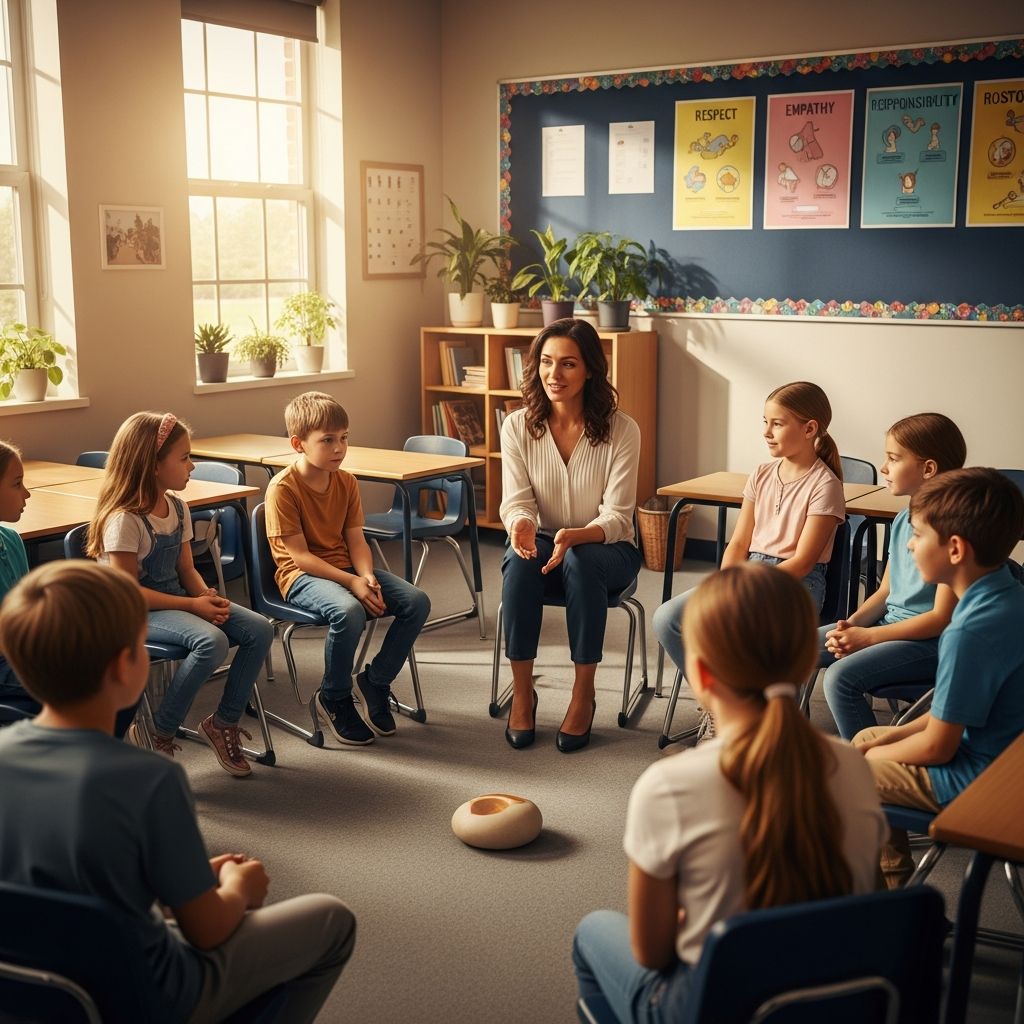
Restorative practices offer educators a proven framework for cultivating environments where students feel valued, conflicts are resolved constructively, and learning flourishes. By shifting from punitive measures to relationship-centered approaches, teachers can address behavioral challenges at their root while promoting emotional growth and mutual respect.
Understanding the Essence of Restorative Practices
At its core, restorative practices represent a philosophy that views misbehavior not as defiance to be punished, but as a signal of unmet needs or damaged relationships. This method draws from indigenous justice traditions and modern conflict resolution models, emphasizing healing over harm. In educational settings, it involves proactive community-building alongside reactive strategies for repairing ruptures when they occur.
Educators using these techniques report stronger class cohesion and reduced disruptions. The approach encourages participants to explore the human impact of actions, fostering empathy and personal responsibility. Unlike zero-tolerance policies that may escalate tensions, restorative methods de-escalate by inviting dialogue.
Key Foundations Supporting Restorative Classrooms
Successful implementation rests on several interconnected pillars that guide daily interactions.
- Relationship Prioritization: Genuine connections form the bedrock. Teachers greet students by name, learn their interests, and model vulnerability to encourage reciprocity.
- Inclusive Dialogue: Every voice matters. Structured talks ensure all perspectives are aired without interruption, building trust and understanding.
- Reframing Errors: Incidents become teachable moments. Students analyze causes, effects, and remedies, turning setbacks into skill-building opportunities.
- Balanced Accountability: Responsibility pairs with guidance. Offenders make amends voluntarily, supported by clear steps toward restoration.
These elements create a culture where safety enables risk-taking in learning and social navigation.
Practical Tools for Everyday Classroom Use
Integrating restorative practices requires no overhaul—just intentional adaptations to routines. Begin with low-stakes activities to build familiarity.
Daily Community Circles
Morning or afternoon circles gather students in a non-hierarchical seating arrangement, often with a talking piece passed to regulate turns. Prompts like “Share one highlight from your day” or “What support do you need?” spark connection. These sessions, lasting 10-15 minutes, normalize vulnerability and preempt conflicts.
Affective Expression Techniques
Teach students to articulate feelings using “I feel… when… because…” statements. For example, “I feel frustrated when instructions are interrupted because it confuses me.” This replaces blame with clarity, modeling emotional literacy.
Guided Conflict Resolution Talks
When issues arise, facilitate one-on-one or small-group discussions with targeted questions:
- What occurred from your viewpoint?
- What emotions surfaced for you?
- Who else might be impacted?
- How can we repair the harm?
- What prevents recurrence?
These inquiries empower participants to own outcomes collaboratively.
Co-Created Agreements
Collaborate with students to draft class expectations, such as “We honor speaking turns” or “We own our choices.” Display visibly and revisit periodically to reinforce commitment.
Building a Supportive School-Wide Ecosystem
Classroom efforts amplify when aligned school-wide. Professional development equips staff with facilitation skills, from circle-leading to empathy training. Leadership endorsement ensures consistency across grades.
Track progress via journals or surveys gauging belonging and conflict resolution efficacy. Adjust based on feedback, celebrating milestones like fewer referrals.
| Strategy | Frequency | Expected Outcome |
|---|---|---|
| Check-in Circles | Daily | Enhanced peer bonds |
| Restorative Chats | As needed | Quick issue resolution |
| Reflection Journals | Weekly | Increased self-awareness |
| Norm Reviews | Monthly | Sustained adherence |
Overcoming Common Implementation Hurdles
Resistance is normal; persistence yields results. Address concerns proactively.
- Time Constraints: Integrate micro-practices, like 2-minute check-ins, scaling up gradually.
- Student Skepticism: Demonstrate through consistent modeling; share your own reflections to normalize.
- Variable Engagement: Offer pass options in circles; pair reluctant participants with allies.
- Escalation Fears: Have escalation protocols ready, using restoratives for most cases.
Staff collaboration via peer observations accelerates mastery.
Evidence of Transformative Impact
Research affirms restorative practices’ efficacy. Schools adopting them see suspension drops up to 50%, improved attendance, and academic gains, particularly for marginalized groups. They nurture social-emotional competencies essential for life success.
Frequently Asked Questions
What age groups benefit most from restorative practices?
All ages, from early years to secondary, adapt well with age-appropriate modifications. Younger children thrive on play-infused circles; teens engage via real-world scenarios.
How does it differ from traditional discipline?
It focuses on restoration over retribution, addressing ‘why’ alongside ‘what,’ yielding deeper behavioral shifts.
Can it handle severe behaviors?
Yes, combined with safety measures; it reduces recidivism by tackling root causes.
What training is required?
Initial workshops on basics suffice; ongoing practice refines skills.
How to measure success?
Monitor relational surveys, incident logs, and student feedback for holistic insights.
References
- Restorative Practices: A Toolkit for Educators — Santa Cruz County Office of Education. 2016. https://www.sccoe.org/yhw/Documents/YHW%20Restorative%20Justice%20Toolkit-%20FINAL.pdf
- Restorative Practices with Classroom — Chicago Public Schools. N.D. https://intranet.cps.edu/contentassets/2cf5ae7863554181b7732cee16b4afd1/cps-restorative-practices-booklet-4-rp-in-the-classroom.pdf
- Quick Start Guide to Restorative Approaches in the Classroom for Teachers — Maryland State Department of Education. 2017-04-30. https://marylandpublicschools.org/stateboard/Documents/TFSDR/04252019/QuickStartGuideRATeachers04302017.pdf
- Restorative Practices: Fostering Healthy Relationships & Promoting Positive Discipline in Schools — Schott Foundation for Public Education. N.D. https://schottfoundation.org/restorative-practices/

Medha Deb is an editor with a master's degree in Applied Linguistics from the University of Hyderabad. She believes that her qualification has helped her develop a deep understanding of language and its application in various contexts. Medha specializes in the areas of beauty, health, sports, and wellness and is committed to ensuring that the content on the website is…