
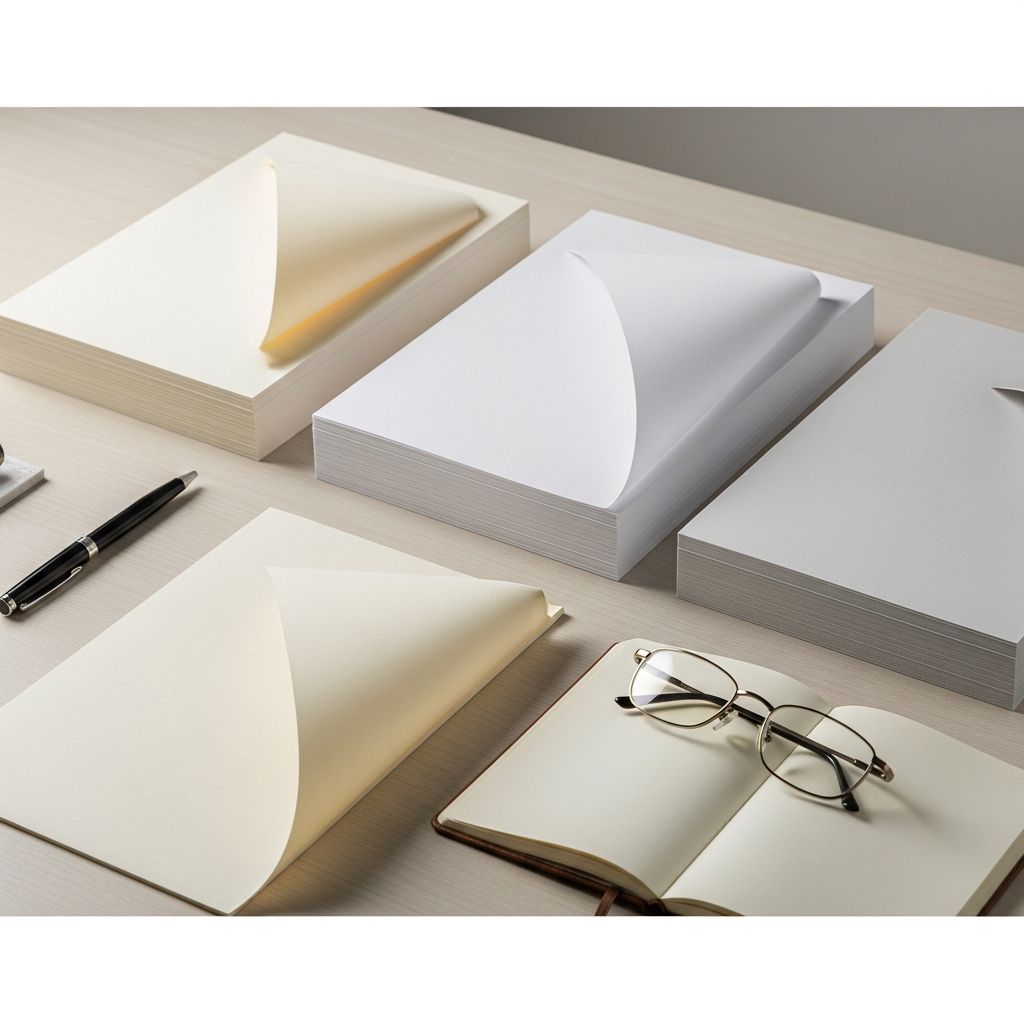
The Hidden Power of Resume Paper
When applying for a job, most candidates focus on content: skills, experience, formatting, and keywords. But there’s one often-overlooked detail that can subtly influence how hiring managers perceive you: the paper your resume is printed on.
Even in a digital age, there are still situations where a physical copy matters—career fairs, in-person interviews, networking events, or when mailing a formal application. In those moments, the feel, weight, and appearance of your resume can reinforce professionalism, attention to detail, and seriousness about the role.
Choosing the right resume paper isn’t about extravagance; it’s about making a consistent, polished impression that matches the quality of your content.
Why Resume Paper Matters
At first glance, a resume is judged by its layout, clarity, and relevance. But when a hiring manager holds a printed copy, their subconscious picks up on tactile cues: thickness, texture, and color.
- Perceived professionalism: Thicker, higher-quality paper feels more substantial and deliberate, signaling that you take the application seriously.
- Attention to detail: Using appropriate paper shows you’ve thought through every aspect of your presentation, not just the words on the page.
- Differentiation: In a stack of standard 20 lb copy paper, a well-chosen resume on slightly heavier, smoother paper can stand out without being distracting.
That doesn’t mean you need exotic materials or flashy colors. The goal is to support your content with a clean, professional foundation that feels intentional, not accidental.
Understanding Paper Weight for Resumes
Paper weight is one of the most important factors in choosing resume paper. It’s measured in pounds per 500 sheets (lb) or grams per square meter (gsm). For resumes, the standard range is between 20 lb and 32 lb.
Standard Copy Paper (20 lb)
Most home and office printers use 20 lb copy paper. It’s thin, lightweight, and inexpensive, but it has drawbacks for resumes:
- Can feel flimsy or cheap in hand.
- More prone to wrinkling, tearing, and ink bleed-through.
- May look like a casual printout rather than a formal document.
While acceptable in a pinch, 20 lb paper is not ideal for a professional resume.
Lightweight Resume Paper (24 lb)
24 lb paper is a significant upgrade from 20 lb. It’s thicker, more opaque, and feels more substantial without being overly heavy.
- Less likely to wrinkle or tear during handling.
- Reduces the risk of ink bleeding through, especially with laser or inkjet printers.
- Still compatible with most home and office printers.
For most job seekers, 24 lb is the sweet spot: professional, affordable, and practical.
Heavyweight Resume Paper (32 lb)
32 lb paper is noticeably thicker and more rigid. It’s often used for business cards, brochures, and premium stationery.
- Provides a very high-end, durable feel.
- Excellent opacity and resistance to wear.
- May not feed well in all printers, especially older or low-end models.
32 lb is best reserved for industries where presentation is critical (e.g., design, luxury, executive roles) or when you know the resume will be handled frequently.
Recommended Resume Paper Weights
| Paper Weight | Best For | Printer Compatibility |
|---|---|---|
| 20 lb | Quick drafts, internal use | Excellent |
| 24 lb | Most job applications, interviews | Very good |
| 32 lb | Premium roles, frequent handling | Good (check printer specs) |
Resume Paper Texture and Finish
Texture affects how the resume feels in hand and how text and graphics appear when printed. The right texture should enhance readability and professionalism, not distract from the content.
Smooth (Plain) Finish
Smooth or plain finish is the most common and safest choice. It’s flat, even, and works well with all resume designs.
- Pros: Clean, professional, widely accepted, excellent for dense text and tables.
- Cons: Can feel generic; doesn’t add much visual or tactile distinction.
Best for: Corporate, technical, and traditional industries where understated professionalism is valued.
Linen Texture
Linen paper has a subtle crosshatch pattern that mimics fabric. It’s thicker and more tactile than smooth paper.
- Pros: Classic, elegant feel; hides minor imperfections; good grip.
- Cons: Can wrinkle more easily; may interfere with very fine fonts or small graphics.
Best for: Creative fields, consulting, or roles where a slightly more distinctive but still professional look is appropriate.
Laid Texture
Laid paper has visible parallel lines that give it a traditional, almost historical appearance.
- Pros: Unique, sophisticated look; pleasant to the touch.
- Cons: Higher risk of printing issues (misalignment, font distortion); can look outdated in modern offices.
Best for: Niche applications where a classic or artisanal aesthetic is relevant (e.g., heritage brands, academia, publishing).
Granite and Other Textured Finishes
Granite and similar grainy textures offer a rougher, more tactile surface. They can feel substantial and high-quality.
- Pros: Distinctive feel; good for gripping and handling.
- Cons: Can make text appear less crisp; may not suit minimalist or data-heavy resumes.
Use with caution: best paired with simple, clean designs and tested thoroughly before final printing.
Choosing the Right Resume Paper Color
Color is a subtle but powerful signal. While most resumes are printed on white or off-white, the choice of shade can influence perception.
White vs. Off-White (Ivory, Cream)
- White: Clean, modern, and universally accepted. It’s the safest choice for most industries.
- Ivory/Cream: Slightly warmer, softer appearance. Can feel more premium and less stark than pure white.
Studies on resume appearance suggest that white paper is generally preferred by hiring managers, especially in formal or corporate settings. Off-white can be a good alternative if it’s subtle and doesn’t look yellowed or dirty.
Colored Resume Paper: When to Use It
Bright or unusual colors (pink, green, yellow, etc.) are generally discouraged for standard resumes. Research has shown that:
- Unconventional colors can reduce the likelihood of being considered for a role.
- Some recruiters view decorative or colored paper as unprofessional or distracting.
Exceptions:
- Creative industries (design, fashion, advertising) may allow for more personality, but even then, subtle off-white or very light gray is usually safer than bold colors.
- Portfolio pieces or design-focused applications might use color strategically, but the resume itself should still prioritize readability and professionalism.
Material Matters: Cotton Content in Resume Paper
Resume paper is typically made from wood pulp, but higher-end options include cotton fibers. Cotton content affects durability, feel, and print quality.
- Higher cotton content (25–100%): More durable, softer feel, better ink absorption, and a more premium appearance.
- Lower cotton or 100% wood pulp: More affordable, but can feel stiffer and less luxurious.
For most job seekers, a resume paper with some cotton content (even 25–50%) offers a noticeable upgrade in quality without a huge cost increase. For executive or high-stakes applications, 75–100% cotton can reinforce a premium image.
Practical Tips for Printing Your Resume
Even the best paper can be ruined by poor printing. Follow these tips to ensure a professional result:
- Test print first: Always print a test copy to check for alignment, ink bleed, and readability.
- Use the right printer settings: Select the correct paper type (e.g., “heavy” or “thick”) in your printer settings to avoid jams and ensure proper ink application.
- Avoid overloading the tray: Don’t put too many sheets in the feeder at once, especially with heavier paper.
- Handle with care: Store printed resumes flat in a folder or portfolio to prevent creasing and smudging.
- Check for smudges: Especially with inkjet printers, ensure the ink is fully dry before handling or stacking.
When Resume Paper Choice Is Most Important
Not every job application requires premium paper. Consider the context:
- Career fairs: You’ll hand out multiple copies; slightly heavier paper helps yours stand out and survive handling.
- In-person interviews: A well-printed resume on quality paper reinforces your professionalism.
- Networking events: A polished resume makes a stronger impression when exchanged casually.
- Online applications: Paper quality doesn’t matter for PDFs, but if you’re asked to mail a hard copy, use appropriate resume paper.
In purely digital processes, focus on PDF quality, file size, and ATS compatibility instead.
Common Resume Paper Mistakes to Avoid
- Using regular copy paper for important applications: It can look lazy or unprofessional in formal settings.
- Choosing overly textured or patterned paper: Can interfere with readability and appear gimmicky.
- Going for bright or unusual colors: Risks distracting from content and signaling poor judgment.
- Ignoring printer compatibility: Heavy or textured paper can jam printers or produce poor results if not set up correctly.
- Overlooking condition: Wrinkled, creased, or smudged resumes undermine even the best content.
FAQs About Resume Paper
Do I need special resume paper?
Not strictly, but using slightly heavier, higher-quality paper (24–32 lb) instead of standard 20 lb copy paper can make your resume feel more professional and durable, especially for in-person use.
What is the best weight for a resume?
24 lb is ideal for most situations: it’s thick enough to feel substantial but still works well with most printers. 32 lb is excellent for premium applications but may not be necessary for every role.
Is colored paper okay for a resume?
Generally, no. White or off-white (ivory/cream) is safest. Bright or unusual colors can be seen as unprofessional and may reduce your chances of being considered, especially in traditional industries.
Can I use textured paper for my resume?
Yes, but choose wisely. Linen and subtle textures can add a professional touch, but avoid overly rough or patterned finishes that interfere with readability. Always test print first.
Does paper quality matter for online resumes?
No. For digital applications, the PDF file is what matters. Focus on clean formatting, proper file naming, and ATS compatibility rather than paper quality.
Should I use cotton resume paper?
If budget allows, yes. Cotton content improves durability, feel, and print quality. Even a moderate cotton blend (25–50%) can elevate the perceived quality of your resume.
How many copies should I print?
For a career fair or interview, bring 5–10 copies on quality paper. Store them in a folder or portfolio to keep them clean and wrinkle-free.
Final Recommendations
Choosing the right resume paper is about balance: professional enough to impress, but not so flashy that it distracts from your qualifications.
- Weight: 24 lb for most applications; 32 lb for premium or frequently handled resumes.
- Color: White or off-white (ivory/cream); avoid bright or unusual colors.
- Texture: Smooth or lightly textured (linen); avoid heavily patterned or rough finishes.
- Material: Prefer paper with some cotton content for better durability and feel.
- Context: Use quality paper for in-person events; focus on PDF quality for online applications.
By paying attention to these details, you ensure that every aspect of your job application—from content to paper— supports a consistent, professional image.
References
- Printing and Paper Specifications — International Organization for Standardization (ISO). 2023. https://www.iso.org/standard/75280.html
- Best Practices for Job Application Materials — U.S. Department of Labor, Office of Disability Employment Policy. 2024. https://www.dol.gov/agencies/odep
- Resume and Cover Letter Guidelines — Harvard University Office of Career Services. 2024. https://ocs.fas.harvard.edu/resumes-cover-letters

- Integrated M.A. in Applied Linguistics, University of Hyderabad
- 5+ years in editorial, instructional, SEO, and research-based writing
Sneha is a relationships and lifestyle writer with a strong foundation in applied linguistics and certified training in relationship coaching. She brings over five years of writing experience to theskillvault, crafting thoughtful, research-driven content that empowers readers to build healthier relationships, boost emotional well-being, and embrace holistic living. Her writing and insights reflect the belief that beauty, happiness, and wellness…