
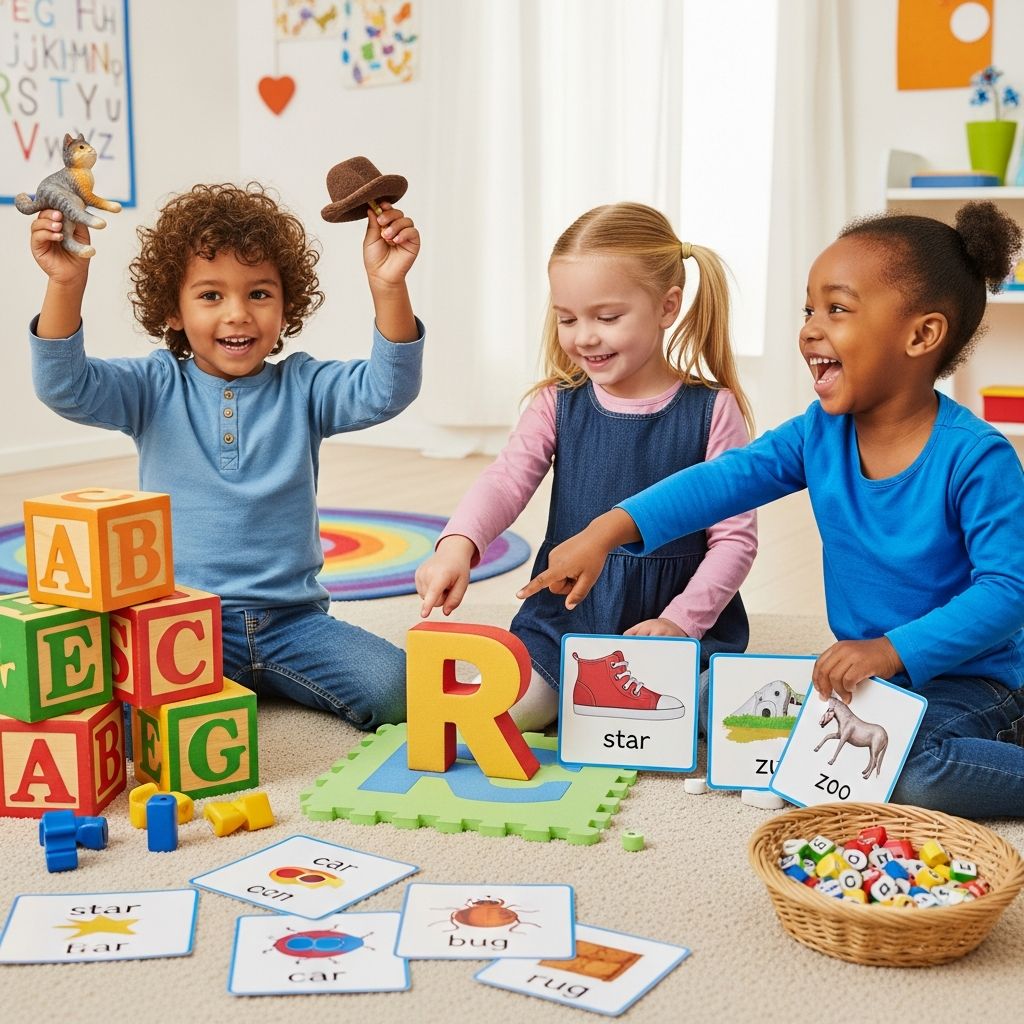
Understanding the Foundation: Why Rhyming Matters in Early Learning
Rhyming serves as a critical building block in the development of phonological awareness—the ability to recognize and manipulate sounds in language. During the preschool and kindergarten years, children are developing the auditory discrimination skills necessary for reading success. When young learners engage with rhyming activities, they begin to recognize that words are composed of distinct sounds that can be isolated, compared, and manipulated. This foundational skill directly supports later reading acquisition and spelling development.
Research in early childhood education demonstrates that children who develop strong phonological awareness skills, including the ability to identify and produce rhymes, tend to become more proficient readers. The playful nature of rhyming makes it an ideal vehicle for introducing these complex linguistic concepts in a developmentally appropriate manner. Rather than presenting sound patterns as abstract rules, rhyming activities allow children to discover patterns through exploration and play.
Musical Approaches: Integrating Sound and Movement
One of the most effective methods for teaching rhyming involves pairing words with music and rhythmic movement. Young children are naturally drawn to melody and rhythm, making musical activities an excellent entry point for rhyming instruction. When children hear rhyming words set to a familiar tune, they internalize the sound patterns more effectively than through isolated word presentation.
Traditional and contemporary songs provide rich opportunities for rhyming exposure. As children sing along with classic melodies like “Twinkle, Twinkle, Little Star” or “Baa Baa Black Sheep,” they simultaneously absorb vocabulary, practice pronunciation, and internalize rhyming patterns. The repetitive nature of these songs reinforces learning without requiring explicit instruction. Teachers can enhance this approach by pausing strategically within familiar songs and inviting children to supply the missing rhyming word, transforming passive listening into active participation.
Movement-based variations extend these musical experiences even further. By pairing rhyming songs with corresponding gestures, children engage multiple sensory modalities—auditory, kinesthetic, and visual—creating stronger neural pathways for learning. A freeze dance activity where music stops and teachers call out words for children to rhyme with maintains engagement while building phonological skills in an active, energetic format suitable for young learners with high kinetic needs.
Matching and Recognition Activities: Building Systematic Understanding
While exposure to rhyming through music and storytelling provides valuable foundational experiences, children benefit from more systematic practice identifying rhyming pairs. Matching activities offer structured opportunities to develop rhyming recognition without requiring productive output initially. Picture cards or word cards representing rhyming pairs can be arranged in various configurations to support different learning objectives and skill levels.
Simple matching games introduce the concept that words can sound alike at their endings. Children begin by comparing two options and determining whether they rhyme, then progress to selecting matching pairs from a larger set. This scaffolded approach respects developmental limitations in working memory and attention span while gradually increasing cognitive demand.
To increase complexity and engagement, teachers can transform basic matching into discovery activities. Hiding rhyming picture pairs around the learning environment and asking children to locate matches combines gross motor movement with cognitive engagement. As children search for and identify rhyming pairs, they remain actively invested in the task rather than sitting passively with cards. This exploration-based approach also accommodates varying attention spans and energy levels within a single classroom.
Word Family Sorting: Recognizing Patterns and Categories
Once children develop basic rhyming recognition, introducing word family sorting deepens their understanding of consistent sound patterns. Word families—groups of words that share the same ending sounds and letter patterns—represent a more sophisticated level of phonological awareness. Activities that organize words by their endings (such as grouping “cat,” “bat,” “mat,” and “hat” together) help children recognize that rhyming is not random but follows predictable patterns.
Sticky note activities provide a flexible, engaging approach to word family sorting. Teachers write individual words on sticky notes and display them on a board or table. Children then sort the notes into columns based on shared ending sounds. The tactile engagement of manipulating sticky notes, combined with the visual organization of categories, supports multiple learning preferences. Teachers can gradually increase difficulty by introducing less obvious rhyming patterns or words with silent letters that complicate straightforward sound-to-spelling relationships.
Word ladders represent another valuable approach to understanding word families. Starting with a base word, children brainstorm additional words that rhyme with it, recording each new word on successive rungs of a drawn ladder. This activity encourages sustained thinking about sound patterns while also building vocabulary and practicing written representation of words. Collaborative ladders where teachers and children take turns suggesting words model problem-solving strategies while maintaining engagement.
Interactive Games: Combining Movement, Competition, and Skill Building
Game-based learning harnesses children’s natural enjoyment of play while simultaneously building academic skills. Rhyming games that incorporate elements of movement, competition, or treasure-hunting appeal to young learners’ preferences and maintain motivation through extended practice sessions. The challenge element inherent in games encourages children to apply their developing skills without perceiving the activity as formal instruction.
Hopscotch variations provide an excellent example of combining traditional playground games with rhyming skill development. Teachers or children create hopscotch squares containing either pictures or words representing various rhyming possibilities. As children progress through the hopscotch course, they practice identifying and vocalizing rhyming matches. This kinesthetic engagement—jumping from square to square while simultaneously processing sound patterns—appeals to learners who benefit from movement-based instruction.
Rhyming treasure hunts introduce problem-solving elements while maintaining physical activity. Teachers hide objects or cards around the classroom or outdoor space, each representing an answer to rhyming clues. For example, “I rhyme with ‘clock’—find something you might wear on your foot” guides children to locate a “sock.” This activity combines auditory processing, logic, searching skills, and gross motor movement in a unified experience. Creating challenges that require children to generate their own clues for peers extends higher-order thinking while promoting collaboration.
Race-based games where children wear rhyming picture cards and must locate their matching partner create excitement and urgency. The competitive element motivates engagement even among children who might otherwise avoid structured learning activities. These physically active games provide valuable breaks from seated instruction while reinforcing rhyming skills.
Language Production: Moving Beyond Recognition to Generation
As children develop confidence identifying and matching rhymes, instruction should progress toward rhyming generation—the ability to produce words that rhyme with a given word. This represents a higher level of phonological awareness requiring children to manipulate sound patterns actively rather than simply recognizing them.
Read-aloud experiences using rhythmic, rhyming literature provide natural opportunities for rhyming generation. By strategically pausing before anticipated rhyming words, teachers invite children to predict and produce the missing rhyme. This approach maintains engagement with quality literature while developing productive rhyming skills. Children who successfully generate rhymes experience the satisfaction of active participation and intellectual contribution, strengthening their confidence and engagement with language.
Conversational rhyming games develop production skills in low-pressure contexts. In “Rhyme Time,” participants simply take turns saying words and generating rhymes, with no winner or loser. This casual format removes performance anxiety while providing authentic practice. Parents can engage children in this activity during car rides or walks, integrating rhyming practice into everyday routines without dedicating separate instructional time.
Scaffolding and Differentiation: Meeting Diverse Learning Needs
Effective rhyming instruction recognizes that children develop phonological awareness at varying rates. Some four-year-olds demonstrate sophisticated rhyming abilities, while others require extensive foundational experiences. Similarly, children bring different linguistic backgrounds and experiences to rhyming activities, affecting their starting points and progression rates.
Beginning learners benefit from rhyming activities emphasizing obvious, consistent patterns. Words with simple consonant-vowel-consonant structures and clear rhyming patterns (such as “cat,” “bat,” “mat”) provide accessible entry points. As confidence develops, teachers can introduce more complex patterns, words with consonant blends, and less obvious rhyming relationships.
Teachers can provide additional scaffolding for struggling learners by emphasizing the ending sounds through exaggerated pronunciation, isolating rhyming sounds within words, and providing multiple exposures to the same rhyming patterns across different activities and contexts. Peer partnerships pairing more advanced learners with those still developing skills can provide models and support while maintaining inclusion.
Simultaneously, advanced learners benefit from extended challenges such as generating multiple rhymes for single words, identifying rhyming words with different letter patterns (like “cat” and “mat” versus “cat” and “bat”), and creating their own rhyming patterns or nonsense rhymes. These extensions maintain engagement for children ready for more complex thinking.
Fine Motor Development: Secondary Benefits of Rhyming Activities
Many rhyming activities simultaneously develop fine motor skills essential for later writing. Activities involving manipulation of cards, sticky notes, clothespins, or writing implements integrate motor skill development with phonological awareness instruction. Clip card activities where children use clothespins to indicate correct rhyming answers develop hand strength and pincer grasp necessary for pencil control. Drawing pictures to represent rhyming words builds the visual-motor coordination foundational to writing.
This integration of multiple skill domains within single activities maximizes instructional efficiency. Rather than dedicating separate time blocks to motor skill development and phonological awareness, teachers accomplish both objectives simultaneously through thoughtfully designed activities.
Creating a Rhyme-Rich Environment: Sustained Exposure and Practice
Beyond structured activities, creating a classroom environment saturated with rhyming language, literature, and visuals supports continuous exposure to rhyming patterns. Bulletin boards featuring rhyming picture pairs, poetry charts displaying favorite rhyming books, and word walls organized by word families maintain ambient exposure to rhyming concepts throughout the day. This environmental support reinforces learning initiated during structured instruction without requiring additional instructional time.
Incorporating rhyming into daily routines and transitions—such as using rhyming chants for cleanup or dismissal—provides repeated, meaningful exposure in authentic contexts. When children hear the same rhyming patterns across multiple settings and activities, they consolidate learning and develop automaticity in recognizing and generating rhymes.
Frequently Asked Questions
Q: At what age should rhyming instruction begin?
A: Children can begin experiencing rhyming through songs and stories as early as infancy. Formal rhyming recognition activities typically become developmentally appropriate around age 3 to 4, though individual variation is significant. Teachers should follow children’s interests and readiness rather than adhering to rigid age guidelines.
Q: What if a child struggles to identify or produce rhymes?
A: Provide additional exposures through music, stories, and games emphasizing obvious rhyming patterns. Use explicit instruction isolating rhyming sounds within words. Consider whether hearing or auditory processing concerns might affect rhyming development, and consult specialists if concerns persist.
Q: How can parents support rhyming development at home?
A: Parents can read rhyming books regularly, engage in conversational rhyming games during car rides or walks, and incorporate rhyming into daily routines. The casual, playful approach to rhyming during everyday interactions supports skill development without requiring formal instruction.
Q: Do rhyming activities need to be lengthy or complicated?
A: No. Short, frequent exposures to rhyming patterns throughout the day are more effective than occasional lengthy sessions. Simple games or songs can be incorporated into transitions or routine moments without requiring dedicated planning or materials.
References
- Teaching Rhyming in Pre-K — PreKinders. Accessed April 2026. https://www.prekinders.com/rhyme/
- 10 Rhyming Activities That Teach AND Entertain Kindergarteners — Big City Readers. Accessed April 2026. https://www.bigcityreaders.com/blog/10-rhyming-activities-for-kindergarteners
- 43 Rhyming Activities for Kindergarten — My Teaching Cupboard. Accessed April 2026. https://www.myteachingcupboard.com/blog/43-rhyming-activities-for-kindergarten
- 5 Simple Rhyming Games to Play with Your Preschooler — Storypod. Accessed April 2026. https://www.storypod.com/blogs/what-comes-next/5-simple-rhyming-games-to-play-with-your-preschooler
- Rhyming Games — Reading Rockets. Accessed April 2026. https://www.readingrockets.org/classroom/classroom-strategies/rhyming-games

- Integrated M.A. in Applied Linguistics, University of Hyderabad
- 5+ years in editorial, instructional, SEO, and research-based writing
Sneha is a relationships and lifestyle writer with a strong foundation in applied linguistics and certified training in relationship coaching. She brings over five years of writing experience to theskillvault, crafting thoughtful, research-driven content that empowers readers to build healthier relationships, boost emotional well-being, and embrace holistic living. Her writing and insights reflect the belief that beauty, happiness, and wellness…