
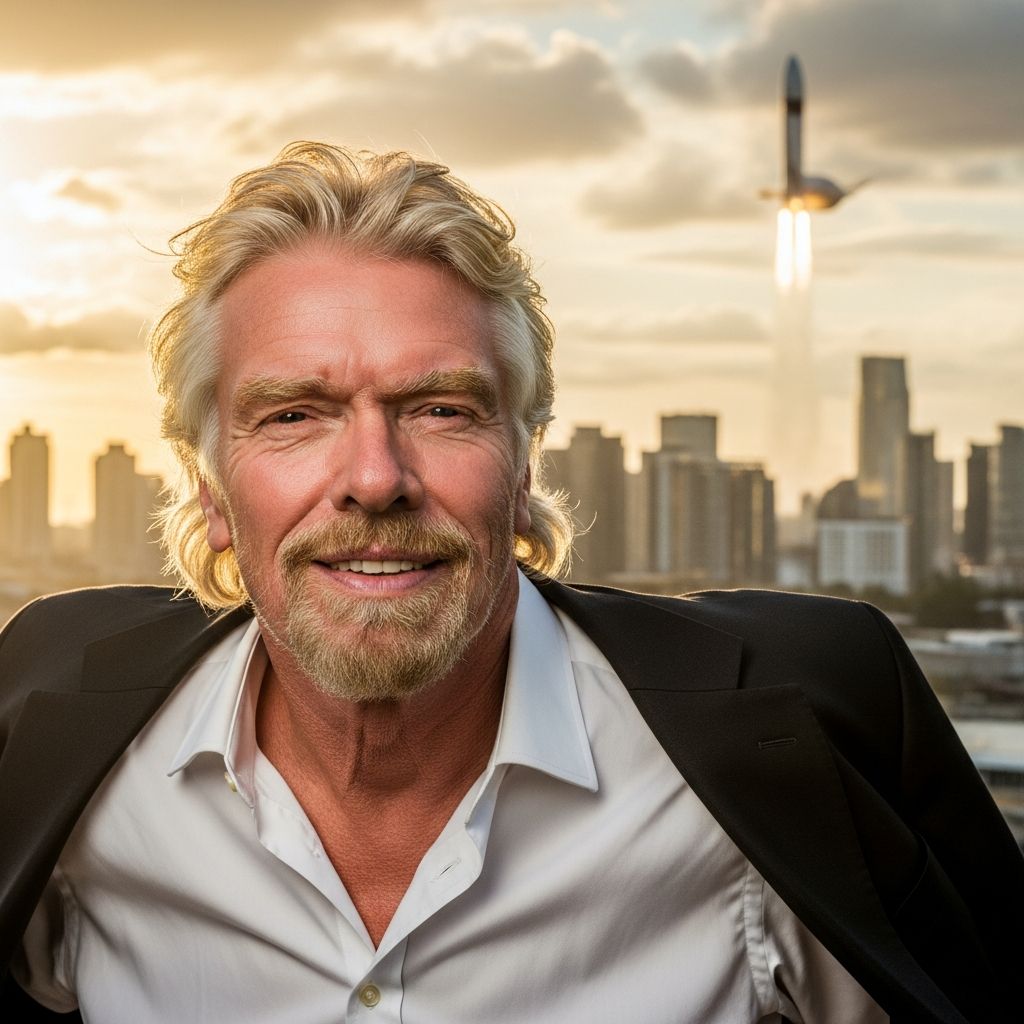
Sir Richard Branson, the visionary founder of the Virgin Group, exemplifies how acknowledging and strategically addressing personal limitations can fuel extraordinary achievements. Despite challenges like dyslexia and a track record of failed ventures, Branson has built a conglomerate spanning airlines, music, telecom, and space travel by focusing on his strengths and compensating for weaknesses through innovative leadership.
Understanding Branson’s Core Challenges
Branson’s path was never smooth. Early in life, he struggled academically due to dyslexia, dropping out of school without strong analytical skills. This condition affected his ability to process numbers and complex data, areas critical for traditional business management. Public appearances sometimes reveal discomfort with detailed interviews, highlighting unease in structured, analytical settings.
Business-wise, nearly half of Virgin’s ventures have faced financial losses or closure, from Virgin Cola challenging beverage giants to ill-fated attempts like Virgin Cars and Brides. These setbacks, including a $400 million debt crisis in the 1990s that forced selling Virgin Records, tested his resilience.
- Dyslexia impact: Hindered formal education and detail-oriented tasks like financial analysis.
- Analytical gaps: Lacks hallmark problem-solving prowess expected in critical thinking leaders.
- Risk exposure: Bold entries into new markets led to high-profile flops, yet each taught invaluable lessons.
Leveraging Creativity Over Convention
Where analytics falter, Branson shines in creative intelligence. He identifies market gaps with uncanny intuition, launching disruptive brands that challenge incumbents. Virgin Atlantic disrupted airlines with superior service; Virgin Mobile redefined telecom accessibility.
His flamboyant style—balloon adventures, daring stunts—generates buzz, turning promotions into cultural events. This creativity compensates for academic shortcomings, building an empire through innovation rather than rote expertise.
| Weakness | Creative Counter-Strategy | Example Outcome |
|---|---|---|
| Analytical Deficiency | Market intuition and bold launches | Virgin Atlantic’s airline dominance |
| Dyslexia | Visual, experiential learning | Flamboyant marketing campaigns |
| Financial Detail Aversion | Expert delegation | Diversified successes in finance, fitness |
The Power of Elite Teams and Delegation
Branson’s genius lies in surrounding himself with brilliant minds who handle what he cannot. He delegates extensively, trusting experts to execute visions while he focuses on big-picture inspiration. This delegative style avoids micromanagement pitfalls, fostering autonomy.
During the 1992 crisis, selling Virgin Records funded Virgin Atlantic, advised by sharp financial minds. Subsequent wins in Virgin Money, Virgin Active, and Virgin Trains stemmed from empowering specialists. He spots talent, appreciates contributions, and lets them thrive—key to scaling Virgin’s 400+ companies.
“Surround yourself with the right people and appreciate them.” This axiom underscores Branson’s approach, turning potential leadership voids into collaborative strengths.
Embracing Risk and Rapid Recovery
Fearless risk-taking defines Branson. Failures like Virgin Cola or balloon mishaps—where a partner nearly drowned—do not deter him. Instead, he analyzes, adapts, and pivots swiftly.
Post-1990s debt, Virgin expanded into telecom, health, and transport, aligning with core values of better service and pricing. This resilience transforms losses into stepping stones, proving boldness pays when paired with learning agility.
- Risky ventures teach market realities.
- Quick pivots minimize damage.
- Brand consistency across sectors builds loyalty.
Transformational Leadership with Human Touch
Branson embodies transformational leadership: inspiring visions, bonding with employees, driving change. Staff rally behind his goal of superior products at fair prices, fueled by his charisma.
Unlike rigid, risk-averse styles, his is bold, unstructured, and people-centric. He shows emotional vulnerability—dyslexia included—to build trust, contrasting with impersonal executives.
Curiosity drives him; Necker Island retreats invite academics and leaders, fueling ideas. This openness counters analytical limits, ensuring Virgin stays innovative.
Navigating Controversies and Future Growth
Virgin’s structure—loose control over many entities—invites critique. Numerous ventures falter financially, questioning his scattershot approach. Eccentricity risks alienating stakeholders in pragmatic eras.
Yet, Branson evolves, advocating authentic leadership: self-awareness, transparency, ethical climates. Enhancing emotional intelligence could deepen follower connections, promoting inclusive practices.
Key Lessons for Aspiring Leaders
Branson’s blueprint offers timeless strategies:
- Acknowledge limits: Dyslexia became a creativity catalyst.
- Build stellar teams: Delegate to experts for execution.
- Fail forward: Use setbacks as data for next wins.
- Inspire boldly: Vision and charisma trump perfection.
- Stay curious: Learn from diverse sources continuously.
Leaders are made through careers, not born flawless. Humility to improve separates greats like Branson.
Frequently Asked Questions
What is Richard Branson’s biggest personal weakness?
Dyslexia and discomfort with numbers and analytics, yet he overcomes them via delegation and creativity.
How does Branson handle business failures?
By learning quickly, pivoting to new opportunities, and maintaining brand-aligned expansions.
Is Branson’s leadership style effective long-term?
Yes, through diversification and people-focus, though tighter structures may aid future scalability.
Why does Branson delegate so much?
To leverage others’ expertise in areas like finance and engineering where he lacks depth.
Can anyone adopt Branson’s risk-taking approach?
With caution: pair boldness with strong teams and rapid learning from failures.
References
- Effective leadership – A case study of Sir Richard Branson — Pvtscientist. 2019-08-23. https://pvtscientist.wordpress.com/2019/08/23/effective-leadership-a-case-study-of-sir-richard-branson/
- What Is Richard Branson’s Leadership Style? 8 Traits — MTD Training. N/A. https://www.mtdtraining.com/blog/richard-branson-leadership-style.htm
- The strengths and weaknesses of the superhero CEO — The European. N/A. https://the-european.eu/story-18688/the-strengths-and-weaknesses-of-the-superhero-ceo.html
- Richard Branson’s advice if you have ever felt like a stranger — AEEN. N/A. https://www.aeen.org/richard-bransons-advice-if-you-have-ever-felt-like-a-stranger/
- The Advantages and Disadvantages of 6 Leadership Styles — Stellenbosch Business School. N/A. https://www.stellenboschbusiness.ac.za/blog/advantages-and-disadvantages-6-leadership-styles

- Integrated M.A. in Applied Linguistics, University of Hyderabad
- 5+ years in editorial, instructional, SEO, and research-based writing
Sneha is a relationships and lifestyle writer with a strong foundation in applied linguistics and certified training in relationship coaching. She brings over five years of writing experience to theskillvault, crafting thoughtful, research-driven content that empowers readers to build healthier relationships, boost emotional well-being, and embrace holistic living. Her writing and insights reflect the belief that beauty, happiness, and wellness…