
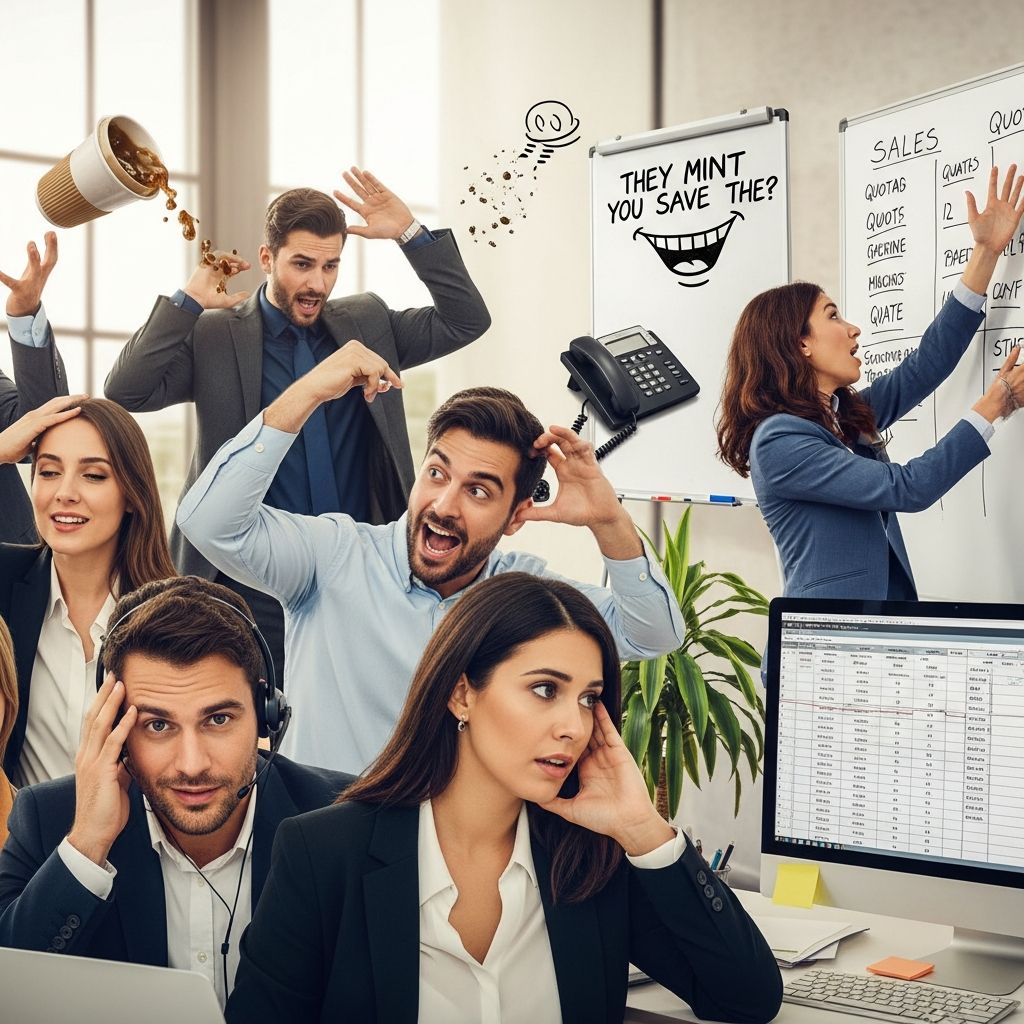
Sales is one of the few careers where you can feel on top of the world at 9:00 a.m. and completely defeated by 9:15. In this rollercoaster environment, sales memes have quietly become culture, therapy, and team-bonding tool all rolled into one. They turn rejection, pressure, and chaos into something you can laugh about instead of lose sleep over.
This article explores why memes resonate so deeply with salespeople, the most common situations they poke fun at, and how leaders can use humor to strengthen culture without trivializing performance.
Why Memes Hit So Hard in Sales Teams
Sales is uniquely emotional. Every day brings uncertainty, rejection, and scrutiny of your numbers. Research on occupational stress consistently ranks sales among professions with high stress and burnout risk because of variable income, demanding quotas, and constant performance monitoring. In this context, memes do more than entertain.
- Instant recognition: One screenshot can summarize a month of pipeline anxiety or a quarter’s worth of missed follow-ups.
- Shared language: Memes give teams shorthand for complex emotions like “lost the deal on price again” or “prospect ghosted after proposal.”
- Low-friction coping: Humor is widely recognized as a helpful coping strategy to reduce perceived stress and build resilience at work.
- Safe venting: It’s easier (and healthier) to laugh at a meme about no-show demos than to silently stew over it.
In short, when your livelihood is tied to conversations you cannot fully control, laughing about the chaos is a rational survival strategy.
The Everyday Struggles Sales Memes Capture
Sales memes tend to orbit around a handful of recurring themes. Even when the images differ, the core storylines are remarkably consistent across inside sales, SDR teams, and full-cycle reps.
1. Quotas, Forecasts, and the End-of-Month Panic
Few things unite salespeople like the end-of-month or end-of-quarter crunch. Goals are fixed. Deals are not. Memes turn this pressure cooker into something almost cinematic.
- “Crushing it” on day 2 vs. scrambling on day 28: Reps start strong, then watch deals stall, budgets disappear, or decision-makers go offline.
- Forecast fiction: The difference between what the CRM says will close and what your gut knows is actually real is prime meme material.
- Discount drama: Last-minute executive approvals, emergency discounts, and “one-time” offers that mysteriously repeat every month.
These memes reflect a deeper truth: variable pay plans and stretch goals are core to how sales is structured in many organizations. That structural pressure naturally breeds both tension and humor.
2. Cold Outreach and the Art of Being Ignored
If there is a universal sales experience, it is being ignored. Memes exaggerate this into absurdity, but the underlying behaviors are real.
- “I’ll get back to you”: Prospects politely exit the conversation and never return, a classic case of ghosting that’s now a staple of digital communication.
- Seen but silent: You know they opened the email. You know they read the DM. Silence anyway.
- “Circle back next quarter”: A phrase that sounds promising on the surface but often just prolongs the inevitable no.
Memes transform this constant rejection into a shared running joke, making it feel less personal and more like an expected part of the job.
3. Pricing, Discounts, and the Eternal Negotiation
Another favorite meme topic is the perpetual tug-of-war over price.
- “Can you do better?”: Prospects pushing for a discount even when the price is already competitive.
- Comparing you to a free tool: The moment when a full-featured, supported solution is weighed against a free alternative with none of the same capabilities.
- Budget surprises: After weeks of engagement, the buyer reveals there was never a budget to begin with.
Memes spotlight the absurdity without revealing confidential details or calling out specific customers. They act as a safety valve for frustration when the economic logic of a deal just doesn’t add up.
4. Internal Meetings, Dashboards, and Manager Check-Ins
Sales culture isn’t just about prospects; it is also about how teams operate internally. Memes often poke fun at:
- Pipeline review dread: When managers ask “What’s closing this month?” and the rep’s dashboard is mostly yellow and red.
- Motivational speeches: The Monday morning pep talk that sounds inspiring… until reality hits again by Tuesday.
- Tool overload: When reporting requirements and tech stacks feel more demanding than talking to customers.
These jokes point toward real organizational tensions: balancing accountability with autonomy, and data visibility with the time required to maintain that data.
How Sales Memes Affect Team Morale
It is easy to dismiss memes as trivial, but they can meaningfully shape how a team feels and functions when used thoughtfully.
Benefits of Humor in Sales Environments
| Benefit | How Memes Contribute |
|---|---|
| Stress relief | Offers a quick emotional reset after tough calls, rejections, or no-show demos. |
| Social bonding | Shared jokes create a sense of “we’re in this together” across remote and hybrid teams. |
| Psychological safety | Signals that it is acceptable to acknowledge difficulty rather than pretend everything is fine. |
| Engagement | Light-hearted content can make internal chats, Slack channels, and meetings feel more human. |
When Memes Go Too Far
Not every joke is harmless. Leaders and reps alike should be aware of potential pitfalls:
- Mocking customers or colleagues: Anything that identifies real people, companies, or deals can damage trust and reputation.
- Normalizing burnout: Constant jokes about working late, skipping breaks, or “living in the CRM” can accidentally glamorize unhealthy habits.
- Undermining change: Sarcasm about new processes or tools can harden resistance instead of surfacing constructive feedback.
Healthy meme culture punches up at shared challenges, not down at individuals.
Using Sales Memes Strategically (Without Being Cringey)
Memes can be more than random entertainment in group chats. Used thoughtfully, they can reinforce values and foster connection.
For Sales Leaders and Managers
- Create a dedicated “humor” channel: Encourage reps to share memes in a designated Slack or Teams channel, keeping fun visible but contained.
- Use memes to open meetings: A quick, relevant meme related to prospecting, follow-up, or quota can break the ice before digging into numbers.
- Celebrate wins playfully: Mark big deals, first demos booked, or quota milestones with custom memes about the rep’s achievement.
- Model boundaries: Share memes that acknowledge struggle while still reinforcing healthy behavior, like taking breaks and protecting weekends.
For Individual Reps and SDRs
- Use memes to self-regulate: After a brutal call block, take 2–3 minutes to share a joke, reset, and then get back on the phone.
- Turn patterns into memes: If the team keeps hearing the same objection, a light meme about it can spark a conversation about better handling it.
- Keep it professional: Assume anything you post internally could someday be seen externally; avoid jokes you would not defend to a customer.
Memes Beyond the Team: Prospects, Social Media, and Brand
Some teams take their meme game outside of internal channels and use it in prospecting or brand marketing. This can work extremely well when done thoughtfully and sparingly.
Memes in Cold Outreach
Visual humor can break the monotony of crowded inboxes. Marketing research indicates that visual and emotional content tends to generate higher engagement on digital channels, especially when it feels authentic and contextually relevant. In a B2B setting, that could mean:
- Including a single, tasteful meme in a sequence after prior outreach has gone unanswered.
- Referencing a widely known cultural moment that connects clearly to the prospect’s situation.
- A/B testing memes versus traditional follow-ups to see what truly improves response rates.
The key is alignment: the meme should relate directly to the value of your solution or the pain point you are addressing, not be random comedy.
Memes as Part of Your Personal or Company Brand
On platforms like LinkedIn, memes can humanize both individual sellers and the companies they represent. Done well, they showcase personality and understanding of customer challenges without sacrificing professionalism.
- Do: Share memes about broadly relatable sales or industry situations, paired with a short insight or tip.
- Don’t: Share anything that could appear to trivialize a customer’s risk, data security, or business-critical decision.
- Do: Use memes to support your narrative of being approachable, knowledgeable, and easy to talk to.
Tips for Creating Your Own Sales Memes
You don’t need to be a graphic designer to create memes that resonate with your team. Simple tools and a good eye for relatable moments are enough.
- Start with reality: Notice situations that keep coming up—gatekeepers, procurement delays, CRM updates—and ask, “What image would perfectly exaggerate this?”
- Keep text short: The best memes are instantly understandable. A punchy one-liner usually beats a long explanation.
- Protect anonymity: Never mention specific customers, internal stakeholders, or sensitive metrics.
- Align with culture: If your company prides itself on being customer-obsessed, ensure your memes never show customers as the punchline.
- Iterate based on reactions: Notice which jokes consistently land and which fall flat, then adjust your style over time.
Frequently Asked Questions (FAQs)
Q: Are sales memes appropriate for every sales organization?
Not always. Highly regulated industries or very formal cultures may need stricter guidelines. That said, most teams can still use light, internally focused memes about general sales challenges as long as confidentiality and respect are preserved.
Q: Can sharing memes hurt my professional reputation with prospects?
It can if the memes are off-topic, offensive, or insensitive. If you use memes externally, keep them relevant to the conversation, avoid controversial topics, and ask whether they would make you seem more trustworthy or less.
Q: Do memes actually improve sales performance?
Memes do not close deals directly, but they can improve mood, reduce perceived stress, and strengthen peer relationships. A healthier, more connected team is more likely to show resilience and creativity, which indirectly supports performance.
Q: How often should leaders use memes in internal communication?
Sparingly. A meme at the start of a weekly meeting, a celebratory image when someone hits quota, or an occasional joke in Slack can keep things light without diluting focus on customers and results.
Q: What makes a sales meme truly relatable?
Specificity. Memes about generic “hard work” rarely land. Memes about the 4:59 p.m. procurement call on the last day of the quarter, the seventh “just circling back” email, or the CRM forecasting 200% of reality tend to resonate because they reflect lived experience.
References
- Stress and Burnout in Sales Professionals: The Role of Personality and Coping Styles — Journal of Business & Industrial Marketing. 2019-03-01. https://doi.org/10.1108/JBIM-02-2018-0062
- Sales Profession: State of the Profession 2020 — Sales Management Association. 2020-06-15. https://salesmanagement.org/resource/sales-profession-state-of-the-profession-2020/
- Humor as a Moderator Between Job Stress and Job Burnout — Social Behavior and Personality. 2010-01-01. https://doi.org/10.2224/sbp.2010.38.7.921
- Sales Compensation: A Review of Practices and Research — WorldatWork Journal. 2018-01-01. https://worldatwork.org/resources/publications/worldatwork-journal/sales-compensation-a-review-of-practices-and-research
- Ghosting in Emerging Adults’ Romantic Relationships — Psychology of Popular Media. 2021-01-01. https://doi.org/10.1037/ppm0000329
- Workplace Humor, Employee Mental Health, and Organizational Outcomes — International Journal of Environmental Research and Public Health. 2020-09-01. https://doi.org/10.3390/ijerph17186652
- Content Marketing: The Importance of Visual Storytelling — Nielsen Norman Group. 2021-02-21. https://www.nngroup.com/articles/visual-storytelling/

- Integrated M.A. in Applied Linguistics, University of Hyderabad
- 5+ years in editorial, instructional, SEO, and research-based writing
Sneha is a relationships and lifestyle writer with a strong foundation in applied linguistics and certified training in relationship coaching. She brings over five years of writing experience to theskillvault, crafting thoughtful, research-driven content that empowers readers to build healthier relationships, boost emotional well-being, and embrace holistic living. Her writing and insights reflect the belief that beauty, happiness, and wellness…