
Understanding the Foundation of Sales Process Mapping
In today’s competitive business landscape, sales organizations often find themselves operating without a clear, documented path forward. Teams may be closing deals, yet the process remains fragmented, inconsistent, and difficult to replicate at scale. This fundamental challenge is where sales process mapping becomes invaluable.
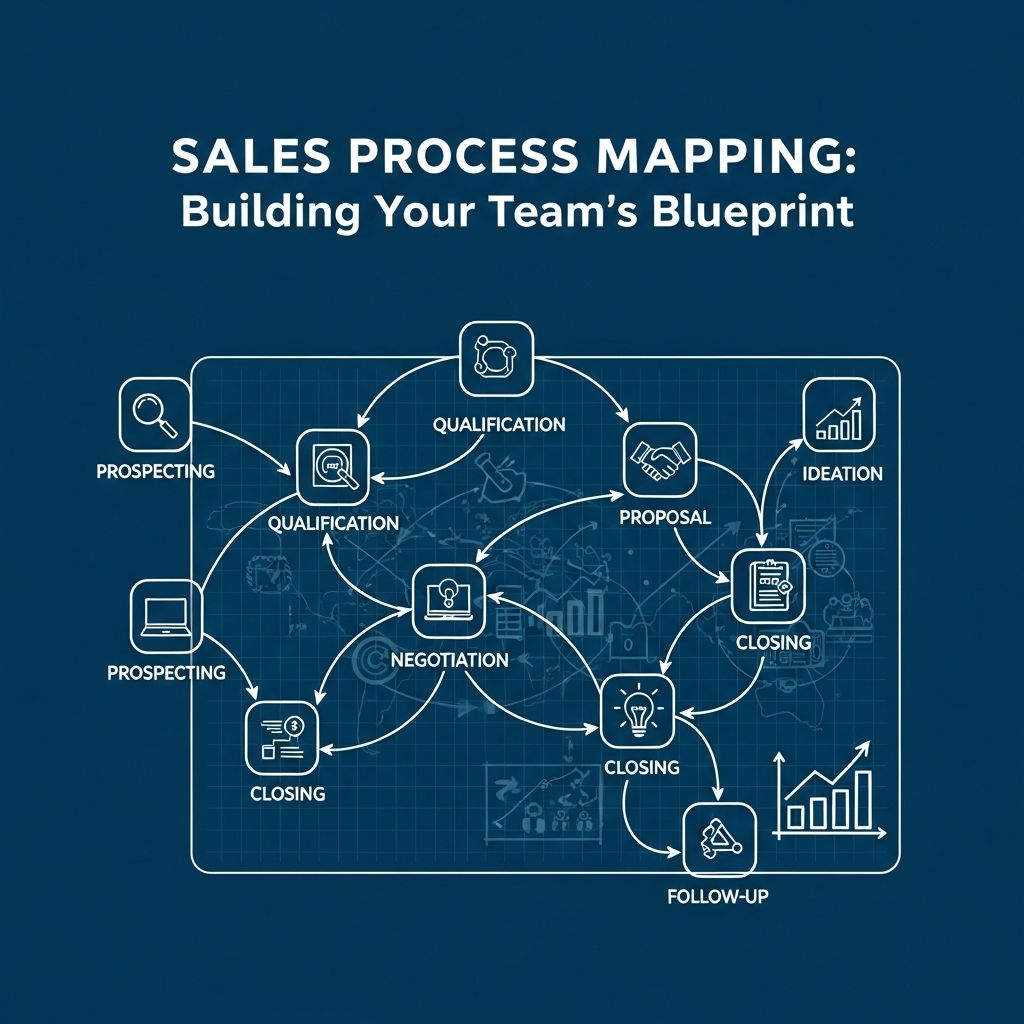
Sales process mapping is the systematic approach of documenting, visualizing, and organizing every stage that a prospect travels through from initial contact to deal closure. Rather than allowing sales activities to occur organically or based on individual rep preferences, process mapping establishes a standardized framework that every team member follows. This visual representation transforms abstract sales activities into concrete, measurable steps that drive predictable outcomes.
The beauty of process mapping lies in its ability to serve as both a strategic document and a practical operational guide. It captures the current state of your sales activities while simultaneously providing a roadmap for improvement and scaling.
Why Your Organization Needs a Structured Sales Approach
Without a defined sales process, your organization faces several critical challenges that directly impact revenue generation and team morale. Many sales leaders recognize these pain points but struggle to articulate why process mapping matters beyond the obvious.
Eliminating the Chaos of Inconsistency
One of the most damaging aspects of unstructured sales operations is the inconsistency that develops when each representative operates independently. When ten sales reps are using ten different approaches, you’re essentially running ten separate micro-businesses. This creates unpredictable results where some deals close quickly while others stall indefinitely, with no clear understanding of why the outcomes differ.
Process mapping establishes a unified approach where every team member understands the exact sequence of steps required to move a prospect forward. This standardization means that a deal in stage two looks the same regardless of which rep owns the relationship. Consistency breeds predictability, which in turn enables better forecasting and resource allocation.
Accelerating Deal Velocity and Team Productivity
When sales representatives lack a clear process, they often waste valuable time on unproductive activities or pursue prospects that don’t fit the ideal customer profile. Without guidance, reps default to the activities that feel comfortable rather than those that actually move deals forward. A documented process eliminates this guesswork by clearly defining which activities drive conversion at each stage.
With a structured process in place, reps can allocate their time more strategically, focusing their energy on high-probability opportunities and proven conversion activities. This targeted approach naturally shortens sales cycles and increases the productivity of your entire team, generating more revenue from the same time investment.
Building Forecasting Accuracy Through Data Insights
Sales leaders often struggle with forecast accuracy because they lack visibility into where deals stand in the pipeline. A mapped process provides the data foundation necessary for reliable predictions. When you know exactly what percentage of deals typically convert from each stage, and you can clearly see how many prospects are in each stage, accurate forecasting becomes achievable rather than guesswork.
This data-driven approach replaces optimistic assumptions with realistic projections, enabling leadership to make informed strategic decisions about resource planning, hiring, and revenue targets.
Designing a Customer-Centric Sales Journey
While internal efficiency matters, the ultimate beneficiary of a well-designed sales process is the customer. When your sales activities are organized around how customers actually buy rather than how you prefer to sell, the entire relationship improves.
A structured process ensures that each prospect receives appropriate information and engagement at precisely the right moment in their buying journey. Rather than being bombarded with premature asks or left without necessary support, customers experience a thoughtful progression that addresses their concerns and builds confidence in your solution. This elevated customer experience strengthens relationships and increases the likelihood that prospects choose to do business with you.
Furthermore, when your process is designed around customer needs, it becomes easier to identify when a prospect isn’t ready to move forward and why, enabling your team to provide better support or gracefully move on to other opportunities.
Transforming New Hire Development and Team Onboarding
One of the most underestimated benefits of process mapping is its impact on training efficiency and new hire productivity. When you onboard a new sales representative, you’re typically pulling an experienced team member away from revenue-generating activities to share tribal knowledge and best practices. This arrangement is inefficient and prone to inconsistencies.
A documented sales process serves as the perfect training manual. New representatives can follow proven steps, observe how successful reps navigate each stage, and develop competency more quickly. Instead of learning through trial and error over several quarters, new hires can achieve baseline productivity within weeks because they’re following a validated framework.
This accelerated onboarding dramatically reduces the time-to-productivity for new team members and ensures they’re implementing the same strategies as your top performers, rather than developing their own approaches.
Creating Visibility for Organizational Alignment
Sales process mapping isn’t exclusively beneficial for the sales team. When cross-functional teams understand the sales process, the entire organization operates more effectively. Marketing can align campaign messaging and timing with where prospects are in the buyer journey. Customer success can prepare for incoming customers by understanding what promises were made during the sales process. Finance can better forecast cash flow based on where deals sit in the pipeline.
This organizational transparency eliminates silos and creates a shared understanding of how revenue flows through your business. When marketing and sales operate from the same playbook, customer retention improves, and team velocity accelerates because everyone moves in unison rather than at cross-purposes.
Identifying and Eliminating Process Bottlenecks
One of the most powerful applications of sales process mapping is its ability to reveal where deals get stuck. Visual representation of your sales process makes bottlenecks immediately obvious. Perhaps deals consistently stall during the discovery phase, indicating a need for better qualification criteria. Maybe your close rate drops dramatically at the proposal stage, suggesting that your proposals need enhancement.
Once bottlenecks are identified, your team can collectively develop strategies to overcome them. Maybe you need better discovery questions, improved proposal templates, or additional resources allocated to that stage. The process map creates a diagnostic tool that enables targeted improvements rather than broad, unfocused optimization efforts.
Defining the Critical Elements of Each Sales Stage
An effective sales process map doesn’t simply list stages; it defines the specific criteria and activities that characterize each stage. For every phase in your process, consider documenting:
- Entry Criteria: What conditions must exist for a prospect to move into this stage? What qualifies them?
- Key Activities: What specific actions should the sales rep take while a deal is in this stage?
- Success Indicators: What outcomes or milestones indicate progress through this stage?
- Exit Criteria: What must be accomplished before moving to the next stage?
- Common Obstacles: What typically prevents deals from advancing from this stage?
This level of detail ensures that your process map serves as a practical guide rather than an abstract framework.
Aligning Process Mapping with Strategic Business Objectives
Before mapping your sales process, establish clear business objectives that the process will support. Are you trying to reduce average sales cycle length? Increase average deal size? Improve close rates at a particular stage? Accelerate new hire productivity? Your process map should be specifically designed to drive these outcomes.
Starting with the end destination ensures that every element of your process contributes to achieving your goals. Without this alignment, you risk creating a process that looks good on paper but doesn’t actually drive the business outcomes that matter most.
Making Your Sales Process Visual and Accessible
The value of process mapping is significantly amplified when the map is visual rather than buried in documentation. Visual representations enable team members to quickly understand where they are in the process, what comes next, and what happens when deals stall. Flowcharts, swim lanes, and process diagrams make complex sequences immediately comprehensible.
Moreover, visual maps are more likely to be referenced, discussed, and improved because they’re more accessible and easier to share than lengthy written documents. When your sales process is visualized, it becomes a living tool that teams reference regularly rather than a document that sits in a folder.
Implementing Continuous Improvement Culture Through Process Maps
A sales process map isn’t static; it’s a foundation for continuous improvement. By regularly reviewing process performance, your team can identify what’s working and what needs adjustment. This creates a culture of continuous optimization where processes evolve based on real-world results rather than assumptions.
When team members see that their feedback leads to process improvements, engagement increases. Reps feel heard and understand that they’re contributing to organizational success beyond their individual deals. This sense of ownership strengthens team culture and commitment to following the process.
Measuring and Monitoring Process Performance
An effectively documented sales process enables measurement at each stage. You can track conversion rates between stages, average time spent in each phase, and identify which stages represent your greatest opportunities for improvement. This data-driven approach replaces intuition with facts, enabling smarter decision-making about where to allocate coaching, training, or process refinement efforts.
Regular monitoring of process metrics keeps your team focused on leading indicators that drive revenue rather than lagging indicators like total deals closed. This shift toward proactive management prevents problems rather than just reacting to them.
Frequently Asked Questions About Sales Process Mapping
Q: How long does it typically take to develop a sales process map?
A: The timeline varies depending on complexity and organizational size, but most organizations complete an initial process map within 2-4 weeks by conducting interviews with top performers, analyzing historical data, and facilitating collaborative mapping sessions with key team members. The effort required is minimal compared to the ongoing value delivered.
Q: Should we map the sales process before hiring new reps?
A: Absolutely. Having a documented process in place before new hires start dramatically improves onboarding effectiveness. New reps can follow a proven framework immediately rather than trying to learn multiple approaches from different team members.
Q: How often should we update our sales process map?
A: Review your process map quarterly to ensure it reflects current realities and incorporates lessons learned. Make major revisions annually or when business circumstances change significantly, such as entering new markets or introducing new products.
Q: Can a sales process map work across different product lines or customer segments?
A: While the fundamental framework may be similar, different segments often benefit from customized processes. Create a base process that all reps follow, then develop variations for specific segments or products that have unique buying cycles or requirements.
Q: What tools work best for creating and maintaining sales process maps?
A: Visual diagramming tools like flowchart software, CRM systems with built-in process visualization, and business process management platforms all work effectively. The best choice depends on your technical resources and whether you need integration with other business systems.
References
- Why You Need Sales Process Mapping and How to Do It Right — Autoklose. Accessed December 9, 2025. https://www.autoklose.com/sales-process-mapping/
- The Full Guide to Sales Process Mapping — Weflow. Accessed December 9, 2025. https://www.getweflow.com/blog/sales-process-mapping
- Sales Process Mapping: What it is and Why is it Important? — Mindtickle. Accessed December 9, 2025. https://www.mindtickle.com/blog/sales-process-mapping/
- 14 Benefits of Process Mapping — Indeed. Accessed December 9, 2025. https://www.indeed.com/career-advice/career-development/process-mapping-benefits
- Sales Process Mapping: Visualizing Your Path to Closing Deals — Lucidchart. Accessed December 9, 2025. https://www.lucidchart.com/blog/sales-process-mapping

- Integrated M.A. in Applied Linguistics, University of Hyderabad
- 5+ years in editorial, instructional, SEO, and research-based writing
Sneha is a relationships and lifestyle writer with a strong foundation in applied linguistics and certified training in relationship coaching. She brings over five years of writing experience to theskillvault, crafting thoughtful, research-driven content that empowers readers to build healthier relationships, boost emotional well-being, and embrace holistic living. Her writing and insights reflect the belief that beauty, happiness, and wellness…