
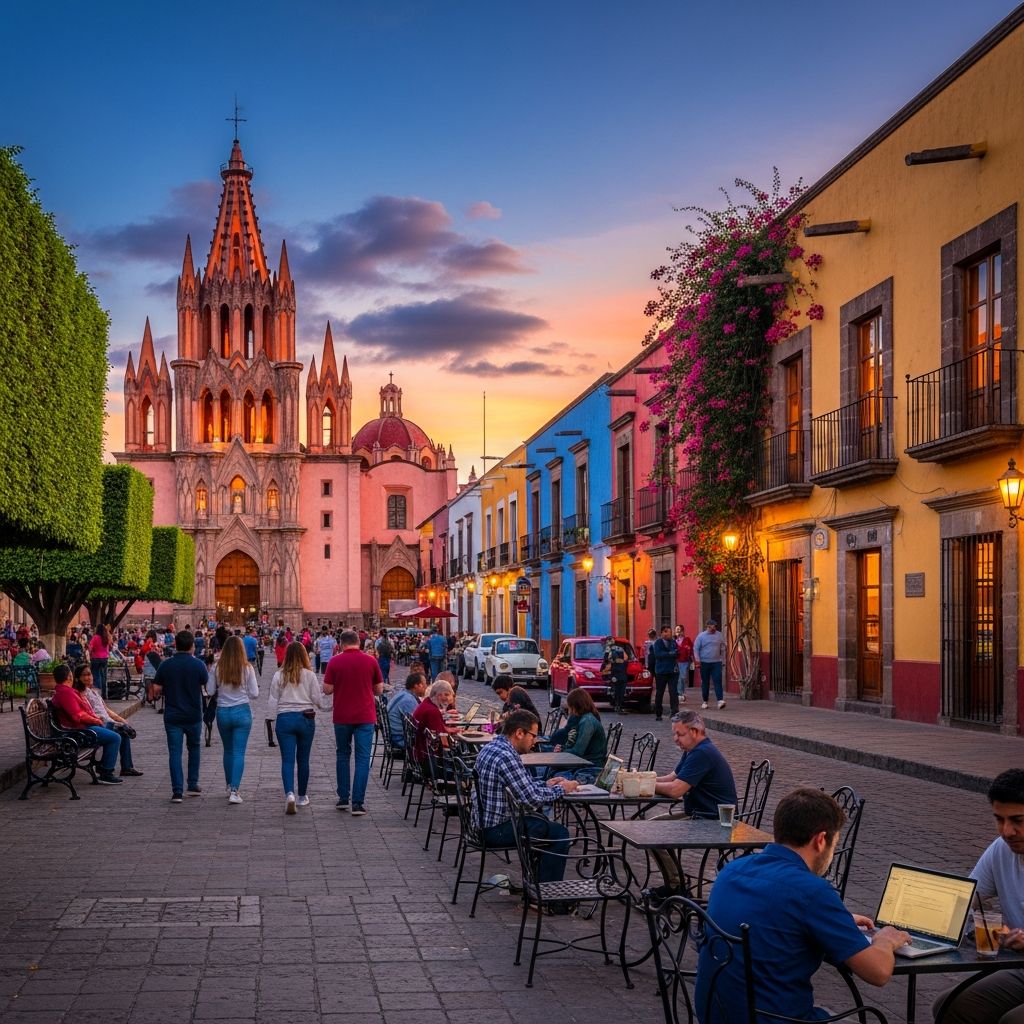
San Miguel de Allende, a colonial gem in the highlands of central Mexico, has evolved from a quiet artists’ town into one of the most celebrated small cities in the world. It consistently appears in international rankings for its hospitality, architecture, gastronomy, and overall visitor experience, including several recent wins as a “Best City in the World” in Travel + Leisure’s World’s Best Awards. Its historic center and nearby Sanctuary of Atotonilco were designated a UNESCO World Heritage Site in 2008, underscoring its cultural and architectural importance.
This guide brings together what you need to know if you are considering San Miguel de Allende for a remote work base, an extended stay, or even a more permanent move.
Why San Miguel de Allende Attracts Long-Term Visitors
Several factors explain why travelers return to San Miguel de Allende (often called SMA) and why many decide to stay longer than planned:
- Award-winning reputation: Multiple international travel awards highlight its hospitality, cultural richness, colonial streetscapes, and friendly residents.
- UNESCO recognition: The historic center and the Sanctuary of Atotonilco reflect a well-preserved blend of Spanish and local influences.
- Walkable urban core: A compact, cobblestoned downtown allows most daily errands on foot, supported by cafés, markets, and co-working-friendly venues.
- Thriving arts and gastronomy: Galleries, festivals, and chef-led restaurants give the city an outsized cultural footprint for its size.
- Established international community: A longstanding expat and retiree population, particularly from the U.S. and Canada, coexists with strong local traditions, making it easier to integrate while still experiencing authentic Mexican culture.
First Impressions: What the City Feels Like
San Miguel de Allende sits in the state of Guanajuato, in a region known as El Bajío, surrounded by semi-arid highlands. The historic core is a mosaic of warm-toned facades, wrought-iron balconies, and church spires rising over narrow streets. Regulations protecting the urban landscape mean new developments must respect traditional colors and architectural styles, creating a cohesive visual identity.
At the heart of the city is a lively central plaza framed by a distinctive pink neo-Gothic parish church, cafés, and benches shaded by manicured trees. Days tend to unfold at a slower pace than in major capitals: mornings often begin with coffee on a rooftop terrace, afternoons might be spent working from a café or co-working space, and evenings bring live music, street performances, or gallery openings.
Cost of Living: Affordability with Options
San Miguel de Allende offers a range of price points. You can live modestly on a local-oriented budget or spend at a level comparable to mid-sized North American or European cities, especially if you favor luxury housing and frequent fine dining.
| Expense Category | Lower-Budget Lifestyle | Comfortable / Expat-Oriented Lifestyle |
|---|---|---|
| Housing (monthly rent) | Shared flat or simple apartment outside the historic core | Designer casita or house in central, walkable neighborhoods |
| Food | Home cooking, local markets, street food | Regular dining at mid-range and high-end restaurants |
| Transportation | Walking, local buses, occasional taxis | Frequent taxis, private drivers, or car ownership |
| Healthcare | Use of public clinics and lower-cost private visits | Private hospitals, specialty care, and international insurance |
| Leisure | Free cultural events, local bars, parks | Wine tastings, spa visits, boutique tours, classes |
Guanajuato state and cities like San Miguel de Allende are often cited as offering a favorable balance between quality of life and cost, particularly for retirees and remote workers compared with major U.S. and Canadian cities.
Housing and Neighborhoods
Residential options range from traditional courtyard homes to newly built apartments with contemporary amenities. Strict preservation rules in the historic core limit high-rise construction and encourage adaptive reuse of older buildings.
Popular Areas to Consider
- Historic Center: Ideal if you prioritize walkability, cultural events, and quick access to cafés and co-working spaces. Expect higher rents and occasional noise from festivities.
- Adjacent Hillsides: Neighborhoods on surrounding slopes often offer expansive city views, rooftop terraces, and quieter surroundings while remaining a moderate walk or short taxi ride from downtown.
- Outlying Communities: Gated communities and semi-rural areas around the city center attract those wanting more space, privacy, or garden areas. These may require a car or reliance on rideshare services.
Foreigners can own property in San Miguel de Allende through well-established legal mechanisms. In inland areas beyond restricted coastal and border zones, full-title ownership is common, and the process can involve escrow services, bilingual documentation, and professional due diligence to ensure security and clarity of ownership.
Working Remotely from San Miguel de Allende
San Miguel de Allende’s growing population of remote workers, entrepreneurs, and creatives has encouraged the development of work-friendly infrastructure:
- Internet access: Fixed broadband and fiber connections are increasingly available in central neighborhoods, and many rentals advertise internet speeds suitable for video calls and cloud-based work.
- Cafés and co-working: Numerous cafés near the historic center feature reliable Wi-Fi, power outlets, and a culture that welcomes laptop work. Co-working spaces and shared offices provide meeting rooms and networking events.
- Time zone advantages: San Miguel de Allende generally shares time zones with U.S. and Canadian business hubs for much of the year, simplifying scheduling for remote teams and clients.
Mexico has introduced and refined immigration categories that can be suitable for long-stay remote workers and retirees, though requirements differ by visa type and are enforced by Mexican authorities. Prospective long-term residents should consult official Mexican consular information or legal professionals for up-to-date details on financial thresholds and documentation.
Culture, Festivals, and Everyday Life
San Miguel de Allende’s identity is anchored in a blend of Mexican traditions, religious celebrations, and international artistic influences.
Historic and Cultural Highlights
- Colonial architecture: Streets are lined with 18th- and 19th-century buildings in rich earth tones that reflect Spanish, Creole, and Indigenous design traditions.
- Revolutionary history: San Miguel de Allende is associated with the early stages of Mexico’s independence movement and is home to museums dedicated to this period, including the former residence of national hero Ignacio Allende.
- Sanctuary of Atotonilco: A short distance from town, this church complex is renowned for its elaborate murals and is sometimes called the “Sistine Chapel of Mexico.”
Art, Gastronomy, and Nightlife
- Art scene: Galleries, studios, and repurposed industrial spaces showcase painting, sculpture, textiles, and contemporary works. Art schools and workshops attract international students and visiting instructors.
- Food culture: Restaurants range from family-run eateries to establishments led by chefs with international training, reflecting regional Mexican cuisine and global influences.
- Wine and wellness: Nearby vineyards, spas, and boutique hotels support a growing wellness and culinary tourism sector aimed at both visitors and residents.
The city hosts frequent festivals, religious processions, and cultural events throughout the year, many of which involve music, fireworks, and public gatherings. These occasions contribute to a strong sense of community but can also mean late-night noise in central areas.
Healthcare and Services
San Miguel de Allende’s role as a hub for retirees and second-home owners has spurred the growth of private healthcare offerings. Private clinics and hospitals in the region may provide general practice, emergency care, and some specialty services at costs often lower than comparable care in the United States and Canada, though coverage, quality, and availability can vary.
Some long-term foreign residents opt for a combination of:
- Local private health insurance or membership programs.
- Out-of-pocket payments for routine visits, which can be more affordable than in many high-income countries.
- International insurance policies for major procedures or planned treatment abroad.
Pharmacies are widely available and often stock common medications. Prospective residents with specific medical needs should research whether required medications and specialties are accessible locally or in nearby larger cities such as Querétaro or Mexico City.
Safety, Regulations, and Practical Considerations
Mexico’s federal and state governments have implemented tourism initiatives and safety strategies in major destinations, and international recognition of San Miguel de Allende as a welcoming city underscores its reputation for hospitality and visitor satisfaction. As in any urban area, conditions can vary by neighborhood and over time, so visitors are encouraged to stay informed through official travel advisories, local contacts, and reputable local news sources.
Practical Tips
- Documents: Carry photocopies or digital copies of your passport and immigration documents, and keep originals secure.
- Payments: Cards are widely accepted at mid-range and upscale establishments, while smaller shops and markets often prefer cash in Mexican pesos.
- Language: Spanish is the primary language. Basic Spanish phrases are extremely helpful, although many people working in hospitality and some local services speak English.
- Noise and festivities: Church bells, fireworks, and music are common elements of celebrations, particularly near major plazas.
Community and Integration
One of San Miguel de Allende’s defining traits is the coexistence of a substantial foreign-born community with strong local traditions. This dynamic has created space for newcomers to integrate through:
- Language classes and cultural workshops.
- Volunteer opportunities with local non-profits.
- Professional meetups, entrepreneurship groups, and co-working networks.
- Art classes, cooking courses, and wellness retreats.
Long-term visitors who make an effort to learn Spanish, understand local customs, and support local businesses often find it easier to establish meaningful connections with both Mexican neighbors and fellow internationals.
Is San Miguel de Allende Right for You?
San Miguel de Allende may be a good fit if you are looking for:
- A walkable, historic environment rather than a beach destination.
- A strong cultural scene with art, music, and gastronomy at the forefront.
- An established international community that still lives within a distinctly Mexican cultural context.
- Varied lifestyles—from budget-conscious living to high-end homes and services.
On the other hand, those seeking a very large metropolitan labor market, extensive nightlife districts, or direct beach access may find other Mexican destinations more aligned with their priorities.
Frequently Asked Questions (FAQs)
Q: Is San Miguel de Allende only for retirees?
No. While retirees form a visible part of the foreign community, San Miguel de Allende also attracts younger remote workers, entrepreneurs, and families. Co-working spaces, creative industries, and hospitality businesses provide a base for people at different life stages.
Q: Do I need to speak Spanish to live there long-term?
You can manage daily tasks in tourist-facing areas with limited Spanish, but learning the language significantly improves your experience, makes it easier to handle bureaucracy, and deepens relationships with local residents.
Q: How does San Miguel de Allende compare to Mexico’s beach towns?
Instead of beaches, San Miguel de Allende offers highland scenery, milder temperatures, and a dense historic center. The focus is more on arts, architecture, and inland excursions than on coastal activities.
Q: Is it easy to travel to and from San Miguel de Allende?
San Miguel de Allende does not have its own major commercial airport, but it is reachable by road from nearby airports in cities like León/Guanajuato or Querétaro. Many international visitors arrive via Mexico City or other hubs and then continue by bus or private transport.
Q: Can foreigners buy property in San Miguel de Allende?
Yes. Foreign buyers can purchase property through legally recognized mechanisms with full-title ownership in inland areas. Professional real estate agencies and legal advisors commonly use escrow services and bilingual contracts to ensure transparency and clarity in transactions.
References
- SAN MIGUEL DE ALLENDE & MEXICO CITY SHINE IN 2025 — Destination Mexico. 2025-08-05. https://www.destination-mexico.com/san-miguel-de-allende-mexico-city-shine-in-2025
- San Miguel de Allende is T + L’s 2025 ‘Best City in the World’ — Mexico News Daily. 2025-07-16. https://www.mexiconewsdaily.com/lifestyle/best-city-in-the-world-honors/
- 5 Reasons You’ll Love San Miguel de Allende — Pueblo Bonito Resorts. 2019-10-18. https://www.pueblobonito.com/blog/5-reasons-youll-love-san-miguel-de-allende
- Why San Miguel de Allende Is the Number One Destination for Luxury Real Estate Buyers from the U.S. and Canada in 2025 — Kimmel Realty Group San Miguel. 2025-03-05. https://www.krgsanmiguel.com/why-san-miguel-de-allende-is-the-number-one-destination-for-luxury-real-estate-buyers-from-the-u-s-and-canada-in-2025/
- San Miguel de Allende Cost of Living: A Complete 2025 Guide — Berkshire Hathaway HomeServices Colonial Homes San Miguel. 2025-01-10. https://bhhscolonialhomessanmiguel.com/san-miguel-de-allende/san-miguel-de-allende-cost-of-living-a-complete-2025-guide/
- The Ultimate Travel Guide to San Miguel de Allende, Mexico — Bon Traveler. 2023-06-12. https://www.bontraveler.com/san-miguel-de-allende-mexico/
- Now, San Miguel de Allende and Mexico City Steal Spotlight in Global Tourism 2025 — Travel And Tour World. 2025-05-28. https://www.travelandtourworld.com/news/article/san-miguel-de-allende-mexico-city-outpacing-denver-los-angeles-global-tourism-2025/

- Integrated M.A. in Applied Linguistics, University of Hyderabad
- 5+ years in editorial, instructional, SEO, and research-based writing
Sneha is a relationships and lifestyle writer with a strong foundation in applied linguistics and certified training in relationship coaching. She brings over five years of writing experience to theskillvault, crafting thoughtful, research-driven content that empowers readers to build healthier relationships, boost emotional well-being, and embrace holistic living. Her writing and insights reflect the belief that beauty, happiness, and wellness…