
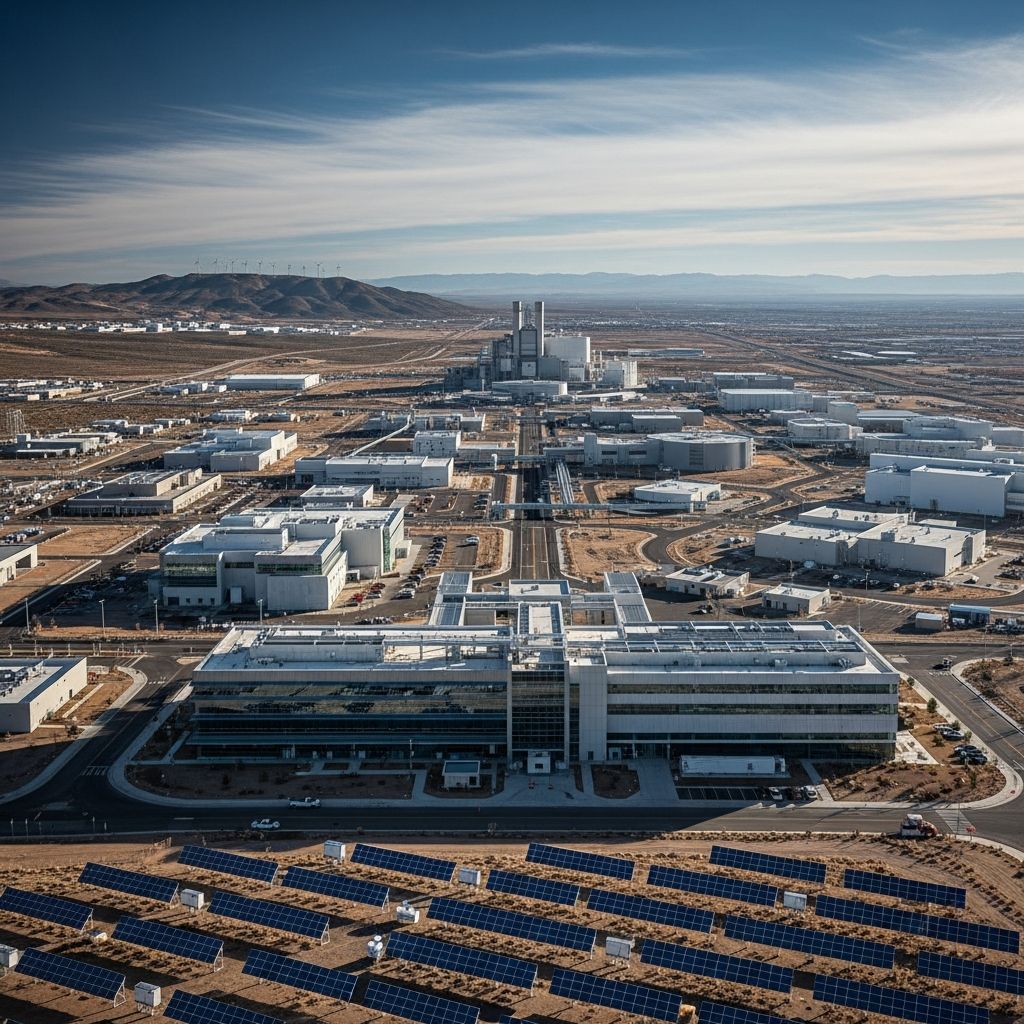
Sandia National Laboratories is one of the United States’ premier research institutions, combining advanced science, engineering, and technology to support national security and broader societal needs. It offers a rare mix of cutting-edge research, mission-driven work, and long-term career paths for people across many STEM and professional disciplines.
What Is Sandia National Laboratories?
Sandia National Laboratories is a U.S. Department of Energy (DOE) national laboratory operated by a contractor for the National Nuclear Security Administration (NNSA). It focuses on nuclear deterrence, national and homeland security, energy technologies, and emerging scientific challenges.
The lab operates multiple sites, with major campuses in Albuquerque, New Mexico, and Livermore, California, and missions that range from maintaining the safety and reliability of the U.S. nuclear stockpile to tackling global issues such as climate, energy, and cybersecurity.
Mission and Core Focus Areas
Sandia’s work is guided by a national security mission but touches many areas of science and engineering. Officially, it supports the nuclear weapons stockpile, prevents the spread of weapons of mass destruction, protects critical infrastructure, and advances energy security and technology innovation.
Key Mission Themes
- Nuclear deterrence: Ensuring the U.S. nuclear stockpile remains safe, secure, and reliable, without the need for live nuclear testing.
- Global security: Countering threats such as weapons proliferation, terrorism, and emerging technologies that could destabilize security.
- Energy and climate: Developing advanced energy systems, grid technologies, and resilience solutions that support the nation’s energy infrastructure.
- Science and technology foundations: Conducting fundamental and applied research in physics, engineering, mathematics, computing, and materials science that underpins mission work.
Representative Research Domains
| Domain | Typical Work | Impact |
|---|---|---|
| Computing & Cybersecurity | High-performance computing, secure systems, advanced simulations | Supports stockpile stewardship, infrastructure security, and modeling of complex systems. |
| Engineering & Design | Mechanical, electrical, systems engineering; prototyping and testing | Turns scientific concepts into deployable technologies for national programs. |
| Materials & Manufacturing | Materials characterization, reliability engineering, additive manufacturing | Improves performance and safety of critical components and systems. |
| Energy & Infrastructure | Grid modernization, renewable integration, resilience analysis | Enhances reliability and security of the energy system and critical infrastructure. |
| National & Homeland Security | Detection systems, threat analysis, systems-of-systems engineering | Strengthens defenses against physical, cyber, and unconventional threats. |
Life and Work at a National Laboratory
National laboratories occupy a unique space between academia, government, and industry. They are mission-driven like federal agencies, research-focused like universities, and application-oriented like private-sector companies.
How Work Differs from Industry and Academia
- Long-horizon missions: Many projects are multi-year or even multi-decade efforts tied to national strategy, not just quarterly metrics.
- Real-world deployment: Research often goes beyond papers and prototypes into fielded systems and operational capabilities.
- Interdisciplinary teams: Projects routinely bring together physicists, engineers, computer scientists, social scientists, and policy experts.
- Stable funding base: Core national security programs provide ongoing support, supplemented by competitive research awards and partnerships.
Culture and Workplace Environment
National labs emphasize scientific rigor, safety, collaboration, and a sense of public service. Many employees cite the ability to work on challenging problems with societal impact as a primary reason to build a career there.
Because Sandia works with classified information and sensitive technologies, it also operates within a rigorous security and compliance framework governed by DOE and NNSA regulations.
Types of Roles You’ll Find at Sandia
While Sandia is best known for hiring scientists and engineers, it depends on a wide array of professions. Roles range from hands-on experimental work to modeling and simulation, from operations and security to business support.
Technical and Research Positions
- Scientists: Physicists, chemists, materials scientists, mathematicians, and geoscientists working on modeling, experiments, and analysis.
- Engineers: Mechanical, electrical, aerospace, nuclear, software, and systems engineers designing, building, and maintaining complex systems.
- Computing professionals: Computer scientists, data scientists, and cybersecurity experts working on high-performance computing, analytics, and secure architectures.
- Technical specialists: Technologists, lab technicians, and engineering support staff who build hardware, run experiments, and maintain specialized facilities.
Operations and Business Roles
- Project and program managers: Coordinating multi-disciplinary teams and large-scale national programs.
- Security and compliance professionals: Managing information security, physical security, export controls, and regulatory obligations.
- Business support: Finance, procurement, human resources, communications, and legal functions that keep the lab running.
Early-Career and Student Opportunities
Sandia and other DOE national laboratories offer structured pathways for students and new graduates, including internships, co-op programs, post-bachelor roles, and postdoctoral fellowships. DOE highlights thousands of such opportunities across its lab system each year, designed to develop the next generation of the STEM workforce.
Who Thrives at Sandia?
Because of its mission and environment, Sandia tends to attract people who care deeply about public impact, enjoy complex technical challenges, and value collaboration.
Key Traits and Mindsets
- Mission orientation: A desire to contribute to national security, energy security, and scientific advancement.
- Systems thinking: Comfort working on large, interconnected systems rather than isolated components.
- Interdisciplinary curiosity: Willingness to learn from and collaborate with experts in very different fields.
- Ethical responsibility: Respect for safety, security, and the societal implications of advanced technologies.
- Patience and persistence: Ability to stay engaged with long-term projects and incremental progress.
Backgrounds Commonly Hired
- STEM degrees: physics, chemistry, mathematics, computer science, and engineering disciplines.
- Applied fields: data science, cybersecurity, operations research, systems engineering.
- Policy and analysis: security studies, public policy, economics, and quantitative social science for certain analytical roles.
- Business and operations: finance, HR, communications, legal, and project management.
Benefits and Work-Life Considerations
Federal contractors supporting critical missions typically offer competitive compensation, comprehensive benefits, and support for long-term careers.
Common Benefit Themes
- Health and wellness: Medical, dental, and vision coverage; wellness programs; and employee assistance resources are standard in DOE-contractor environments.
- Retirement and savings: Retirement plans, often with employer contributions, support long-term financial planning.
- Time off: Paid leave and holidays, with flexibility varying by role and clearance requirements.
- Professional development: Training, conferences, advanced degree support, and technical leadership development.
- Recognition of service: Many employees build decades-long careers, reflecting the stability of core national missions.
Security and Clearance
Many positions at national security laboratories require a U.S. security clearance, which involves background checks and ongoing responsibility for handling classified or sensitive information. Applicants must typically meet citizenship and suitability requirements defined by federal regulations.
How Sandia Fits in the U.S. Lab Ecosystem
Sandia is one of 17 DOE national laboratories, each with distinct missions but overlapping capabilities in science and engineering. DOE describes this network as the nation’s “crown jewels” of research, supporting everything from basic science to applied national security and energy innovation.
Comparison with Other National Laboratories
| Laboratory | Primary Emphasis | Examples of Work |
|---|---|---|
| Sandia | Engineering, national security, nuclear deterrence | Systems engineering for stockpile stewardship, cybersecurity, infrastructure security. |
| Los Alamos | Nuclear security, materials, high-performance computing | Weapons physics, supercomputing, materials under extreme conditions. |
| Lawrence Livermore | National security, high-energy density physics | Inertial confinement fusion, advanced modeling for national security. |
| National Renewable Energy Laboratory (NREL) | Renewable energy & energy efficiency | Solar, wind, bioenergy, and grid integration research. |
Pathways to Join Sandia
Building a career at Sandia is often a multi-step journey involving education, research experience, and exposure to national security or energy topics.
Steps to Become a Competitive Candidate
- Strengthen technical foundations: Focus on rigorous coursework and projects in your chosen field, especially in mathematics, modeling, and systems thinking.
- Pursue research experience: Undergraduate research, design teams, graduate theses, or industry R&D roles help demonstrate depth and initiative.
- Engage with national lab programs: Apply for DOE-sponsored internships, fellowships, or user facility projects to gain exposure to the lab environment.
- Develop communication skills: National lab work requires explaining complex ideas to colleagues, sponsors, and decision-makers.
- Understand clearance requirements: Become familiar with basic expectations around citizenship, ethics, and security for sensitive roles.
What Hiring Managers Look For
- Strong academic record or equivalent professional accomplishments.
- Evidence of problem-solving on complex, open-ended challenges.
- Experience working on interdisciplinary or multi-partner teams.
- Clear interest in national or energy security, public service, and responsible innovation.
Career Growth and Long-Term Development
Research from science and engineering organizations shows that national labs provide robust career ladders, with tracks for technical experts, project leaders, and managers. Employees can move among programs, rotate through new mission areas, and expand their skills over time.
Technical vs. Managerial Paths
- Technical excellence: Many labs offer senior technical titles for subject-matter experts who lead research directions without moving into formal management.
- Project and program leadership: Engineers and scientists can grow into roles managing large projects, budgets, and multidisciplinary teams.
- Operations leadership: Professionals in HR, finance, and operations can advance into strategic roles that shape institutional policies and capabilities.
Continuous Learning
National laboratories emphasize ongoing learning through internal courses, external training, conferences, and partnerships with universities. Some employees pursue advanced degrees while working, with varying levels of employer support depending on role and mission needs.
Frequently Asked Questions (FAQs)
Q1: Do you need a PhD to work at Sandia National Laboratories?
A PhD is common for research scientist and postdoctoral roles, especially in physics, mathematics, and advanced engineering. However, Sandia also hires many bachelor’s and master’s-level engineers, technologists, and professionals for design, testing, operations, and business functions. The level of education required depends on the specific position.
Q2: What is it like to work in a classified environment?
Working with classified information means following strict security rules about data handling, discussions, and travel. Day-to-day, it involves working inside controlled facilities, using secured networks, and limiting conversations about details to cleared colleagues. Many employees find that the added structure becomes routine, while also underscoring the importance of their work.
Q3: Are internships available for undergraduates?
Yes. DOE-supported laboratories, including those with national security missions, offer paid internships and co-op programs in science, engineering, computing, and business disciplines. These internships provide real project experience, mentorship, and exposure to the lab culture.
Q4: Can non-U.S. citizens work at Sandia?
Many positions tied to classified work require U.S. citizenship because of federal security regulations. Some unclassified research or collaboration roles may be open to non-U.S. citizens, but eligibility depends on the specific job, sponsor requirements, and export control laws.
Q5: How does Sandia support work-life balance?
While expectations vary by project and mission urgency, national labs typically offer structured schedules, paid leave, and benefits that support families and personal well-being. Flexible work arrangements may be available for some unclassified roles, but classified work usually requires on-site presence within secure facilities.
References
- About Sandia National Laboratories — Sandia National Laboratories. 2023-05-01. https://www.sandia.gov/about/
- Jobs, Internships, and Fellowships at the Department of Energy’s National Labs — U.S. Department of Energy. 2023-08-10. https://www.energy.gov/jobs/national-lab-jobs
- Security Clearances — U.S. Department of Energy. 2022-11-30. https://www.energy.gov/hss/security-clearances
- National Renewable Energy Laboratory: About NREL — National Renewable Energy Laboratory. 2023-07-15. https://www.nrel.gov/about/
- Careers in Science and Engineering: A Student Planning Guide to Grad School and Beyond — National Academies Press. 1996-01-01. https://nap.nationalacademies.org/catalog/5129/careers-in-science-and-engineering-a-student-planning-guide-to

- Integrated M.A. in Applied Linguistics, University of Hyderabad
- 5+ years in editorial, instructional, SEO, and research-based writing
Sneha is a relationships and lifestyle writer with a strong foundation in applied linguistics and certified training in relationship coaching. She brings over five years of writing experience to theskillvault, crafting thoughtful, research-driven content that empowers readers to build healthier relationships, boost emotional well-being, and embrace holistic living. Her writing and insights reflect the belief that beauty, happiness, and wellness…