
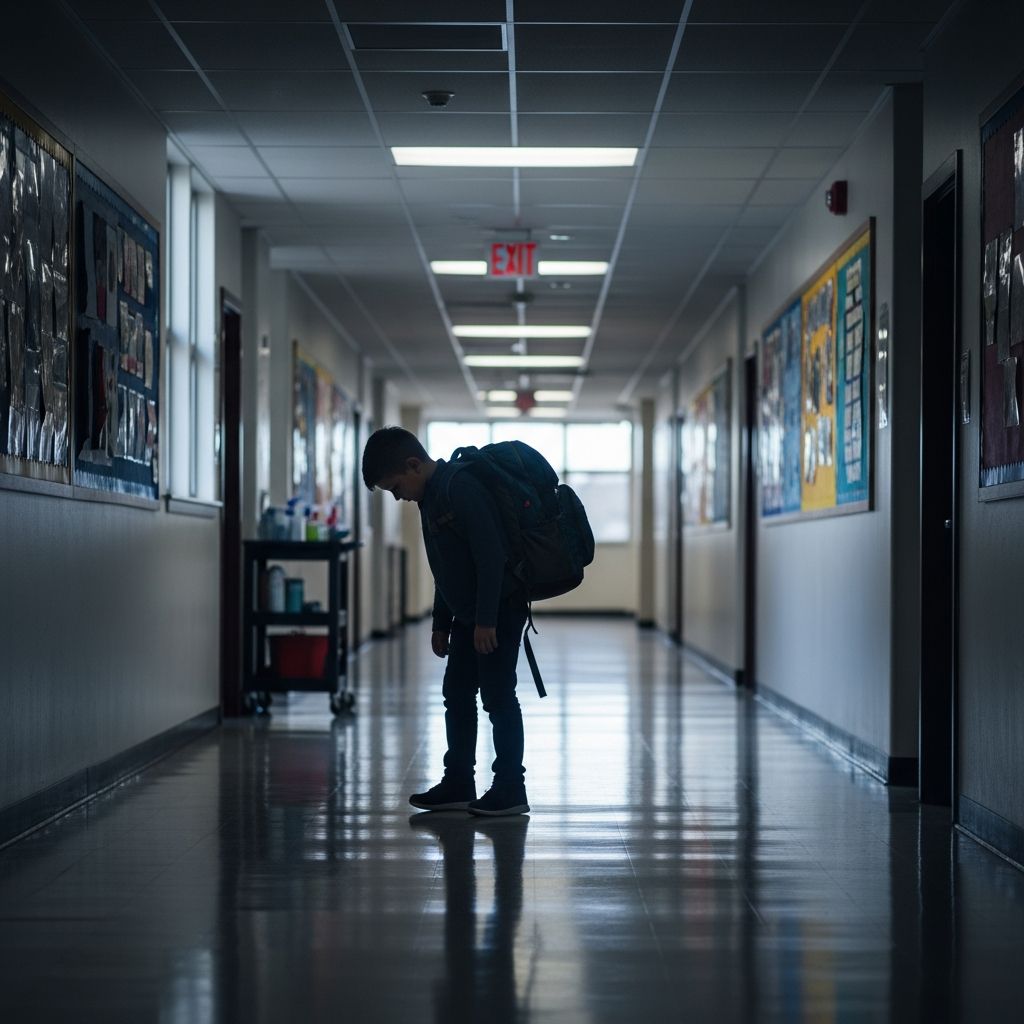
The Reality of School-Related Anxiety: Understanding a Growing Challenge
School anxiety is far more common than many parents and educators realize. Research indicates that an estimated 10-15% of children experience chronic absence from school due to anxiety, depression, social difficulties, and learning challenges. For these students, the prospect of attending school creates overwhelming dread that extends beyond normal nervousness about academic performance or social interactions. Understanding the nature of this anxiety and its underlying triggers is the first critical step toward helping young people overcome these barriers and return to meaningful educational engagement.
Identifying the Primary Causes of School-Related Fear
School anxiety rarely emerges in isolation or without cause. The roots of this condition typically trace back to specific experiences, environmental factors, or internal struggles that make the school setting feel unsafe, overwhelming, or impossibly difficult. By identifying these underlying causes, parents, teachers, and mental health professionals can develop targeted interventions that address the real source of distress rather than merely treating surface-level symptoms.
Social and Peer-Related Concerns
One of the most significant sources of school anxiety involves peer relationships and social dynamics. Bullying—whether physical, verbal, or conducted through digital channels—creates a profoundly unsafe perception of the school environment. Children who experience bullying often develop a strong aversion to attending school, fearing daily confrontation with their tormentors. Beyond overt bullying, more subtle forms of social rejection can also trigger anxiety, including exclusion from peer groups, teasing, or the fear of being “cancelled” by classmates. The modern teenage experience adds another layer of complexity, as social hierarchies and peer judgment feel especially consequential to adolescent development and self-worth.
Academic Performance Pressures
Many students experience intense anxiety related to academic expectations and performance standards. This anxiety takes multiple forms: children who struggle academically may fear embarrassment or failure, while high-achieving students often place self-imposed pressure to maintain perfectionism. Learning disabilities that go unidentified or unaddressed can make classroom instruction feel impossibly difficult, leading students to avoid school altogether rather than face repeated frustration and confusion. Additionally, parental expectations—whether explicitly communicated or subtly implied—can amplify academic stress, creating a cycle where students become anxious about their ability to meet standards and subsequently avoid the situations where they fear they will fail.
Separation and Attachment Concerns
For some children, particularly younger students, the primary driver of school anxiety is not related to academic or social factors but rather to separation from parents or primary caregivers. Severe separation anxiety prevents children from tolerating time away from their parents, making the school day feel like an unbearable separation. This anxiety can be rooted in insecure attachment patterns, previous traumatic experiences, or family circumstances that create heightened dependence or worry about parental well-being.
Mental Health Conditions and Previous Trauma
In many cases, school refusal and anxiety are symptoms of underlying mental health conditions rather than school-specific problems. Generalized anxiety disorder, social anxiety, depression, obsessive-compulsive disorder, and specific phobias all can manifest as school avoidance. Additionally, children who have experienced traumatic events—including family loss, serious illness, parental divorce, relocation, or personal violence—may develop aversions to school as their anxiety generalizes from the trauma itself to new environments and situations. A student who previously experienced a panic attack at school may develop anticipatory anxiety, becoming terrified that the experience will recur.
Safety Concerns and External Threats
Contemporary school anxiety often includes legitimate concerns about safety. Students worry about the possibility of school shootings or other acts of violence. These fears are not irrational but reflect awareness of real-world events, yet they can become paralyzing when they persist at high levels. Additionally, concerns about violence in the home or community can create baseline anxiety that extends into the school setting.
Environmental and Family Stressors
The home environment significantly influences a child’s emotional capacity to engage with school. Financial instability, food insecurity, lack of stable housing, and inadequate parental attention can all contribute to school-related anxiety. Family transitions such as parental divorce, relocation, or significant changes in family structure create uncertainty and stress that make school attendance more difficult. In some cases, children feel compelled to stay home because they worry about a parent’s well-being or fear what might happen if they leave.
Recognizing the Signs: How School Anxiety Manifests
School anxiety presents through multiple channels—cognitive, emotional, and behavioral. Parents and educators should watch for physical symptoms such as stomachaches, headaches, or fatigue that emerge specifically on school days. Emotional signs include irritability, tearfulness, or expressions of dread about school attendance. Behaviorally, children may resist leaving for school, experience difficulty sleeping before school days, or show sudden changes in academic engagement or social withdrawal. Recognizing these signs allows adults to intervene early before anxiety becomes deeply entrenched.
The Neuroscience of Anxiety Avoidance and Exposure
Understanding how anxiety operates neurologically helps explain why simply allowing a child to stay home or avoiding school temporarily actually worsens the problem over time. When individuals avoid anxiety-provoking situations, the brain learns that those situations are truly dangerous, reinforcing the anxiety response. Each day a child remains home from school because of anxiety essentially tells their nervous system, “Your fears are valid—this place is dangerous.” The brain does not distinguish between an actual threat and a perceived threat; it simply records that avoidance prevented danger.
Conversely, exposure to feared situations—when conducted gradually and with appropriate support—helps the brain learn that the feared outcome does not occur. This process, called habituation, is considered the most effective psychological tool for anxiety reduction. While this may seem to suggest forcing children back to school, effective exposure involves careful planning, adequate support, and gradual increments of difficulty.
Developing Coping Strategies: Evidence-Based Approaches
Positive Reappraisal and Cognitive Reframing
Research has identified specific coping skills that help students experience “stress-related growth” when facing challenges. Positive reappraisal involves attaching constructive meaning to difficult situations in terms of personal development. Rather than viewing a challenging class as “proof I’m not smart enough,” a student might reframe it as “an opportunity to develop problem-solving skills” or “a chance to prove I can handle difficulty.” This cognitive shift does not deny the legitimate difficulty but changes the narrative about what the challenge means about the individual.
Building and Leveraging Support Networks
Overcoming school anxiety requires consistent, reliable support from others. Social connection serves as a protective factor that helps students feel less alone and more capable of facing their fears. Parents, teachers, counselors, peers, and mentors all play crucial roles in creating a network that validates the student’s feelings while encouraging gradual progress. Students should feel permission to share specific worries, doubts, and fears with trusted adults who can respond with both empathy and realistic perspective.
Exposure Response Prevention Therapy
For clinical-level anxiety, Exposure Response Prevention (ERP) therapy represents a highly effective treatment approach. This structured therapy involves gradually exposing individuals to feared situations while preventing the avoidance response. For school anxiety, this might involve progressive exposure—starting with visiting the school building outside of school hours, then attending for shortened periods, gradually increasing to full attendance. The key is that exposure occurs with professional guidance and adequate coping support.
Establishing Clear Goals and Purpose
Fear flourishes in ambiguity and uncertainty. When students develop crystalline clarity about why school matters to them and what specific goals they hope to achieve, anxiety loses some of its power. Rather than viewing school as an obligation they “have to” attend, reframing it around personal aspirations—developing skills, pursuing interests, achieving specific academic or social goals—provides motivation that can partially counteract anxiety’s pull toward avoidance.
Practical Strategies for Parents and Educators
Creating a Foundation of Open Communication
The first intervention is establishing an environment where children feel safe expressing their fears without judgment. Active listening—where adults genuinely seek to understand rather than immediately problem-solve—validates the child’s emotional experience. Once a child feels heard, they become more willing to collaborate on solutions. Gently probing to identify specific triggers helps distinguish between vague anxiety and concrete fears, which leads to more targeted interventions.
Addressing Bullying and Social Concerns
When peer issues drive school anxiety, parents should maintain open dialogue with school administration to ensure appropriate protective measures are implemented. Simultaneously, encouraging the child to connect with supportive friends or finding opportunities for positive peer interaction can build resilience and reduce feelings of isolation.
Organizing Academic Support When Needed
If learning challenges contribute to anxiety, tutoring, classroom accommodations, or learning support can reduce academic stress. Addressing the actual skill gap—rather than just encouraging the student to try harder—demonstrates that the child’s struggles are legitimate and solvable.
Normalizing Gradual Returns to Routine
Establishing consistent sleep schedules, regular meal times, and predictable daily routines helps stabilize mood and reduces generalized anxiety. When a child’s basic biological needs are consistently met, they have greater emotional capacity to handle stressors.
Modeling Healthy Anxiety Management
Children learn anxiety management by observing how adults in their lives handle stress and worry. Parents who demonstrate healthy coping—acknowledging concerns while maintaining perspective—teach children that anxiety is manageable rather than catastrophic.
Comparison Table: Different Types of School Anxiety and Appropriate Interventions
| Type of Anxiety | Primary Symptoms | Recommended Interventions |
|---|---|---|
| Bullying-Related | Fear of peers, avoidance, emotional withdrawal | School communication, peer support building, ERP therapy |
| Academic Performance | Perfectionism, fear of failure, avoidance of challenging subjects | Tutoring, cognitive reframing, academic accommodations |
| Separation Anxiety | Distress when leaving parent, somatic complaints | Gradual exposure, family therapy, reassurance rituals |
| Underlying Mental Health | Pervasive worry, depression, panic attacks | Professional counseling, possible medication, comprehensive therapy |
| Situational/Trauma-Based | Triggered responses, flashbacks, safety concerns | Trauma-informed therapy, school safety planning, gradual reintegration |
When Professional Help Is Essential
While many students experience temporary back-to-school jitters that resolve naturally, persistent school refusal or severe anxiety warrants professional assessment. Mental health professionals can distinguish between developmentally normal stress and clinical anxiety disorders, identify underlying conditions, and recommend appropriate treatment. A multidimensional approach—combining family therapy, school collaboration, education specialists, and potentially medication management—often proves most effective for significant school anxiety.
Frequently Asked Questions
Q: How long does it typically take for school anxiety to improve with intervention?
A: Timelines vary depending on the anxiety’s severity and underlying causes. Some students show improvement within weeks with consistent support and exposure, while others with deeper-rooted trauma or clinical anxiety may require months of treatment. The key is consistent application of evidence-based strategies rather than expecting rapid resolution.
Q: Should I allow my child to stay home if they’re experiencing severe anxiety about school?
A: While temporary accommodations may be necessary for extremely distressed students, regular school attendance combined with anxiety treatment is generally more effective than avoidance. Allowing extended absence can paradoxically intensify anxiety by reinforcing the belief that school is unbearable. A gradual return plan developed with professionals typically works better than extended absence.
Q: Can school anxiety lead to long-term academic or social difficulties?
A: Yes, untreated school anxiety can result in significant academic gaps, social isolation, and reduced future opportunities. Early intervention prevents these cascading effects and gives students the best chance for recovery and educational success.
Q: What role do teachers play in helping students with school anxiety?
A: Teachers are essential allies in supporting anxious students. They can provide a safe classroom environment, offer academic accommodations, communicate concerns to parents, collaborate with school counselors, and provide positive reinforcement. Regular teacher-parent-counselor communication ensures coordinated support.
Q: Are there differences in how school anxiety manifests between younger children and teenagers?
A: Yes. Younger children often express anxiety through somatic complaints (stomachaches, headaches) and resistance to separation. Teenagers may experience anxiety differently, sometimes expressing it through irritability, social withdrawal, or perfectionism. However, the underlying mechanism—fear triggering avoidance—remains consistent across ages.
References
- Scared to Go Back to School — PrairieCare. 2024. https://prairie-care.com/scared-to-go-back-to-school/
- How to Help a Child or Teen with Back-to-School Anxiety — Compass Health Center. 2024. https://compasshealthcenter.net/blog/how-to-help-a-child-or-teen-with-back-to-school-anxiety/
- Easing Back-to-School Anxiety — CHOC Children’s Hospital. 2024. https://health.choc.org/easing-back-to-school-anxiety/
- Scolionophobia (Fear of School): Causes & Treatment — Cleveland Clinic. 2024. https://my.clevelandclinic.org/health/diseases/23982-scolionophobia-fear-of-school
- Avoiding and Refusing to Go to School — Yale Medicine. 2024. https://www.yalemedicine.org/conditions/school-related-problems
- Back-to-School Anxiety: What Students and Parents Should Know — Weill Cornell Medicine. 2024. https://weillcornell.org/news/back-to-school-anxiety-what-students-and-parents-should-know
- 6 Simple Ways to Conquer Your Fears of Returning to School — Cornerstone University. 2024. https://www.cornerstone.edu/blog-post/6-simple-ways-to-conquer-your-fears-of-returning-to-school/

- Integrated M.A. in Applied Linguistics, University of Hyderabad
- 5+ years in editorial, instructional, SEO, and research-based writing
Sneha is a relationships and lifestyle writer with a strong foundation in applied linguistics and certified training in relationship coaching. She brings over five years of writing experience to theskillvault, crafting thoughtful, research-driven content that empowers readers to build healthier relationships, boost emotional well-being, and embrace holistic living. Her writing and insights reflect the belief that beauty, happiness, and wellness…