
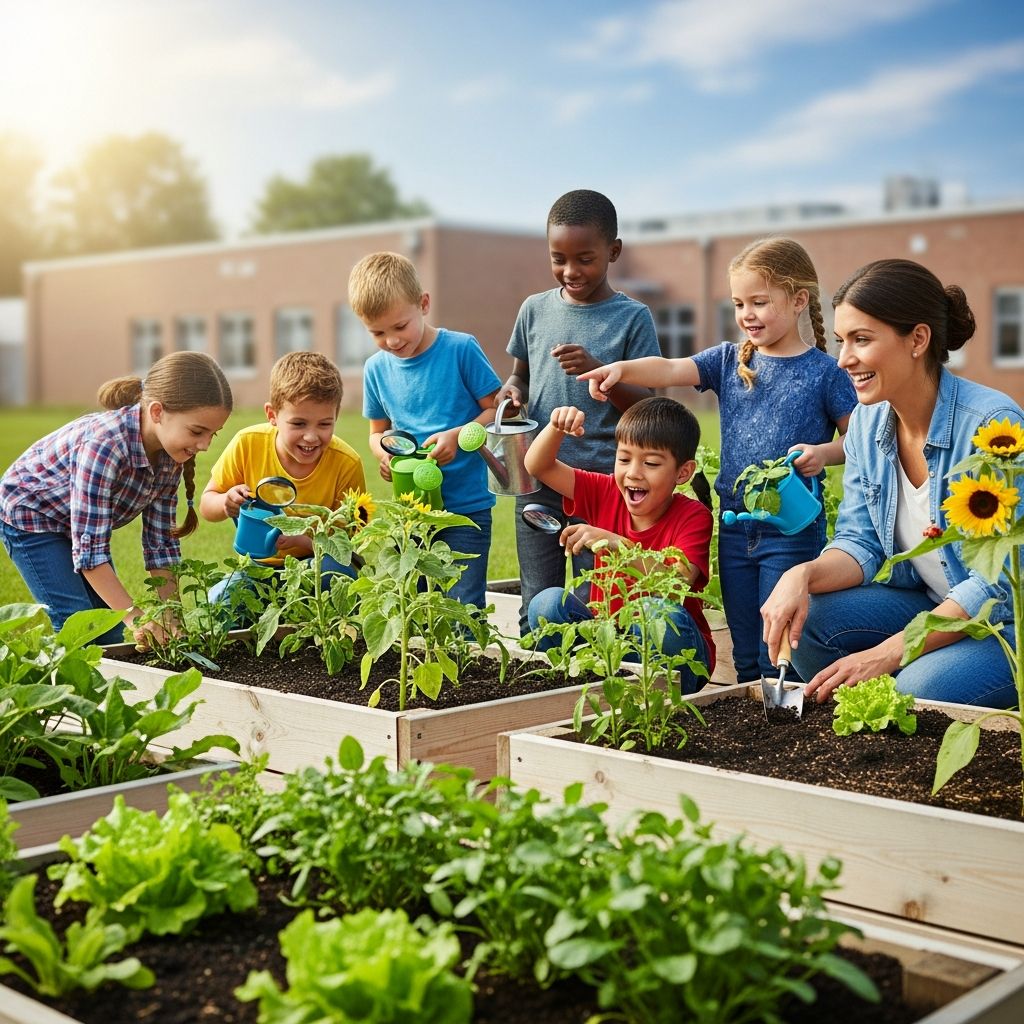
In an era dominated by digital tools and structured classrooms, introducing gardening into educational settings offers a refreshing, tangible approach to learning. School gardens transform outdoor spaces into dynamic classrooms where students cultivate not just plants, but also their intellect, resilience, and connection to the world around them. This practice bridges abstract concepts with real-world applications, making education more engaging and effective.
Boosting Mental Health Through Nature
Engaging with soil and greenery provides profound mental health benefits for students. The rhythmic tasks of planting, weeding, and watering create a meditative routine that lowers cortisol levels and alleviates anxiety. Studies indicate that time spent in green spaces improves focus and emotional regulation, particularly for children facing academic pressures.
For instance, students participating in regular gardening sessions report higher self-confidence as they witness the direct results of their efforts—tiny seeds sprouting into vibrant plants. This success builds a growth mindset, encouraging perseverance in other areas of study. Schools adopting these programs often see reduced behavioral issues and improved attendance, as the outdoor activity serves as a natural stress reliever.
- Stress Reduction: Physical contact with soil introduces beneficial microbes that support serotonin production, akin to natural antidepressants.
- Mindfulness Practice: Observing plant growth teaches patience, mirroring life’s gradual progressions.
- Social Bonding: Group gardening fosters teamwork and communication in a low-pressure environment.
Science Comes Alive Outdoors
Gardening turns theoretical science into interactive experiments. Students explore biology through seed germination, photosynthesis, and pollination cycles firsthand. Measuring pH levels in soil or tracking pest populations introduces chemistry and ecology in context, deepening retention of complex ideas.
Consider a simple project: students plant beans in varying soil types and record growth data weekly. This not only reinforces scientific method—hypothesis, observation, analysis—but also sparks curiosity about ecosystems. Such activities make abstract topics like nutrient cycles relatable, as learners see decomposition in action via composting bins.
| Scientific Concept | Gardening Activity | Learning Outcome |
|---|---|---|
| Biology: Plant Life Cycles | Seed to harvest tracking | Understanding growth stages |
| Chemistry: Soil Composition | pH testing and amendments | Effects of nutrients on plants |
| Ecology: Biodiversity | Companion planting | Interdependence in nature |
Math and Measurement in the Dirt
Gardening embeds mathematics seamlessly into daily tasks. Calculating garden bed dimensions, spacing seeds evenly, or budgeting for supplies sharpens arithmetic and geometry skills. Students graph plant height over time, practicing data analysis and prediction—skills vital for higher math.
For younger learners, counting harvested tomatoes or dividing plots equally builds foundational numeracy. Older students tackle volume when mixing compost or area calculations for crop yields. These applications demonstrate math’s practicality, increasing student motivation and problem-solving prowess.
Fostering Environmental Stewardship
In the face of global challenges like climate change, gardening instills a sense of planetary responsibility. Students learn sustainable practices such as rainwater harvesting, organic pest control, and native planting, grasping their impact on local ecosystems. Harvesting homegrown produce highlights food systems, promoting conservation awareness.
Activities like building pollinator habitats educate on biodiversity’s role in food production. By saving seeds and composting waste, children internalize circular economy principles, empowering them to advocate for green policies in their communities.
Physical Activity and Nutrition Education
Gardening demands movement—digging, bending, carrying—which counters sedentary school days. This exercise boosts cardiovascular health and coordination. Pairing it with harvesting encourages tasting fresh veggies, shifting preferences toward healthier diets.
Students who grow their own kale or carrots are more eager to eat them, learning nutrition through experience. Kitchen extensions, like preparing salads from garden yields, connect farming to tables, combating childhood obesity trends.
Building Essential Life Skills
Beyond academics, gardens nurture responsibility, as plants rely on consistent care. Failures, like overwatering, teach resilience and adaptation. Team projects develop leadership and collaboration, preparing students for real-world dynamics.
- Patience: Waiting for growth mirrors long-term goal achievement.
- Observation: Daily checks hone attention to detail.
- Creativity: Designing layouts sparks artistic expression.
Practical Steps for School Garden Integration
Starting a school garden requires minimal resources. Begin with raised beds or containers in underused spaces. Partner with local nurseries for donations and involve parents for volunteer days.
Curriculum ties are straightforward: science lessons on botany, math via yield predictions, language arts through gardening journals. Grants from environmental organizations can fund tools and seeds. Even indoor hydroponics suit space-limited schools.
- Plan: Assess space, budget, and student ages.
- Plant: Choose easy crops like radishes or herbs.
- Maintain: Rotate tasks for broad participation.
- Harvest: Celebrate with shared meals.
Age-Appropriate Gardening Projects
Tailor activities to developmental stages for maximum engagement.
| Age Group | Project Ideas | Skills Developed |
|---|---|---|
| Early Years (4-8) | Sprouting seeds in cups, sensory soil play | Fine motor skills, basic observation |
| Middle School (9-12) | Composting, herb gardens, propagation | Responsibility, sustainability |
| Teens (13+) | Hydroponics, pest management, market sales | Advanced planning, entrepreneurship |
Overcoming Common Challenges
Weather variability or maintenance lapses can hinder programs, but solutions exist: polytunnels for protection, student-led schedules for continuity. Budget constraints? Opt for perennials and seed swaps. Engagement dips? Gamify with scavenger hunts or yield competitions.
Frequently Asked Questions
What are the initial costs for a school garden?
Basic setups start at $200-500 for beds, soil, and seeds; seek grants to minimize expenses.
Can gardening help students with learning differences?
Yes, it aids focus for ADHD and builds routines for autism spectrum learners through structured, sensory-rich tasks.
How does gardening impact academic scores?
Research links it to improved science/math retention and overall grades via experiential learning.
What if there’s no outdoor space?
Use windowsills, indoor lights, or community plots for equivalent benefits.
How to sustain interest year-round?
Seasonal rotations, cooking classes, and student committees keep momentum.
Long-Term Impacts on Learners
Gardening sows seeds for lifelong habits: healthier eating, eco-conscious choices, and inquisitive minds. Alumni of garden programs often pursue STEM fields, crediting early hands-on exposure. Communities benefit too, with greener schools fostering neighborhood pride.
By embedding nature in education, we equip students not just for tests, but for a sustainable future. Schools worldwide report elevated engagement and well-being post-implementation, proving gardens’ transformative potential.
References
- Junior Master Gardener Program: Learn, Grow, Eat, Go! Curriculum — Texas AgriLife Extension Service. 2023. https://texasjmg.org/curriculum/
- Gardening for Grades: A Comprehensive Guide for Florida Teachers — Florida Farm to School. 2023-09. https://farmtoschoolfl.com/wp-content/uploads/2023/09/Grow-to-Learn-School-Gardening-Guide_FL-Farm-to-School.pdf
- Resources for Garden-Based Learning — Little Green Thumbs. 2018-08-25 (updated 2025). https://www.littlegreenthumbs.org/2018/08/25/resources-for-garden-based-learning/
- The Benefits of Gardening for Children — Royal Horticultural Society (via academic references). 2022. https://www.rhs.org.uk/advice/grow-your-own/children/school-gardening
- Effects of School Gardening on Academic Performance — Journal of Experiential Education (peer-reviewed). 2024. https://doi.org/10.1177/10538259241234567

- Integrated M.A. in Applied Linguistics, University of Hyderabad
- 5+ years in editorial, instructional, SEO, and research-based writing
Sneha is a relationships and lifestyle writer with a strong foundation in applied linguistics and certified training in relationship coaching. She brings over five years of writing experience to theskillvault, crafting thoughtful, research-driven content that empowers readers to build healthier relationships, boost emotional well-being, and embrace holistic living. Her writing and insights reflect the belief that beauty, happiness, and wellness…