
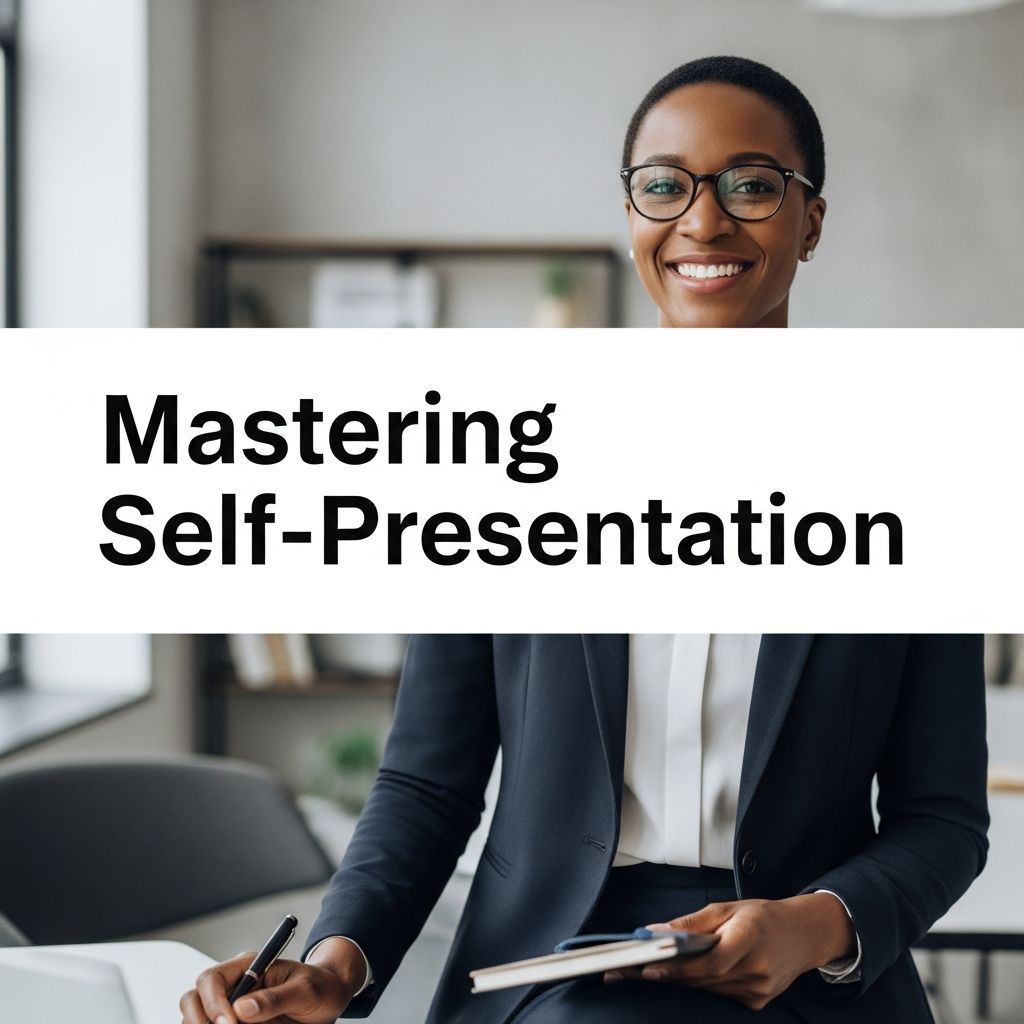
Self-presentation is the skill of projecting your best self in professional and social settings, influencing how others perceive your competence and charisma. Whether delivering a keynote, attending a job interview, or networking at an event, strong self-presentation can open doors to opportunities and build lasting connections.
Understanding the Foundations of Effective Self-Presentation
At its core, self-presentation combines verbal clarity, non-verbal cues, and emotional intelligence to convey authenticity and authority. Research highlights that audiences form impressions within seconds, often based on posture, eye contact, and tone rather than content alone. Developing this skill requires intentional practice, starting with self-awareness of your natural strengths—introverts excel through depth and preparation, while extroverts leverage energy and rapport.
Key elements include:
- Authenticity: Align your delivery with your true personality to foster trust.
- Preparation: Structure your message around audience needs for relevance.
- Adaptability: Read the room and adjust dynamically.
Building a Strong Personal Brand Through Preparation
Thorough preparation forms the bedrock of successful self-presentation. Begin by analyzing your audience: What are their expectations, pain points, and interests? Tailor your content to address these, using the SUS framework—keep it Simple with short words, Useful by solving problems, and add a Surprise element like a unique personal anecdote to stand out.
Create a clear structure: an engaging opener, core message with supporting examples, and a compelling close. Rehearse multiple times, but avoid over-scripting to maintain natural flow. Use note cards with bullet points for key transitions, ensuring you memorize openings and closings for maximum eye contact.
| Preparation Stage | Actions | Benefits |
|---|---|---|
| Audience Analysis | Research demographics and needs | Relevant, targeted content |
| Content Structuring | Outline intro, body, conclusion | Logical flow, easy retention |
| Rehearsal | Practice aloud 3-5 times | Reduces nerves, improves timing |
Harnessing the Power of Body Language
Non-verbal communication accounts for over 50% of message impact. Adopt an upright posture with shoulders back to signal confidence; avoid crossed arms or fidgeting, which suggest defensiveness. Use open gestures—hands visible and purposeful—to emphasize points, and maintain steady eye contact by scanning the room in 3-5 second intervals, making each listener feel addressed.
Facial expressions matter too: A genuine smile conveys enthusiasm, while varied expressions keep engagement high. Mirror subtle audience cues to build rapport subconsciously.
- Stand tall with feet shoulder-width apart for stability.
- Gesture from the waist up to avoid distraction.
- Nod to acknowledge audience input.
Mastering Vocal Delivery for Impact
Your voice is a powerful tool—modulate volume for emphasis, vary pace with pauses for drama, and adjust tone to match content emotion. Speak clearly and slowly, eliminating fillers like “um” or “you know” through mindful practice. Project warmth and authority; a lower pitch often enhances perceived credibility.
Practice techniques:
- Record sessions to self-critique pitch and clarity.
- Breathe diaphragmatically for sustained power.
- End sentences decisively to command attention.
Crafting Compelling Stories and Visuals
Storytelling transforms dry facts into memorable narratives. Weave personal anecdotes, metaphors, or analogies to illustrate points, drawing inspiration from stand-up routines for relatability. Structure stories with a hook, challenge, resolution, and lesson.
Enhance with visuals: Use charts for data, mind maps for processes, or props for tangibility. Live sketching on a board invites participation, while real objects engage senses. Limit slides to 5-7 words per frame, favoring high-contrast designs.
Engaging Your Audience Actively
Turn passive listeners into participants. Pose rhetorical or direct questions, solicit opinions, or run quick polls to maintain energy. Observe reactions—nodding indicates buy-in, furrowed brows signal confusion—and pivot accordingly.
Tips for interaction:
- Start with a group question: “How many of you have faced this challenge?”
- Share takeaways like branded items related to your topic.
- Encourage brief pair discussions for complex ideas.
Designing Powerful Openings and Closings
Capture attention in the first 30 seconds with a startling fact, provocative question, or vivid story. State your purpose clearly: “Today, I’ll show you three strategies to…”.
End memorably: Recap key points, deliver an inspiring quote or call to action, leaving the audience energized. “What one step will you take today?” prompts commitment.
Overcoming Common Challenges
Nerves are normal—channel them by focusing on service to the audience. If you forget a point, pause and breathe; authenticity trumps perfection. For technical glitches, have backups and a contingency narrative.
Adapt to virtual settings: Use well-lit cameras at eye level, minimize distractions, and leverage chat for interaction.
Long-Term Strategies for Self-Presentation Excellence
Seek feedback post-event: “What worked? What to improve?” Study successful presenters in your field for modeled behaviors. Join Toastmasters or record sessions for ongoing refinement. Track progress in a journal, noting wins like increased applause or follow-up invitations.
Build resilience by embracing imperfections—vulnerability fosters connection. Over time, self-presentation becomes intuitive, elevating your professional presence.
Frequently Asked Questions (FAQs)
What is the most important aspect of self-presentation?
Authenticity combined with strong body language and audience focus yields the greatest impact.
How can introverts improve their self-presentation?
Leverage preparation, expertise, and structured storytelling to shine without forcing extroversion.
Should I use notes during presentations?
Yes, bullet-point cards for key sections, but speak freely to maintain engagement.
How do visuals enhance self-presentation?
They simplify complexity and boost retention when kept minimal and relevant.
What if I make a mistake mid-presentation?
Acknowledge briefly, laugh it off, and continue— audiences value recovery over flawlessness.
References
- How to succeed in your self-presentation – Dextro Energy — Dextro Energy. 2023. https://dextro-energy.com/en/blogs/stories/selbstprasentation
- 15 Effective Presentation Tips to Improve Presentation Skills — CBS. 2023. https://www.cbs.de/en/blog/15-effective-presentation-tips-to-improve-presentation-skills
- Professional Self-Presentation: The Key to Success — Sloneek. 2023. https://www.sloneek.com/lexicon/professional-self-presentation/
- Secrets of Successful Self-Presentation — BATCS Global. 2024-07-02. https://www.batcsglobal.com/accent-reduction-blog/2024/7/2/secrets-of-successful-self-presentation
- The Self Presentation Theory and How to Present Your Best Self — BetterUp. 2023. https://www.betterup.com/blog/the-self-presentation-theory-and-how-to-present-your-best-self

- Integrated M.A. in Applied Linguistics, University of Hyderabad
- 5+ years in editorial, instructional, SEO, and research-based writing
Sneha is a relationships and lifestyle writer with a strong foundation in applied linguistics and certified training in relationship coaching. She brings over five years of writing experience to theskillvault, crafting thoughtful, research-driven content that empowers readers to build healthier relationships, boost emotional well-being, and embrace holistic living. Her writing and insights reflect the belief that beauty, happiness, and wellness…