
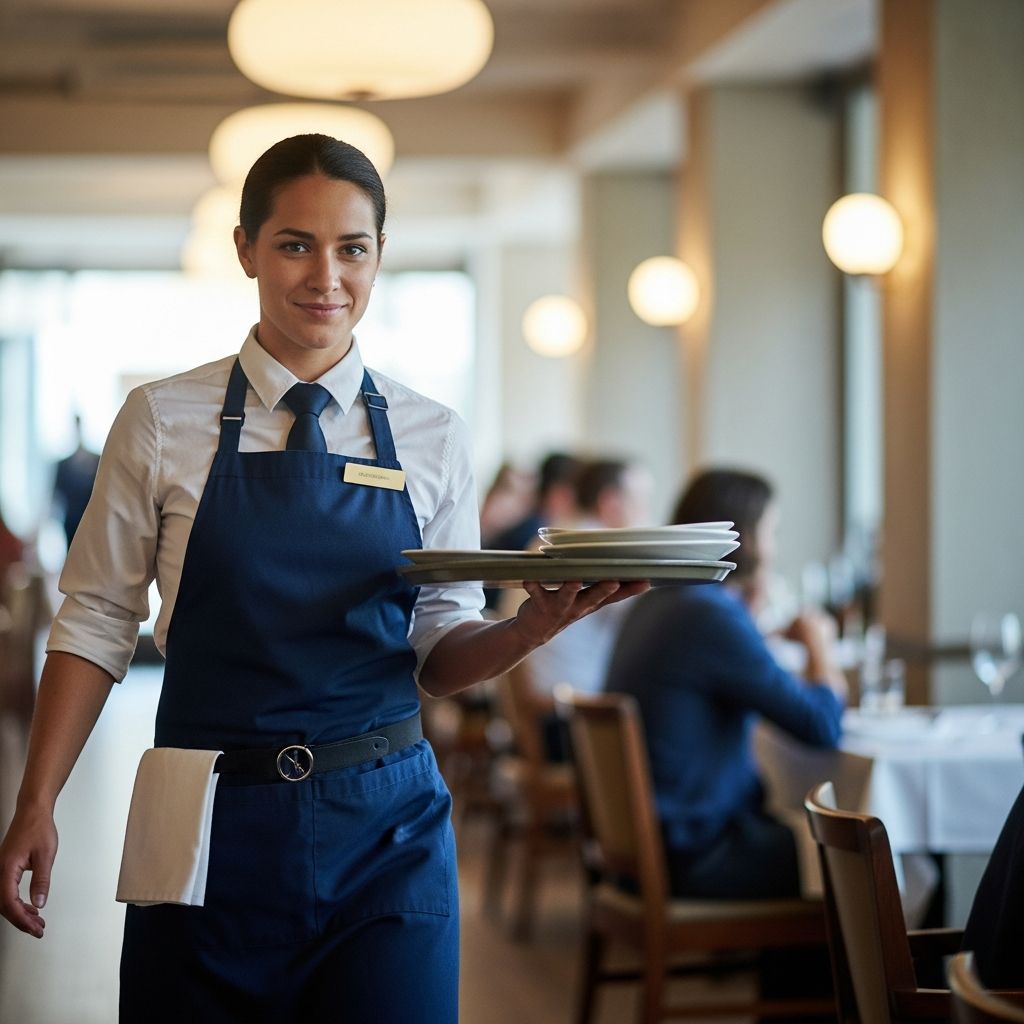
In the dynamic world of food service, servers rely heavily on a combination of base wages and customer gratuities to build a sustainable income. With over 2.2 million servers employed across the United States, understanding how to optimize earnings is crucial for career longevity and financial stability. This guide explores current salary landscapes, the pivotal role of tips, regional opportunities, skill-building techniques, and future trends shaping the profession.
Understanding Server Compensation Basics
Server pay structures typically include a modest hourly base wage supplemented by tips, which often constitute the majority of total earnings. Recent data indicates an average base hourly wage of $17.56 before tips, translating to an annual base salary around $36,530 for full-time work. However, total compensation varies widely, with tips accounting for approximately 69% of a server’s hourly income on average.
Entry-level servers might start with base pay as low as $10.15 per hour including some tips, while experienced professionals in high-end settings can reach up to $19.14 or more. Annual figures show averages around $22,402 to $32,855, but top earners exceed $44,000-$60,090 yearly. These numbers underscore the importance of location, experience, and service quality in determining financial outcomes.
Regional Variations in Server Earnings
Earnings differ significantly by geography due to cost of living, tipping customs, and establishment types. High-wage areas like the District of Columbia offer base salaries up to $50,790 annually, followed closely by New York at $49,796. Coastal cities in California, such as Corte Madera and Cupertino, boast hourly rates nearing $19.62, while Alaskan spots like Nome reach $19.59.
| Top Paying Locations | Annual Salary | Hourly Wage |
|---|---|---|
| Corte Madera, CA | $40,815 | $19.62 |
| Nome, AK | $40,757 | $19.59 |
| Cupertino, CA | $40,535 | $19.49 |
| District of Columbia | $50,790 (base) | N/A |
| New York | $49,796 (base) | N/A |
Urban centers and tourist-heavy regions generally provide better opportunities, with full-time employment in waiter roles showing stability around 752,000 to 828,000 workers annually in recent years.
The Power of Tips: How Much Can You Realistically Earn?
Tips are the lifeblood of server income, with fine dining shifts yielding $180-$400 and casual spots $100-$280 per shift. The standard tipping range remains 15%-20% of the pre-tax bill, though 20% is becoming the norm for exceptional service. In 2024, full-service restaurant tips averaged 19.8%, contributing to servers’ overall prosperity.
- Fine Dining: High check averages lead to larger tips; focus on upselling premium items.
- Casual Dining: Higher volume of tables compensates for smaller individual tips.
- Busy Shifts: Weekends and holidays can double or triple earnings through increased patronage.
To maximize tips, servers should track patterns: parties of four or more often tip generously, while building rapport through personalized service can elevate averages beyond 20%.
Skills That Boost Your Earning Potential
Beyond location, personal attributes and honed abilities directly influence tip amounts. Top earners exhibit strong communication, multitasking, and emotional intelligence.
- Product Knowledge: Knowing menu details, specials, and pairings impresses customers and encourages upsells.
- Speed and Efficiency: Delivering orders promptly without errors keeps tables happy and turning over faster.
- Positive Demeanor: Smiling, remembering names, and anticipating needs foster loyalty and higher gratuities.
- Upselling Techniques: Suggest add-ons like appetizers or desserts naturally to inflate bills.
Experience levels correlate with pay: entry-level (under 1 year) at $9.75/hour total, early career (1-4 years) at $10.12, with mid-career professionals seeing substantial jumps. Continuous training in these areas can accelerate progression.
Navigating Challenges in the Server Role
Despite lucrative potential, servers face hurdles like inconsistent shifts, physical demands, and variable income. Job satisfaction varies, but many appreciate the flexibility and social aspects. The industry projects steady demand with 471,200 annual openings through 2033, despite modest 1% growth.
Full-time wage and salary employment for waiters has hovered between 674,000 and 828,000 over recent years, indicating resilience. Servers often advance: 80% of restaurant owners and 90% of managers started in frontline roles.
Industry Trends Shaping Server Futures
The restaurant sector anticipates $1.5 trillion in 2025 sales, up 4% from prior years, fueling over 1 million outlets. Technology like POS systems and apps aids efficiency, while sustainability and experiential dining influence tips.
- Increased focus on contactless payments hasn’t diminished tipping; digital prompts maintain rates.
- Growth in fast-casual hybrids offers hybrid pay models blending wages and tips.
- Career ladders emphasize certifications for sommelier or management roles to exceed $60,000 annually.
Practical Strategies for Higher Earnings
To thrive, servers should:
- Choose venues with strong tip-sharing policies and high traffic.
- Work peak hours: Friday-Sunday evenings.
- Build regulars through exceptional, consistent service.
- Track earnings weekly to identify peak performance patterns.
- Pursue side certifications like food safety or wine knowledge for premium placements.
In high-end spots, professional waiters average $29.57/hour, far above full-time norms of $15.80.
Career Progression and Long-Term Planning
Serving serves as a launchpad: transition to bartending, hosting, or management for stable salaries. With 90% of managers rising from servers, networking internally is key. Diversify by freelancing at events or private catering for supplemental income.
| Role | Average Annual Salary | Tip Potential |
|---|---|---|
| Server | $32,855 | High |
| Bartender | $40,500 (related) | Very High |
| Restaurant Manager | $50,000+ | Moderate (bonuses) |
| Owner | Varies widely | Equity-based |
Frequently Asked Questions (FAQs)
What is the average server salary including tips?
Total earnings average $32,855 annually, with tips comprising 69% of income.
Which states pay servers the most?
California cities like Corte Madera and Alaskan areas top lists at nearly $20/hour, alongside D.C. and New York for base pay.
How can I increase my tips as a server?
Master upselling, provide personalized service, and work high-volume shifts in fine dining or busy casual spots.
Is the server job market growing?
Expect 471,200 openings yearly through 2033 with stable employment around 2.2 million.
What education is needed for serving?
A high school degree suffices; experience and soft skills drive success.
References
- Waiters/Servers in 2026: Statistics, Salaries, Job Growth & Trends — Oysterlink. 2026. https://oysterlink.com/spotlight/waiter-server-statistics/
- Waiter Salary: Hourly Rate January 2026 United States — ZipRecruiter. 2026-01-19. https://www.ziprecruiter.com/Salaries/Waiter-Salary
- Waiter Salary, Hourly Rate (January 01, 2026) in the United States — Salary.com. 2026-01-01. https://www.salary.com/research/salary/alternate/waiter-salary
- Waiter/Waitress Hourly Pay in 2026 — PayScale. 2026. https://www.payscale.com/research/US/Job=Waiter%2FWaitress/Hourly_Rate
- Employed full time: Wage and salary workers: Waiters and waitresses occupations — FRED, Federal Reserve Bank of St. Louis. 2024. https://fred.stlouisfed.org/series/LEU0254493400A
- Waiter/Waitress Salary (2026) — ERI Economic Research Institute. 2026. https://www.erieri.com/salary/job/waiter-waitress/united-states

- Integrated M.A. in Applied Linguistics, University of Hyderabad
- 5+ years in editorial, instructional, SEO, and research-based writing
Sneha is a relationships and lifestyle writer with a strong foundation in applied linguistics and certified training in relationship coaching. She brings over five years of writing experience to theskillvault, crafting thoughtful, research-driven content that empowers readers to build healthier relationships, boost emotional well-being, and embrace holistic living. Her writing and insights reflect the belief that beauty, happiness, and wellness…