
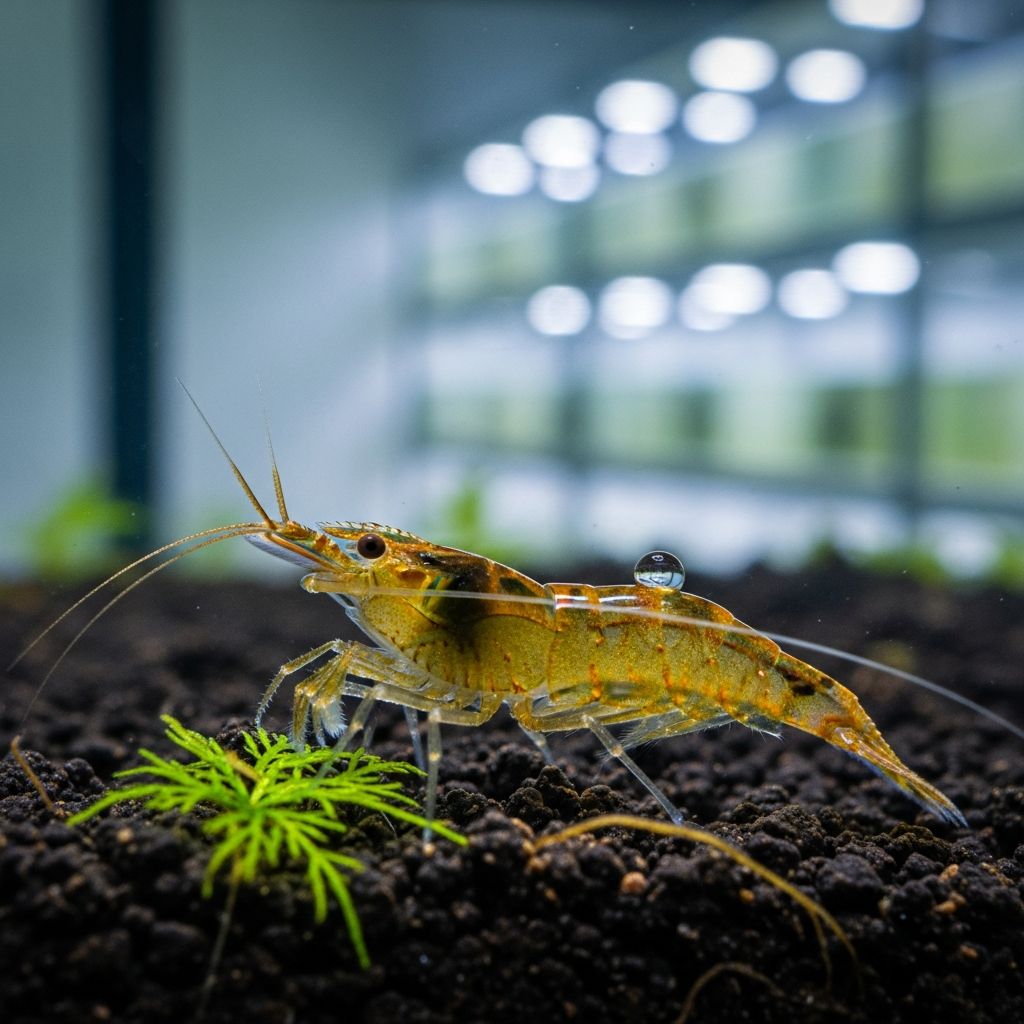
Shrimp are among the most widely consumed animals on Earth, yet their welfare has received remarkably little public attention. At the same time, scientific and economic evidence suggests that how we farm shrimp may be causing immense amounts of preventable suffering. This article explores what happens in shrimp aquaculture, why sentience matters, and how targeted reforms could help.
Why Shrimp Deserve A Closer Look
When people think about farmed animals, cows, chickens, and pigs usually come to mind. Shrimp often remain invisible, even though they are farmed in staggering numbers. Research from Rethink Priorities estimates that around 230 billion shrimp are alive on farms at any given time, more than any other farmed vertebrate or invertebrate species globally. This scale alone makes shrimp welfare an issue worth examining.
- Sheer numbers: Shrimp are farmed at several times the number of all land farm animals combined.
- High mortality: Some analyses suggest that roughly half of farmed shrimp die before slaughter due to disease and poor conditions.
- Low visibility: Shrimp are small, voiceless, and typically processed far from where consumers live, making their suffering easy to ignore.
Because many ethical frameworks give weight to the amount of suffering across all individuals, large populations of relatively neglected animals become especially important to consider.
Do Shrimp Feel Pain? The Question Of Sentience
Debate about crustacean sentience has intensified as new evidence accumulates. Scientists examining decapod crustaceans (a group including shrimp, crabs, and lobsters) have studied their behavior, neural systems, and responses to noxious stimuli. In 2021, an independent review commissioned by the UK government concluded that many decapods satisfy criteria for sentience and recommended they be recognized in animal welfare legislation.
Indicators that support the possibility of shrimp sentience include:
- Complex nervous systems: Shrimp possess centralized nervous structures capable of processing sensory information in sophisticated ways.
- Non-reflexive responses: In some crustaceans, reactions to harmful stimuli can be modified by learning and context, which is more consistent with pain than simple reflexes.
- Motivated trade-offs: Animals sometimes tolerate one harm to avoid a greater one, suggesting an evaluation process rather than automatic responses.
While there is still scientific uncertainty, many researchers and policy bodies now treat decapod welfare as a precautionary concern. If shrimp are sentient, even to a limited degree, the combination of huge numbers and harsh conditions implies a massive welfare problem.
How Modern Shrimp Farming Works
Shrimp aquaculture has expanded rapidly over recent decades, especially in countries such as India, Vietnam, Thailand, Ecuador, and Indonesia. Production systems vary in intensity, but many follow a similar pattern.
| Farming Stage | Typical Practices | Key Welfare Risks |
|---|---|---|
| Breeding & Hatcheries | Broodstock kept in tanks; larvae raised in high-density systems. | Eyestalk ablation, handling stress, poor water quality. |
| Grow-out Ponds | Juveniles stocked in ponds or raceways, from low- to high-intensity systems. | Overcrowding, disease, low oxygen, pollutants, lack of enrichment. |
| Transport | Moved between facilities or to processing plants. | Temperature shock, rough handling, suffocation risk. |
| Harvest & Slaughter | Netting or draining ponds; chilling, asphyxiation, or crushing in ice. | Crushing injuries, prolonged distress before death. |
The intensity of production strongly influences welfare. Extensive ponds may provide somewhat more natural conditions but often lack reliable disease control, while super-intensive systems can severely constrain movement and natural behavior.
Major Welfare Challenges In Shrimp Aquaculture
1. Disease, Mortality, And Water Quality
Disease is consistently identified as one of the biggest challenges in shrimp farming. Viral outbreaks such as white spot disease can wipe out entire ponds, leading to enormous economic losses and mass mortality events. Poor water quality is often a root cause:
- Low dissolved oxygen from high stocking densities or algal blooms can suffocate shrimp.
- Accumulated waste and sludge at the bottom of ponds create toxic conditions and promote pathogens.
- Chemical pollutants from surrounding agriculture or inappropriate disinfectant use can damage shrimp immune systems.
Beyond direct mortality, chronic sub-lethal conditions can cause ongoing stress and poor health, likely leading to long-term negative experiences for shrimp.
2. Confinement, Crowding, And Barren Environments
As producers seek higher yields, stocking densities in shrimp ponds have increased. High densities can limit movement, increase aggression or injury risk, and amplify disease transmission.
Many ponds are also largely barren, lacking substrate or structures that allow for natural hiding or foraging behavior. Research applying the “Five Domains” welfare model to shrimp notes that lack of environmental complexity can restrict behavior and may negatively affect mental states.
3. Painful Husbandry: Eyestalk Ablation
One controversial practice in commercial hatcheries is eyestalk ablation, the removal or destruction of part or all of a female shrimp’s eyestalk to induce maturation and increase egg production. While this can improve short-term reproductive output, it raises major welfare concerns:
- The procedure likely causes acute pain and stress.
- It can compromise immune function, making shrimp more susceptible to disease.
- It permanently alters behavior and sensory abilities.
Some producers and researchers are exploring alternatives, such as selective breeding and improved environmental management, but the practice remains widespread.
4. Harvest, Transport, And Slaughter Methods
The final hours of a shrimp’s life often involve intense handling and environmental disruption. Common practices include:
- Netting or draining ponds, which can crush shrimp under their own body weight or expose them to hypoxia.
- Transport in crowded containers with fluctuating temperatures and oxygen levels.
- Slaughter by asphyxiation or immersion in ice, where animals may remain conscious for prolonged periods.
Organizations such as the Shrimp Welfare Project are promoting electrical stunning as a more humane alternative, aiming to render shrimp unconscious rapidly before slaughter.
Why Shrimp Welfare Matters Beyond Ethics
Improving shrimp welfare is not only a moral issue; it intersects with sustainability, food safety, and human livelihoods.
- Health and productivity: Stressed or diseased shrimp grow more slowly, suffer higher mortality, and produce lower yields. Better welfare can enhance productivity and reduce losses.
- Food safety: Disease outbreaks and poor hygiene can increase the risk of contaminated seafood entering the supply chain.
- Environmental impacts: Mismanaged farms can pollute waterways, damage mangrove ecosystems, and contribute to biodiversity loss. Higher-welfare systems that prioritize water quality and responsible stocking densities can reduce these harms.
- Labor and community wellbeing: Reports have linked some parts of the shrimp supply chain to hazardous working conditions and human rights violations, especially in processing facilities and associated fisheries.
As consumer awareness grows, retailers and certification bodies are beginning to see shrimp welfare as part of a broader shift toward sustainable and ethical seafood.
Emerging Solutions To Improve Shrimp Lives
Because shrimp welfare has been neglected for so long, relatively modest interventions can have outsized impact. A range of strategies is now being tested and scaled.
Higher-Welfare Slaughter Methods
One of the most promising reforms is the adoption of electrical stunning before slaughter. Organizations working with producers and retailers report that commitments to install stunning systems could affect billions of shrimp annually.
Potential benefits include:
- Rapid loss of consciousness, reducing the duration of pain during slaughter.
- More consistent product quality from reduced stress and damage.
- A clear welfare standard that can be monitored and certified.
Improving Water Quality And Pond Management
Pilot programs aimed at better pond management are targeting the long portion of the shrimp lifecycle spent in grow-out systems. Interventions include:
- Sludge removal from pond bottoms to reduce toxic byproducts and disease pressure.
- Lower stocking densities to improve oxygen availability and reduce stress.
- Regular water testing to maintain stable temperature, salinity, and pH ranges suited to shrimp health.
These changes can simultaneously improve welfare, reduce mortality, and lower the need for antibiotics or chemical treatments.
Measuring What Matters: Shrimp Welfare Indices
One barrier to progress is the lack of commonly accepted metrics to assess shrimp welfare. In response, researchers and advocacy groups have developed tools such as a Shrimp Welfare Index that combines indicators across nutrition, environment, health, and behavior.
Standardized metrics allow:
- Producers to benchmark and improve their practices.
- Retailers and certifiers to set and enforce minimum welfare standards.
- Researchers to evaluate which interventions yield the greatest welfare gains per dollar invested.
Policy, Certification, And Market Pressure
Legislative reform for invertebrate welfare is at an early stage, but some jurisdictions are beginning to explicitly include decapods in animal protection frameworks. At the same time, voluntary certification schemes and procurement policies can move faster than law.
- Retailers can require suppliers to phase out the most harmful practices, such as non-stunned slaughter.
- Certifications can reward farms that meet higher-welfare criteria with access to premium markets.
- Public campaigns can inform consumers and increase demand for shrimp produced under better conditions.
How Individuals And Institutions Can Help
Because shrimp welfare is still emerging as a mainstream issue, motivated individuals and organizations have opportunities to shape the field.
For Consumers
- Reduce overall consumption of shrimp, especially from unknown or unregulated sources.
- When buying seafood, look for credible sustainability or welfare certifications, and inquire specifically about crustacean welfare policies.
- Support companies that commit publicly to better standards for decapod crustaceans.
For Researchers And Advocates
- Investigate shrimp cognition, pain perception, and behavior to refine our understanding of their needs.
- Evaluate the cost-effectiveness of different interventions, from breeding programs to slaughter reforms.
- Engage with policymakers, industry groups, and certification bodies to incorporate shrimp into broader animal welfare agendas.
For Funders And Philanthropists
- Support organizations working specifically on shrimp and other neglected invertebrates, where marginal funding may reach very large numbers of animals.
- Encourage rigorous monitoring and transparent reporting so that the most effective approaches can be scaled.
Frequently Asked Questions (FAQs)
Q1: Are shrimp legally protected as sentient animals?
Legal recognition of shrimp and other decapods varies by country. Some jurisdictions, influenced by recent scientific reviews, have begun to include decapods in animal welfare legislation, while many others still do not. Where laws are absent, welfare standards depend largely on voluntary industry initiatives.
Q2: Isn’t it impossible to farm shrimp humanely at scale?
Farming any animal at large scale presents welfare challenges, but there is a spectrum of outcomes. Evidence suggests that interventions such as improved water quality, lower stocking densities, better biosecurity, and pre-slaughter stunning can substantially reduce suffering relative to current norms, even if they do not eliminate all harms.
Q3: How bad are shrimp farms compared to wild capture?
Wild-caught shrimp face different welfare issues, including bycatch, long trawling times, decompression, and crushing in nets. Aquaculture concentrates harms in a smaller physical space but allows for more direct control over conditions. From a welfare perspective, both systems warrant scrutiny, and more research is needed to compare them rigorously.
Q4: What is the most impactful single reform for shrimp welfare today?
Analysts focused on cost-effective interventions often prioritize reforms that affect large numbers of animals at critical moments, such as adopting electrical stunning at slaughter, alongside improvements in water quality that reduce disease and chronic suffering during the grow-out period.
Q5: Why focus on shrimp when many mammals and birds also suffer?
Helping shrimp does not preclude helping other animals. Because shrimp are so numerous and historically neglected, relatively small investments can influence the lives of vast numbers of individuals. Many organizations working on shrimp also advocate for higher standards across the entire animal agriculture system.
References
- Welfare considerations for farmed shrimp — Rethink Priorities. 2023-06-01. https://rethinkpriorities.org/research-area/welfare-considerations-for-farmed-shrimp/
- Shrimp Welfare and Sustainability — Shrimp Welfare Project. 2024-01-15. https://www.shrimpwelfareproject.org/shrimp-welfare-and-sustainability
- Shrimp Welfare Project Review — Animal Charity Evaluators. 2025-01-01. https://animalcharityevaluators.org/charity-review/shrimp-welfare-project/
- Three Numbers That Make The Case For Shrimp Welfare — Faunalytics. 2023-03-28. https://faunalytics.org/three-numbers-that-make-the-case-for-shrimp-welfare/
- Uncovering neglected issues: Advancing shrimp welfare — Rethink Priorities. 2022-11-10. https://rethinkpriorities.org/impact-area/uncovering-neglected-issues-advancing-shrimp-welfare/

- Integrated M.A. in Applied Linguistics, University of Hyderabad
- 5+ years in editorial, instructional, SEO, and research-based writing
Sneha is a relationships and lifestyle writer with a strong foundation in applied linguistics and certified training in relationship coaching. She brings over five years of writing experience to theskillvault, crafting thoughtful, research-driven content that empowers readers to build healthier relationships, boost emotional well-being, and embrace holistic living. Her writing and insights reflect the belief that beauty, happiness, and wellness…