
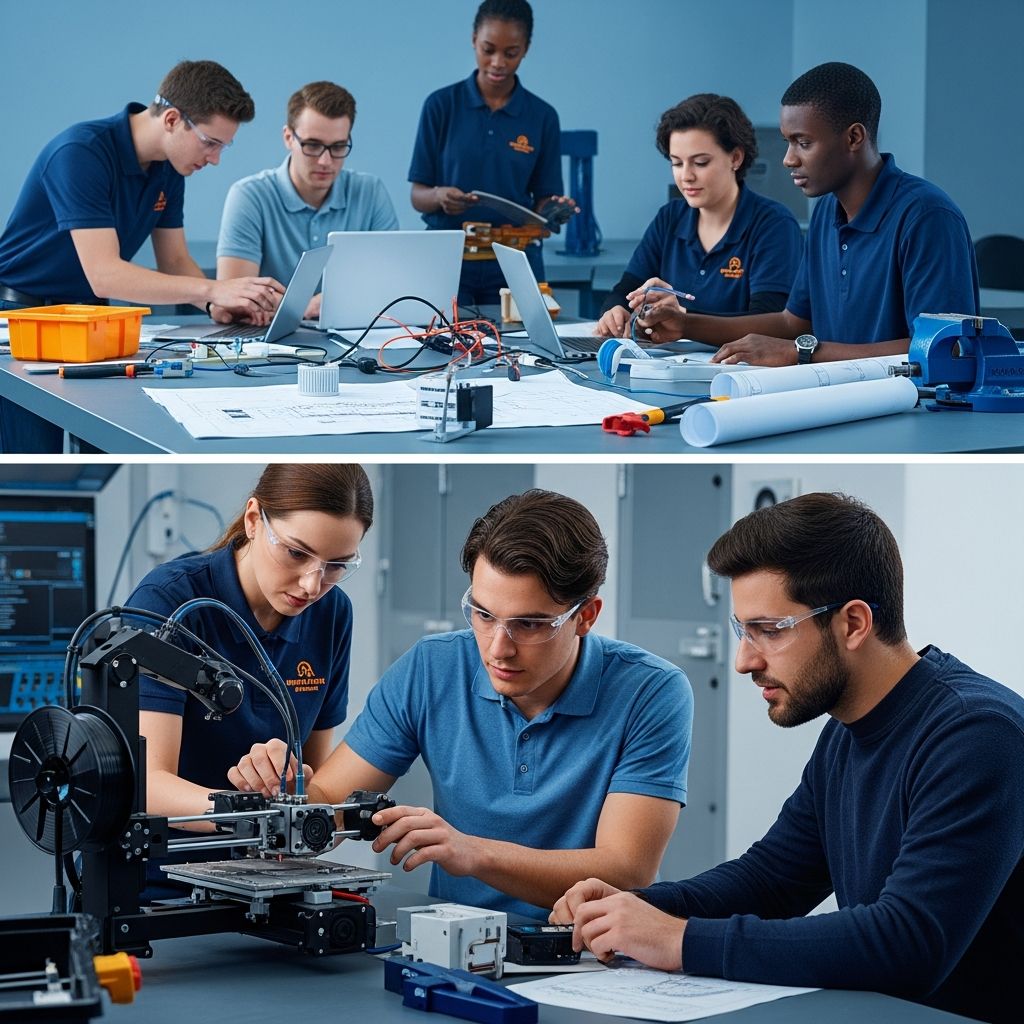
Understanding Skills-Based Career Education
The conventional educational model does not resonate with every student. While quality educators work diligently to accommodate diverse learning styles and student needs, a one-size-fits-all approach often leaves some learners feeling disconnected from their studies. For individuals who thrive through practical application rather than theoretical instruction, skills-based career programs provide a compelling alternative that prioritizes real-world competency development over traditional academics.
Skills training institutions are educational centers designed to equip students with expertise in specific trades and occupations, enabling them to transition smoothly into professional employment. These programs emphasize applied learning, allowing students to develop proficiencies that employers actively seek. Unlike conventional high schools that prioritize broad academic knowledge, these institutions concentrate on job-specific capabilities that directly translate to workplace readiness.
Core Program Areas and Specializations
Skills training institutions offer an extensive array of specialization options spanning multiple industries and sectors. Students can pursue certification and credentials in numerous fields depending on their interests and career aspirations. The diversity of available programs reflects the wide range of skilled positions that remain in high demand across the economy.
Common program concentrations include:
- Building trades such as carpentry, masonry, and general construction
- Mechanical fields including automotive repair and equipment maintenance
- Healthcare professions such as nursing, dental assisting, and medical billing
- Educational support roles and early childhood development
- Agricultural production and farm management
- Personal services including cosmetology and barbering
- Technical design and architectural drafting
- Metal fabrication and welding
- Culinary preparation and food service management
- Public safety careers in law enforcement and emergency response
These programs work closely with industry professionals to ensure curriculum remains current and aligned with market demands. Students gain exposure to cutting-edge techniques and technologies used in their chosen field, preparing them to contribute productively from their first day of employment.
The Distinction Between Practical and Traditional Education
The most significant differentiator between skills training programs and traditional secondary education lies in instructional methodology. While conventional schools emphasize theoretical knowledge and academic subjects, skills-based institutions prioritize experiential learning through laboratory work, simulations, and supervised practice in actual work environments.
Students in these programs engage in hands-on activities within properly equipped facilities that mirror professional settings. A student pursuing automotive technology, for example, works with diagnostic equipment, engine systems, hydraulic mechanisms, and electrical components in a functioning shop environment rather than studying these concepts from textbooks. This immersive approach builds genuine competence and confidence that students carry directly into their careers.
Additionally, core academic subjects are frequently integrated into the technical curriculum rather than taught as separate subjects. Mathematics instruction focuses on calculations relevant to specific trades, while communication skills emphasize clear documentation and client interaction pertinent to the chosen field. This integration increases relevance and retention, as students immediately understand the practical application of academic concepts.
Program Duration and Credential Options
Skills training institutions offer considerable flexibility in program length and credential types to accommodate diverse student circumstances and career goals. Most programs are structured to enable rapid entry into the workforce, recognizing that many students are eager to begin earning and establishing their careers.
Typical program structures include:
- Short-term certificate programs lasting several months, focused on specific competencies within a broader field
- Diploma programs typically spanning 12-24 months, providing comprehensive training in a trade or technical area
- Associate degree programs lasting two years, combining hands-on technical training with general education coursework
- Bachelor’s degree programs offered by some institutions, particularly in applied sciences and technical management
Many programs are intentionally compressed to move students through training efficiently, often permitting completion within two years or less. However, advanced technical colleges also provide extended degree programs in specialized fields such as nursing and engineering that require broader theoretical foundations alongside practical skills.
Admission Considerations and Selection Process
Access to skills training programs varies by institution and geographic location. Many school districts maintain designated training centers that serve students from their constituent schools, though specific eligibility requirements differ. Prospective students should consult their school’s academic advisor to understand available options and application procedures specific to their region.
Admission requirements are generally more flexible than traditional higher education institutions. Many programs welcome students regardless of previous academic performance, recognizing that strong conventional grades do not necessarily predict success in practical skill development. This accessibility makes these programs particularly valuable for students whose academic transcripts do not reflect their true abilities or interests.
Some specialized programs may have limited enrollment due to facility capacity or industry demand, making selection competitive. However, this selectivity typically reflects space availability rather than academic prerequisites. Students should not hesitate to explore programs even if their academic record appears modest, as admissions departments evaluate applicants holistically with consideration for motivation and aptitude in the chosen field.
Curriculum Structure and Academic Components
The organization of coursework within skills training institutions follows varied models depending on institutional design and accreditation requirements. Students may experience different combinations of academic and technical instruction depending on whether the school delivers all curriculum components internally or partners with traditional high schools for core academic courses.
Some institutions maintain comprehensive in-house curricula where all instruction, including mathematics, English, science, and humanities, occurs within the vocational environment. This approach offers significant advantages: core academic courses are customized to emphasize concepts directly applicable to the chosen trade. A mathematics course for construction students, for instance, emphasizes geometry, measurement conversion, and spatial reasoning essential to building trades rather than abstract theoretical mathematics.
Other institutions focus exclusively on technical training while students complete general education requirements through conventional high school attendance or prior coursework. This model allows intensive concentration on skill development during dedicated technical instruction periods.
Bridging Education and Employment
A fundamental strength of skills training programs is their direct connection to employment opportunities. These institutions maintain active relationships with employers, industry associations, and professional organizations to ensure training remains relevant and graduates possess marketable capabilities.
Many programs incorporate apprenticeship components or work-study arrangements where students simultaneously earn wages while completing training. This model reduces financial barriers to education while providing authentic workplace exposure. Employers benefit from access to pre-trained workers familiar with industry standards and equipment, while students gain employment references and demonstrated experience before graduation.
Career placement support is often integrated into programs, with instructors and placement specialists assisting students in identifying appropriate employment opportunities. Many institutions maintain databases of employers actively hiring graduates, facilitating efficient job matching.
Locating Appropriate Training Programs
Students interested in skills-based education have multiple avenues for discovering appropriate programs. School guidance counselors represent the primary resource, as they maintain knowledge of programs available through district partnerships and can discuss alignment between student interests and available specializations.
Many institutions conduct information sessions and facility tours enabling prospective students to evaluate facilities, meet instructors, and understand program specifics before making enrollment decisions. These visits provide invaluable insight into the learning environment and instructional approach.
Online directories and search platforms aggregate program information across regions, allowing students to explore options beyond their immediate geographic area. Some programs offer hybrid or fully online delivery, expanding access for students with geographic constraints or scheduling limitations. National accreditation bodies maintain searchable databases of approved institutions meeting established quality standards.
Program Accreditation and Quality Assurance
Accreditation represents a critical factor in evaluating program quality and legitimacy. Accredited programs meet established standards of academic rigor, instructional quality, and resource adequacy. Accreditation bodies verify that programs maintain appropriate facilities, qualified instructors, and curricula aligned with industry standards.
Prospective students should verify accreditation status through the school’s website or by contacting the institution directly. The Accrediting Commission of Career Schools and Colleges maintains a publicly searchable directory of accredited institutions and programs. Accreditation provides assurance that credentials earned are recognized by employers and that education quality meets professional standards.
Investment in Skills and Earning Potential
Skills training programs represent a cost-effective pathway to career establishment compared to traditional four-year degree programs. Shorter program duration translates to lower total tuition costs and reduced time before earning begins. Many skilled trades offer substantial earning potential, particularly for workers who establish strong reputations and develop specialized expertise.
The financial return on education investment can be significant. Skilled tradespeople often earn competitive wages exceeding bachelor’s degree holders in certain fields, without accumulating substantial student debt. Additionally, hands-on skills remain less susceptible to automation and outsourcing than many white-collar positions, offering career stability and growth potential.
Evaluating Institutional Fit
Selecting an appropriate training program requires careful consideration of multiple factors beyond curriculum content. Prospective students should assess facility quality, instructor qualifications and experience, student support services, placement rates, and graduate employment outcomes when available.
Campus visits enable evaluation of learning environments, equipment quality, and facility maintenance. Conversations with current students and recent graduates provide authentic perspectives on program quality and career preparation. Instructor credentials should demonstrate both technical expertise and teaching capability.
Consider whether the program structure aligns with personal circumstances. Some students benefit from intensive full-time programs enabling rapid credentialing, while others require flexible scheduling or part-time options. Evaluate whether the institution offers support services such as academic advising, financial aid, and career counseling that address individual needs.
Alternative Delivery Models
Modern skills training extends beyond traditional on-campus instruction. Online programs deliver theoretical content remotely while coordinating practical experience through partner facilities or employer partnerships. Hybrid models combine online coursework with in-person laboratory and hands-on training.
Apprenticeship programs integrate classroom instruction with paid employment, enabling students to earn immediate income while learning. Some employers offer proprietary training programs developing workers for specific positions within their organizations.
Community colleges increasingly offer technical and vocational programs, providing another avenue for skills training combined with general education coursework. Four-year institutions also maintain technical degree programs serving students pursuing advanced technical credentials with bachelor’s degrees.
Frequently Asked Questions
Q: What is the primary difference between vocational and technical schools?
A: Vocational schools emphasize practical skills and hands-on training for specific trades and occupations. Technical schools similarly focus on applied learning but typically include a broader academic foundation with specialized mathematics, science, and theoretical coursework, preparing students for technical fields requiring both practical and conceptual understanding.
Q: Can I earn a degree through a skills training program?
A: Yes, many institutions offer multiple credential levels including certificates, diplomas, associate degrees, and bachelor’s degrees. The type of degree depends on program length and institution offerings. Associate degrees are common two-year options combining technical training with general education, while some programs offer four-year bachelor’s degrees in applied fields.
Q: How long does skills training typically take?
A: Program duration varies considerably. Certificate programs may require only several months, diploma programs typically last 12-24 months, while associate degrees span two years and bachelor’s degrees require four years. Most programs are designed for efficient completion, with many offering credentials in two years or less.
Q: Are skills training programs only for students with poor grades?
A: No. While these programs welcome students regardless of academic performance, students with strong grades also pursue technical education based on career interests and learning preferences. These programs serve students who learn most effectively through practical application rather than traditional classroom instruction.
Q: Where can I find skills training programs?
A: Programs are available through vocational and technical schools, community colleges, four-year institutions, employer training centers, and online platforms. Contact your school’s guidance counselor for local options, or explore national directories and search platforms aggregating program information across regions.
Q: Will employers recognize credentials from vocational programs?
A: Credentials from accredited programs are widely recognized by employers. Accreditation ensures programs meet industry standards and prepare graduates with relevant skills employers seek. Many employers actively recruit from established technical programs and view graduates as well-prepared candidates.
Q: Can I pursue skills training online?
A: Yes, many institutions offer hybrid or fully online programs combining distance-based theoretical instruction with arranged practical experience. Online options provide flexibility for students with geographic constraints or scheduling limitations, though hands-on components typically require in-person participation.
References
- Vocational Technical Schools Explained: A Guide for Students and Parents — Education Corner. Accessed April 2026. https://www.educationcorner.com/vocational-technical-schools-guide/
- Vocational School: A Comprehensive Guide — American Automotive Institute. Accessed April 2026. https://auto.edu/blog/vocational-school-a-comprehensive-guide
- Vocational School: A Complete Guide — College Essay Guy. Accessed April 2026. https://www.collegeessayguy.com/blog/vocational-school-guide
- Trade Schools: Choose a Vocational School for Your Best Career — Trade Schools Network. Accessed April 2026. https://www.trade-schools.net
- Vocational Training: A Guide To Non-Degree Education — Learn How to Become. Accessed April 2026. https://www.learnhowtobecome.org/vocational-trade-schools/
- Trade School Requirements: A Complete Application Guide — Indeed Career Advice. Accessed April 2026. https://www.indeed.com/career-advice/career-development/trade-school-requirements

- Integrated M.A. in Applied Linguistics, University of Hyderabad
- 5+ years in editorial, instructional, SEO, and research-based writing
Sneha is a relationships and lifestyle writer with a strong foundation in applied linguistics and certified training in relationship coaching. She brings over five years of writing experience to theskillvault, crafting thoughtful, research-driven content that empowers readers to build healthier relationships, boost emotional well-being, and embrace holistic living. Her writing and insights reflect the belief that beauty, happiness, and wellness…