
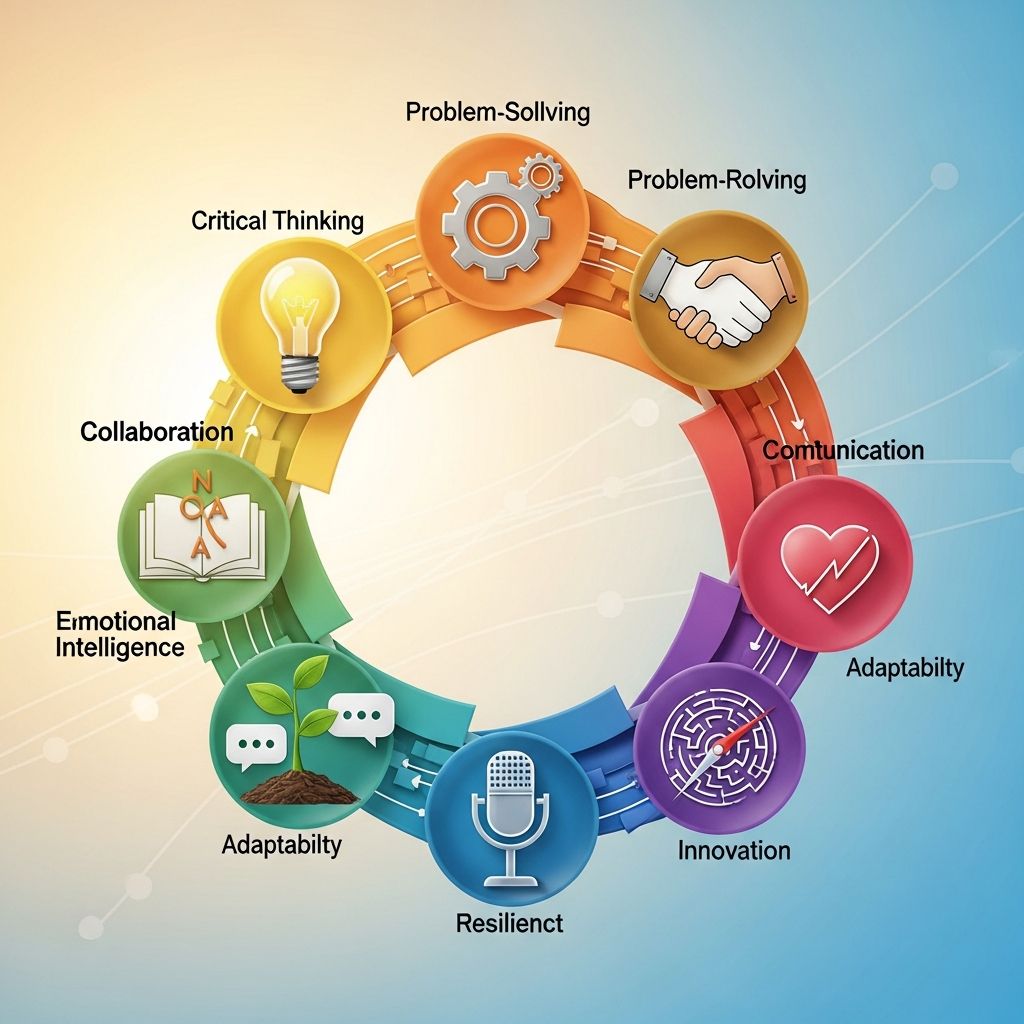
Success in today’s fast-evolving world hinges on a set of core competencies known as the Skills for Success. Developed through collaborative efforts by government and educational bodies, this model identifies nine interconnected abilities that form the bedrock for thriving in professional, educational, and personal spheres. These skills are not isolated; they overlap, reinforce each other, and adapt to diverse contexts, making them universally applicable.
Why These Skills Matter in Modern Life
The Skills for Success framework replaces older models by emphasizing both foundational literacies and emerging socio-emotional strengths. Core literacy skills like reading, writing, and numeracy provide the base, while expanded areas such as digital proficiency and creativity address contemporary demands. Employers across sectors prioritize these for upskilling, as they enable workers to navigate change, innovate, and collaborate effectively.
In a landscape marked by automation, remote work, and rapid technological shifts, possessing these skills boosts employability, resilience, and productivity. They support everything from daily tasks like managing budgets to complex challenges like team projects under tight deadlines.
Foundational Literacy Skills: Building Blocks of Competence
At the heart of the model are three essential literacies that underpin all learning and interaction.
Reading Proficiency
Reading involves locating, comprehending, and applying information from text, symbols, and visuals. This skill is crucial for interpreting emails, reports, forms, instructions, and news articles. For instance, professionals use it to analyze technical drawings or compliance documents, ensuring accuracy in high-stakes environments.
- Scan documents quickly to extract key data.
- Interpret graphs and charts for informed decisions.
- Comprehend complex narratives in policy briefs.
Writing Effectiveness
Writing entails conveying ideas clearly through text, symbols, and images. Everyday applications include drafting emails, completing applications, reports, and social media updates. Strong writers articulate thoughts precisely, fostering better relationships and project outcomes.
- Craft persuasive proposals to secure funding.
- Document procedures for team handovers.
- Produce engaging content for digital platforms.
Numeracy Mastery
Numeracy is the capacity to handle mathematical information via numbers, symbols, words, and graphics. It powers budgeting, data analysis, calculations, and estimations. Workers apply it to forecast expenses, model scenarios, or evaluate performance metrics.
| Application | Example | Benefit |
|---|---|---|
| Budget Management | Tracking monthly expenditures | Financial stability |
| Data Analysis | Interpreting sales charts | Strategic insights |
| Estimation | Predicting project timelines | Efficient planning |
Digital and Problem-Solving Competencies: Tools for the Digital Age
Digital Literacy
Digital skills enable finding, managing, creating, and sharing content using technology. From spreadsheets and secure online transactions to social media navigation, this proficiency is indispensable in digitized workplaces.
- Utilize cloud tools for remote collaboration.
- Protect data with cybersecurity best practices.
- Develop multimedia presentations for stakeholders.
Problem Solving
Problem solving means identifying issues, analyzing options, proposing fixes, and deciding on actions while monitoring results. It aids in hiring, troubleshooting tech failures, or selecting strategies. This skill turns obstacles into opportunities through logical evaluation.
Effective problem solvers break down complexities: define the problem, gather data, brainstorm solutions, implement, and review. In teams, it drives innovation by anticipating hurdles.
Socio-Emotional Skills: Connecting and Innovating
These skills enhance interpersonal dynamics and creative capacities, vital for collaborative success.
Communication Excellence
Communication is receiving, understanding, sharing ideas via speaking, listening, and interaction. It underpins customer service, instruction-following, and idea exchange. Active listeners and articulate speakers build trust and clarity.
- Conduct productive meetings with clear agendas.
- Provide constructive feedback to peers.
- Negotiate terms with empathy and precision.
Collaboration Dynamics
Collaboration involves contributing to collective goals by supporting others. In projects, it means offering aid, sharing insights, and aligning efforts. Strong collaborators enhance team morale and efficiency.
Key elements include trust-building, role clarity, and conflict resolution, leading to superior outcomes in diverse groups.
Adaptability Resilience
Adaptability is adjusting goals and behaviors amid change through planning, focus, persistence, and setback recovery. Examples include revising plans for deadlines or mastering new tools via feedback.
- Pivot strategies during market shifts.
- Embrace remote work transitions seamlessly.
- Persist through skill-building challenges.
Creativity and Innovation
Creativity and innovation mean generating novel ideas that challenge norms. It fuels product development, process improvements, and service enhancements. Innovators spot gaps and prototype solutions.
Cultivate it by questioning assumptions, experimenting, and encouraging diverse inputs. Organizations thrive when employees innovate routinely.
How the Skills Interconnect: A Holistic Model
The Skills for Success form a circular, interdependent framework where no skill dominates—all contribute equally. Numeracy bolsters problem solving; digital skills amplify communication; adaptability enhances creativity. This synergy allows adaptation across contexts, from trades to tech.
To visualize:
| Skill Pair | Interaction Example |
|---|---|
| Communication + Collaboration | Team brainstorming sessions |
| Digital + Numeracy | Data visualization tools |
| Adaptability + Problem Solving | Crisis response planning |
Developing Your Skills for Success
Building these competencies requires intentional practice. Start with self-assessment: rate proficiency in each area and identify gaps. Pursue targeted training, such as online courses for digital skills or workshops for communication.
- Daily Habits: Read diverse materials, solve puzzles, journal digitally.
- Workplace Application: Volunteer for cross-functional projects; seek feedback regularly.
- Resources: Government programs offer free assessments and training.
Track progress quantitatively: before/after metrics on tasks like report accuracy or project completion rates. Employers value demonstrated growth, so highlight it in resumes with specifics.
Real-World Impact: Case Studies and Statistics
Organizations implementing Skills for Success training report higher retention and productivity. For example, adaptability training helps workers handle AI integrations, while creativity boosts innovation rates.
Statistics underscore demand: 80% of Canadian employers seek stronger problem-solving and digital skills. Upskilling in these areas correlates with 20-30% wage premiums.
Frequently Asked Questions (FAQs)
How do I assess my Skills for Success level?
Use free government tools to benchmark reading, numeracy, and other skills against workplace standards.
Are these skills relevant for all industries?
Yes, from healthcare to manufacturing, they adapt universally, enhancing any role.
Can these skills be taught to beginners?
Absolutely—scaffolded training builds from basics, with inclusive approaches for diverse learners.
What role does technology play in skill development?
Digital platforms provide interactive simulations for practice, accelerating mastery.
How do employers use this model for hiring?
They prioritize candidates showing these skills via behavioral interviews and portfolios.
References
- Skills For Success — Workplace Education Manitoba. 2023. https://wem.mb.ca/skills-for-success/
- Skills for Success Implementation Guidance Report — SRDC. 2022-11. https://www.srdc.org/wp-content/uploads/2022/11/skills-for-success-implementation-guidance-final-report.pdf
- Skills for Success — Literacy Now Burnaby. 2023. https://literacynowburnaby.ca/resources/skills-for-success/
- What Are Workplace Skills? 15 Examples for Success — CloudAssess. 2023. https://cloudassess.com/blog/workplace-skills/
- Skill development examples: 15 essential skills and how to build them — Axonify. 2023. https://axonify.com/blog/skill-development-examples/
- Learn about the Skills — Government of Canada. 2024-01-18. https://www.canada.ca/en/services/jobs/training/initiatives/skills-success/understanding-individuals.html
- Skills for Success — Government of Canada. 2024-01-18. https://www.canada.ca/en/services/jobs/training/initiatives/skills-success.html

Medha Deb is an editor with a master's degree in Applied Linguistics from the University of Hyderabad. She believes that her qualification has helped her develop a deep understanding of language and its application in various contexts. Medha specializes in the areas of beauty, health, sports, and wellness and is committed to ensuring that the content on the website is…