
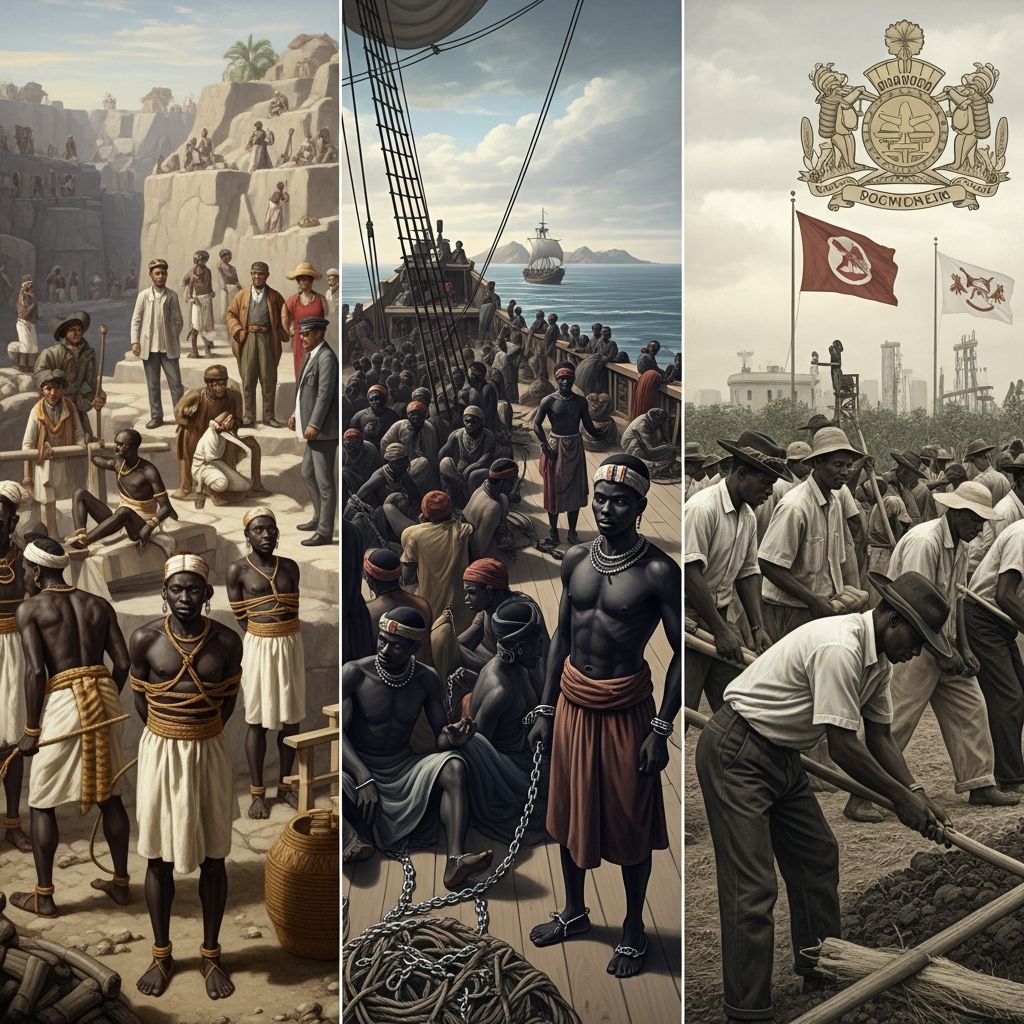
Slavery in Africa predates European contact by centuries, manifesting in diverse forms shaped by local economies, social structures, and cultural norms. Unlike the rigid chattel systems of the Americas, many pre-colonial African practices emphasized integration, kinship, and temporary servitude rather than lifelong, inheritable bondage.
Indigenous Systems of Servitude in Pre-Colonial Africa
Before extensive external influences, African societies employed bondage primarily to meet labor demands in agriculture, households, and warfare. In West and Central Africa, elites controlled production through labor arrangements where individuals worked land rather than being owned outright as property. Land was often communal, making human labor the key asset.
Debt bondage was common, where individuals pledged service to settle obligations. Criminals convicted of offenses might enter servitude as punishment, while war captives filled roles in victorious communities. Women predominated among those in bondage due to their contributions to farming, textile production, and reproduction.
- Debt Servitude: Temporary arrangement to repay loans, often allowing eventual freedom.
- Punitive Bondage: Imposed on thieves or offenders, integrated into kin groups over time.
- War Captives: Absorbed into societies, sometimes rising to influential positions.
Hereditary slavery was uncommon; children of bound individuals frequently gained freedom and societal membership. This fluidity distinguished African systems from later chattel models.
The Role of Gender and Family in Traditional Bondage
Female captives were highly valued for their dual roles in labor and family expansion. In sub-Saharan regions, they handled field work, weaving, and child-rearing, bolstering household economies. Male captives often served as warriors or laborers but faced higher risks of resale.
Integration into owner’s families was typical, fostering social ties. Over generations, many achieved emancipation through manumission, marriage, or service. This contrasts sharply with the dehumanizing permanence of transatlantic slavery.
Islamic Influences and the Trans-Saharan Trade
Northward trade routes introduced elements of Islamic law, which permitted bondage but mandated humane treatment and paths to freedom. In regions like Sudan and northern Nigeria, slaves held limited rights, including manumission after conversion to Islam. However, the trans-Saharan trade escalated scale, treating people as commodities for North African and Middle Eastern markets.
Caravans transported captives across deserts, demanding endurance. Destinations included harems, armies, and plantations. Unlike domestic systems, this commerce emphasized profitability, with inheritable status emerging in some cases.
| Aspect | Domestic African Slavery | Trans-Saharan Trade |
|---|---|---|
| Nature | Integrative, kinship-based | Commercial, chattel-like |
| Gender Focus | Primarily women for labor/reproduction | Both genders, military uses for men |
| Freedom Prospects | High, via integration/manumission | Lower, religious paths possible |
East African Dynamics and the Indian Ocean Network
In Swahili coastal societies like Zanzibar, Islamic frameworks governed bondage amid clove and ivory booms. Slaves enjoyed theoretical legal protections but faced exploitation in booming economies. The Indian Ocean trade exported laborers to Arabia, Persia, and India, blending local customs with external demands.
Captives endured sea voyages, inspected harshly for market value. Plantations demanded grueling work, foreshadowing Atlantic intensities. Yet, some attained domestic roles or military status, retaining shreds of agency absent in New World systems.
Disruption by the Transatlantic Slave Trade
From the 15th century, European demand for American plantations revolutionized African bondage. Portuguese forts like El Mina became holding pens for millions funneled through raids deeper inland. This shifted focus to males for field labor, inverting prior gender balances.
The Middle Passage epitomized horror: captives stripped, prodded, and assaulted en route. Mortality soared from disease, suicide, and abuse. Trade volumes dwarfed prior networks, depopulating regions and fueling wars for captives.
- Scale Shift: Millions exported vs. localized pre-trade numbers.
- Racial Ideology: Europeans fused bondage with notions of inferiority.
- Economic Impact: African societies militarized, prioritizing slave-raiding over development.
Social and Economic Transformations
Atlantic commerce intensified internal exploitation, with kings and merchants amassing wealth from exports. Coastal forts symbolized collaboration, as African elites traded for guns and goods. This eroded traditional fluidity, embedding permanent hierarchies.
Demographic losses—estimated at 12 million shipped, plus millions dead in capture—stunted growth. Cultural erosion followed, as communities fragmented.
Comparative Analysis of Bondage Forms
Pre-colonial systems prioritized social utility over commodification. Transatlantic trade industrialized servitude, emphasizing racial permanence and mass transport. Islamic trades bridged these, introducing scale but retaining some rights.
| System | Key Features | Scale | Legacy |
|---|---|---|---|
| Domestic | Integrative, female-focused | Local | Social absorption |
| Trans-Saharan | Commercial, Islamic rules | Regional | Northward migration |
| Transatlantic | Chattel, racialized | Global | Demographic devastation |
Paths to Freedom and Resistance
Even in harsher systems, resistance thrived. Runaways formed maroon communities; revolts challenged captors. Manumission persisted via purchase, service, or religion. Post-abolition, covert bondage lingered, adapting to modern guises.
Lasting Legacies in Modern Africa
Bondage’s scars persist in inequality, ethnic tensions, and migrations. Contemporary forced labor echoes historical patterns, underscoring unresolved histories. Understanding these forms informs global anti-trafficking efforts.
Frequently Asked Questions
Was slavery in Africa the same as in the Americas?
No, African systems were often domestic and integrative, while American chattel slavery was hereditary and racially based.
Did Africans participate in the slave trade?
Yes, local elites supplied captives to Europeans, driven by trade incentives, though under duress of demand.
Could slaves gain freedom in pre-colonial Africa?
Frequently, through kinship adoption, manumission, or service completion.
How did gender roles differ in African slavery?
Women were preferred for labor and reproduction in domestic contexts.
What was the Middle Passage?
The brutal Atlantic crossing where captives endured overcrowding, abuse, and high mortality.
References
- Slavery in Africa — Digital History, University of Houston. Accessed 2026. https://www.digitalhistory.uh.edu/disp_textbook.cfm?smtid=2&psid=443
- Slavery before the Trans-Atlantic Trade — Lowcountry Digital History Initiative, College of Charleston. Accessed 2026. https://ldhi.library.cofc.edu/exhibits/show/africanpassageslowcountryadapt/introductionatlanticworld/slaverybeforetrade
- Origins – The Transatlantic Slave Trade — Equal Justice Initiative. Accessed 2026. https://eji.org/report/transatlantic-slave-trade/origins/
- Comparing African Slavery and Trans-Atlantic Trade — Gale Review. 2025-04-08. https://review.gale.com/2025/04/08/african-slavery-vs-trans-atlantic-slave-trade/
- Africa Enslaved — University of Texas at Austin, Liberal Arts. Accessed 2026. https://liberalarts.utexas.edu/hemispheres/educator-resources/6-12/africa-enslaved.html
- Slavery in Africa — Oxford Research Encyclopedia of African History. Accessed 2026. https://oxfordre.com/africanhistory/display/10.1093/acrefore/9780190277734.001.0001/acrefore-9780190277734-e-62

- Integrated M.A. in Applied Linguistics, University of Hyderabad
- 5+ years in editorial, instructional, SEO, and research-based writing
Sneha is a relationships and lifestyle writer with a strong foundation in applied linguistics and certified training in relationship coaching. She brings over five years of writing experience to theskillvault, crafting thoughtful, research-driven content that empowers readers to build healthier relationships, boost emotional well-being, and embrace holistic living. Her writing and insights reflect the belief that beauty, happiness, and wellness…