
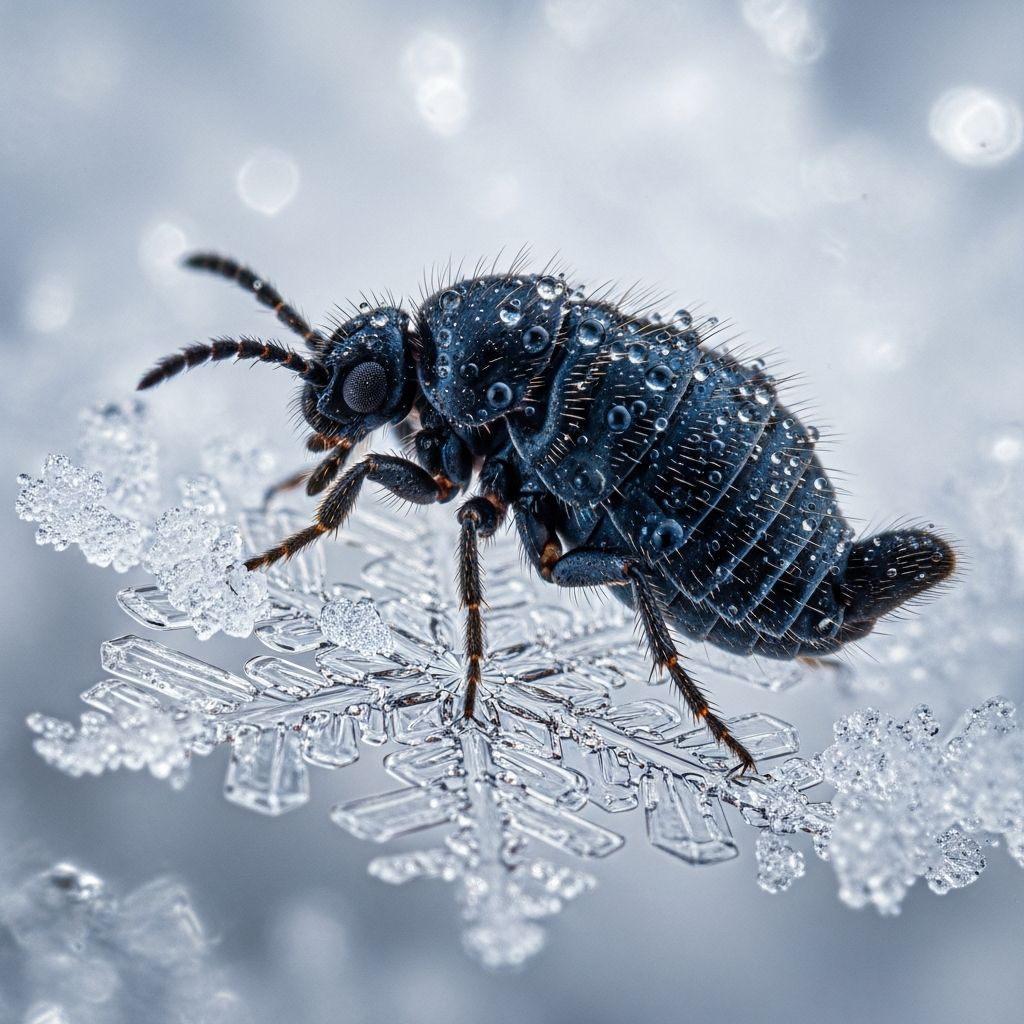
Introduction to Snow Fleas
When winter arrives and snow blankets the landscape, few people notice the tiny dark specks scattered across the white surface. These miniature creatures, known as snow fleas or springtails, represent one of nature’s most remarkable survival stories. Despite their misleading common name, snow fleas are not actually fleas at all, nor are they classified as true insects. Instead, they belong to the Collembola taxonomic class, a diverse group of hexapods that have inhabited Earth for millions of years. Understanding these fascinating organisms provides insight into winter ecology and the complex interconnections within natural ecosystems.
Snow fleas have captured human attention for centuries, particularly during winter months when they become visible against the stark white backdrop of snow. Their sudden appearance on warm winter days creates what observers describe as a miniature circus, with thousands of creatures performing aerial acrobatics. This phenomenon, combined with their curious behavior and unique adaptations, makes snow fleas worthy subjects of study for both casual naturalists and scientific researchers.
Physical Characteristics and Appearance
Identifying snow fleas requires close examination due to their diminutive size. These creatures measure approximately 1/16 of an inch or between 1.5 to 3 millimeters in length, making them barely visible to the naked eye. Their small stature means that even when thousands gather together, they often appear as nothing more than a light dusting of dirt or pepper on snow’s surface.
In terms of physical structure, snow fleas possess distinctive characteristics that distinguish them within the arthropod world. Their bodies display a dark blue-black coloration that provides excellent contrast against white snow. Each specimen features short antennae and two eye clusters, with each cluster containing up to 16 individual eyes. These creatures are wingless hexapods, meaning they have six legs arranged in the typical insect pattern. Their body structure appears elongated and oval-shaped, optimizing their form for movement through soil and organic debris.
One of the most distinctive features of snow fleas is their specialized jumping apparatus called a furcula. This remarkable tail-like appendage functions like a compressed spring, folding underneath the body when at rest. When the snow flea needs to propel itself, the furcula releases with tremendous force, launching the creature several inches through the air—a distance many times its body length. This explosive jumping mechanism gives springtails their alternative common name and explains why they’re often compared to fleas, despite their lack of actual relationship to parasitic fleas.
The Mystery Behind Their Name
The nomenclature surrounding snow fleas reflects both their appearance and behavior. The term “snow flea” emerged from two primary characteristics: their visual similarity to actual fleas and their pronounced jumping ability. However, this naming convention creates significant misconceptions about these harmless creatures.
While true fleas rely on enlarged hind legs to achieve their impressive jumping distances, snow fleas employ a completely different biomechanical system through their furcula. Despite this fundamental difference, both creatures share the capacity for remarkable vertical and horizontal displacement relative to their body size. The comparison proved intuitive enough that the “flea” name persisted throughout history.
The “snow” portion of their name derives from the most visible time of their annual cycle. Although snow fleas remain active throughout the year, they become conspicuously apparent during winter months, particularly on warmer days when snow begins to melt. Their dark coloration stands in sharp relief against white snow, making them suddenly noticeable to human observers who might walk past the same creatures undetected in summer soil.
The scientific designation for the most common snow flea species is Hypogastrura nivicola, though another related species, Hypogastrura harveyi, also exhibits similar winter surface behavior. These Latin names reflect early scientific attempts to categorize and understand these organisms.
Remarkable Cold-Weather Survival Mechanisms
Perhaps the most fascinating aspect of snow flea biology involves their extraordinary ability to remain active during conditions that would prove lethal to most arthropods. While many insects enter dormant states during winter, snow fleas continue feeding and reproducing in subzero temperatures. This adaptation represents millions of years of evolutionary refinement.
The key to their winter survival lies in their production of specialized amino acids, particularly glycine, which form part of a glycine-rich antifreeze protein. These proteins fundamentally alter the chemistry of snow flea body fluids. Rather than freezing at the standard 32 degrees Fahrenheit, the protective proteins prevent ice crystal formation within individual cells by lowering the freezing point of their bodily fluids.
This antifreeze mechanism functions similarly to human-engineered coolants used in automobile radiators, except that snow fleas developed this technology through natural selection over millennia. The amino acid glycine, rich in chemical properties that inhibit crystallization, accumulates throughout the creature’s body during winter months. When temperatures plummet, these proteins remain active and functional, allowing the snow flea to continue its normal metabolic processes.
Understanding this adaptation provides valuable insights into extremophile biology—the study of organisms adapted to extreme environments. Scientists continue researching snow flea antifreeze proteins for potential applications in medicine, agriculture, and biotechnology.
Habitat Preferences and Distribution
Snow fleas are not randomly distributed across landscapes but instead concentrate in specific habitats that meet their ecological requirements. These creatures require consistently moist environments to survive, as their bodies easily desiccate in dry conditions. Therefore, they naturally congregate in wooded areas with rich accumulations of decomposing organic matter.
In their preferred outdoor habitats, snow fleas thrive among:
- Rotting leaves and leaf litter
- Decomposing logs and woody debris
- Areas around tree trunks and root systems
- Soil enriched with fungal growth
- Locations with abundant algae and bacteria colonies
These habitats provide the moisture and food resources necessary for snow flea populations to flourish. The creatures remain active throughout the year in these environments, though their movements toward snow surfaces become most pronounced during warmer winter days when surface conditions shift.
Geographically, snow fleas occur throughout North America and other temperate regions where winter snow cover provides these creatures with a unique ecological niche. Their presence depends more on microhabitat conditions than on geographic latitude, meaning snow fleas can thrive wherever sufficient moisture and organic material exist, even at relatively southern latitudes.
Ecological Importance and Environmental Role
Despite their small size, snow fleas wield disproportionately significant ecological influence within their environments. These creatures function as primary decomposers, consuming dead organic matter and facilitating nutrient cycling throughout ecosystems. Their feeding activities accelerate decomposition processes that would otherwise progress more slowly.
The dietary preferences of snow fleas include:
- Fungi and fungal spores
- Bacteria and bacterial colonies
- Algae and algal growth
- Decaying plant material
- Dead animal matter
By consuming these decomposing materials, snow fleas transform dead organic matter into fertile, nutrient-rich soil through their metabolic processes. This nutrient recycling mechanism returns essential elements to the soil, making them available for plant uptake. Additionally, snow fleas consume certain fungal species and bacteria that can harm plant roots, effectively protecting vegetation from pathogenic organisms. Simultaneously, they distribute beneficial bacteria and fungi that enhance soil health and plant nutrition.
Beyond their direct ecological functions, snow fleas serve as crucial food sources for numerous predators. Small spiders, beetles, and other arthropods depend on snow flea populations for sustenance. Birds and other vertebrates also consume them indirectly through their predators. The loss of snow flea populations would cascade through food webs, potentially destabilizing entire ecosystems.
Indoor Infestations and Management
Although snow fleas primarily inhabit outdoor environments, they occasionally migrate indoors, where their presence transforms from beneficial to problematic. When moisture levels inside homes exceed optimal thresholds, snow flea populations can establish themselves in indoor spaces.
Common indoor locations where snow fleas appear include:
- Basements and crawl spaces
- Bathrooms with persistent moisture
- Kitchen areas near leaky pipes
- Potted plants and window planter boxes
- Areas around building foundations
- Spaces beneath porches
- Proximity to floor drains and water intrusion points
Preventing indoor snow flea populations primarily involves moisture management. Reducing humidity levels, fixing water leaks promptly, ensuring proper drainage around foundations, and maintaining adequate ventilation in damp areas all contribute to creating inhospitable conditions for these moisture-dependent creatures. Dehumidifiers prove particularly effective in basements and other enclosed spaces prone to dampness.
If indoor snow flea infestations occur, affected areas should be thoroughly dried and ventilated. Professional pest management services rarely become necessary, as simple environmental modifications typically resolve infestations without chemical interventions.
Distinguishing Snow Fleas from True Parasitic Fleas
The misleading common name frequently causes homeowners and pet owners unnecessary alarm. A critical distinction separates snow fleas from parasitic fleas found on dogs, cats, and other animals. Snow fleas are not parasites and possess no interest in vertebrate hosts.
Key differences between snow fleas and parasitic fleas include:
| Characteristic | Snow Fleas | Parasitic Fleas |
|---|---|---|
| Host Requirement | None; free-living decomposers | Require vertebrate hosts for blood meals |
| Feeding Behavior | Consume decaying organic matter | Feed exclusively on blood |
| Size | 1-3 millimeters | 2-3 millimeters |
| Jumping Mechanism | Furcula appendage | Enlarged hind legs |
| Parasitic Nature | Non-parasitic; beneficial | Parasitic; harmful to hosts |
| Biting Ability | Cannot bite | Bite to extract blood |
Neither humans nor pets face any threat from snow fleas. These creatures cannot pierce skin, cannot transmit diseases, and possess no interest in living organisms. Encountering snow fleas indoors or outdoors presents no health risk whatsoever.
Winter Activity Patterns and Behavior
One of the most intriguing aspects of snow flea biology involves their temporal activity patterns. Rather than entering hibernation like many organisms, snow fleas emerge onto snow surfaces during winter thaws. The precise evolutionary advantage of this behavior remains partially mysterious.
Several hypotheses explain snow flea surface activity during winter:
- Seeking warmth from solar radiation on snow surfaces
- Locating new food sources exposed by melting snow
- Engaging in reproductive mating rituals
- Dispersing to colonize new habitats
- Capitalizing on reduced predator activity in winter
Regardless of their specific motivations, snow fleas respond predictably to warming trends, appearing in greatest numbers when temperatures rise above freezing. Observers frequently report seeing thousands of these creatures simultaneously, creating spectacular natural displays. The synchronized behavior of large populations remains an area of active biological research.
Scientific Classification and Evolutionary History
Snow fleas belong to the Collembola taxonomic class, a group containing several thousand species distributed worldwide. Collembolans occupy a unique position in arthropod phylogeny, being distinguishable from true insects by several characteristics despite sharing a hexapod body plan with insects.
Within the Collembola class, snow fleas represent specialized members uniquely adapted to winter environments. The two primary snow flea species, Hypogastrura nivicola and Hypogastrura harveyi, evolved their distinctive cold-tolerance mechanisms through millions of years of natural selection in temperate and boreal regions.
Fossil evidence suggests that springtails have existed for over 300 million years, predating many modern insect groups. Their longevity as a taxonomic lineage testifies to the effectiveness of their evolutionary adaptations. The antifreeze protein system developed by snow fleas represents only one example of the sophisticated biological solutions Collembolans have evolved.
Observing Snow Fleas in Their Natural Habitat
For naturalists and outdoor enthusiasts, observing snow fleas provides an accessible window into winter ecology. Spotting these creatures requires minimal equipment beyond patient observation and careful attention to detail. Successful snow flea observation typically occurs on mild winter days when temperatures approach or exceed freezing, particularly in early morning or afternoon hours when solar warmth is greatest.
Locations most likely to harbor visible snow flea populations include areas around tree trunks, at the bases of evergreen trees, and near accumulations of organic debris. Using a magnifying glass or hand lens significantly enhances the viewing experience, revealing the intricate details of these remarkable creatures’ anatomy.
Photographing snow fleas presents challenges due to their size and rapid movements, but macro photography equipment allows detailed documentation of their appearance and behavior. Many naturalist organizations and educational institutions conduct citizen science projects tracking snow flea populations, contributing valuable data to our understanding of these organisms.
Frequently Asked Questions
Q: Are snow fleas dangerous to humans or pets?
A: No, snow fleas pose no danger whatsoever. They cannot bite, do not transmit diseases, and have no interest in living organisms. Both humans and pets can safely encounter snow fleas without concern.
Q: Why do snow fleas appear on snow during winter?
A: Snow fleas emerge onto snow surfaces during warmer winter days to search for food sources, seek warmth from solar radiation, or engage in mating activities. Their exact motivations remain partially mysterious to scientists.
Q: How do snow fleas survive freezing temperatures?
A: Snow fleas produce glycine-rich antifreeze proteins that prevent ice crystals from forming within their cells, allowing them to remain active and functional in subzero conditions.
Q: What do snow fleas eat?
A: Snow fleas consume decomposing organic matter including dead leaves, fungi, bacteria, and algae found in soil. They do not eat living plants or plant roots.
Q: How can I prevent snow fleas from entering my home?
A: Reduce indoor moisture levels by fixing water leaks, improving ventilation, using dehumidifiers, and ensuring proper drainage around building foundations. Snow fleas require moist conditions to survive.
Q: Are snow fleas actually fleas?
A: No, snow fleas are not fleas. They’re springtails belonging to the Collembola class and are unrelated to parasitic fleas despite their similar jumping ability.
Q: Why are snow fleas beneficial to the environment?
A: Snow fleas serve as decomposers, accelerating the breakdown of dead organic matter and converting it into nutrient-rich soil. They also protect plants by consuming harmful fungi and bacteria while distributing beneficial microorganisms.
References
- Snow Fleas or Springtails: Do They Bite? How to Get Rid of Them — Healthline. 2024. https://www.healthline.com/health/snow-fleas
- Eeek! What Are Snow Fleas? — Farmers’ Almanac. 2024. https://www.farmersalmanac.com/snow-fleas
- Creature Feature – Snow Fleas — Friends of the Rouge. 2024. https://therouge.org/creature-feature-snow-fleas/
- Snow Fleas: Helpful Winter Critters — Ecological Society of America. 2011. https://esa.org/esablog/2011/01/28/snow-fleas-helpful-winter-critters-2/
- Hypogastrura nivicola — Wikipedia. 2024. https://en.wikipedia.org/wiki/Hypogastrura_nivicola

- Integrated M.A. in Applied Linguistics, University of Hyderabad
- 5+ years in editorial, instructional, SEO, and research-based writing
Sneha is a relationships and lifestyle writer with a strong foundation in applied linguistics and certified training in relationship coaching. She brings over five years of writing experience to theskillvault, crafting thoughtful, research-driven content that empowers readers to build healthier relationships, boost emotional well-being, and embrace holistic living. Her writing and insights reflect the belief that beauty, happiness, and wellness…