
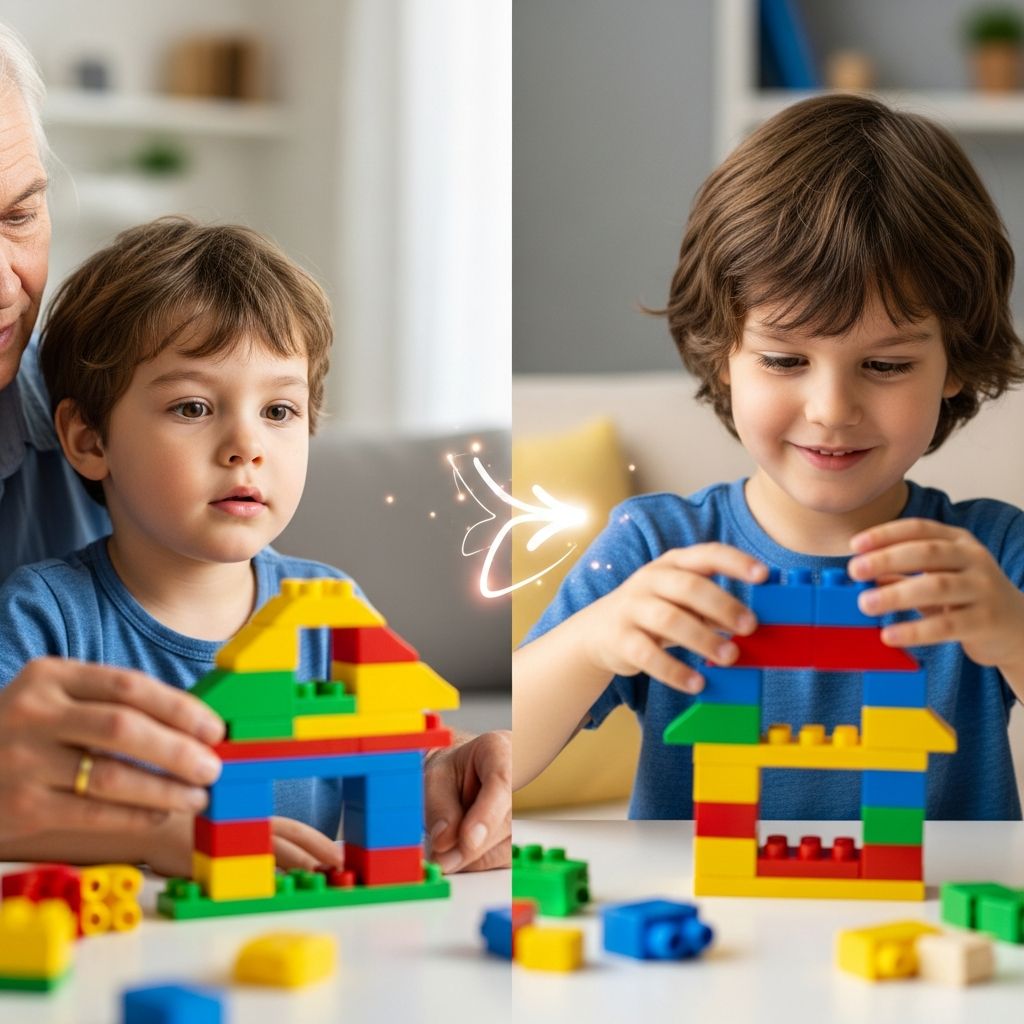
Social learning theory posits that individuals acquire new behaviors primarily through observing others in their environment, rather than solely through direct experience. This framework, pioneered by psychologist Albert Bandura, integrates elements of behaviorism and cognitive psychology, emphasizing the roles of attention, retention, reproduction, and motivation in the learning process.
Core Principles of Observational Learning
At its heart, social learning revolves around four key processes. First, attention determines what behaviors learners notice, influenced by the model’s status or the behavior’s distinctiveness. Next, retention involves encoding observed actions into memory through mental rehearsal or verbalization. Reproduction requires the ability to replicate the behavior, often after practice. Finally, motivation drives performance, shaped by anticipated rewards or punishments observed in the model.
These stages highlight a reciprocal interplay between personal factors, behavior, and environment, evolving into Bandura’s broader social cognitive theory. This dynamic underscores how self-efficacy—belief in one’s capabilities—amplifies learning outcomes.
Historical Development and Key Experiments
Albert Bandura’s seminal work in the 1960s challenged strict behaviorism by demonstrating that aggression could be learned vicariously. In the famous Bobo doll experiment, children who observed adults aggressively interacting with a doll later mimicked those actions, especially when the model was rewarded. This illustrated modeling’s power, where symbolic, verbal, or live demonstrations influence behavior.
Building on this, the theory expanded to explain prosocial behaviors, media effects, and skill acquisition, influencing fields from therapy to public health campaigns that model positive habits.
Implementing Social Learning in Educational Settings
Educators harness social learning to foster collaborative environments where students observe, interact, and reinforce each other’s growth. This approach shifts from passive lectures to active, peer-driven experiences, enhancing engagement and retention.
- Collaborative Group Work: Students tackle projects together, exchanging ideas and observing diverse problem-solving strategies, which builds critical thinking and communication skills.
- Peer Teaching and Mentoring: Advanced students guide novices, reinforcing their own knowledge while providing relatable models for beginners.
- Flipped Classroom Models: Learners review content at home via videos, then apply it in class through discussions and activities, observing peer applications and receiving real-time feedback.
Technology amplifies these methods. Online forums and discussion boards enable asynchronous interactions, while video platforms allow students to create and share content, modeling skills for peers.
Practical Strategies for Classroom Integration
To maximize social learning, instructors can adopt targeted techniques tailored to hybrid and digital environments.
| Strategy | Description | Benefits |
|---|---|---|
| Think-Pair-Share | Individuals reflect alone, discuss in pairs, then share with the group. | Encourages dialogue and collective knowledge building. |
| Gamification | Incorporate points, badges, and leaderboards for desired behaviors. | Boosts motivation through observed successes. |
| Student-Led Presentations | Learners produce videos or skits demonstrating concepts. | Promotes reproduction and peer observation. |
| Peer Feedback Sessions | Students review and critique each other’s work constructively. | Develops soft skills like empathy and evaluation. |
These strategies not only increase productivity but also cultivate organizational and interpersonal competencies essential for future workplaces.
Beyond Education: Applications in Health and Professional Training
Social learning extends to health professions, where observational models teach skills like patient interaction. For instance, simulations allow students to watch experts perform procedures, then replicate them, fostering safe skill acquisition.
In workplaces, apprenticeship models pair novices with mentors, enabling observation of real-world techniques. Health campaigns leverage media role models to promote behaviors like exercise or stress management by showcasing observable benefits.
Learner Types and Personalized Approaches
Not all learners engage identically with social methods. Collaborative learners excel in groups, observational learners benefit from demonstrations, and communicative learners thrive in discussions. Tailoring activities accommodates these styles, optimizing outcomes.
Advantages and Empirical Support
Adopting social learning yields measurable gains: heightened engagement, improved communication, and skill development. Studies in paramedic and nursing programs using tools like interactive response systems demonstrated enhanced critical thinking via Bandura’s stages.
It empowers learners with autonomy over their pace and methods, while positive reinforcement builds confidence.
Challenges and Mitigation Strategies
Despite benefits, issues like unequal participation or digital divides arise. Solutions include clear guidelines for safe interactions and inclusive tools ensuring accessibility.
In hybrid settings, monitored social media or virtual communities maintain focus while enabling observation.
Frequently Asked Questions
What is the main difference between social learning theory and traditional behaviorism?
Social learning incorporates cognitive processes like attention and motivation, allowing indirect learning via observation, unlike behaviorism’s focus on direct stimulus-response.
How can teachers encourage motivation in social learning activities?
By highlighting rewards for modeled behaviors and providing positive feedback, teachers reinforce reproduction of observed actions.
Is social learning effective in online environments?
Yes, through forums, video sharing, and virtual collaborations, it mirrors in-person dynamics effectively.
What role does self-efficacy play in this theory?
Self-efficacy, or belief in one’s abilities, mediates whether observed behaviors are adopted, bridging personal and environmental factors.
Can social learning address behavioral issues in students?
Absolutely, by modeling positive alternatives and using peer reinforcement to shift maladaptive patterns.
References
- Social Learning: The Complete 2026 Guide — D2L. 2026. https://www.d2l.com/blog/the-complete-guide-to-social-learning/
- Social Learning Theory In Education In A Hybrid World — Panopto. 2023. https://www.panopto.com/blog/education-creating-social-learning-strategy-for-hybrid-environment/
- A Guide to Social Learning Theory in Education — Western Governors University. 2023. https://www.wgu.edu/blog/guide-social-learning-theory-education2005.html
- Albert Bandura’s Social Learning Theory — Simply Psychology. 2024. https://www.simplypsychology.org/bandura.html
- Social Learning: Applying It In Higher Education — Practera. 2023. https://practera.com/social-learning/
- Social Learning Theory: What It Is & How It Works — Cleveland Clinic. 2024. https://my.clevelandclinic.org/health/articles/social-learning-theory
- Applications of social theories of learning in health professions — PMC (PubMed Central). 2022-08-15. https://pmc.ncbi.nlm.nih.gov/articles/PMC9367215/

- Integrated M.A. in Applied Linguistics, University of Hyderabad
- 5+ years in editorial, instructional, SEO, and research-based writing
Sneha is a relationships and lifestyle writer with a strong foundation in applied linguistics and certified training in relationship coaching. She brings over five years of writing experience to theskillvault, crafting thoughtful, research-driven content that empowers readers to build healthier relationships, boost emotional well-being, and embrace holistic living. Her writing and insights reflect the belief that beauty, happiness, and wellness…