
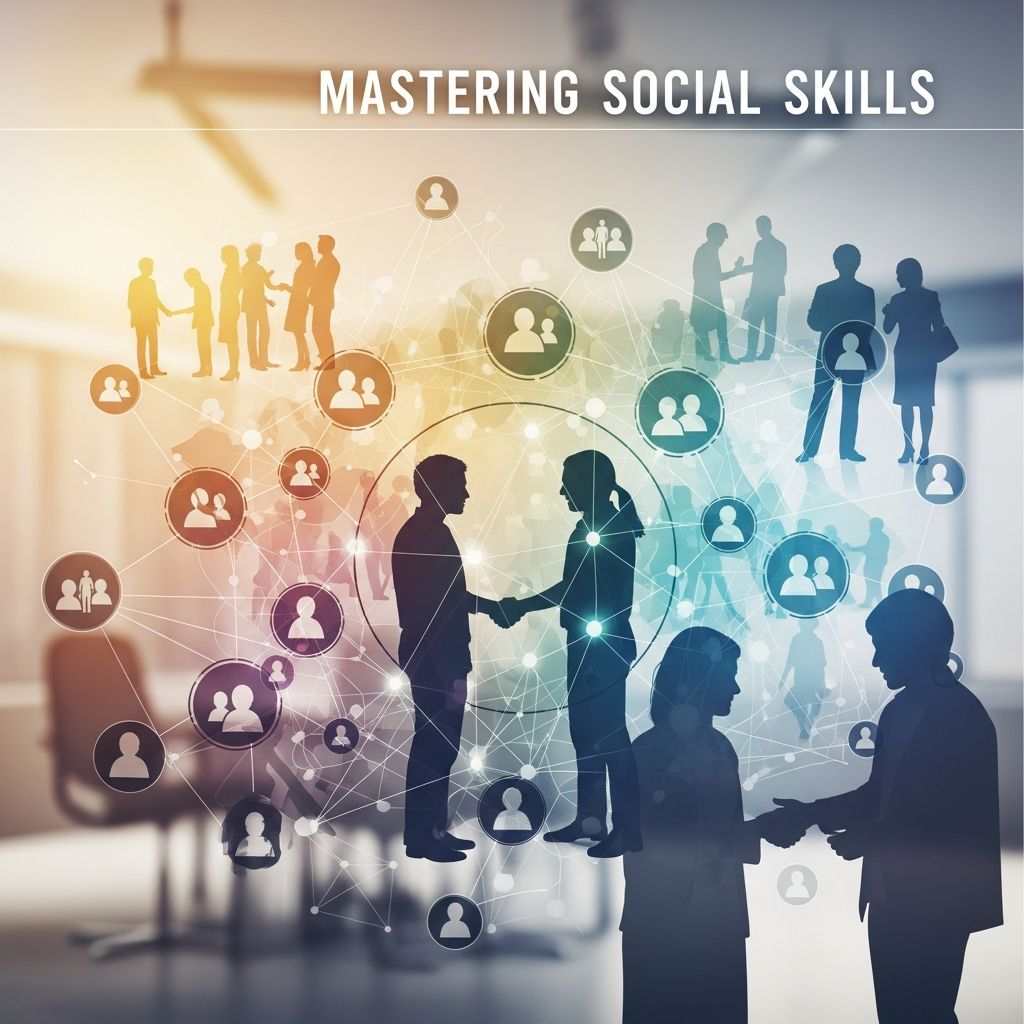
Social skills form the backbone of successful human connections, enabling individuals to navigate conversations, resolve conflicts, and build lasting relationships. These abilities go beyond mere politeness; they encompass a range of competencies that foster mutual understanding and collaboration in diverse settings.
Understanding the Foundations of Social Skills
At their core, social skills are the competencies that facilitate smooth interactions and communication with others. They involve recognizing social cues, responding appropriately, and adapting to different contexts. Research in social psychology highlights how these skills develop through observation, practice, and feedback, influencing everything from personal friendships to career advancement.
Strong social skills contribute to emotional well-being by reducing misunderstandings and enhancing trust. In professional environments, they correlate with higher job performance and leadership potential, as noted in workforce studies.
Core Categories of Social Skills
Social skills can be broadly divided into basic and advanced types, each building on the other for comprehensive interpersonal effectiveness.
Basic Social Skills: The Building Blocks
These foundational abilities are essential for everyday exchanges and serve as prerequisites for more nuanced interactions. They include:
- Active Listening: Fully concentrating on the speaker, providing feedback, and avoiding interruptions to show genuine interest.
- Starting Conversations: Initiating dialogue with open-ended questions or relevant observations to break the ice naturally.
- Expressing Gratitude: Using phrases like “thank you” to acknowledge others’ efforts, reinforcing positive bonds.
- Self-Introduction: Confidently sharing your name and a brief detail to establish identity in new groups.
- Giving Compliments: Offering sincere praise to uplift others and create goodwill.
Mastering these basics ensures smooth entry into social scenarios, setting the stage for deeper engagement.
Advanced Social Skills: Elevating Interactions
Once basics are solid, advanced skills allow for handling complexity and emotional depth:
- Empathy: Understanding and sharing others’ feelings, which builds deeper connections and trust.
- Assertiveness: Expressing needs and opinions respectfully without aggression or passivity.
- Negotiation: Finding mutually beneficial solutions through dialogue and compromise.
- Emotional Intelligence: Managing one’s emotions and recognizing them in others to navigate tense situations.
- Conflict Resolution: Addressing disagreements calmly to reach harmonious outcomes.
These skills are crucial in leadership roles and high-stakes environments, where nuanced understanding drives success.
Why Social Skills Matter: Tangible Benefits
Developing these abilities yields measurable advantages across life domains. In workplaces, employees with superior social skills often receive promotions faster due to their networking prowess and team collaboration.
Personally, they enhance mental health by fostering supportive networks that buffer stress. Studies link strong social competencies to lower anxiety levels and higher life satisfaction.
| Domain | Key Benefits | Examples |
|---|---|---|
| Professional | Improved teamwork, leadership | Better project outcomes, career growth |
| Personal | Stronger relationships, well-being | Deeper friendships, reduced isolation |
| Educational | Enhanced learning, peer support | Group study success, mentorship |
This table illustrates how social skills create ripple effects, amplifying success in multiple areas.
Practical Strategies to Build Social Skills
Improvement requires deliberate practice. Start with self-assessment: Reflect on recent interactions to identify strengths and gaps, such as poor eye contact or interrupting habits.
Daily Exercises for Progress
- Practice Emotion Recognition: Observe facial expressions in videos or real life, labeling emotions to sharpen perceptiveness.
- Role-Play Scenarios: Simulate conversations with a partner, focusing on tone and body language for realism.
- Seek Feedback: Ask trusted friends for honest input on your communication style and adjust accordingly.
- Expand Your Circle: Attend events or join clubs to expose yourself to diverse interactions.
- Mindful Listening Drills: In conversations, paraphrase what was said to confirm understanding and show engagement.
Consistency is key; track progress in a journal to note improvements over weeks.
Overcoming Common Social Challenges
Many face hurdles like shyness or misreading cues. For introverts, preparation—such as rehearsing small talk—eases anxiety. In cross-cultural settings, learning norms like personal space prevents faux pas.
Handling rejection involves resilience: View it as feedback, not personal failure, and persist. Digital communication adds layers; use emojis judiciously to convey tone in texts.
Social Skills in the Digital Age
Virtual interactions demand adapted skills. Video calls require strong webcam presence and minimizing distractions. Social media calls for thoughtful posting to maintain likeability without oversharing.
Balance online and offline: Prioritize face-to-face for building empathy, as nonverbal cues are richer in person.
Measuring Your Social Skill Growth
Track via self-ratings or 360-degree feedback from peers. Milestones include sustaining longer conversations or resolving disputes independently. Apps and workshops offer structured paths.
Frequently Asked Questions (FAQs)
What are the most important social skills to learn first?
Begin with active listening and empathy, as they underpin all other interactions and build immediate rapport.
Can social skills be taught to adults?
Yes, through targeted practice and feedback; neuroplasticity allows lifelong development.
How do social skills impact career success?
They enhance networking, leadership, and collaboration, often outweighing technical skills in promotions.
What if I’m naturally introverted—do I need to change?
No, leverage strengths like deep listening while gradually expanding comfort zones.
Are there exercises for improving nonverbal communication?
Yes, mirror exercises for body language and video reviews for self-awareness work well.
References
- 68 Examples of Social Skills — Simplicable. 2023. https://simplicable.com/talent/social-skills
- Social Skills — Wikipedia. 2024-02-01. https://en.wikipedia.org/wiki/Social_skills
- How to Improve Your Social Skills: Social Skills Games — NeuronUP. 2023. https://neuronup.us/neurorehabilitation-activities/activities-for-social-skills/how-to-improve-your-social-skills-social-skills-games/
- What are Social Skills? 5 Examples in the Workplace — Monster.com. 2024-01-15. https://hiring.monster.com/resources/workforce-management/company-culture/what-are-social-skills-5-examples-in-the-workplace/
- Social Skills: Types, Benefits and How to Improve — 21K School. 2023. https://www.21kschool.com/us/blog/social-skills/
- What are Social Skills? Definition and Examples — Indeed.com. 2024. https://www.indeed.com/career-advice/career-development/social-skills

Medha Deb is an editor with a master's degree in Applied Linguistics from the University of Hyderabad. She believes that her qualification has helped her develop a deep understanding of language and its application in various contexts. Medha specializes in the areas of beauty, health, sports, and wellness and is committed to ensuring that the content on the website is…