
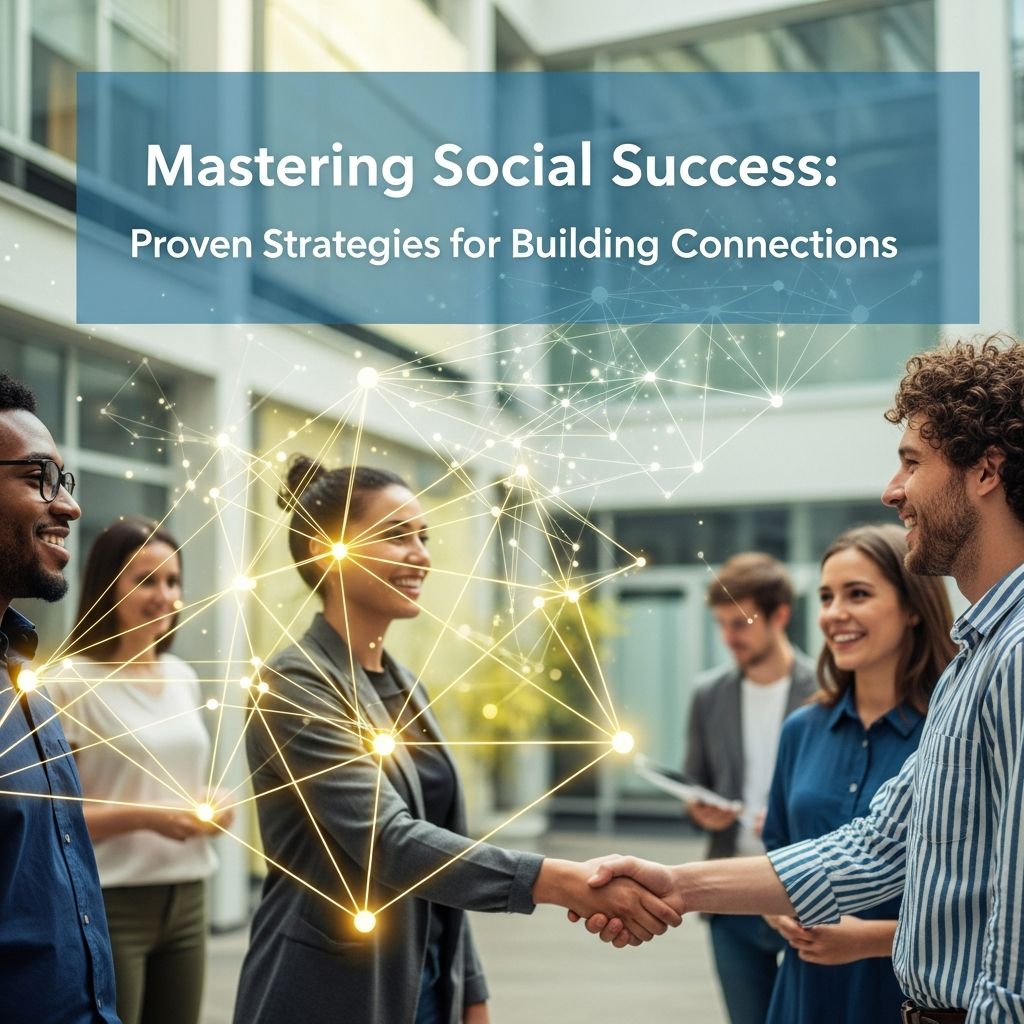
Social success hinges on the ability to connect authentically with others, fostering relationships that enrich personal and professional lives. This comprehensive guide explores key principles drawn from psychological research, offering practical tools to elevate your interpersonal interactions.
Understanding the Foundations of Social Proficiency
At its core, social proficiency involves blending emotional awareness with strategic communication. Research from the American Psychological Association highlights how high-pressure environments can erode mental well-being if not balanced with genuine connections. Effective social navigators prioritize mutual benefit, creating environments where collaboration thrives over competition.
Developing this skill set begins with self-reflection. High self-efficacy, as outlined in positive psychology studies, emerges from mastering challenging tasks and interpreting feedback constructively. Individuals who view social hurdles as growth opportunities build resilience and confidence.
Initiating Conversations with Confidence
Starting interactions effectively sets the tone for deeper engagement. Psychological strategies emphasize sincerity and surprise to lower defenses. For instance, direct expressions of intent, such as requesting a brief moment, signal respect for others’ time while conveying clarity.
Unexpected openers leverage human tendencies to assist with simple queries, activating reward centers in the brain. Transitioning smoothly from these—perhaps from checking the time to discussing a nearby event—feels organic and engaging. Practice in low-stakes settings like parks or cafes hones this ability.
- Direct Honesty: State your purpose plainly to build trust instantly.
- Surprise Element: Pose an unforeseen question to spark curiosity.
- Contextual Tie-In: Link the opener to the shared environment for relevance.
Cultivating Win-Win Relationships
Long-term social success relies on framing interactions as collaborative ventures. The principle of seeking mutual gains ensures sustained alliances, as collaboration amplifies individual power through value exchange. Approach encounters with a mindset of alliance-building rather than rivalry.
High-quality networks amplify this effect. Select companions who reciprocate generosity, uphold ethics, and remain open to dialogue. This selectivity fosters environments rich in support and opportunity.
| Competitive Mindset | Collaborative Mindset |
|---|---|
| Views others as threats | Sees potential partners |
| Prioritizes short-term wins | Aims for mutual long-term gains |
| Breeds isolation | Builds expansive networks |
Balancing Warmth and Assertiveness
Projecting both warmth and power creates magnetic appeal. Warmth invites trust, while assertiveness commands respect. Emotional and social intelligence training, such as improvisation classes, sharpens this duality by enhancing adaptability and empathy.
In practice, respond to conflicts by reframing toward shared goals. Verbal cues like “This benefits us both” reinforce cooperative frames. Over time, this balance positions you as a valued collaborator.
Navigating Social Status Dynamics
Prestige psychology reveals innate drives toward status, rooted in evolutionary needs. Modern awareness allows redirection toward intrinsic fulfillment. Metacognition—observing your motivations—helps distinguish value-aligned pursuits from hollow status-chasing.
Surround yourself with non-competitive peers to sidestep envy traps. Pursue skill-building in communication or problem-solving for genuine growth over superficial markers.
- Journal status-driven impulses daily.
- Seek biographies of unconventional achievers.
- Dedicate time to novel skill acquisition.
Overcoming Perfectionism in Social Pursuits
Toxic achievement cultures fuel socially prescribed perfectionism, linking to anxiety and diminished connections. Counter this by cultivating mattering—a sense of worth beyond accomplishments—which buffers mental health pressures.
Shift focus to process-oriented goals. Celebrate incremental social wins to bolster self-efficacy through mastery experiences.
Practical Exercises for Social Mastery
Implement daily habits to internalize these strategies:
- Engage one stranger weekly using varied openers.
- Audit relationships for win-win potential; nurture or prune accordingly.
- Practice improv to blend warmth and power fluidly.
- Reflect metacognitively on status motivations post-interaction.
Consistency transforms theory into instinct. Track progress in a journal, noting enhanced ease in conversations and deeper bonds forming.
Common Pitfalls and How to Avoid Them
Avoid competitive entry into relationships, especially if power-driven, as it alienates potential allies. Don’t overlook reputation; explicit win-win language safeguards it. Perfectionist traps undermine authenticity—embrace imperfection to connect truly.
Frequently Asked Questions (FAQs)
What is the most effective way to start a conversation?
Combine sincerity with context, like a direct request tied to the environment, to build instant rapport.
How do I build high-quality social circles?
Prioritize reciprocal, ethical individuals open to growth and dialogue.
Can social skills be learned?
Yes, through practices like improv classes and mastery experiences that enhance emotional intelligence and self-efficacy.
What role does status play in social success?
Awareness allows redirecting prestige-seeking toward intrinsic skill development and value-aligned goals.
How does perfectionism affect relationships?
It heightens anxiety and isolation; counter with mattering and process focus.
Long-Term Strategies for Sustained Social Excellence
Social mastery evolves through deliberate practice. Integrate collaboration into all repeated interactions, from family to business. High self-efficacy sustains momentum, turning challenges into confidence builders.
Regularly reassess networks for quality. Warm-power balance, honed via role-playing, ensures enduring respect. By transcending status games, you unlock profound fulfillment.
This holistic approach not only boosts immediate interactions but cultivates a life of meaningful connections. Apply these insights incrementally for transformative results.
References
- Seven Effective Social Opening Lines: Psychological Strategies to Enhance Interpersonal Success — Oreate AI. 2023. https://www.oreateai.com/blog/seven-effective-social-opening-lines-psychological-strategies-to-enhance-interpersonal-success/f2845e076d67db2ada0b6f66a826ab77
- The 5 Laws of Social Success: Smart Power, For Smart Cooperation — The Power Moves. 2023. https://thepowermoves.com/laws-of-social-success/
- The Psychology of Prestige: Why We Play the Social Status Game — Ness Labs. 2023. https://nesslabs.com/prestige-psychology
- Perfectionism and the High-Stakes Culture of Success: The Hidden Toll — American Psychological Association (APA). 2024-10. https://www.apa.org/monitor/2024/10/antidote-achievement-culture
- How to Increase Your Emotional and Social Intelligence — Psychology Today. 2022-10. https://www.psychologytoday.com/us/blog/cutting-edge-leadership/202210/how-increase-your-emotional-and-social-intelligence
- How to Improve Self-Efficacy: 4 Science-Based Ways — Positive Psychology. 2023. https://positivepsychology.com/3-ways-build-self-efficacy/

Medha Deb is an editor with a master's degree in Applied Linguistics from the University of Hyderabad. She believes that her qualification has helped her develop a deep understanding of language and its application in various contexts. Medha specializes in the areas of beauty, health, sports, and wellness and is committed to ensuring that the content on the website is…