
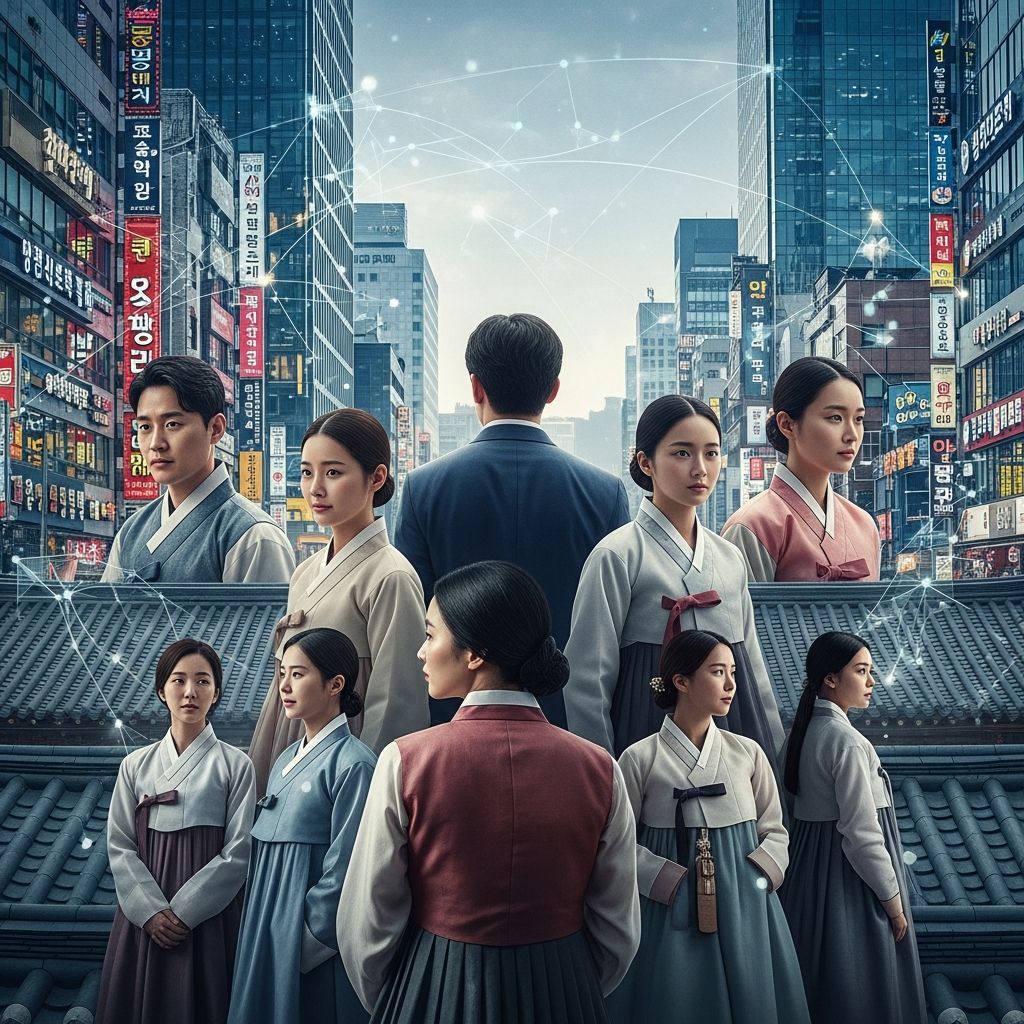
South Korea offers a vivid example of how history, values, and rapid modernization interact to shape the way people think, feel, and behave. To understand South Korean personalities, it is essential to look beyond individual traits and explore the cultural forces that influence identity, relationships, work, and aspirations.
Cultural Roots: Values That Shape Korean Personality
Modern South Korean society is deeply shaped by a combination of Confucian ethics, indigenous beliefs, and global influences. These forces help explain why certain personality patterns and social expectations are especially prominent.
Confucian Heritage and Social Harmony
For centuries, Confucianism has guided Korean social organization, emphasizing hierarchy, loyalty, and collective harmony. Even in a technologically advanced society, many daily interactions still reflect these ideas.
- Respect for hierarchy: Age, status, and seniority affect language choices, decision-making, and behavior.
- Emphasis on duty: Fulfilling roles as a child, parent, student, or employee is considered a moral responsibility.
- Harmony over confrontation: People often avoid open conflict or direct criticism to preserve group cohesion.
This environment tends to encourage personalities that value responsibility, self-control, and sensitivity to others’ expectations.
Family-Centered Identity
Family remains a core reference point for identity in South Korea. Major life decisions often involve negotiation with parents and elders, and success is frequently understood as a shared family achievement.
- Strong intergenerational ties: Older family members are honored at important life events and holidays, with formal rituals expressing respect.
- Collective reputation: A person’s behavior can enhance or damage the family’s social standing, encouraging conscientiousness and social awareness.
- Support and obligation: Parents often invest heavily in children’s education and careers, while adult children may feel responsible for caring for aging parents.
These patterns can foster a sense of loyalty and perseverance, but also intensify pressure to conform to expectations.
Daily Life: How Culture Appears in Routines and Customs
Daily routines in South Korea reveal how cultural values translate into habits and social norms that shape personality development over time.
Rituals, Holidays, and Emotional Bonds
Traditional holidays such as Lunar New Year (Seollal) and Chuseok (often described as Korean Thanksgiving) highlight respect, gratitude, and connection.
- Families travel to ancestral hometowns, perform memorial rites, and share symbolic foods like rice cake soup and seasonal rice cakes.
- Children perform deep formal bows to elders and receive words of blessing and sometimes gifts, reinforcing respect and reciprocity.
- Ancestral rites affirm the idea that past generations remain part of the family’s moral community, shaping a long-term sense of belonging.
Participating in these rituals can cultivate emotional traits like gratitude, reverence for tradition, and awareness of one’s place in a broader lineage.
Urban Pace and Digital Connectivity
South Korea is one of the most urbanized and digitally connected societies in the world, with dense cities, fast public transport, and widespread smartphone use. This environment influences both introverted and extroverted tendencies.
- High-intensity routines: Long work and study hours in major cities encourage endurance and time management, but also increase stress.
- Online social life: Messaging apps, online communities, and gaming create new spaces for expression, anonymity, and social experimentation.
- Blending online and offline identities: Many people move fluidly between formal in-person roles and more relaxed digital personas, showing different sides of themselves depending on context.
Education and Work: Pressure, Ambition, and Group Identity
Education and work are central arenas where South Korean cultural values come into sharp focus. They strongly influence personality traits such as discipline, competitiveness, and attitudes toward authority.
The Education System and Student Experience
South Korea’s education system is renowned for high academic performance and intense competition, with a strong focus on examinations and ranking.
| Aspect | Typical Features | Personality Impact |
|---|---|---|
| School Day | Long hours, after-school classes, and private tutoring are common. | Encourages perseverance and goal orientation, but can reduce leisure and self-discovery time. |
| Exams | High-stakes exams heavily influence university and career opportunities. | Reinforces conscientiousness and attention to detail; may increase anxiety and fear of failure. |
| Parental Role | Parents closely monitor academic progress and invest in education. | Strengthens family bonds and shared goals, but may limit autonomy. |
Many students learn to be highly disciplined and future-focused, yet may also struggle to explore unconventional paths or express dissenting preferences.
Workplace Culture and Professional Identity
In the workplace, traditional hierarchy and modern corporate demands intersect. Employees often navigate expectations of loyalty, teamwork, and high performance.
- Seniority and deference: Junior staff typically show formality toward seniors, using polite language and observing unspoken rules about speaking order in meetings.
- Team orientation: Projects are usually executed as group efforts, emphasizing coordination over individual boldness.
- Commitment and long hours: Extended working hours and social gatherings with colleagues can blur boundaries between work and personal life.
These dynamics can encourage reliability, sociability, and adaptability. At the same time, some may experience burnout or feel constrained in voicing personal preferences.
Relationships, Etiquette, and Emotional Expression
Social etiquette in South Korea shapes how people present themselves and manage emotions in different settings. Many norms are subtle but strongly felt.
Politeness, Language, and Status
Language reflects and reinforces social structure. Different speech levels and honorifics signal respect, distance, or familiarity.
- Polite forms are used for strangers, seniors, and formal interactions.
- Casual forms emerge between close friends, peers, and family members.
- Address terms often reference roles (older brother, teacher, senior) instead of using first names.
Learning to adjust speech and behavior to context fosters social sensitivity, situational awareness, and a nuanced understanding of interpersonal boundaries.
Balancing Restraint and Warmth
Public behavior tends to favor emotional restraint and modesty, particularly in formal contexts. Yet among close friends and family, warmth and humor are common.
- Indirect communication: People may hint rather than state criticism directly to avoid embarrassment.
- Gift-giving and hospitality: Small gifts, shared meals, and gestures of care serve as indirect expressions of affection and gratitude.
- Inner vs. outer self: Many distinguish between how they act in front of others and how they feel privately, managing a careful social “face.”
This encourages skills in self-monitoring and empathy, though it can sometimes make honest emotional disclosure more challenging.
Tradition Meets Change: Diversity Within Korean Personalities
South Korea’s rapid economic growth and cultural globalization have created a landscape where traditional norms coexist with new lifestyles and identities.
Generational Differences
Older and younger generations often differ in their views on work, relationships, and self-expression.
- Older generations: Tend to prioritize stability, collective duty, and respect for authority, shaped by war, poverty, and nation-building experiences.
- Younger generations: Exposed to global media and travel, they may place greater emphasis on personal fulfillment, mental health, and work–life balance.
- Intergenerational dialogue: Families and workplaces become sites where these values are negotiated, sometimes leading to tension but also to gradual change.
Influence of Pop Culture and Global Trends
South Korea is both a source and a recipient of global cultural flows. The global success of Korean music, television, film, and fashion has reshaped identity and aspiration.
- Media portrayals introduce new role models, from bold entrepreneurs to unconventional artists.
- Young people find communities around shared interests, such as fandoms, gaming, or creative hobbies.
- Exposure to global discourses on gender, diversity, and mental health encourages more open conversations.
These shifts diversify the range of acceptable personality expressions, allowing more space for nontraditional paths and identities.
Cross-Cultural Encounters: Understanding and Misunderstanding
For visitors, migrants, and business partners, grasping South Korean cultural patterns can reduce misunderstandings and support positive relationships.
Common Misinterpretations
- Indirectness as lack of honesty: What may appear as evasiveness is often an effort to protect relationships and avoid causing offense.
- Formality as coldness: Polite distance in early interactions does not necessarily reflect personal dislike; trust often grows over time.
- Group thinking as lack of individuality: Many people balance private opinions with public conformity, expressing individuality within socially acceptable boundaries.
Practical Tips for Interacting in South Korea
Adapting to local norms can make communication smoother and more respectful.
- Use polite greetings and a slight bow when meeting people, especially elders.
- Accept and offer items (like business cards or gifts) with both hands as a sign of respect.
- Be patient with long-term relationship-building; trust often develops gradually.
- Pay attention to nonverbal cues, pauses, and tone, which often carry important meaning.
Frequently Asked Questions (FAQs)
Q: Are South Koreans generally collectivist or individualist?
Many social norms in South Korea are collectivist, emphasizing group harmony, family, and organizational loyalty. At the same time, younger generations increasingly value personal choice and self-expression, creating a hybrid environment where both tendencies coexist.
Q: How important is respect for elders in daily life?
Respect for elders is a foundational value, visible in language, seating arrangements, and family rituals. Younger people commonly defer to older relatives and colleagues in decisions and conversation, although the way this respect is expressed is gradually evolving.
Q: Do all South Koreans experience the same academic pressure?
Academic pressure is widespread due to the competitive education system and strong link between educational background and career opportunities. However, experiences vary by region, family resources, and personal goals, and there is growing discussion about alternative paths and educational reforms.
Q: How open are South Koreans about emotions and mental health?
Traditionally, people were encouraged to endure hardship quietly and prioritize group needs over individual distress. Today, younger generations and professionals are increasingly open about stress, burnout, and mental health challenges, though stigma has not disappeared.
Q: What should foreigners keep in mind when working with South Korean colleagues?
It is helpful to show respect for hierarchy, use polite forms of address, and be attentive to group consensus. Being prepared for meetings, communicating clearly yet tactfully, and investing time in informal relationship-building—such as shared meals—can significantly improve collaboration.
References
- Daily life and social customs: South Korea — Encyclopaedia Britannica. 2023-06-01. https://www.britannica.com/place/South-Korea/Daily-life-and-social-customs
- Festivals, Celebrations, and Holidays — Korea.net, Korean Culture and Information Service. 2020-01-15. https://www.korea.net/AboutKorea/Society/Festivals-Celebrations-and-Holidays
- Culture of Korea — Culture of Korea overview, summarizing traditional beliefs and customs. 2022-08-10. https://en.wikipedia.org/wiki/Culture_of_Korea
- South Korea – Language, Culture, Customs and Etiquette — Commisceo Global Consulting. 2021-11-05. https://commisceo-global.com/support/culture-guides/south-korea-guide/
- Exploring South Korean Culture: A Journey Worth Taking — International Volunteer HQ. 2020-09-18. https://www.volunteerhq.org/blog/exploring-south-korean-culture/
- Korea Information: Culture and the Arts — Korean Cultural Center New York. 2019-05-01. https://www.koreanculture.org/korea-information-culture-and-the-arts
- Korean Culture: History, Customs, People and Modern Day — 90 Day Korean. 2023-02-10. https://www.90daykorean.com/korean-culture/

Medha Deb is an editor with a master's degree in Applied Linguistics from the University of Hyderabad. She believes that her qualification has helped her develop a deep understanding of language and its application in various contexts. Medha specializes in the areas of beauty, health, sports, and wellness and is committed to ensuring that the content on the website is…