
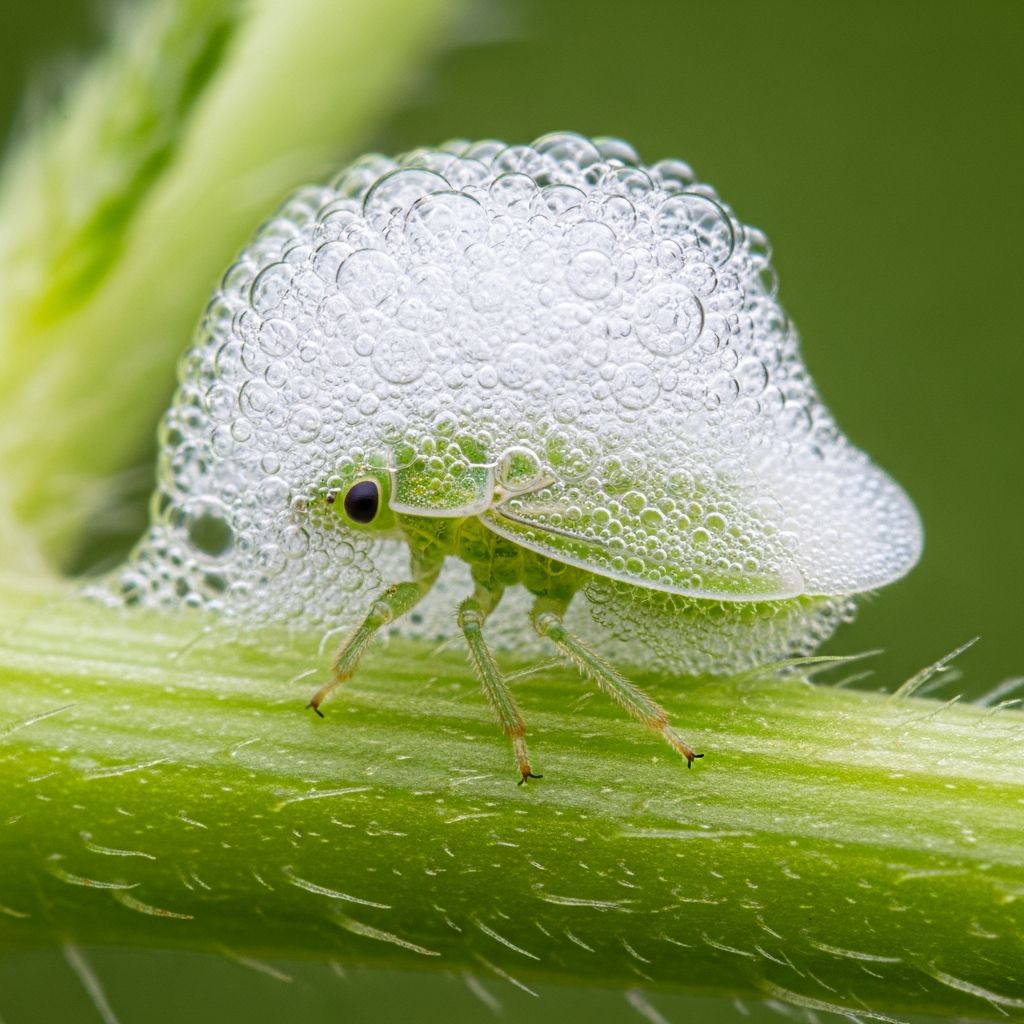
Spittlebugs, often spotted as mysterious white foam blobs on garden plants, are tiny insects belonging to the family Cercopidae in the order Hemiptera. These creatures, also called froghoppers in their adult stage, captivate observers with their unique protective mechanisms and unassuming presence in ecosystems.
Recognizing the Signature Foam in Your Garden
The most noticeable sign of spittlebugs is the frothy, spittle-like mass that appears on plant stems, especially in spring. This foam, sometimes dubbed ‘cuckoo spit’ in folklore, is not saliva but a clever concoction produced by nymphs. Gardeners often find these bubbly clusters on grasses, herbs, and ornamentals, prompting curiosity or concern.
- Foam typically measures 1/4 to 1/2 inch in diameter and clings tightly to stems.
- It emerges in early spring as plants awaken, persisting through molting stages.
- Common locations include bases of tender shoots and leaf undersides.
Parting the froth reveals the pale green, yellow, or brown nymph inside, actively feeding on sap. This foam serves multiple vital roles, making spittlebugs masters of camouflage and survival.
How Spittlebugs Craft Their Protective Bubbles
Nymphs generate foam by mixing xylem sap—the watery, nutrient-poor fluid they extract from plants—with anal secretions rich in mucilage. They rapidly expel this mixture while pumping air through their abdomens, creating up to 80 bubbles per minute. The insect then maneuvers the froth over its body using hind legs, forming a stable, viscous shield.
This process demands immense effort; nymphs process volumes of sap equivalent to hundreds of times their body weight daily, producing urine-like fluid that aerates into foam. The result is a moist, insulated environment that deters predators and stabilizes temperature.
| Component | Source | Function |
|---|---|---|
| Xylem Sap | Plant vascular tissue | Provides water base |
| Mucilaginous Secretion | Nymph glands | Increases viscosity |
| Air Bubbles | Abdominal pumping | Creates insulation |
Such ingenuity ensures nymphs thrive in exposed garden settings without constant relocation.
The Complete Life Cycle of Spittlebugs
Spittlebugs complete one generation annually, syncing perfectly with seasonal plant growth. Overwintering occurs as tiny white eggs embedded in plant stems or leaf litter, hatching in late April or early May.
- Egg Stage: Laid in fall by females, eggs endure winter cold within tough plant tissues.
- Nymph Stage: Lasts 1-2 months; nymphs feed, molt 4-5 times, and expand their foam homes upward as plants grow.
- Adult Emergence: In late spring or early summer, adults burst from the dried foam, ready to feed and reproduce.
Adults, resembling plump leafhoppers, measure about 1/4 inch, with robust hind legs for leaping up to 2 feet vertically. They rarely fly despite wings, preferring hops to evade threats. By late summer, females deposit eggs, restarting the cycle.
What Do Spittlebugs Eat and Where?
Both nymphs and adults pierce plants with stylets to suck xylem sap, favoring nitrogen-rich hosts like legumes due to higher amino acid content. This diet requires processing vast sap quantities for minimal nutrition, explaining their high fluid output.
- Preferred Grasses: Ornamental varieties, alfalfa, clover.
- Garden Plants: Strawberries, roses, chrysanthemums, Shasta daisies, goldenrod, herbs.
- Trees (Rarely): Pines, spruces, firs for species like pine spittlebug.
Meadow spittlebug (Philaenus spumarius), the most widespread in North America, attacks over 200 plant species, yet rarely causes significant harm.
Ecological Roles and Natural Defenses
Spittlebugs integrate into food webs as prey for birds like meadowlarks, beetles, fire ants, and spiders. Their foam hides them effectively, tasting bitter to discourage probing predators. Additionally, nymphs emit a yellowish defensive fluid from feet when threatened.
Recent studies reveal advanced respiration: nymphs use a snorkel-like structure or pierce bubbles for oxygen in low-oxygen foam. This adaptability underscores their resilience in variable garden microclimates.
Though xylem-feeding stresses plants mildly, healthy specimens tolerate it without visible damage, positioning spittlebugs as benign ecosystem players.
Spittlebugs in Gardens: Concern or Curiosity?
Most gardeners needn’t worry; spittlebugs seldom warrant intervention. Damage is negligible—yellowing or stunted growth occurs only under heavy infestations on weakened plants. Their polyphagous nature spreads impact thinly.
Management, if desired, is simple and eco-friendly:
- Manual Removal: Gently rinse foam with water to expose and dislodge nymphs.
- Cultural Practices: Maintain plant vigor through watering and fertilizing to boost resilience.
- Natural Predators: Encourage birds and beneficial insects.
Resist pesticides; they harm pollinators more than these minor sap-suckers. Embrace spittlebugs as signs of a thriving, biodiverse garden.
Common Species Across Regions
North America hosts over 30 species, varying by habitat. Key examples include:
| Species | Appearance | Host Plants | Region |
|---|---|---|---|
| Meadow Spittlebug (Philaenus spumarius) | Tan/gray adults; green nymphs | Grasses, herbs, crops | Midwest, widespread |
| Pine Spittlebug (Aphrophora parallella) | Brown nymphs | Conifers like pine, spruce | Northern forests |
Regional diversity enriches local ecology, with each adapted to prevalent flora.
Frequently Asked Questions (FAQs)
Is the foam from spittlebugs harmful to plants?
No, the froth is inert and washes away easily. It doesn’t damage plants or spread disease.
Should I remove spittlebug foam from my garden?
Optional; a strong water spray exposes nymphs to predators and elements. Avoid chemicals.
Do spittlebugs bite humans or pets?
No, they feed exclusively on plant sap and pose no threat to animals.
How can I identify spittlebug nymphs?
Look for small, pale, soft-bodied insects (green/yellow/brown) hidden in wet foam on stems.
Are spittlebugs the same as froghoppers?
Yes—nymphs produce spittle, adults are froghoppers known for jumping prowess.
Observing Spittlebugs: Tips for Nature Lovers
Spring walks reveal these foamy wonders; use a magnifying glass to peek inside without disturbing. Photograph the transformation from nymph to hopper for personal records. In educational settings, they illustrate insect adaptation perfectly, fostering appreciation for overlooked biodiversity.
Spittlebugs remind us that even ‘pests’ contribute to balanced ecosystems. Their foam factories highlight nature’s inventive solutions to survival challenges, turning potential eyesores into emblems of resilience.
References
- Spittlebugs — University of Wisconsin-Madison Extension. 2023. https://hort.extension.wisc.edu/articles/spittlebugs/
- Spittlebugs in home gardens — University of Minnesota Extension. 2024. https://extension.umn.edu/yard-and-garden-insects/spittlebugs
- Spittlebugs and Froghoppers — Missouri Department of Conservation. 2022. https://mdc.mo.gov/discover-nature/field-guide/spittlebugs-froghoppers
- Cercopidae — Wikipedia (informational). N/A. https://en.wikipedia.org/wiki/Cercopidae

Medha Deb is an editor with a master's degree in Applied Linguistics from the University of Hyderabad. She believes that her qualification has helped her develop a deep understanding of language and its application in various contexts. Medha specializes in the areas of beauty, health, sports, and wellness and is committed to ensuring that the content on the website is…