
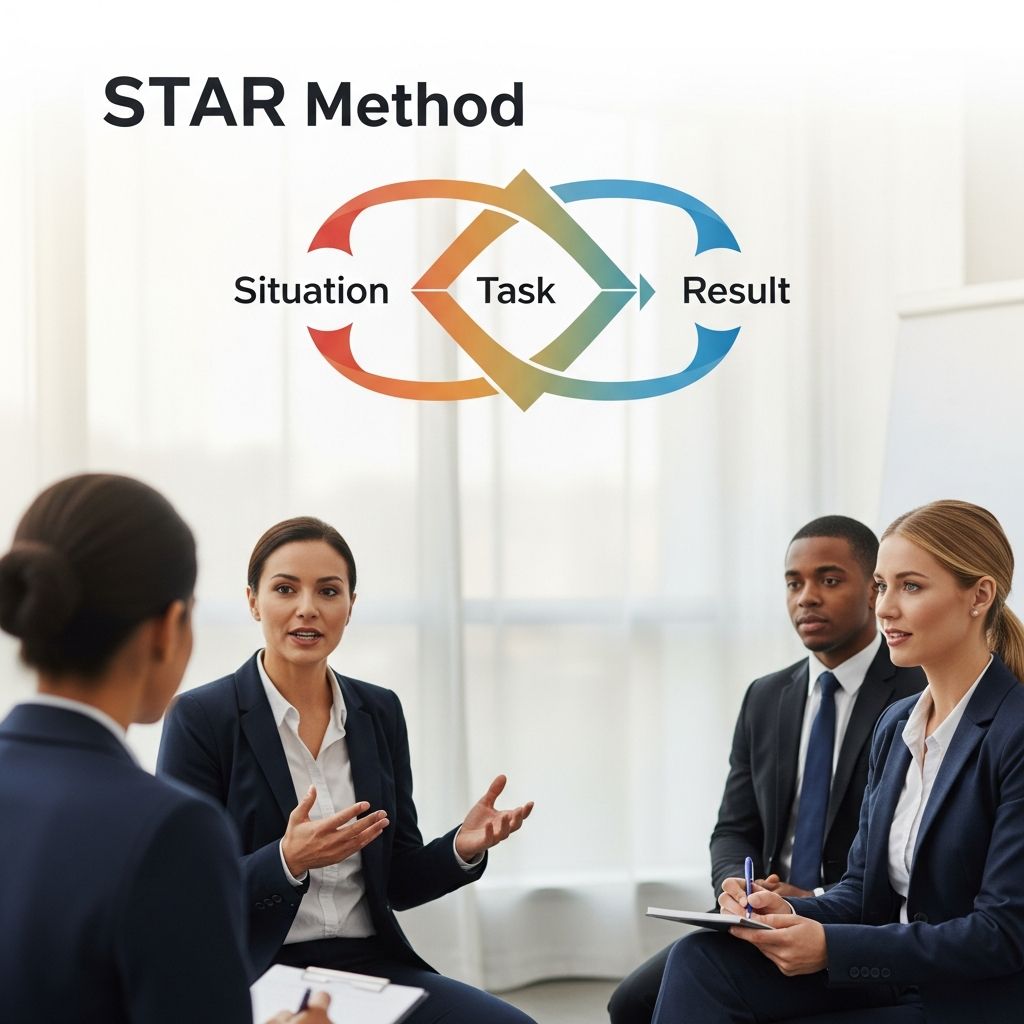
Behavioral interviews are designed around one idea: the best predictor of your future performance is how you behaved in similar situations in the past. To stand out, you need more than good intentions—you need clear, structured stories that prove what you can do. That is exactly what the STAR method helps you deliver.
Why Behavioral Interviews Matter More Than Ever
Organizations increasingly rely on behavioral questions to evaluate how candidates handle teamwork, conflict, leadership, problem-solving, and pressure. Instead of asking what you would do, employers ask what you actually did in real situations.
Typical behavioral prompts include:
- “Tell me about a time you had to deal with a difficult stakeholder.”
- “Give an example of when you showed leadership without formal authority.”
- “Describe a situation where a project did not go as planned.”
Without a framework, answers to these questions can become vague, lengthy, or unfocused. The STAR method provides a simple structure that keeps your response relevant, concise, and easy to follow.
What the STAR Method Really Is
The STAR method is a storytelling technique that structures your answer into four parts:
| Element | What You Cover | Goal |
|---|---|---|
| S – Situation | Set the context: where you were, who was involved, and what was happening. | Help the interviewer understand the background. |
| T – Task | Explain your responsibility, target, or challenge in that situation. | Clarify what you were expected to achieve. |
| A – Action | Describe the specific steps you took to address the task. | Show your skills, judgment, and behavior in detail. |
| R – Result | Share the outcome, impact, and what you learned. | Demonstrate effectiveness and reflection. |
The strength of STAR is that it forces you to move from general statements (like “I’m a good team player”) to concrete evidence from your experience.
Breaking Down Each STAR Component
1. Situation: Give Only the Essential Context
The Situation is where you briefly set the scene. According to career guidance from MIT, this part should be the shortest segment of your answer, providing only the context necessary to understand your story.
Focus on:
- Where and when it happened (job, course, internship, volunteer role).
- Who was involved (team, client, department).
- What made the scenario important or challenging.
Aim for two or three concise sentences so you do not lose your listener in detail.
2. Task: Clarify Your Responsibility
The Task explains what you were expected to do—your objective, challenge, or specific responsibility.
Make sure you answer these questions in your mind:
- What outcome were you working toward?
- What constraints, targets, or expectations were in place?
- What part of the situation were you accountable for?
The Task segment should be short but precise; it frames the problem that your actions will solve.
3. Action: Showcase What You Personally Did
The Action is the core of your answer. Guidance from MIT suggests spending the majority of your time here, because this is where you demonstrate your skills and behaviors.
When describing actions:
- Use “I” language to highlight your contribution, even if the situation involved a team.
- Walk through the steps in a logical order—how you analyzed, decided, communicated, and executed.
- Mention specific tools, methods, or frameworks if they are relevant to the role.
- Include soft skills the employer cares about, such as collaboration, resilience, or influence.
A well-told Action segment turns your story into evidence that you can operate effectively in similar circumstances at the new employer.
4. Result: Quantify Impact and Share Learning
The Result explains how things ended and what changed because of your actions. Career-services guidance emphasizes communicating positive and, whenever possible, measurable outcomes.
Strong Results typically include:
- Numbers (saved time, increased revenue, improved satisfaction, reduced errors).
- Qualitative outcomes (better relationships, smoother processes, improved trust).
- Recognition (feedback from managers, awards, or follow-up responsibilities).
- What you learned and how you applied it later.
Even when the overall outcome was mixed, focus on what you improved and how you grew from the experience.
Choosing the Right Stories for STAR Answers
The quality of your STAR answers depends on the quality of the examples you choose. National careers advice services recommend using varied situations from work, education, volunteering, or personal projects, as long as they clearly demonstrate the skills required for the role.
Good Sources of Examples
- Previous jobs or internships.
- University or training projects with measurable outcomes.
- Volunteer work or community initiatives.
- Informal leadership experiences, such as leading a club, event, or small team.
Qualities of a Strong STAR Story
- Relevant to the job description and core competencies.
- Clear ownership of your role and contribution.
- Includes a real challenge or conflict—not just routine work.
- Shows progression, such as learning, improvement, or growth.
Time Management Within a STAR Answer
While exact timing varies, career guidance suggests dedicating a larger portion of your answer to Action, with less time spent on Situation, Task, and Result.
| STAR Element | Approximate Share of Time | Focus |
|---|---|---|
| Situation | ~20% | Only essential context. |
| Task | ~10% | Your goal or challenge. |
| Action | ~60% | What you did and how you did it. |
| Result | ~10% | Outcomes and learning. |
These are guidelines, not strict rules. The main aim is to keep your answer structured and to spend most of your time on the part that reveals your skills.
Common Mistakes When Using the STAR Method
Even with a strong framework, several pitfalls can weaken STAR answers. Being aware of them helps you prepare more compelling stories.
- Being too vague – Giving general descriptions (“we worked hard,” “it went well”) without specific actions or results.
- Overloading the Situation – Spending too long on background details, leaving little time to explain what you did.
- Focusing on the team, not yourself – Using “we” throughout and failing to highlight your individual contribution.
- Choosing trivial examples – Describing routine tasks instead of meaningful challenges that show your capability.
- Skipping the Result – Forgetting to share outcomes, leaving the story incomplete.
- Sounding memorized – Reciting a script word for word instead of speaking naturally and adapting to the question.
Step-by-Step: Preparing Your STAR Stories
With preparation, STAR can become a natural way you talk about your experience. Career services and interview guides recommend planning multiple stories ahead of time rather than improvising in the moment.
1. Study the Role and Employer
- Highlight the key skills and behaviors mentioned in the job description.
- Look for repeated themes: leadership, collaboration, analysis, customer focus, resilience, innovation, etc.
- Research the organization’s values and culture through its official materials.
2. Select 3–6 Core Experiences
- Pick varied examples that together show a broad range of strengths.
- Make sure each example has a clear challenge and outcome.
- Include at least one story that shows learning from a difficult or imperfect situation.
3. Turn Each Example into a STAR Outline
Instead of writing full speeches, create bullet-point sketches covering:
- Situation: 1–2 bullets with the essentials.
- Task: 1 bullet describing your responsibility.
- Action: 3–5 bullets listing what you did, in order.
- Result: 1–2 bullets with specific, ideally quantified, outcomes.
Outlining keeps you flexible; you can adjust the story to different questions without losing structure.
4. Practice Out Loud
- Rehearse with a friend, mentor, or coach and ask for feedback on clarity and relevance.
- Record yourself and listen for filler words, speed, or points where the story is unclear.
- Practice tailoring the same story to different questions (e.g., teamwork, conflict, leadership).
Adapting STAR for Remote and Hybrid Interviews
As video and remote interviews have become more common, clear structure is even more important. Research by large hiring platforms highlights that candidates who prepare structured, concise responses tend to come across as more confident and professional in virtual formats.
To make STAR work effectively online:
- Keep stories slightly shorter to account for potential lag or minor audio issues.
- Pause briefly between each STAR element so the interviewer can follow your narrative.
- Use brief signposts such as “In that situation…”, “My main responsibility was…”, “What I did was…”, “As a result…”.
- Maintain eye contact with the camera when describing key actions and results.
Using STAR Beyond Job Interviews
Although most commonly associated with interviews, the STAR structure is broadly useful for any conversation where you must explain your experience clearly.
- Performance reviews: Summarize achievements and impact using STAR examples across the review period.
- Promotion cases: Demonstrate readiness for higher responsibility with stories that highlight leadership and strategic thinking.
- Mentoring and coaching: Help others unpack challenges by asking them to describe Situation, Task, Action, and Result.
- Networking conversations: Use compact STAR stories to explain key projects when asked, “What have you been working on?”
Frequently Asked Questions (FAQs) about the STAR Method
Q: Do I need to mention each letter of STAR explicitly?
No. You do not need to say “Situation, Task, Action, Result” out loud. Use the structure internally; your answer should sound like a natural, coherent story.
Q: How long should a STAR answer be?
Many career services suggest aiming for about one to three minutes per answer. This is usually enough time to cover all four elements without overwhelming the interviewer.
Q: Can I reuse the same STAR story for different questions?
Yes, as long as the story genuinely fits the question. The same example might highlight leadership in one answer and conflict resolution in another. Emphasize different parts of the story depending on what is being asked.
Q: What if my example does not have a perfect result?
You can still use it. Focus on what improved due to your actions and, importantly, what you learned. Employers often value reflection and growth as much as flawless outcomes.
Q: Is STAR useful for early-career candidates with limited work experience?
Yes. National careers guidance recommends drawing on experiences from education, volunteering, extracurricular activities, or part-time work. The key is to pick situations that show transferable skills, such as teamwork, initiative, and problem-solving.
References
- The STAR method for behavioral interviews — MIT Career Advising & Professional Development. 2023-05-01. https://capd.mit.edu/resources/the-star-method-for-behavioral-interviews/
- The STAR method — National Careers Service (UK Government). 2023-03-15. https://nationalcareers.service.gov.uk/careers-advice/interview-advice/the-star-method
- How to Use the STAR Interview Response Technique — Indeed Career Guide. 2024-01-10. https://www.indeed.com/career-advice/interviewing/how-to-use-the-star-interview-response-technique
- STAR Method: How to Use This Technique to Ace Your Next Job Interview — The Muse. 2023-08-21. https://www.themuse.com/advice/star-interview-method
- Use the STAR Method in Your Next Mentoring Meeting — Mentorloop Blog. 2022-11-02. https://mentorloop.com/blog/star-method/
- STAR Coaching Model Template + Guide — EntrepreneursHQ. 2021-09-10. https://entrepreneurshq.com/star-coaching-model/

- Integrated M.A. in Applied Linguistics, University of Hyderabad
- 5+ years in editorial, instructional, SEO, and research-based writing
Sneha is a relationships and lifestyle writer with a strong foundation in applied linguistics and certified training in relationship coaching. She brings over five years of writing experience to theskillvault, crafting thoughtful, research-driven content that empowers readers to build healthier relationships, boost emotional well-being, and embrace holistic living. Her writing and insights reflect the belief that beauty, happiness, and wellness…