
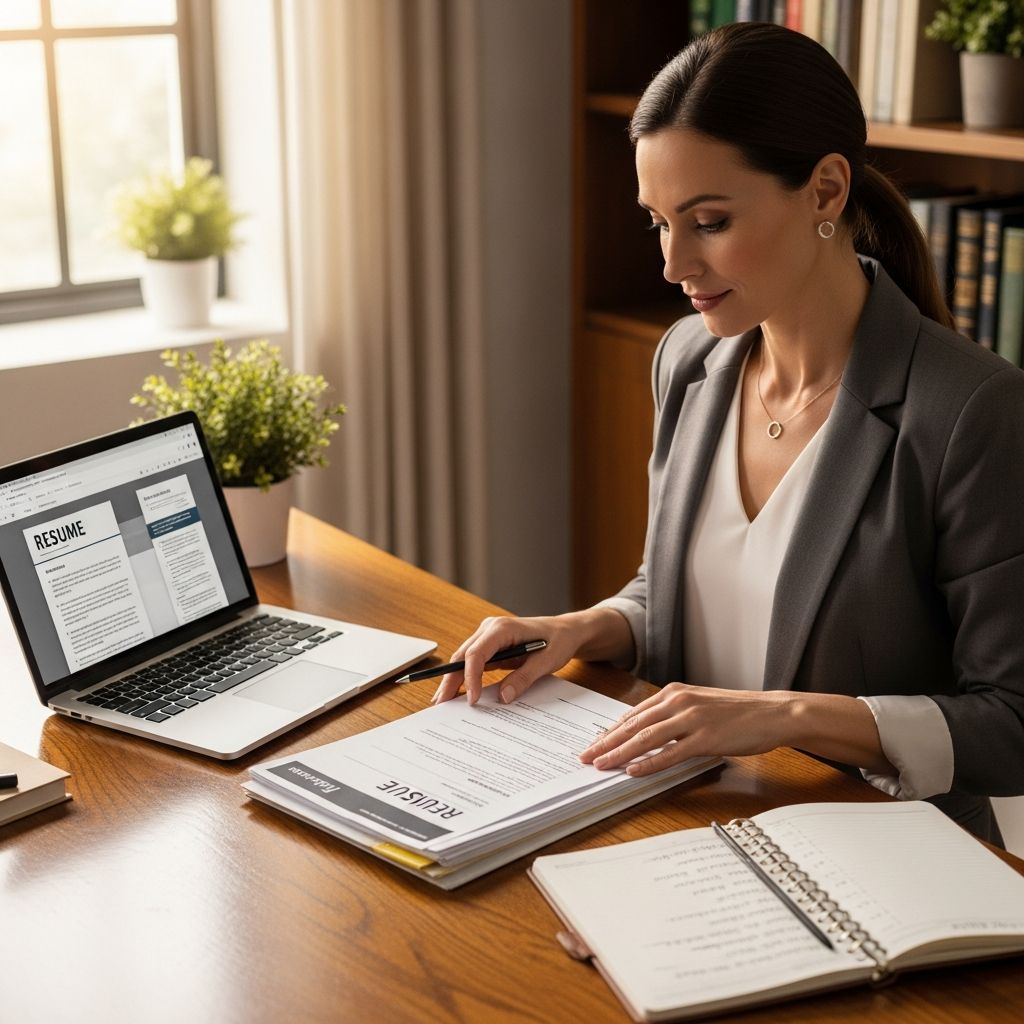
Leaving the workforce to care for your family is a meaningful decision. Returning can feel intimidating, especially when you are staring at a blank resume and a multi-year employment gap. The good news is that the skills you use every day as a caregiver are exactly the kind many employers want: organization, time management, problem-solving, empathy, and resilience.
This guide explains how to transform your stay-at-home mom experience into a professional, results-focused resume that gets interviews. You will learn what to include, how to handle gaps, and how to clearly show the value you bring to a new role.
Why Your Caregiving Years Belong on Your Resume
Many parents underestimate how valuable unpaid caregiving experience can be in the labor market. Modern research shows that employers increasingly value so-called transferable skills such as communication, teamwork, and problem-solving across occupations. These skills are developed extensively while running a household and caring for children.
- Time management: Coordinating school runs, appointments, meals, and activities under real time pressure.
- Project management: Planning moves, school transitions, birthday events, or home renovations from start to finish.
- Budgeting: Managing household expenses and making cost-conscious decisions.
- Conflict resolution: Mediating sibling disagreements and maintaining a calm environment.
- Adaptability: Handling illness, schedule changes, and unexpected crises with limited information.
These are not just vague “soft skills.” Studies on employability emphasize that such capabilities strongly influence hiring and performance outcomes across roles and industries.
Choosing the Best Resume Format After a Career Break
There is no single right way to structure a resume after a caregiving break. However, certain formats make it easier to emphasize strengths and downplay gaps.
| Format | When It Works Best | Pros | Potential Drawbacks |
|---|---|---|---|
| Reverse-chronological | You had a strong career before your caregiving break and are returning to a similar field. | Easy for recruiters to scan; works well with applicant tracking systems (ATS). | Employment gaps are more visible. |
| Combination (hybrid) | You have past experience plus a long break and want to highlight skills first. | Showcases key skills and achievements above your work history; ideal for career transitions. | Can be longer; requires careful design to stay clear and focused. |
| Functional | You are shifting fields entirely or have limited prior work history. | Emphasizes skills rather than dates; can reduce focus on employment gaps. | Some recruiters distrust purely functional resumes; ATS may parse them less accurately. |
For most stay-at-home moms re-entering the workforce, a combination resume is a strong choice: lead with a skills or summary section, then show your experience in reverse-chronological order.
Essential Sections of a Stay-at-Home Mom Resume
Regardless of format, most resumes for returning parents benefit from the following core sections.
1. Contact Information
Place this at the top of the page so hiring managers can reach you quickly.
- Full name
- Phone number
- Professional email address
- City and state (or broader region, if you prefer)
- Optional: LinkedIn profile or online portfolio
2. Professional Headline and Summary
A brief summary at the top of your resume quickly explains who you are, what you bring, and what you are looking for. Research on recruiter behavior shows that they scan resumes in seconds, focusing heavily on top sections.
Use your summary to:
- Identify your target role (for example, customer support specialist, project coordinator, or marketing assistant).
- Highlight years of relevant experience (including pre-career-break work).
- Showcase two to four key strengths tailored to the job description.
- Briefly mention that you are returning to the workforce, if helpful.
3. Skills Section
A dedicated skills area lets you present your capabilities in a concise, ATS-friendly way. Applicant tracking systems typically scan resumes for specific keywords that match the job posting.
Divide your skills into two groups:
- Technical or job-specific skills (software, tools, industry knowledge).
- Transferable skills (communication, leadership, organization).
Examples of valuable skills for returning parents include:
- Scheduling and calendar coordination
- Microsoft Office, Google Workspace, or project management tools
- Customer service and conflict management
- Data entry and record-keeping
- Event planning and logistics
4. Experience (Including Caregiving)
This is where you bring together paid employment, volunteer roles, and your time as a stay-at-home parent. Career guidance from major job platforms suggests presenting caregiving either as a distinct role or by noting it as a period in your timeline, then emphasizing the transferable skills gained.
Possible ways to label your caregiving time:
- Family Caregiver
- Full-Time Parent
- Stay-at-Home Parent
Under that heading, use bullet points that focus on outcomes and skills rather than personal details:
- Coordinated complex weekly schedules for multiple family members, ensuring on-time attendance at school, medical appointments, and extracurricular activities.
- Managed household budget and vendor relationships, comparing options to reduce recurring expenses.
- Led communication with teachers, healthcare providers, and community organizations, maintaining accurate records and documentation.
5. Education and Training
Include:
- Degrees and diplomas
- Relevant certifications
- Online courses or bootcamps completed during your break
Continuing education signals to employers that you stayed intellectually engaged and current in your field. Research on adult learning highlights that upskilling and reskilling are key tools for re-entering a changing labor market.
6. Optional Extras That Strengthen Your Profile
- Volunteer experience: PTA roles, community fundraising, sports coaching, or nonprofit work.
- Projects: Freelance assignments, part-time side work, or substantial self-directed projects.
- Awards or recognition: Any formal acknowledgments from prior employers or organizations.
How to Address Employment Gaps Confidently
Many parents fear that gaps will automatically disqualify them. In reality, employers increasingly encounter candidates with non-linear careers, including caring breaks. Labor market research from international organizations notes that career interruptions for caregiving are common, especially among women, and that policies are evolving to support re-entry.
Use these strategies to handle your employment gap transparently and positively:
- Be honest: Do not hide your caregiving period or manipulate dates.
- Use clear labels: Give the caregiving role a title and timeline.
- Focus on growth: Mention any courses, certifications, or part-time work performed during this period.
- Explain briefly in a cover letter: One or two sentences are enough to explain that you chose to prioritize family care and are now ready to re-engage fully.
Translating Parenting Duties into Professional Achievements
The key to a strong resume is not listing every task you performed, but showing impact. Frame your caregiving and volunteer work the same way you would describe achievements in a paid role.
Use this simple formula for bullet points:
- Action verb + what you did + result or benefit
Examples adapted to a professional tone:
- “Organized” → Organized a shared digital calendar for family and service providers, preventing missed appointments and reducing scheduling conflicts.
- “Managed” → Managed a monthly household budget, tracking and analyzing expenses to keep spending within targets.
- “Coordinated” → Coordinated logistics for school events, collaborating with 10+ parents and staff to deliver successful activities on schedule.
Tailoring Your Resume to the Job Description
Each role you apply for will list responsibilities and required skills. Matching your resume to these requirements not only makes your application more relevant, it also helps your resume get through applicant tracking systems that scan for keywords.
To tailor effectively:
- Identify three to five core requirements in the job posting.
- Use the same or similar keywords in your summary, skills, and experience bullet points.
- Highlight concrete examples from your past paid work, volunteering, or caregiving that align with those requirements.
- Remove or de-emphasize unrelated details that may distract from your fit.
Practical Tips for Format, Style, and Length
A polished, easy-to-read resume reassures hiring managers that you understand professional standards. Career services organizations and major job platforms commonly recommend the following best practices.
- Length: Aim for one page if you have under ten years of experience; use two pages only if your background truly justifies it.
- Font: Choose clean, readable fonts such as Calibri, Arial, or similar, at 10–12 pt size.
- Margins and spacing: Keep enough white space for easy scanning; avoid dense blocks of text.
- Bullet points: Use concise bullet points; start each with a strong verb and avoid full paragraphs when possible.
- Consistency: Align dates, job titles, and locations in a uniform style.
- File format: When submitting online, a PDF is often safest to preserve formatting, unless the posting specifies otherwise.
Building Confidence as You Return to Work
Beyond structure and wording, a strong resume helps you rebuild confidence. It is a written reminder that you have been developing valuable capabilities, even without a traditional job title. Many workforce re-entry programs emphasize that reframing your story—from “gap” to “growth”—is crucial to successful applications and interviews.
Consider complementing your resume with:
- Targeted learning: Short online courses related to your desired field.
- Networking: Reconnecting with former colleagues or joining professional groups.
- Practice interviews: Mock interviews to get comfortable discussing your transition.
Frequently Asked Questions (FAQs)
Q1: Should I list “stay-at-home mom” as an actual job on my resume?
You can list your caregiving period as a role (for example, Full-Time Parent or Family Caregiver) with dates, then describe responsibilities in professional language. Large career platforms note that acknowledging the period and focusing on transferable skills often works better than leaving unexplained gaps.
Q2: How do I explain my career break during an interview?
Prepare a brief, confident statement: that you chose to focus on family for a period, maintained or updated your skills where possible, and are now fully ready to contribute in a new role. Keep it short and pivot quickly to the strengths and experience you bring.
Q3: What if I have almost no recent paid experience?
Emphasize volunteer work, community roles, and any part-time, freelance, or project-based work you have done. Then highlight your caregiving responsibilities using outcome-focused bullet points. A combination format, with a strong skills section at the top, can be especially helpful in this situation.
Q4: Do employers look down on stay-at-home parents?
Attitudes vary by employer, but many hiring managers are familiar with non-linear careers and caregiving breaks. Research on changing labor markets shows an increasing recognition of career interruptions for family reasons and the need to support returners. A clear, confident resume that demonstrates value can help shift the focus from the break itself to what you can do now.
Q5: How often should I update my resume once I start applying?
Update your resume each time you apply for a different type of role, tailoring the summary, skills, and key bullet points to the specific posting. Also revise it whenever you complete new training, take on a new project, or gain additional experience, even before you are hired full-time.
References
- 25 Stay-At-Home Mom Resume Examples and Templates for 2025 — ResumeBuilder. 2024-11-01. https://www.resumebuilder.com/resume-examples/stay-at-home-mom/
- Soft skills for business success — Australian Government, Department of Education, Skills and Employment. 2019-03-01. https://www.dese.gov.au/uncapped-soft-skills-report
- How to Write a Stay-at-Home Caregiver Resume — Indeed Career Guide. 2023-08-09. https://www.indeed.com/career-advice/resumes-cover-letters/stay-at-home-mom-resume
- Applicant Tracking Systems: How They Work and How to Beat Them — U.S. Office of Personnel Management (OPM), via USAJOBS Help Center. 2022-05-10. https://www.usajobs.gov/help/faq/application/process/ats/
- Adult learning and education: As a response to global challenges — UNESCO Institute for Lifelong Learning. 2022-06-15. https://uil.unesco.org/adult-learning-and-education
- Care work and care jobs for the future of decent work — International Labour Organization (ILO). 2018-06-28. https://www.ilo.org/global/publications/books/WCMS_633135/lang–en/index.htm

- Integrated M.A. in Applied Linguistics, University of Hyderabad
- 5+ years in editorial, instructional, SEO, and research-based writing
Sneha is a relationships and lifestyle writer with a strong foundation in applied linguistics and certified training in relationship coaching. She brings over five years of writing experience to theskillvault, crafting thoughtful, research-driven content that empowers readers to build healthier relationships, boost emotional well-being, and embrace holistic living. Her writing and insights reflect the belief that beauty, happiness, and wellness…